The end of March is, in fact, one of the busiest times for moving companies, as university students relocate closer to their chosen universities or entire families move to accommodate a husband’s new job.
Alongside excitement, there are also uncertainties and anxieties. Kindergarten parents, while mostly excited, may feel a bit worried about parent-child separation. Similarly, new students moving up to higher grades or levels may experience anxiety about meeting new friends or coping with new challenges. First-time employees or transferred workers may also feel uncertain about fitting in and being productive right away.
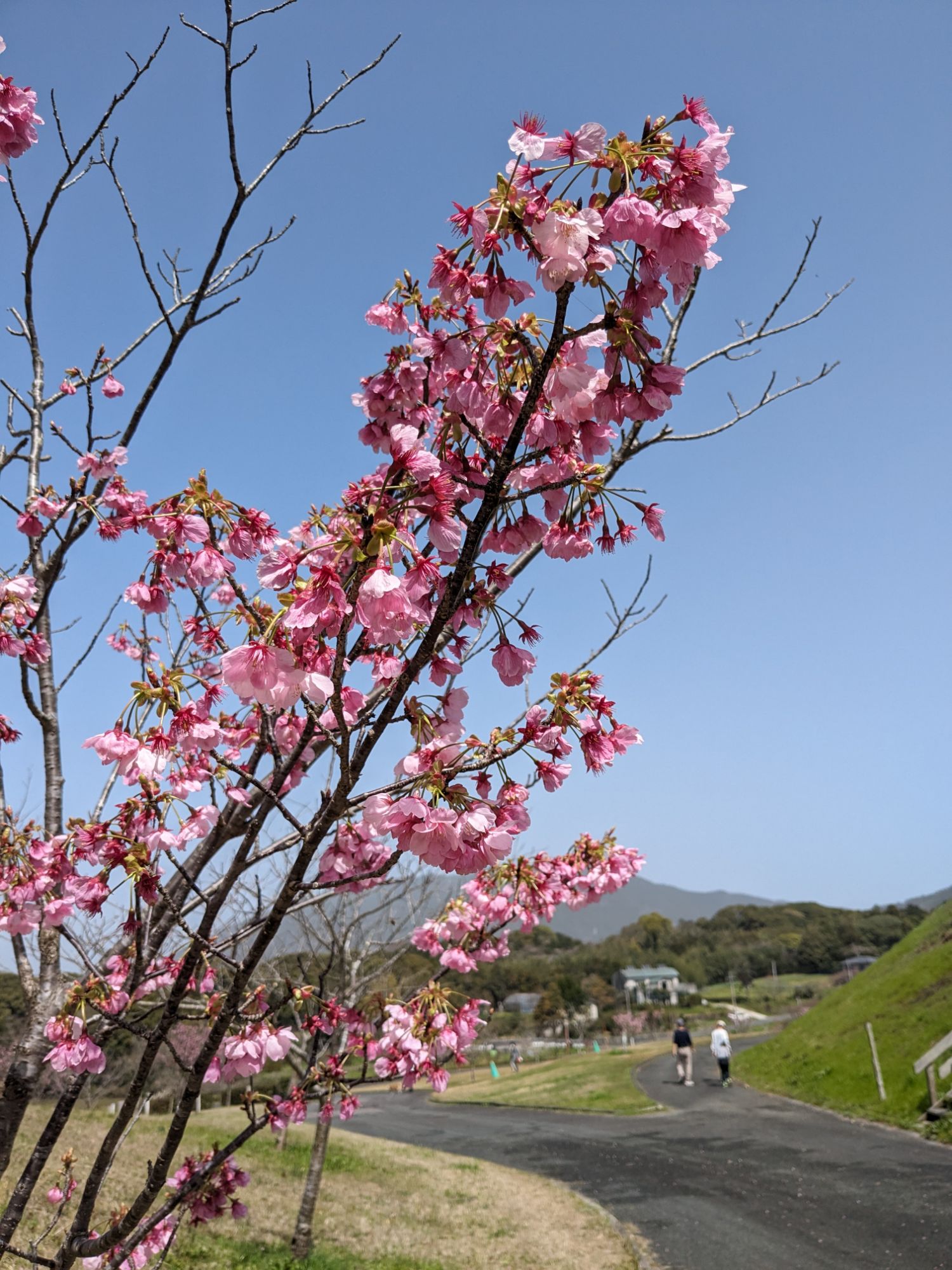
Nevertheless, this season is filled with hope. It’s a fresh start, the beginning of another cycle towards the fulfillment of our goals. Like cherry blossoms, the cycle begins: we bud, we bloom, the flowers fade, and the leaves sprout. We are ready to face another year full of challenges and uncertainties, but most of all, a year full of determination and motivation to navigate life’s ups and downs.
I came to Japan in the spring of 2011 when my sister who lives in Japan invited me for a month-long spring vacation. During my stay (and even up to now) there are several things that surprised me.
11.There are many elderlies. It is a known fact that Japan is an aging country. When I first came here, I was surprised to see people looking beyond their sixties/seventies working as traffic aid, gardener, and even working in the malls. In my country the Philippines, most people you see around are young. Mall workers are usually in their 20s to early 30s. It is also uncommon in the Philippines to see groups of elderly hanging out in a restaurant or taking a walk in the park. Whereas in Japan, this is fairly common.
10.People wear masks. I was very surprised to see many people wearing masks when I first came to Japan. I asked my sister if there was a spreading disease or something but she said people wear it for protection, especially for people who are having kafun allergies, which was fairly common during springtime. In the Philippines, if you wear a mask, people will speculate that you are ill and need to wear a mask to avoid spreading the “contagious disease”. When I came back to the Philippines, my students were all very surprised and kept asking me if I were sick when I wore a mask to protect me from chalk dust from writing on the blackboard.
9.Some fruits, vegetables,and spices are oversized. I was so amazed when my sister took me to the supermarket. The ginger was big and the other vegetables were as well. Eggplants, tomatoes, and bell peppers were bigger than the usual size I have seen in my country. Eggplants also came in different shapes. The round eggplants amazed me the most. That feeling of amazement from seeing something different is a precious experience. I don’t get that same feeling anymore for being here for a long time already.
8. There are many buildings they called apartments and mansions. I was also amazed by the buildings in Japan. There are many apartments and mansions. The smaller buildings are called apartments and the high rise are mansions. Some are government housing dedicated to low-income families. In the Philippines, big houses are called mansions, and the mansions in Japan are what we call condominiums. Although condominiums in the Philippines usually have more elaborate designs and hotel-like lobbies, complete with amenities such as swimming pools and clubhouses. These are for Filipinos who can afford them. Housing in the Philippines is still way behind developed countries. People below the poverty line mostly live in shabby houses in lots that they don’t own. ‘Squatter’ as they are called. I hope one day the Philippines can also provide government housing like in Japan to improve the living conditions of the impoverished.
7. Most people wear subtle colors. Unlike in the Philippines where color and variety is the more popular trend, in Japan, I noticed that this was not the case. Most Japanese wear colors that don’t make them stand out from the crowd. They like to blend in and match the season. Pastel colors are the trend in spring. I also noticed that most Japanese don’t wear revealing clothes. Filipinos on the other hand, have no problem wearing colorful, sometimes showy attire. We like to be different and it is okay to stand out in the crowd. When we went to Huis Ten Bosch, a famous tourist spot in Kyushu, I made sure to wear the most colorful attire to match the happy and festive mood I had. That time, I was told that my outfit was really colorful and “medatsu”. Medatsu means to stand out. I thought it was a compliment. Maybe it was or maybe not. Now, that I have been here for a long time, being medatsu is rather a thing to be avoided. It is better to blend in than to stand out in Japan.
6. People bow when they greet. When my sister said Konichiwa, which means hello, I noticed that she did a slight bow to the person she was greeting. I noticed that other people do it too. Vendors and restaurant staff sometimes do it by welcoming their guests. The funny thing is sometimes I noticed my sister do a slight bow even when talking on the phone. In the Philippines, bowing is not a common practice. Instead, we move our heads or eyebrows up with a smile to greet a friend coming our way.
A tip: when you leave Japan, try to sit on the window side and watch the airport workers wave goodbye and bow to the leaving plane.
5. Japanese money bills are bigand always look new. In the Philippines, we call Japanese money “lapad” which means wide. Before coming to Japan, I didn’t know that Japanese money is actually big in size, the reason why it is called ‘lapad’. Japanese money bills are always crisp and new. In the Philippines, it is not unusual to see folded (sometimes dirty, stapled, and marked) bills, Recently, when the Philippine government released a new one-thousand peso bill with a strict handling guideline that says no folding of the bill, there was a mass uproar against it.
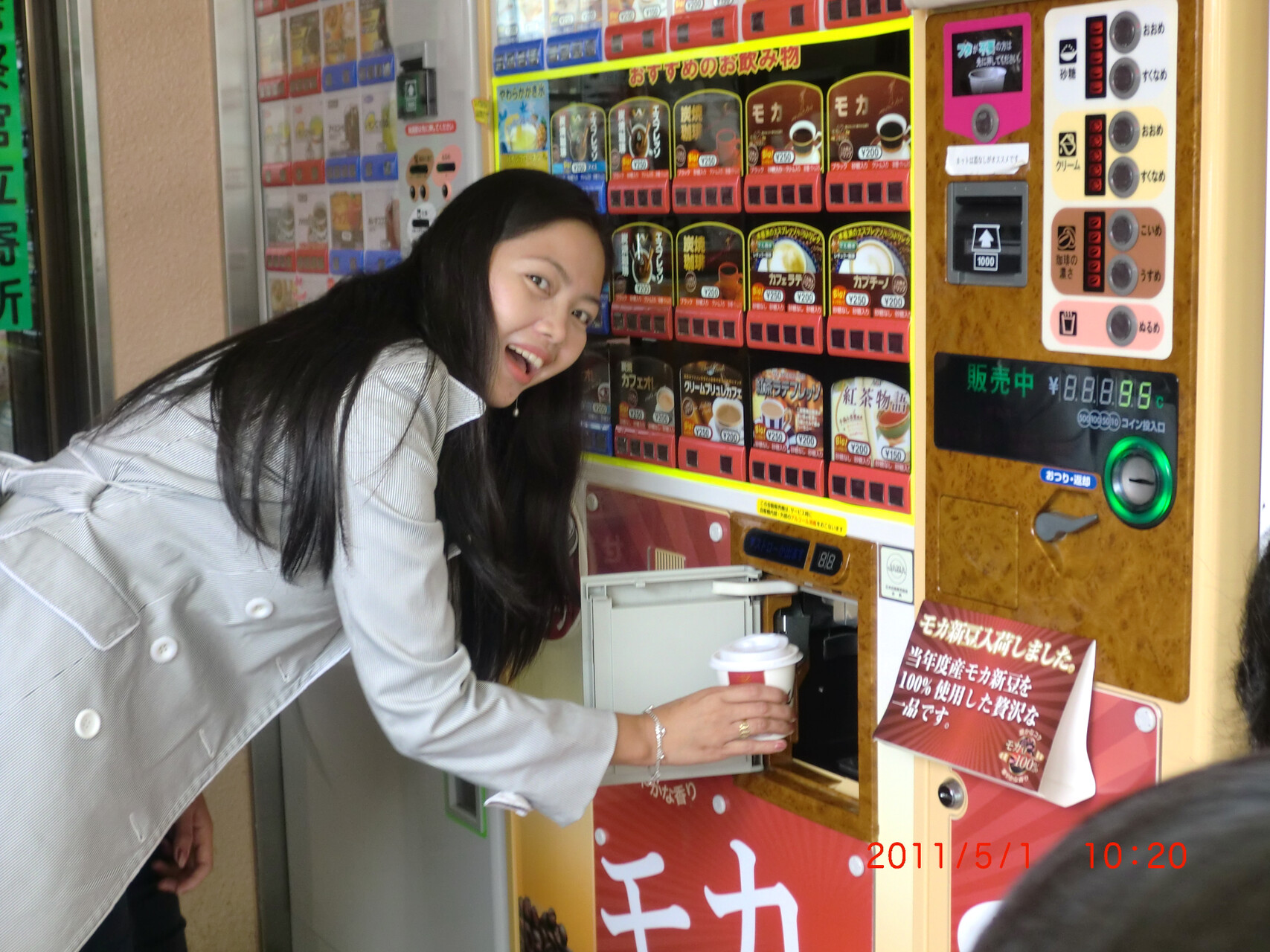
4. Vending Machines are everywhere.
Vending machines are everywhere in Japan. They are in train stations, bus stops, near a park, tourist spots, or outside an apartment complex. Or just along the streets. Vending machines are not limited to bottled drinks. There are also those that sell ice cream, coffee, hot choco, cigarettes, and snacks. I was surprised to see one selling condoms! Whereas in the Philippines, I haven’t seen or experienced buying in a vending machine. We have “sari-sari store” – a small residential shop that sells anything. Sari-sari means variety. The more complete and wide the selection of merchandise a sari-sari store has, the more popular it becomes in the neighborhood. Sari-sari stores are also everywhere. In a busy neighborhood, you will be surprised to see the number of sari-sari stores and that most houses have their own sari-sari.
Nothing beats Japanese toilets! I was very impressed with its very high technology and efficiency. Most toilets in shopping malls are very clean, have an automatic flush, and have different buttons for different purposes. Bidet’s water pressure – Strong? Gentle? Do you need a massage? Do you want to flush with a little water? A lot? Do you want to hide the sound of your pee with a recorded sound? Go ahead. Just press the right button. Make sure not to press the “call an emergency” button or else the alarm will sound and a couple of responders will come to your “rescue”. I had trouble one time I was in a hospital to visit a patient. I wanted to flush but pressed the wrong button. The alarm sounded and two nurses came. My mom also accidentally pressed the emergency button in a toilet at a subway station. Two women came rushing to the site. But, not all toilets in Japan are that hi-tech. The very old traditional style squat toilet still exists and usually found in a community park or old buildings. For women, watch where you face when squatting and how far your legs are apart if you don’t want to get your feet wet with the splash. In most households in Japan, toilets are high-tech. My sister’s toilet automatically opens and closes its lid and automatically flushes when you leave. Philippine toilets are pretty much basic. A small cubicle, a toilet bowl usually with no cover and if you’re lucky, some tissue paper. Don’t be surprised to be asked to pay for toilet fees in some malls or bus stops, too. Also a different fee for pee only and poo.
2. People line up for their turn. I was very impressed with how disciplined and patient Japanese people are. They line up getting on and off a bus or a train. They line up to go up and down the escalator. They are always very patient and just wait for their turn. No complaints. No overtaking. Everything is in order. Whereas in my country, most people are impatient and just want to be the first. Many jump lines which sometimes can cause disagreements. Even inside the church when taking communion, in Japan, they do it by the proximity of the seat to the priest. But in the Philippines, everyone just flocks towards the priest to be the first. There are many instances that I can compare and contrast Japanese and Filipinos but this “waiting in line” in Japan is something that the whole world, especially my country, should learn and adapt to.
1. It is very clean and orderly in Japan! The cleanliness and orderliness in Japan will impress every visitor. I loved how the streets are very clean and clutter-free. There are no trash that can be seen on streets. There are no broken roads and almost no open dirt that could turn to mud on rainy days. There are no excessive posters on building walls. Cars and other vehicles look new and well-maintained. Public toilets are clean and free. There are no beggars or obvious homeless people in sight. Houses are clean outside. Parks and playgrounds are plenty. Flowers and greeneries are everywhere. I never heard a car honk and even myself have never ever used the horn while driving for almost seven years already. Traffic is smooth. Japanese people dress nicely and neatly. No loud noise from car stereos or neighbors’ karaoke. It is peaceful, clean and orderly.
I fell in love with Japan the moment I arrived here. I wished to stay longer and it happened. I wished to stay even longer and now I am still here. A permanent resident and settled. I now call Japan my home. But despite that, there is still no place like my original home – the Philippines – where even though there is a big social disparity, everyone finds happiness in the littlest of things. People celebrate the littlest success. Scarcity doesn’t matter when Filipinos want to celebrate. And that is one thing hard to find in Japan. Japanese are frugal, practical and private people whereas Filipinos are celebratory and mostly open and happy people.
1. Teachers in Japan do not have a permanent school assignment. They change schools. They can only teach in one school for three to four years the longest. They have to move to another school within the city or the neighboring cities. New teachers change from one to three years and veteran teachers who are about to retire can stay in the same school for up to seven years.
In the Philippines, most teachers stay in their assigned schools until retirement, unless they want to be transferred to another school for personal reasons or for promotion.
2. Teachers in Japan change grade level assignments. Not only that teachers have to change schools in Japan, they also have to change their grade levels assignments. For example, a teacher who teaches first grade this year will most probably be teaching second year the following year. They follow the students they are teaching. Few teachers remain in the same grade for consecutive years.
Whereas in the Philippines, most teachers stay in the same grade level until retirement. It is not uncommon for siblings to have the same first grade teacher.
3. Class schedule in Japan changes everyday. Class schedule in Japan is not fixed for the whole year unlike in the Philippines. The schedule is announced a week or a day before usually on Fridays. It is very easy to change the class schedule in Japan because all subjects are taught at equal amounts of time. Each subject is taught at 45 or 50 minutes. Unlike in the Philippines, academic subjects like Math and Science are taught up to one hour or longer and shorter time for non-academic subjects like Music or Home Economics.
I was very surprised about this when I came to work in Japanese public elementary schools because in the Philippines we decide on the schedule at the beginning of the school year. Teachers gather and spend a good amount of time making the schedule that would fit every teacher’s individual schedule and every class’ individual schedule. It’s not easy to make the schedule work for every teacher and every class. Once decided, we follow this schedule from start (June) to end (March) unless there are important changes that we need to do.
4. Japan is a country that values equality and uniformity. Equality in schools is observed through equal treatment of students in terms of opportunities and participation in activities. For example, on a Sports Day, all students participate regardless of their physical abilities. Everyone can participate in racing whether he runs fast or slow or even in wheelchair. Whereas in the Philippines, competition is common. We have all sorts of school competition (Quiz Bee, Spelling, Beauty Contest, Money Contest, Sports Meet, etc.) which is not very common in Japan. It is a battle of the fittest in the Philippines. And only the fittest and the brightest shine. Uniformity is also a very important attribute of Japanese schools and the whole society in general. This can be seen through uniform designs of school bags, school shoes, haircuts and even hair color in junior high schools and high schools. Wearing black suits over white inner is common and considered standard for students on the job training and for those looking for a job. Subtle, basic colors are the staples. It is not pleasing to stand out like a sore thumb in Japan, which is the opposite in the Philippines. Filipinos like individuality and assortment and we like to stand out. Medatsu is a Japanese word which means to stand out. In Japan, you don’t want to be a medatsu, but in the Philippines, being a medatsu is encouraged.
5. Outdoor and indoor shoes shoes culture in Japan. The footwear worn from the house and outdoors will not be allowed to be worn inside the school buildings. Each class/student has their own shoe box. Upon entering the school building, outdoor shoes are changed to indoor shoes. Japanese are very particular about cleanliness. Indoor shoes help to avoid dirt getting inside the school building from outside.
In my native land, this custom doesn’t exist. Although some individual teachers require their students to bring indoor shoes, and have their own classroom shoe box, this is not considered a standard for everyone to follow. It’s all up to the teacher or the principal.
6. Japanese teachers should be able to play the piano and swim before they can pass to be a licensed teacher. In Japan, each elementary school teacher is expected to teach music, play the piano of course and to teach swimming in the school’s swimming pool.
Most public schools in the Philippines don’t have a single piano. Even the small private schools don’t. Teachers teach music even without the ability of playing any musical instrument. It is not a requirement. But, Filipinos love to sing. And I wonder why even though we lack many musical instruments, which sometimes we can only see in pictures or drawings that teachers ask the students to draw (draw the three types of musical instrument: brass, wind and percussion and make a scrap book in music class), we can still sing out loud from the bottoms of our hearts. 🙂 Many Filipinos are famous singers locally and internationally.
For an elementary student in the Philippines, having a swimming pool in the school is like living the dream. Filipinos love swimming. Most occasions like birthdays we like to celebrate it in the beach. But, unlike Japanese, we don’t learn basic swimming skills in school. We learn it on our own. Pretty sure by just going to the beach often or the nearby river. Beaches in the Philippines are open all throughout the year and we even have night swimming. This is a big surprise to the Japanese people since they can only go swimming in the beach in summer. Night swimming is rare. Swimming schools are open all throughout the year but swimming pools are only open in summer.
7. School lunch in Japan is prepared at schools or school lunch centers. School lunch is one of the best features in Japanese schools. I have a different detailed blog about it here. I like Japanese school lunch. It saves me from the hassle of preparing my own packed lunch and saves me some yen since school lunch is cheaper compared to buying food outside. It’s nutritious, well-balanced and well prepared. Japanese students help in the distribution of their school lunch. Whereas in the Philippines, students can opt to bring their lunch boxes, buy at the school canteen or go home and eat if their houses are close to school.
8. Japanese children walk to school on their own (with exemption of those living in far-flung countryside). Chaperon and giving children rides to school are greatly discouraged and most often not allowed in Japan. Students go to school by groups according to their area of residence. In the beginning of classes in April, parents and guardians will accompany grade one students on their way to school but only up to few meters away from their houses. Not all the way to school.
It’s a different scene in the Philippines. In the beginning of class, about 90% of grade one students are taken to school by their guardians. Guardians even stay to watch the class from the classroom windows. Although this is discouraged by the school, some parents couldn’t help but watch their kids in class. In the weeks that follows, fewer guardians do this. Many children, especially lower grades, are taken to school (up to the school gate) by their guardians all throughout the year. In some private schools, there are car pool companies that take children to school for a specific amount of fee.
The difference lies about the distance and safety. In Japan, students should go to the nearest elementary school in their area, not in any school they want to go unless they want to go to a private school. It’s usually a few minute walk from their houses. Except if you’re living in the inaka (country side) where your school can sometimes be as far as an hour walk. In the cities, there are traffic volunteers (usually the elderlies) that guide students in their way to school making sure of the safety of the road. Parents, teachers and principals also help in doing this. This is called ‘koutsu jidou’ in Japanese. Parents take turns doing this. It is very common to see the elementary school principal guiding the traffic and greeting students in front or near the school gate. In the beginning of classes, usually the whole month of April, teachers accompany students halfway on their way home where guardians are waiting to take them up to their houses. This is only done in the beginning and when students get used to it, they go to school and go home with their own groups. Whereas in the Philippines, many parents opt to send their children to central schools, the big schools in the heart of the city, which is very far away from their houses and nearly impossible to get to by foot. With the distance problem and the traffic, it is dangerous and impractical to walk to school.
9. Recess time in Japan is not eating time. Classes in Japan usually starts at 8:30 in the morning. Four subjects are taught in the morning which usually last 45-50 minutes with 10-15 minutes interval. The nakayasumi is the mid-break and the longest break. During this time, students can go to the playground or to the library or just relax and have a break. In the Philippines, subjects are usually taught consecutively without intervals (for example, schedules are 8:00-9:00, 9:00-10:00) and during the recess time, students usually eat their baons (bring to school snacks), or go to the school canteen, or buy at the canteen tray delivered in their very own classroom. Baon can be food or money or both. This is a part of Philippine culture that most school children look forward to and recess time is jokingly everyone’s favorite subject.
10. Bringing money to school is okay in the Philippines but not in Japan. As mentioned above, students can buy food to eat during recess time in the Philippines and students can bring money as much as their parents can afford to give them. In Japan, it is uncommon for students to bring money to school and if they do, there is a limitation, for example, elementary students can only bring ¥100, junior high schools ¥300. There is nothing to buy at the school so there is no need for money. Japanese students are also not allowed to bring their own snacks or use accessories or bring CDs etcetera.
These are only few of the many differences between the elementary and junior high schools in Japan and the Philippines. These differences are of course very normal and not written to make one country look better or bad. These differences are part of the culture and that is what makes each country unique.
I have seen a video about how honest Japanese people really are. Japan is the most honest country in the world as the video claimed. The guy in the video dropped his wallet on the streets of Tokyo fifty times and it was returned every single time. Most comments praised Japan and its Japanese people for their honesty.
Upon reading the comments of praise and reading other people’s experiences, I remember my own. I also have few experiences of losing some things and claiming them back. It is very impressed really how honest Japanese people are and how incredible their system is.
LOST LAPTOP
One December many years ago, it was time to go back to the Philippines for a Christmas vacation. The airport was busy. And there at Fukuoka airport, I lost my laptop. I was in line to check-in but forgot my Residence Card at home, an hour drive away, which means it was impossible to go home and get it. We will miss our flight. So, the attendant asked me to wait until all passengers are accommodated so she can accompany me to the officer who will let me in without my Residence Card for as long as I will write a note. Long story short, I successfully checked in, went thru the security check and lined up to board my flight. Most passengers were already on board and few were left in the line to board. While in line, I suddenly realized my laptop that I was in my hands was not there anymore! I was already under so much pressure because of the long wait to check in and all the procedures I did to forget the Residence Card. I managed to get in the boarding gate with my flight about to leave and then again the lost laptop!! I got out the line and ran hurriedly to the security check and told them what happened. I couldn’t stay long to find it because my plane was leaving so I had to fly without my laptop. I lost it. I was supposed to give it to my niece. Fast forward to coming back to Japan, when I was leaving the plane, a man standing by the exit was carrying a paper bearing my name. To my surprise, he took me to a room and returned my laptop. Things happened too fast I couldn’t even take a photo of him standing with my name. I felt like I was a celebrity for an instant. Lol.
LOST CELLPHONE
I lost my cellphone many times already in my almost ten years living in Japan. I am not very forgetful but I guess I am indeed affected by aging and giving birth and raising a child made me even more vulnerable to short memory loss.
Incident 1
One time, at Mr. Max, a discount store, I was busy checking the items and I did not realize I put my cellphone down in a shelf to check one item. It was in the desk and stands section. I moved around that section checking one item to another until I decided which item to get. I paid at the cashier and left the store. That’s when I realized the phone was not in my hand. It was about thirty minutes since. I hurried and went back to the desk station and there it was on the shelf unmoved.
Incident 2
I left my phone at Nafco, a home-improvement store, where I always frequent to get my plants. After Nafco, we went to another store. I did not realize that I lost my phone until we got home. By then, a good hour had already passed. When I went back to Nafco to check, I told the cashier that I lost my phone and the last time I remember I used it was at there store. All she did was asked about my phone’s description and voila! It was there and the lady handed it to me.
Incident 3
I left my phone in the toilet of Sunlive department store. I put it on top of the tissue holder and left the cubicle without picking it back up. I realized it right away, in less than five minutes upon leaving the toilet. When I went to check, it was not there already. I was feeling dumb. Goodbye cellphone. I dialed my number using my husband’s phone. It rang and a lady answered. She said she got the phone to make sure nobody will get it and she can return the phone to me (she already expected I would call to locate it). After a few minutes of call to locate each others location, I got my phone back.
Incident 4
I lost my phone in the airport toilet. Again, this time, I left it inside the cubicle. I only realized it when I got back to my seat in the waiting area. When I went back to find it, it wasn’t there. So I went to the information counter and told them what happened. I was asked about the phone’s description and tada! My phone was there. Somebody picked it up and gave it to the information counter.
Incident 5
This is the most recent. Yesterday, Tuesday, March 22, 2022 was a long day for us. I had to do errands in the morning and took my little girl to her one-year old pre-school club in the early afternoon. After that we took the train to go to Fukuoka City, meet my DH in Kashii station and from there we took the bus to go to the orchestra concert venue. This was also my little girl’s first bus ride. How exciting! I asked my DH to take a video of her getting on the bus. We sat at the backmost part so the three of us could sit side by side. After about twenty minutes, it was time to get off the bus. My DH carried our little girl and I stood up and took my bag. I heard the announcement that says “Make sure no valuables are left behind”. I stopped there for a split second but I did not go back and check our seat which I always usually do. Now, getting off and seeing the city with tall buildings and many new things for our little girl to experience, I grabbed my phone from my bag to take videos and photos of her. But my phone was not there! I checked and turned over the things inside my bag and I couldn’t find it! I looked back at the bus which was still in the bus stop loading and unloading passengers but I was thinking we were gonna cross the street already. I couldn’t decide and we were on the move. We had to get on the next bus. Which we did. I lost my phone. At the back of my head, my phone will come back to me. This is Japan. I will enjoy the concert, get home and I will figure out how to get it back tomorrow. Fast forward today, after a short email to Nishitetsu bus early in the morning, which was responded after about two hours, I was told to make a phone call to the island city to confirm. I didn’t have a phone so I used the phone booth at the convenience store. It was quick. We went there in the afternoon and got my cell phone back. This was the longest time that I lost my phone but I still got it back. I am really amazed. Although I felt bad because my little girl threw up inside the bus going back to Chihaya station. I realized she doesn’t like bus rides. One reason she wanted to take the taxi instead. But taxis in Japan are really expensive. And that’s another story.
LOSING OTHER THINGS
I lost my house key and wallet a few times also but all I needed to do was report it to the police or go back to where I left or last used them and they always come back. It is really amazing
LOST AND NEVER FOUND
But there is one thing I lost or rather stolen from me that never came back. It was my bicycle which I parked at the University parking. Yes. The university parking. I just parked it there for about twenty to thirty minutes and it was gone. It was my fault because I did not lock it believing it will be fine and that it is Japan! I left that bicycle parked outside my apartment unlocked for about a month and nothing happened so I was very confident. It was in the university! No one would dare! But I guess I was wrong. I reported it to the police and the university’s Lost and Found section but nothing happened. It was never found. Never returned.
So yes, Japanese are honest and most things that are lost are granted to be found ninety percent of the time. But it doesn’t mean no one will steal and nothing will be stolen. Although it rarely happens.
Back in my hometown in the Philippines, there was no reason for me to drive a car. Obviously, I can’t afford to have and maintain a car (with the meager salary of a public school teacher). My place of work was just a walking distance from my house anyway. About 5-6-minute walk. Who needs a car for that? The public transportation is easily accessible. There are taxis, jeepneys, tricycle, trisikadthat will take you anytime, anywhere in the city,door to door if you like.
Why did I need to drive in Japan
In Japan, although public transportation is great, with their on-time scheduled trains and buses, I found myself needing to drive a car to my place of work.
In my second year of being an ALT, I was assigned to teach in a far-flung, very smallcity, where there were no train stations. Where buses were only available once or twice in an hour. Later on, I had to move to the bigger city with my husband, but my company could not find any placement for me in schools located nearby train stations and they had to keep me teaching in that small city (more of a town).That’s when I decided to get a car, thus, needing to get a license.
Enrollment at a driving school
With the help and recommendation of my co-teacher, I enrolled myself in a driving school. Her son just graduated in that driving school and her referral earned her some referral cash. As for me, I got a small discount for the total amount. It costed me about ¥300,000 for the entire driving course. Yes! Driving schools in Japan are really expensive so better be ready if you are planning to enroll.
The registration took hours. I had to fill up some papers (in Japanese, of course) and the receptionist had to explain (also in Japanese) many many things. From schedules, extra payments, rules, etc. etc.
Driving lessons
There were two types of driving lessons in my school: 1.) Classroom lessons, where we study using books, and 2.) the actual driving lessons. These lessons were taken simultaneously.
I rememberthe very first time I visited the school, we had the orientation and diagnostic test – to evaluate our personality – what kind of driver we were. Well, that diagnostic test was unreliable in my case because the test was in Japanese and I was not that good in reading test-level Japanese.
The next visit, I requested for an English book,which luckily the school had.
The lessons were all conducted in Japanese by Japanese teachers. (Atarimae! That means ‘obvious’). In the beginning, I used both Japanese and English books. Japanese, so I can learn the kanji, and English, for comprehension. But, as the lessons moved further, I dropped the Japanese book and concentrated on the English one. It was not time to study Japanese or kanji but I had to focus on the driving lessons. Although I had to admit, I learned a lot of Japanese words. While the teacher was teaching in Japanese, I was reading the book in English. It was like I was watching a Japanese drama with English subtitles.
The practical driving lessons were fun, exciting and challenging. My assigned teacher always made sure I understood her explanation and she even wrote some difficult instructions in English.
I was very excited for the very first actual driving but got disappointed because the class was conducted in a room with a steering wheel in front of a monitor to represent a car. We were taught the very basics of driving. The first half of the driving lessons were done inside the school premises, and after taking a test (if you pass and get a learner’s permit), the rest of the actual driving lessons were conducted outside – in the streets, the real world of driving. The last actual driving lesson (before the final driving test) was to drive in the highway. It was really exciting and a bit scary at the same time. We were three students inside the car who drove alternately with our driving instructor.
Taking the driver’s license papertest
As many people in Japan says, taking the driver’s license paper test is hard, even for Japanese. The questions are tricky and the choices (it’s a multiple choice test) are almost the same. Out of a hundred items, you need to get 95 correct answers. Luckily, I could take the test in English. If not, there was no doubt I would fail. Reading Japanese itself is a test, how much more comprehending the difficult test questions.
I took the test in a driver’s license testing center (unten menkyojo) located in Kitakyushu, a big city, north of Kyushu. The process was long but very organized. It started by filling up of forms, lining up to submit them on a window for evaluation, another line for payment (around ¥5,000), and then the test proper which was time-limited. After the test, you will know if you pass or fail by checking your assigned number on the TV monitor which flashes the numbers of test-takers who passed. Those who passed (and I am one of them fortunately), will have to line up again for eye test, picture-taking, and releasing of the driver’s license. Those who did not can leave the place and have better luck next time.
Since I went to a driving school, there was no need for me to take the actual driving test in the testing center.
It was a long but very fulfilling experience. I took and pass the test only once! Few people I know took it more or less ten times.
I started schooling in the end of January and got my license in the end of March, 2016.
Beginnerdriver
Beginner drivers (shoshinsha) in Japan has to put the beginner driver’s sticker 🔰 – a yellow and green as you can see in the image. It should be posted in the car where it is visible outside. Veteran drivers should give leeway to beginner drivers.
My very first time driving in the streets holding the real driver’s license was not a very nice experience. I drove in a very narrow two-way road (I don’t know why we got there) and another vehicle was oncoming. I had to stop and let the oncoming vehicle pass. Roads in Japan are pretty narrow but that road I went was really extra narrow. I only drive within our small city. From house to school and to some few places. My husband drives when it is a long-distance drive.
License Renewal
The first issued driver’s license last for three years. It is a blue license. If you drive without violations (caught violating) for five years, you will get the gold license.
You will get a notification a month before your birthday, to renew your license. The renewal is good for about two months – one month before and one month after your birthday. Blue license renewal should be renewed in testing centers or renewal centers.
I will write another article about license renewal.
Before coming to Japan, I only knew two words. Oishi (Yummy) and arigatou (thank you).
When I came to visit for one month in 2011, I learned a few more words.
Words that are used in everyday life:
ohayou gozaimasu (good morning)
konichiwa(hello)
konbanwa(good evening)
oyasumi(good night)
itadakimasu(grace before meal)
gochisosamadeshita (grace after meal).
ittekimasu(I’m going – when leaving the house)
itterashai (take care – to someone leaving the house)
tadaima(I’m home)
okaeri(I’m happy your back in the house)
And words used by my sister raising her children (just by listening to her everyday)
oide(come here)
dame(No/not allowed)
yamete(stop)
abunai(dangerous)
hamigaki (brush your teeth)
shukudai(homework)
tabete(eat)
sugui (wow)
The following year when I came back as a government scholar, learning Japanese was the main objective for the first semester.
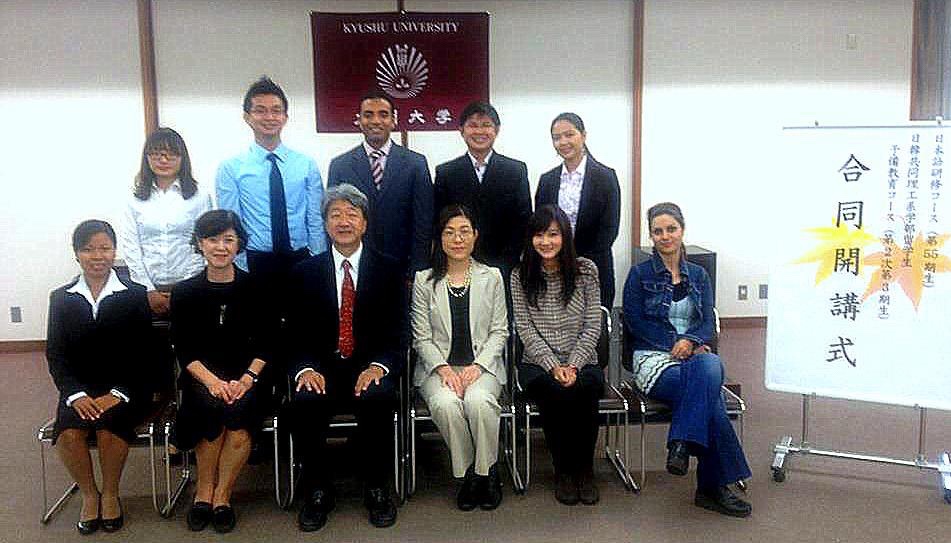
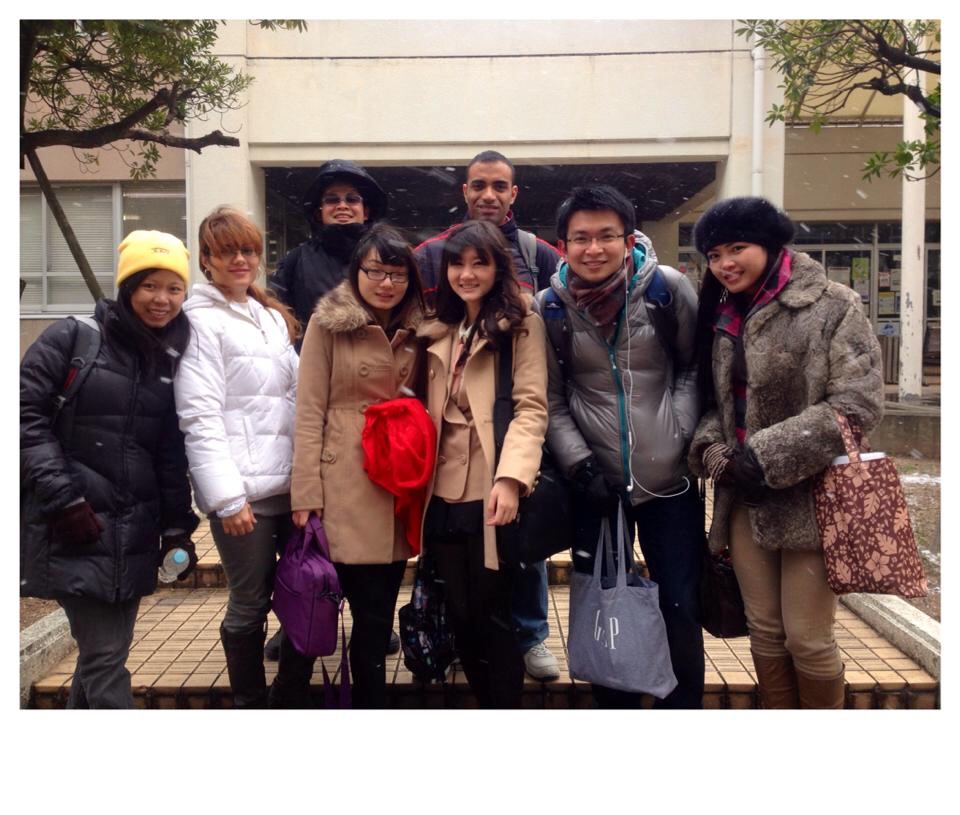
We were eight students in our class. One from each country: Philippines (me), Myanmar, Thailand, Iran, Laos, Egypt, Malaysia, and China.
So, how did I learn Japanese? Let me enumerate the methods below.
1. Memorize hiragana and katakana. These are the basics like the alphabet. Katakana are for foreign/loan words and hiragana are for Japanese words. My university asked me to memorize katakana and hiragana even before coming to Japan. I can’t remember exactly if it was both or just one of the two but I’m sure it was the first task as a student.
2. Increase vocabulary. By mastering hiragana and katakana, I learned to read words and thus increased my vocabulary. In my university, we were taught tons of new words everyday like twenty to thirty words depending on the lesson. We have to master those words because we were given a quiz everyday, five to ten words. And if we make a mistake, we had to write the words several times to fit on a whole sheet of paper. You don’t wanna do that, trust me.
We also learned vocabulary by reading stories and learning the dreaded kanji.
3. Conversation practice. This is the most important part, putting the learned language into practice. In my class, we always have kaiwa no renshu (conversation practice). We were paired with our classmates to do specific conversations and sometimes converse with the teacher. There was a recorded kaiwa test where we had to talk to the teacher and answer her questions. We listened to the record for evaluation.
4. Make a (PowerPoint) presentation. Believe it or not, with very little vocabulary, we were told to make a presentation of our country almost every week. The purpose is to increase vocabulary, share our culture and gain confidence in speaking. We had Japanese tutors who helped us in our Japanese. I remember the first presentation was Watashi no Kuni no Asagohan (My Country’s Breakfast). We also presented about our countries houses, tourist spots and many more. And the final presentation- about our major.
5. Write a diary. Once a week, every Monday, we were asked to submit a diary. This was also very hard in the beginning because of not enough vocabulary and knowledge of the language. But this really helped us learn the language on our own, translating every word and sentences we wanted to say in Japanese. This was when google translate became handy. And the app imiwa? is also very helpful. I highly recommend it. After the teacher checked our composition, we were asked to read it in front of everybody. Oh, I still remember a few times I couldn’t read my own writing. Lol.
6. Watch movies and anime. This was my way to learn Japanese outside of class. Even before coming to Japan, I started watching Japanese movies and anime. A few of my favorites are Sen to Chihiro no Kamikakushi (Spirited Away), Hotaru no Hakka (Grave of the Fireflies), and Hachiko. I watched it in Japanese with English subtitles. I know it’s hard to learn a language this way but I kind of picked up some Japanese words and phrases. I was drowned in tears with the last two movies. My ultimate favorite anime is Chibi Maruko – which I still watch even up to now. I used to watch it everyday. I learned many things from Chibi Maruko- from daily Japanese family life to school life and events and Japanese culture and celebrations. The language used is fairly easy too because the main character is a third grade student.
7. Talk to locals. There’s no better way to learn a language than using it to talk to the natives. You will be surprised how much you will learn naturally by engaging in conversations with the Japanese. I learned a lot talking to my Japanese tutor and my Japanese friends words and phrases I never learned in class. I was advised to have more Japanese friends and spend more time with them than hanging out with fellow foreigners/kababayan where you tend to use English or Filipino/Bisaya.
Japanese Intensive Course
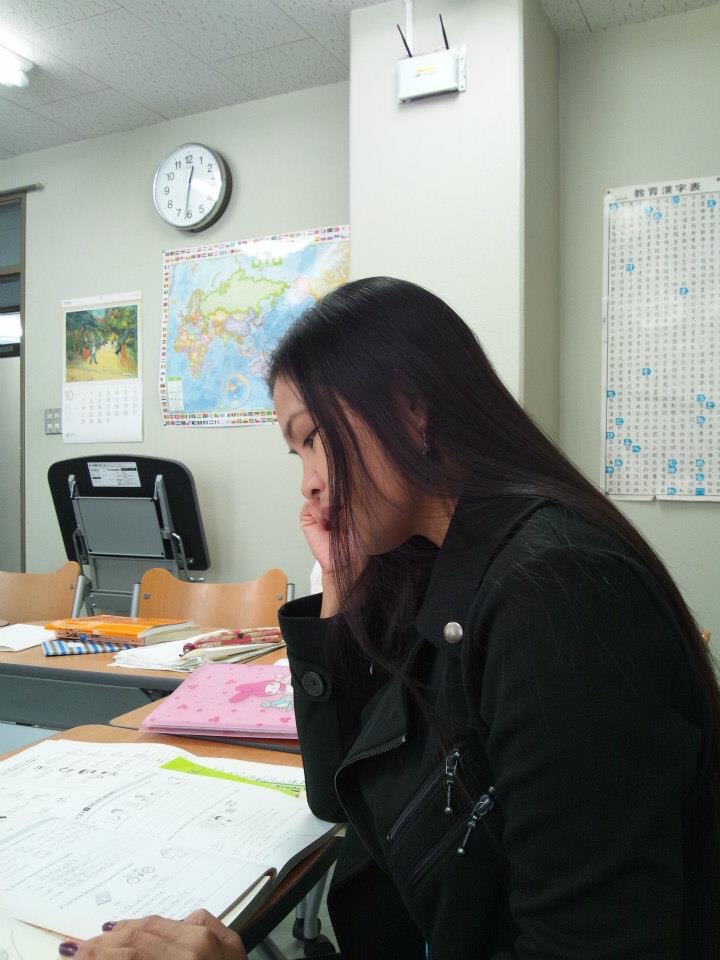
I started learning Japanese officially in late October 2012 and we finished in early February 2013. It was called the Japanese Intensive Course. I salute all my teachers. They were all really good.
During that rough three months, I learned to speak basic conversational Japanese and I was even able to give a (memorized) speech in full Japanese at the podium in front of everyone during the closing ceremony.
Never Enough
But, that was not enough. Japanese is a difficult language to master given that it uses many characters – hiragana, katakana, romaji and kanji, and it has many forms – basic, polite and honorific.
Lifelong Learning
Even after more than seven years I am still trying to learn more. I learn new words by dealing with everyday life – medical terms when I got sick and when I gave birth, construction and real estate terms, bank terms, neighborhood association terms and the list goes on.
It’s like filling a sack with grains everyday. But the sack will never get full but surely the grains will get plenty enough to survive.
There is a huge difference between how the Philippines and Japan celebrate Valentine’s.
What to give/receive
In the Philippines, Valentine’s is more on flowers – roses as the main star. With matching teddy bears and chocolates on the side.And love letters too.
In Japan, it’s mainly chocolate. Not very much on flowers.
Who give
Ladies are feeling princesses on Valentine’s Day in the Philippines because they are showered with love. Boyfriends, husbands and admirers are expected to give something to their girlfriends/wives. Teachers also receive presents from their students. And students are also encouraged to give something like a card to their parents as well.
In Japan, it’s the opposite. Girls give to boys, and ladies to gents. There are three types of chocolate given on Valentine’s Day inJapan:
1. Honmeichoko – for the opposite sex you like/love 2. Girichoko – from the word “giri”, meaning obligatory, like the subordinate to the boss. co-workers, not necessarily “love”, and 3. Tomochoko– from the word “tomo”, meaning friend, given between friends usually between girls.And this is getting more popular than honmeichoko.
The Craze
In the Philippines, you can feel that “love is in the air” in February. Shops, malls, restaurants, schools and offices get decorated with cupids and hearts.
Come Valentine’s Day, red is the color. And many singles want to find “the one” to date or to settle down. Students celebrate by buying flowers and presents for their teachers. Sometimes, classes are canceled to give way to a Valentine Party.
That would never happen in Japan. No disruption of classes because it’s Valentine’s. Not that I know of so far. Valentine’s Day is a somewhat ordinary day.
Many couples go on a dinner date in the Philippines and many proposals happen too. I guess it’s similar in Japan but I just don’t see it or feel it.
In Japan, girls (and their mothers) get really busy on Valentine’s Day (or the day before) making the best homemade chocolate.
If you go to the supermarkets, the first thing you see on displays are arrays of chocolates and baking materials. It’s the season for chocolates. Actually, right after New Year’s, shops change to Valentine’s mood.
Of all these differences, the girls giving chocolate to boys and expressing their affection is one thing that is hard for me to do. It’s not that it’s bad but it’s just something I did not do growing up. I was taught to just wait and never express your feelings to the opposite sex.
You might be surprised and ask yourself this question when you visit Japan for the first time.
Having lived in Japan for many years now, I would like to share my thoughts on this matter. There are many reasons why Japanese people don’t speak English well.
1. Japanese Sense of Nationalism
First of all, I observed that Japanese people are very nationalistic. They love everything about their country and they are very proud to be Japanese. I am sure I am not the only English teacher here who encountered a student who resists learning English and says ‘Why do we have to speak English? We are Japanese!’ or ‘This is Japan! Speak Japanese!’
2. Music Culture
Learning English songs is one way to speak English fast. We learn phrases and new words through the lyrics. It helps us memorize lines and learn pronunciation naturally.
While we in the Philippines are very familiar with English songs and foreign singers as the influence of American music is strong, Japanese have their own strong music trend and popular bands and singers. I was surprised that nobody knew Bruno Mars or his song ‘Count on Me’ among my students, young and adults as well. When I played ‘Always’ by Jon Bon Jovi, it was their first time to hear it. Or maybe my choice of music is just bad. Well, I just played the songs I like and I thought everyone knows it. Well, not in Japan.
The influence of Korean artists, the K-pop groups is stronger than American music in Japan. I remember the phrase ‘Korean invasion ‘ that we used when we went crazy over Korean dramas in the Philippines. I was one of those who watched Jewel in the Palace, Full House, and many other Korean dramas. In Japan, it’s not Korean dramas but K-pop singers. This makes some Japanese especially the younger generation, interested in learning Korean rather than English.
3. Shy Culture
Learning a language is learning a culture. Most Americans and foreigners in general, are assertive and expressive people. They speak their minds and are not afraid to voice their opinions, using language as a tool. On the other hand, most Japanese are rather reserved and shy. They keep their opinions to themselves. They rather follow and listen than question. Very passive. While we were trained to orally participate in class in my elementary and high school years, I observed that it’s not very much the practice in Japan. Teachers mostly dominate the classes thru lecture method and employees seldom raise questions during meetings.
4. Perfect English Concept
“If you can’t speak English right, better not speak at all.” I’ve heard this line many times already. Even in my country. Many Japanese and second language learners are afraid to make grammatical mistakes when using English. Being looked down awaits to those who dare to. “It’s embarrassing.” In this case, many prefer to say nothing. Closed lips. Mum. Sshhh.
5. English is taught mainly in Japanese
Whether it is in elementary, junior high school, senior high school or university level, do not be surprised if one day you observe an English class, fully taught in Japanese. The books are in Japanese, discussions in Japanese, tests are in Japanese, what else is left? Greetings? That, too, is surely in Japanese. “Kirits! Rei! Onengaishimasu.” If there are institutions that use English, it’s very few and it’s not all English. Maybe 70-30, with Japanese as majority.
6. English Teachers Don’t Speak English
Not once, not twice but many times, I encounter a Japanese English teacher who blatantly (sometimes proudly) admit they can’t speak English. Yes. You read it right. I was so surprised the first time I heard it. Of course not all Japanese English teachers are proud non-English speakers. Most of them can actually speak (they studied it in the university ) but won’t. It goes back to the sense of nationalism and the perfect English concept. Why speak English when they are all Japanese and they are in Japan? English Department Teachers meetings are, of course, conducted in….Japanese.
7. The Need to Speak English
In the Philippines, there is a need to learn and speak English. Elementary and high school subjects like Mathematics, Science and English are taught in all English. In the university, all subjects except Filipino are taught in English. If you apply for a job, you have to have good English communication skills to have an edge and land a decent job. Many Filipinos go abroad to work, in which the universal language, which is English, is used.
On the other hand, in Japan, all subjects are taught in Japanese. If they master the Japanese honorific language which is used in the business world, that is sufficient enough. Only recently that companies want employees with English speaking skills. Most Japanese are not interested in working abroad. Not even go visit English speaking countries. Some of my students in a little bit challenging junior high school told me why they don’t like English. They love Japan. They live and work in Japan. They listen to Japanese songs, watch Japanese dramas and movies. Why do they need English? Not even interested in having foreign friends/boyfriends/girlfriends. If there are those who are very interested in English, and have all the reasons to learn the language, only a few.
These are only my opinions and observations based on my own experience in staying and living in Japan for some time now. If you have your own, don’t hesitate to share.
To my Japanese friends and other ESL learners, who wants to speak English, I have some tips for you.
1. Don’t just study but speak it. Just like driving, you have classes to learn the basics, but you will never know how to drive if you don’t get into the car and actually drive it. English (and any language you are learning) is the same. Speak it to learn it.
2. Don’t be afraid to make mistakes. Even the native speakers commit mistakes. Ask yourself: Do I speak my mother language the proper way? Oftentimes no. We don’t. Language is a tool. It is used to communicate. To connect. What’s a small mistake will do but make you learn and become better. It is the mistake that we remember and learn to not make it wrong again.
3. Accept that we are not perfect. If we don’t speak English perfectly, that means we speak another language, not just English. We are bilingual or multilingual. Take pride of that gift.
4. Discover your interest in the foreign culture. Most often than not, the reason why we want to learn a language is our interest to learn the culture. It might be music, food, religion or tourism. Before, I had no interest in learning Spanish but when I discovered we have many similar words, that’s when I got so interested in the language. I also fell in love with Latin telenovelas and music. I love Thalia!!! As for my interest in Japanese, I love how interesting Japanese people are, their discipline, their politeness. And the beauty of Japan never ceases to amaze me.
Speaking a foreign language or not being able to is not what’s the most important point. What matters most is our understanding and openness why some people do speak and some people don’t. No hate. No judgement. Just realities we have to face when we step into a new culture.
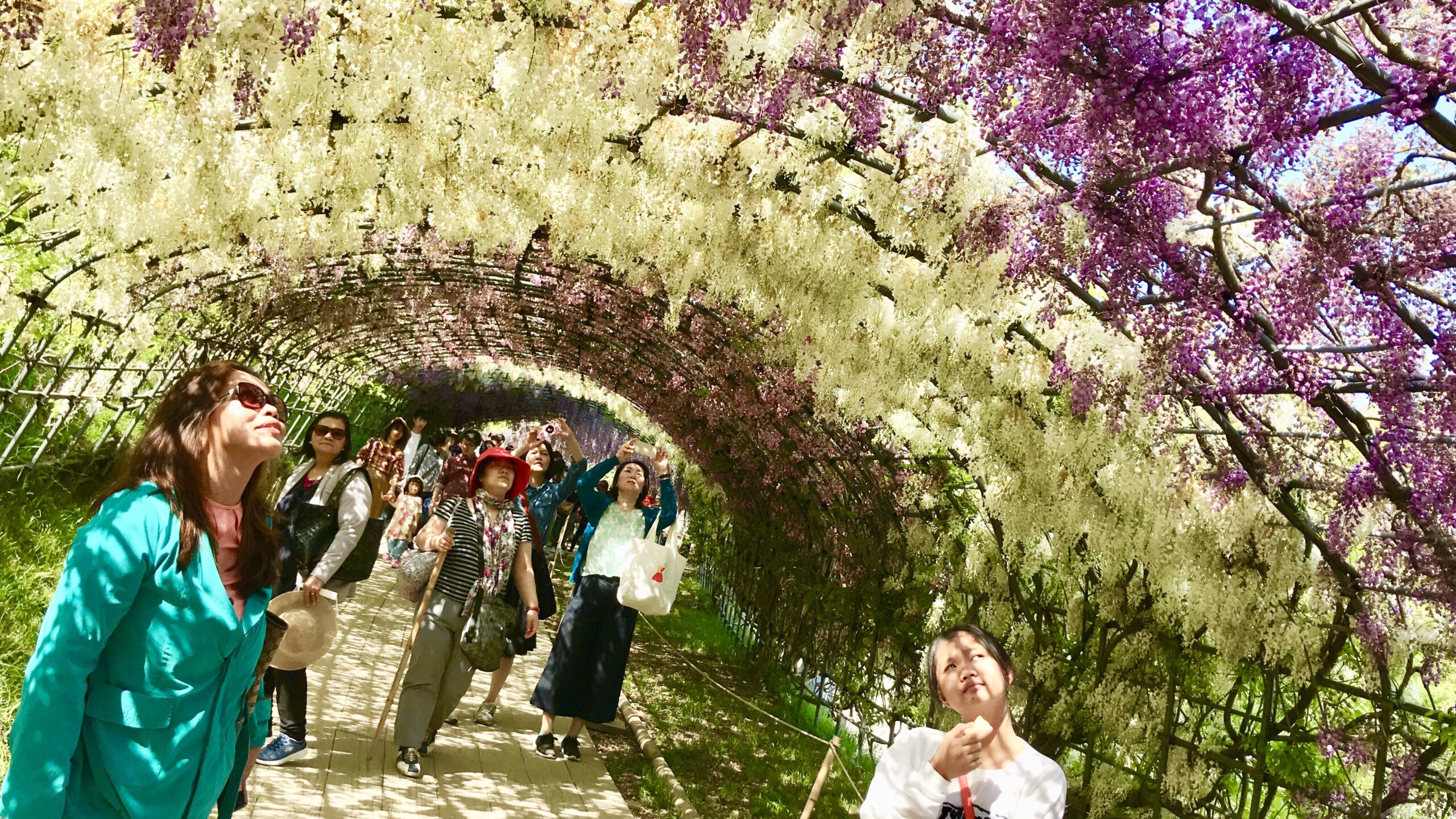
Wisteria Gardens in Kitakyushu, Fukuoka Prefecture, Japan
As a Filipina living in Japan for many years now, I can compare how New Year’s Day is celebrated in both countries. There are few similarities and many differences between Philippines and Japan celebrating New Year’s Day that I would like to share according to my observation and experience.
Decorations and Preparations
In the Philippines, whatever is decorated for Christmas will be carried over for the New Year’s. In fact, the greetings “Merry Christmas and a Happy New Year” is commonly displayed in houses, offices, shops, restaurants and malls.
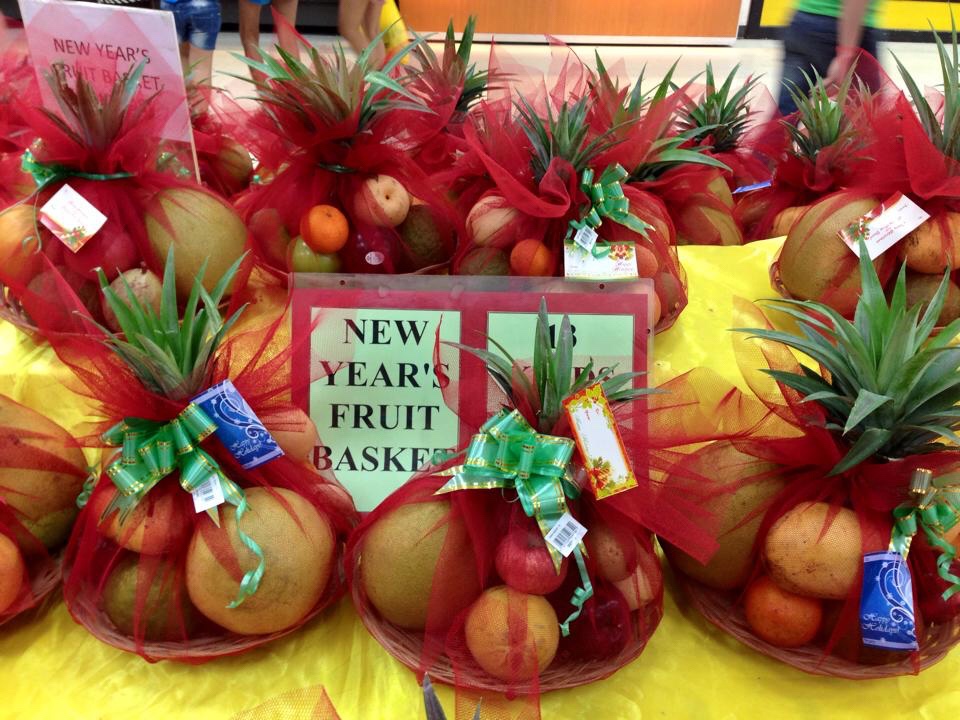
To welcome the year, a tradition of displaying 12, which is recently changed to 13 round fruits – we call the lucky fruits on the dinner table on New Year’s Eve, is practiced in the Philippines. 12 represents each month and 13 represents an extra month which means abundance. Round signifies infinity, no beginning and no end of good luck and good fortune. Round objects are considered lucky so it is common to see people wearing polka dots. Round and sweet foods like leche flan, puto cheese, kalamay are considered lucky.
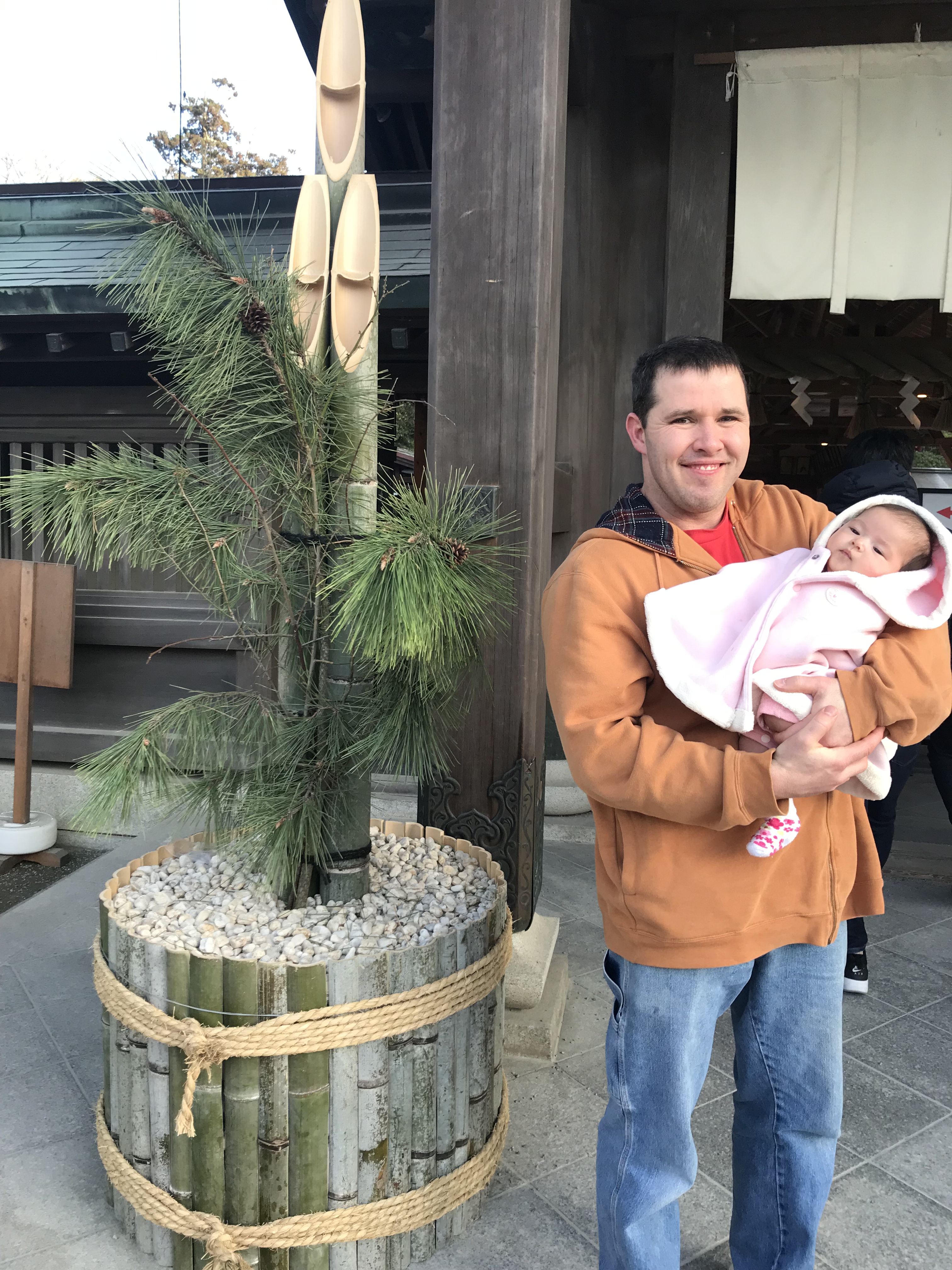
In Japan, New Year’s is the biggest event of the year. Japanese start preparing for the New Year’s by doing a general cleaning which they call osoji. People clean their houses and offices from the main door to the windows, waxing floors , bathroom and everything in between. Shimenawa (sacred straw rope) also called shimekazari and kadomatsu (bamboo and pine decoration) are seen in main doors and gates. Shimenawa are seen in shrines all throughout the year but houses only display these in New Year’s season. There is also kagamimochi (mirror rice cake) and a display of the year’s animal symbol. These decorations are believed to welcome the ancestral spirits and gods to enter the home.
Kadomatsu at Munakata Shrine
Food
In the Philippines, people rush to the market at the break of the dawn on the 31st and expect the supermarket to be flooded with shoppers to prepare for media noche. There is a long list of food prepared for media noche but the regulars are lechon (whole roasted pig), pansit (noodles), lumpia(spring rolls), fried chicken, macaroni salad and spaghetti and of course the lucky fruits. Mostly people prepare food that are either round and sweet and those believed to make the year lucky and abundant.
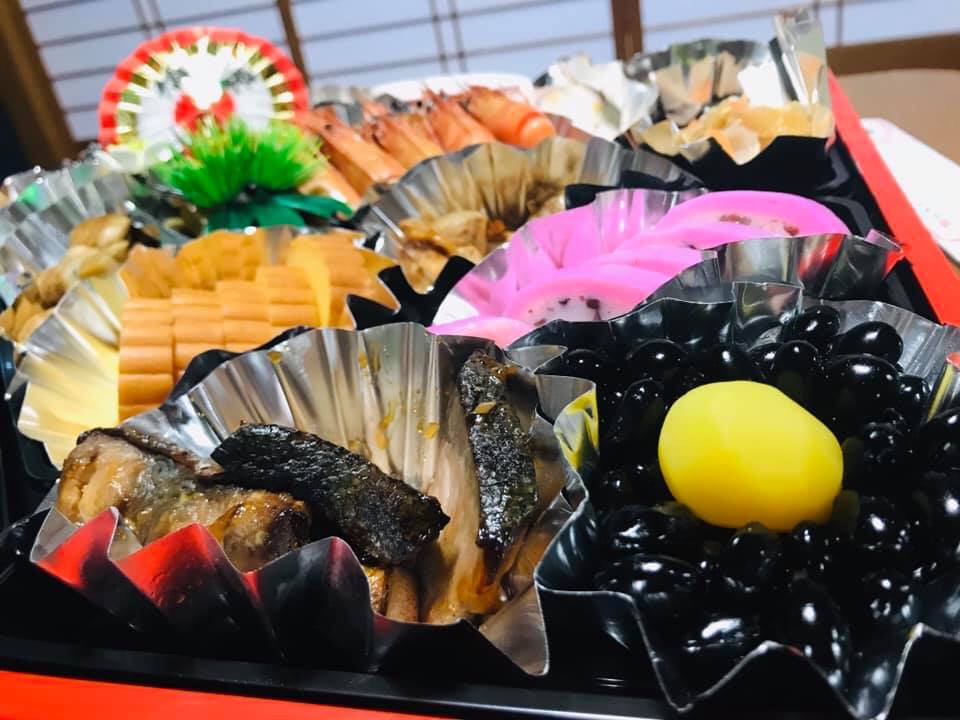
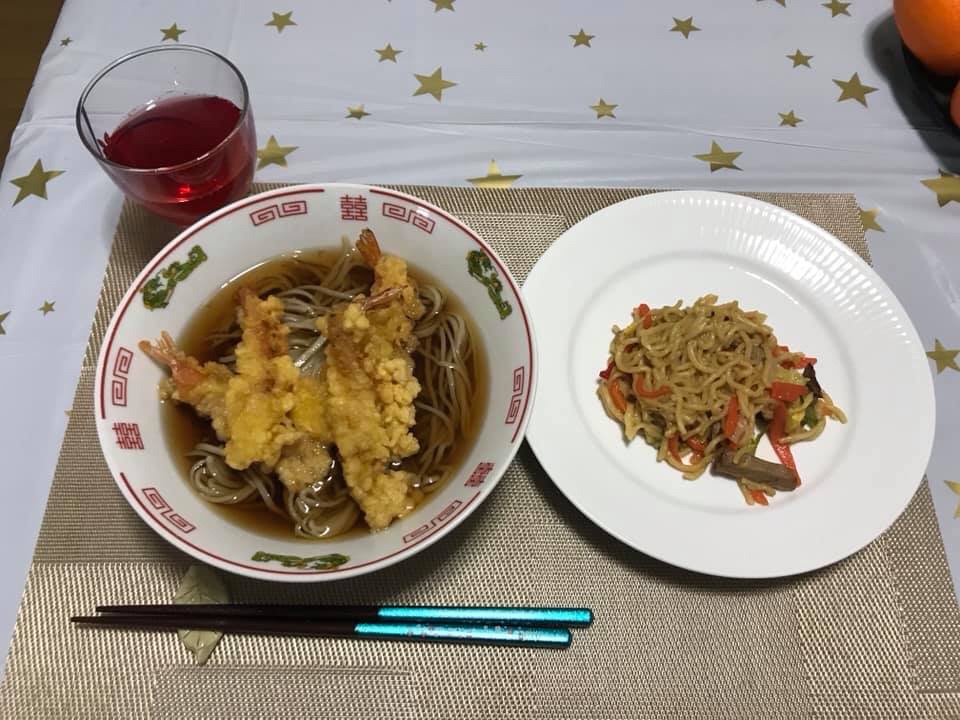
In Japan, there is toshikoshi soba and osechi ryouri. Toshikoshi soba is eaten on New Year’s Eve as a symbol of crossing to a new year. Osechi consists of many different kinds of food in a box. Each food carries a meaning. For example, shrimp means long life as the shrimp is curved like an old person.
Our first osechi ryouri in our house 2018-2019
Toshikoshi soba (Japan) on the left and pansit (Philippines) on the right
New Year’s Eve
It’s hard to keep up with the energy of the Filipinos when it comes to welcoming the new year. The most exciting countdown begins hours before midnight ( three more hours, two more hours, one more hour) and the closer it gets, the higher the energy and the louder the noise. Party starts when darkness hit or even before that. The neighborhood turns into karaoke bar and disco bar with people drinking and dancing on the streets. The ten minutes before 12 and the first ten minutes of January first is the noisiest, loudest, craziest, happiest time of the year. Before the ten-second countdown, people scream of excitement, get ready to jump (for those who wants to get tall), turn on all the lights in the house, turn on the car or motorcycle engine, blow the horns incessantly, get something even the pot cover to make noise. Everyone counts the last ten seconds “10-9-8-7-6-5-4-3-2-1! BOOM! The fireworks, the blowing of horns, the noise of cars and motorbikes, the jumping, the dancing, the shouting “Happy New Year” is endless. You don’t say it once, nor twice, nor three times. You say it to everyone in the house and to the neighbors. People go crazy with New Years. And many goes live on Facebook. It is believed that noise shoo the bad lucks. Some people wear polka dots (rounds objects are lucky), put coins in their pockets and shake them to make noise, and sometimes throw coins for the people to catch (rain of money – paulan ug kwarta). And after the countdown is the feast. Everyone gathers in the dinner table for the medianoche.
This scenario might not be the same in the entire Philippines. I am speaking of my experience and my neighborhood and I am sure many can relate.
I remember the first time my husband spent New Year’s in the Philippines, he couldn’t stand the noise. It was too much for him it gave him headache. He wanted to go somewhere quiet but I told him, it’s the same everywhere we go.
On the contrary, in Japan, New Year’s eve is a very silent night compared to the Philippines. All is calm, all is normal.
Last year I spent New Year’s in our newly-bought house (the reason why we spent New Year’s in Japan). I was kind of disappointed or let’s say frustrated. It was just me, my husband and our daughter (my step daughter). Yes, we had our special dinner. I cooked special menu. But when it was almost 12 o’clock my energy as a Filipino was really high, I was the only one who was very excited to welcome the new year. I turned all the lights in the house, went upstairs and downstairs. I got really excited. But when I looked outside the window nobody was there, it was a very silent night. I was like a burning fire thrown a bucket of water. This is not the Philippines. This is Japan. But I’m not saying Japanese don’t celebrate. They do but in a different way.
Most people in Japan go back to their jikka (実家) or parents’ home to celebrate. On New Year’s Eve, Japanese eat toshikoshi soba and greet each other ‘akemashite omedetou gozaimasu’ (Happy New Year). They don’t normally do countdown at home, but you can go to clubs/bar in the city where the young party people go and party like there’s no tomorrow and welcome the new year. That’s how I spent New Year’s in Japan in 2014. It is a peaceful and simple celebration at home. On the 31st, after doing the general cleaning (osoji) and preparing or buying the special food osechi ryouri , most Japanese families gather and watch NHK’s Kohaku Uta Gassen or commonly called kohaku. This is a TV program where Japanese singers are divided into competing teams of red and white. This finishes shortly before midnight and judges and audiences vote which group perform better.
Some people visit temples and shrines. At the temple, or if you live nearby, you will hear the bell ringing on New Year’s Eve. This is called joyanokane (除夜の鐘). They ring the bell for exactly 108 times at New Year’s Eve which symbolizes 108 human sins in Buddhist belief.
First Day(s) of the Year
It is very common for Filipino families to go swimming on January first or anytime during the first days of the week.
Family Samal Outing 2017
The party and merry making continue. Left-over lechon will turn into lechonpaksiw. There is also a belief that whatever you do on the first day of the year will forecast what will happen for the rest of the year. If you wake up late on January 1, expect that you will always wake up late. If you spend, you will always be spending. If you cry, then your year will be full of tears. In bisaya, we say “malihian“. My mama would say to us to do good things on the first day of the year and we will be lucky the whole year. “Magpalihi ug swerte.” She also told us not to spend a single cent or else money will fly away and we will keep spending the whole year and we will go broke. Lol.
In Japan, it is very famous to watch the first sunrise of the year (hatsuhi/hatsuhinode) and people go to temples or shrines to pray (hatsumode).
[wpvideo JxWGAn34]
The first day of the year is one of the happiest days for children because they get otoshidama, which is money gift from parents and relatives. People flock to the stores for its hatsuuri (first sales) and buy their fukubukuro (lucky bags). These lucky bags are sold for a certain price with random unknown things inside. The total value is more than the sale price.
If you notice – hatsuhi, hatsuhinode, hatsumoude, hatsuuri, all starts with hatsu. It’s because hatsu (初) means first and that is how Japanese values and enjoys the “firsts” of the year.
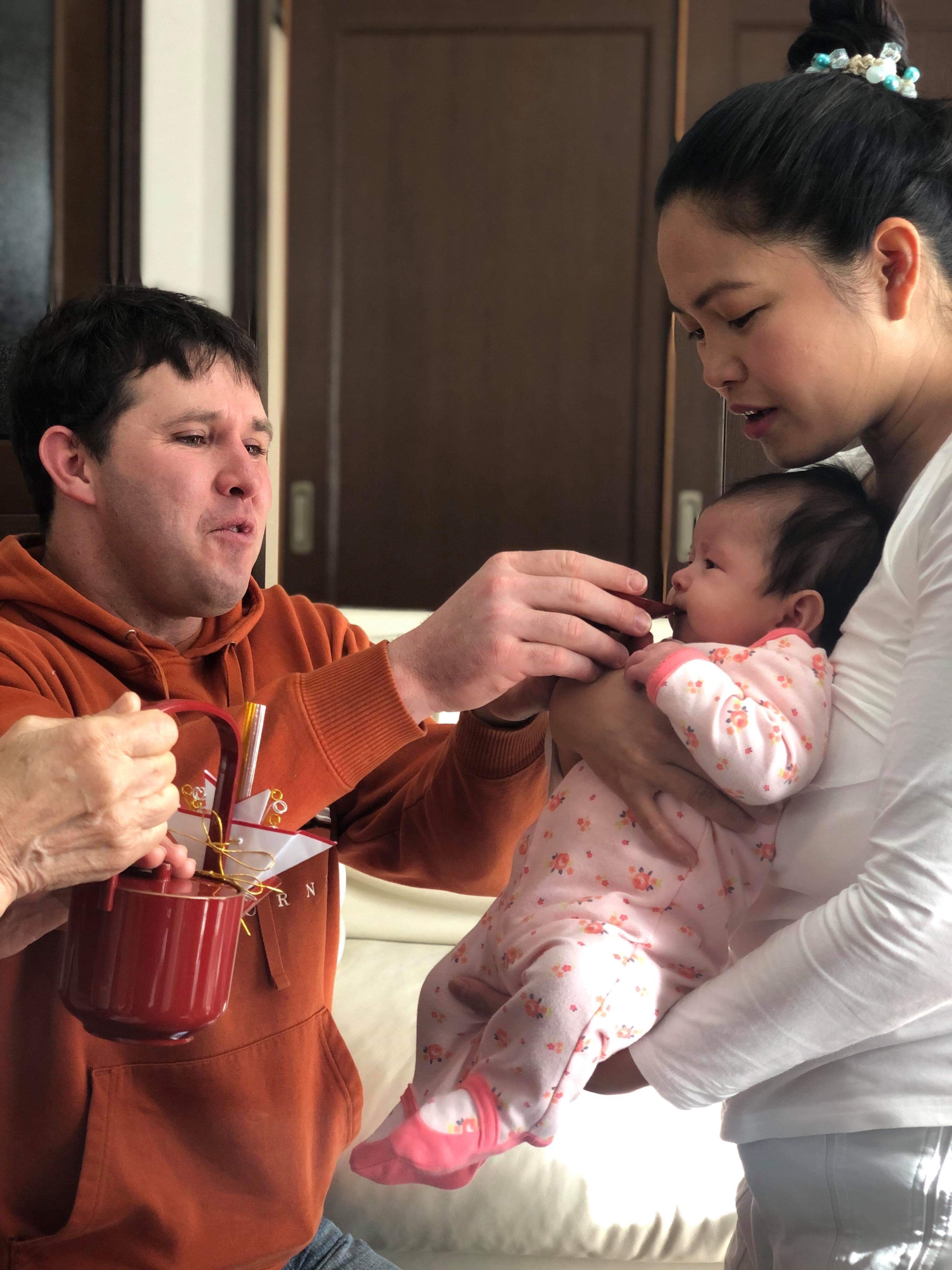
My sister’s Japanese family gather on the first day of the year in the parents’ house and review the year that passed. They also express their aspirations for the new year and they drink otoso (お屠蘇) New Year’s sake. The drinking of otoso starts from the youngest in the family up to the oldest.
Mari ‘s first new year and first otoso
Conclusion
New Year’s is the most celebrated event around the world. It doesn’t matter where you are from or what race you belong. People celebrate New Year’s regardless of religion.
Both Filipinos and Japanese celebrate it. Both value the gathering of families to welcome the new year. It is in the same manner that most go back to their parents’ home to celebrate and do things (although done differently) to attract good fortune for the whole year to come. Filipinos party and make noise to welcome the new year while Japanese enjoy the firsts of the year. Although the food prepared is entirely different, they share the idea of good luck, hope for good health and longevity.
If you ask me which celebration I prefer, I am sure I will have a hard time answering your question. It is hard for me to choose. Of course, there is no place like home. I like to celebrate this event with my family, with the merriment, with parties left and right, with the noise of excitement and bliss. But I also like the simplicity, the practicality, and the idea of enjoying the firsts of the year.
If you have reached this part, thank you for your time reading this article. I hope you enjoyed it and learned something from it and I hope you enjoyed your New Year’s celebration where ever in the world you are from.
I have been living in Japan for almost seven years already (I will be seven years exactly on September 24th.)
With that span of time, I have invited my family to visit Japan three times already.
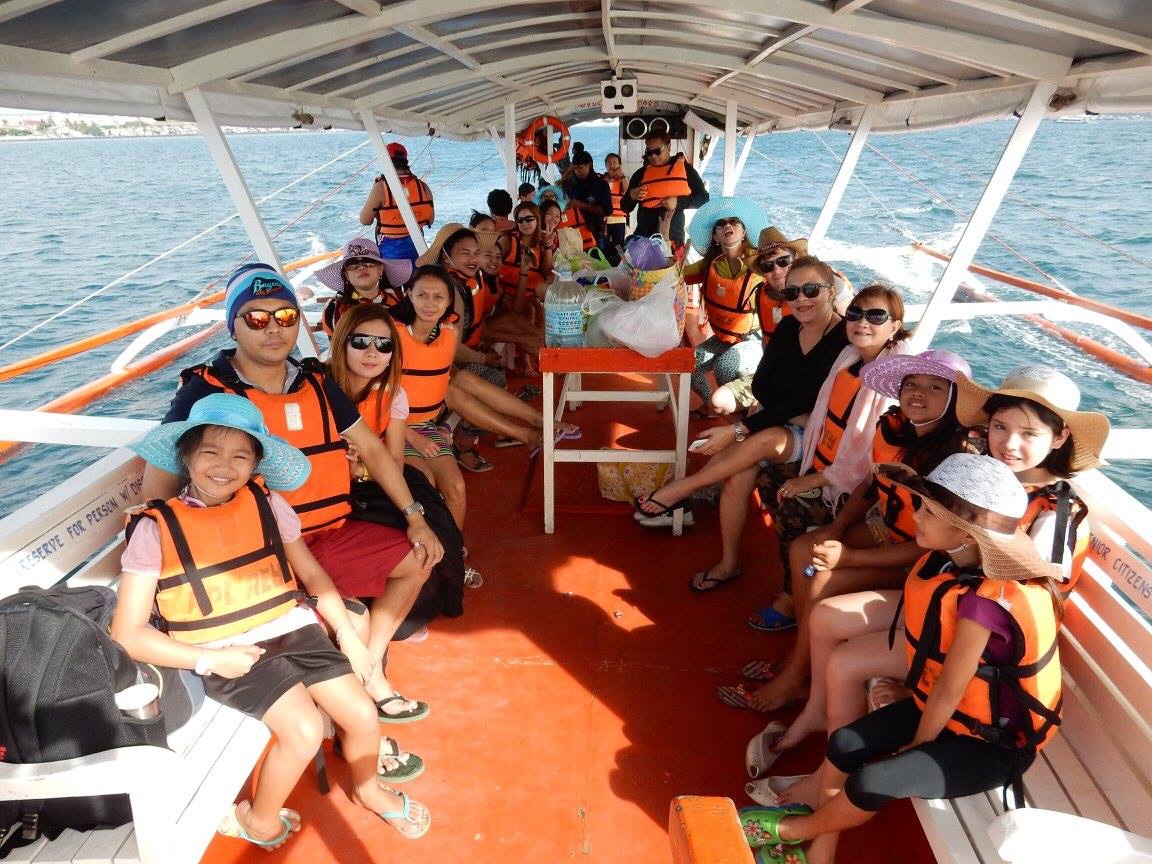
The first time was in the spring of 2017. I invited four family members – my mother, two sisters (eldest and youngest), and my sister-in-law.
The second time was this year`s spring. I invited four family members again this time – my mother, my sister (second eldest), my youngest brother and his daughter, my niece.
The third time was two months ago. Only my mother and my youngest sister came at this time.
Few friends, both Filipino and Japanese, asked me how I did the invitation process.
So, in this article, I will give you the details of how I invited my family to Japan in the hope that it will help somebody planning to do the same.
First of all, you have to have savings and a job here to be able to show that you are capable to be a guarantor. In my first year of work here, when I had an instructor’s visa, I invited my sister but the application was denied because the agency said my savings were not enough. I don’t know if that is still the policy now, but that was what happened with me five years ago.
Three years later since my arrival in Japan, my visa was changed from Instructor’s Visa to Spouse of a Permanent Resident because as the word ‘spouse’ means, I got married to a Permanent Resident.
I don’t think your visa status is important to be able to invite but it helps. Whether you are a student, working visa, or spouse, you can still invite as long as you fulfill the requirements.
I wasn’t really planning to invite my family to Japan anymore, but the promo of Cebu Pacific (Piso Fare) got me thinking. I was in the US in July of 2016 when I found out the airline promo and right there and then booked their travel ticket for spring 2017. I got a very good deal for four people round trip. Imagine, P1 fare! I can`t remember anymore how much I paid exactly for four people but it was very cheap. I only paid the taxes and fuel surcharge etc.
At the back of my head, I thought if their visa will not be approved, it would not hurt that much to lose the money I used to purchase the travel ticket because it was just a promo fare but at least I tried.
But I was optimistic they will get approved. I`m not gonna waste this chance.
Next, I went to uncle Google to check the requirements for visiting Japan.
For the information of non-Filipino readers, yes, we Filipinos need to get a visa to most countries to be able to travel.
It did not take me long to arrive on this website: https://www.mofa.go.jp/j_info/visit/visa/index.html
That`s the website of the Ministry of Foreign Affairs of Japan. There you can check everything about visa and coming to Japan.
To make it easier for you, I copied here the necessary documents to be prepared for visiting relatives:
(Provided by visa applicant) ① Valid Passport ② Visa application Form ③ 1 Photo(Passport Size) ④ Birth certificate (Note1) Including the birth certificate that can attest that the relationship of the applicant to the Japanese relatives is within the third degree. [Examples] when a spouse of Philippine nationality residing in Japan invites her younger brother, 2 certificates – the younger brother’s (applicant) and spouse’s one- are required. ⑤ Marriage certificate (if married) ⑥ Proof of sufficient funds to defray all the expenses while in Japan ・A certificate of income or tax payment issued by a public agency ・Certificate of deposit balance
(Provided from Japan) ⑦ Invitation Letter ⑧ Documents explaining the reason for invitation (copies of medical checkup,maternal health log, etc.) ⑨ Family register ’Kosekitohon’ (when the inviting person or his/her spouse is Japanese) ⑩ Itinerary during stay in Japan ⑪ A certificate of residence ‘Jyuminhyo’ (with description of his/ her family relationship with all family members) (Note) When the guarantor is a foreign national, submit a photocopy of the both sides of the valid Residence card , a Certificate of residence with full details except for Individual Number(“My Number”) and Resident Record Code, and a photo copy of his/her passport(including the pages of status items,the record of entry/departure, and of residence permit)
(Please submit the following documents if the guarantor pays a part or all of the travel expenses) ⑫ Letter of guarantee ⑬ More than one of the following documents pertaining to the guarantor: (a) The latest Certificate of Income / Taxation issued by the head of administration of the place of residence, or a certificate of tax payment (Form 2) issued by the director of the tax office (Note1) Each certificate should indicate the gross income for the previous year. (Note2)Statement of Tax Withholding is not acceptable. (b)A copy of the counterfoil of final tax return with the seal of reception of the Tax Office. (e-Tax: please submit Receipt Notification and Final Tax Return) (c)A certificate of deposit balance
You can download the forms on the website I mentioned above.
And for further details, you can check this link: https://www.mofa.go.jp/files/000121323.pdf
They have included necessary forms in that link as well.
Take note that for visiting visa, you have to submit these documents through accredited agencies. The list of accredited agencies are also in the link.
In my case, my family submitted the documents to Discovery Agency, Inc., Davao Branch (address: Door 109G/ F Court View Inn Bldg., Quimpo Blvd. Cor. Sandawa Road, Davao City, telephone numbers: 082-285-7188, 082-284-4114, 082-321-1315, 0915-326-0111(GLOBE), 0920-210-4677(SMART), 0923-423-2207(SUN)
After about two weeks of submission, my family was notified about the result. The agency asked them to pay P2,500 for each visa. And that was it. They got their passports with a Japanese visa in it.
Next, I asked them to get travel insurance thru Pacific Cross. It is not the best but it is better than nothing.
Inviting a family to visit Japan seems complicated at first but as long as you communicate with the travel agency, they will help you comply with everything so you can get your visa approved.
If this information is too much for you, I advise you go direct to the travel agency nearest you or just give them a call and I am pretty sure they will assist you all the way.
Good luck to you and may you enjoy having your family in Japan.