Category: ALT Life

  • 11 Common Questions Students Ask the ALT

    11 Common Questions Students Ask the ALT

    In Japan, being the only foreigner in school, an ALT (Assistant Language Teacher) gets the attention other regular teachers normally don’t.

    In the beginning of the school year when you do your self-introduction, during lunch time or when junior high school students practice their English, many questions are raised to the ALT.

    Here are some very common questions I encountered as an ALT for six years:

    1. Why did you come to Japan? Students are curios why a foreigner is in their country. Although some students are just influenced or just copy the question from a famous TV show (You wa nanishini Nippon e).

    2. Do you like Japan? To which you always ( I suggest) answer Yes, I do. I like Japan. Imagine if you say no. Lol. Like, why are you even here?

    3. What Japanese food do you like? To which most students expect you to say I like sushi. And if you do, you’ll make their day. Especially the elementary students.

    4. Do you like sushi? Just to confirm if you really do like sushi. Make the students happy-say Yes.

    5. Which do you like better, your country or Japan? This is one of the difficult questions smart and curious students ask. I usually say I like both. Which is true. They’d love it if you provide reasons for your answer.

    6. What things surprised you when you came to Japan? Another surprising question usually asked by junior high school students. Be prepared.

    7. Can you speak Japanese? If you say yes, they might just just speak to you in Japanese. Why bother when you understand their language anyway. I never said no so I don’t know their response. I always say “A little” with the hand gesture and they always want a proof. They giggle when they hear you speak Japanese.

    8. What is your favorite place in Japan? Most Japanese are proud of their country and they want to hear from you what place/s in Japan are indeed beautiful and worth visiting.

    9. What are famous places in your country? Some students are also very interested in foreign cultures that they want to know your country.

    10. What color do you like? And everything under the sun. Just replace the word color and be ready to answer. This is one of the elementary students’ favorite question.

    11. Do you have a boyfriend/girlfriend? This is the junior high school students’ favorite question. They always wanna know. They get more interested when you say yes. And if you say no, they might be disappointed.

    Are you an ALT? What other questions have you encountered from your students?

  • Rainy Season English Bulletin Board

    Rainy Season English Bulletin Board

    It is September already. I know. Rainy season in Japan is around late May to June. But a co-teacher told me that there are two rainy seasons in Japan. The first one I mentioned and this month, September. In fact, today, as I am writing, it is raining. And also this season is typhoon season. We just had typhoon number 21, typhoon Jebi, the strongest typhoon ever.

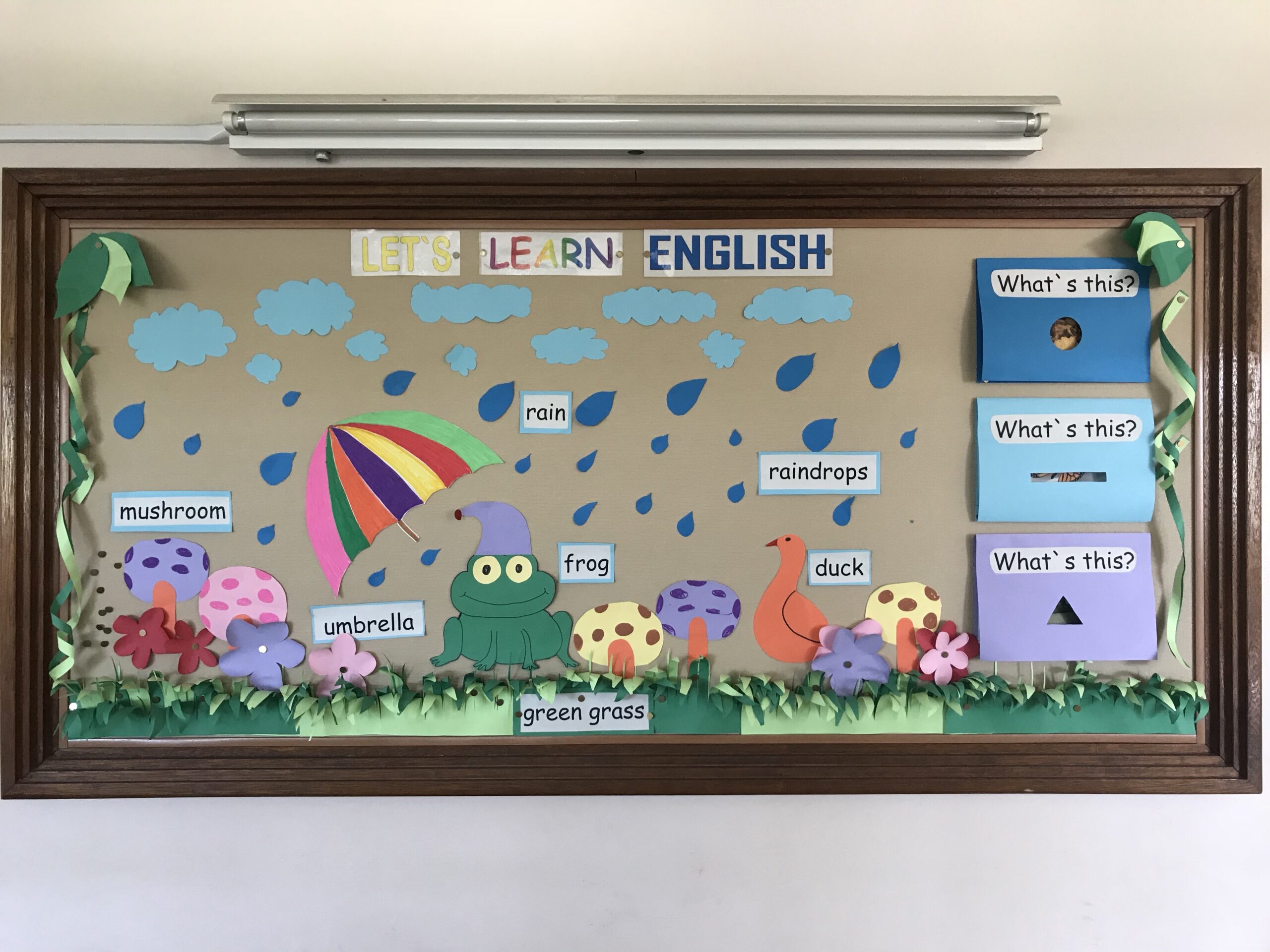
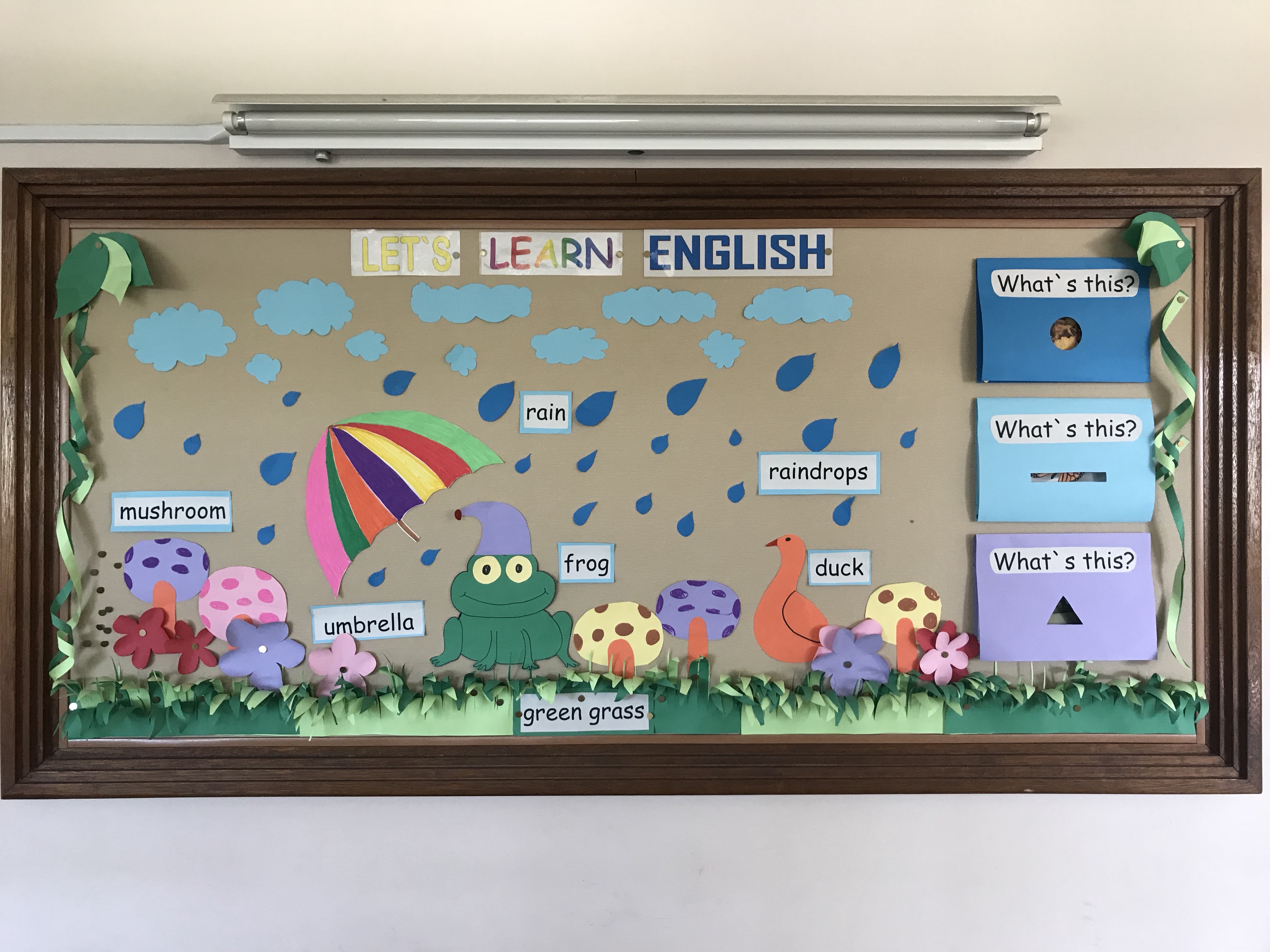
    This is not about the typhoon as you can see in the title. I am showing you my English Bulletin Board in one of my elementary schools.

    I just cut-out light blue thick art paper to form clouds and blue for raindrops. It became the background of the board. I put random things related to rainy season. A frog cut-out, a duck. My favorite part is the colorful umbrella. It serves as the center of attraction. It adds life to the gloomy atmosphere of rainy season.  I reused the flower cut outs from the previous  month display which is spring. I added colorful mushrooms just to add colors and fun. To make it more English related, I labeled all the words for the students to see or read if they can.  On the right side I lined-up a flip-type “What`s this?” I cut-out shapes in the front cover just enough to make a peek of what is inside.

    That`s basically all.

    Oh, before I forget, the border leaves and grasses are also reused from the spring bulletin board.

    Here it is. Take a look. I hope this can help those who are trying to make their English Board and if you think you are better than me or have better ideas, you are very welcome to give advise.

  • School Lunch in Japan

    School Lunch in Japan

    School lunch in Japan is such a very organized system. It is either prepared in the school by the school lunch teachers and the school nutritionist or in some area, in a school lunch center serving a group of schools.

    The school nutritionist makes the menu for the whole month and distribute it to each teachers in the school one month in advance. The teachers post the menu in the bulletin board for everyone to see. That means to say, students already know what they are going to eat on a specific day the following month.

    The school lunch teachers prepare and cook food every day and make sure that everything is complete in each lunch wagon according to the number of classes and  students including the teachers as well as volunteer teachers. About 30 minutes before lunch time, lunch wagons are ready for pick-up in the pantry and the nutritionist take the food sample to the school principal for evaluation. The school principal will be the very first person in the school to try the food and her comment and evaluation is necessary. Students with food allergies are noted and given special menu.

    What do students do during school lunch? Let us discuss them into three categories: 1) preparation time, 2) eating time, and 3) clean-up time.

    1. Preparation time.

    Each classroom has `kyushoku toban` or lunch committee who`s assigned to prepare lunch. The first thing they do is wash their hands and wear their white apron, hair mask and face mask. Then, they go to the pantry  to pick up their lunch wagon. When they come back to their classroom, each one of them do their assigned tasks. There would be one or two students who would wipe the tables, some serve rice, main dish, side dish, and soup. Another student would distribute milk and straw. This system (slightly) changes between classrooms depending on the management of each individual teacher. Some teachers use a timer and measure how fast the students can finish the preparation. Some teachers would assign student leaders who call out which group of students can go line up and fill their lunch trays.

    2. Eating time.

    One good thing about school lunch is that students are trained to be patient to wait for everyone to have their lunch trays ready. No complain about being hungry or whatever. When everyone is ready, the student leaders (they call`​nichoku)would go in front and lead everyone to say `Itadakimasu`. But, no, it`s not eating time yet for everyone. Those who think they’re serving is too much for them can do `herasu` (to reduce) and take a portion back into the food containers. This should be done before eating and never after touching your food. The students can only reduce the amount of food and never allowed to be picky and say no and put everything back into the food containers. Everyone has to eat what is being served unless they have food allergies. After the `herasu` is the `fuyasu` (to add). Students who want more servings can go line up and get more food.

    The most exciting part is when they have “nokori” (excess food). Everyone who wants to get more will do ‘janken‘ (rock, scissors, paper) and the winners who are lucky can get more servings. The most famous is the ‘gyunyuu janken‘. Gyunyuu means milk and kids go crazy to win it.

    School Lunch Broadcasting Committee

    During eating time, the ‘kyuushoku iinkai” (school lunch committee) goes to the broadcasting room and do the daily broadcast about the day’s menu. They will broadcast the name of the menu, the ingredients and the nutrition they can get from each ingredient. They do it every single day.

    Back in the classrooms, while eating and chatting and suddenly you hear the student leader says “Mogumogu taym desu“, that means everyone has to stop talking and concentrate on eating. Timer is set and everyone should finish their food when the time is up.

    3. Clean-up time

    When all the food is served, the classroom lunch committee will have the trays ready for clean-up. Everything on one’s plate should be consumed. Not a single grain of rice or a drop of milk should be left. Everything is cleaned like it’s washed. Before putting the utensils and tray back to the wagon, each student should get the approval of the teacher or in some classrooms, their seat mates/group-mates wether their trays are clean and there’s no left-over.

    The classroom lunch committee together with the teacher adviser then push the wagon back to return to the pantry.

    (Those slow eaters will have to finish their food and return their own trays to the pantry by themselves.)

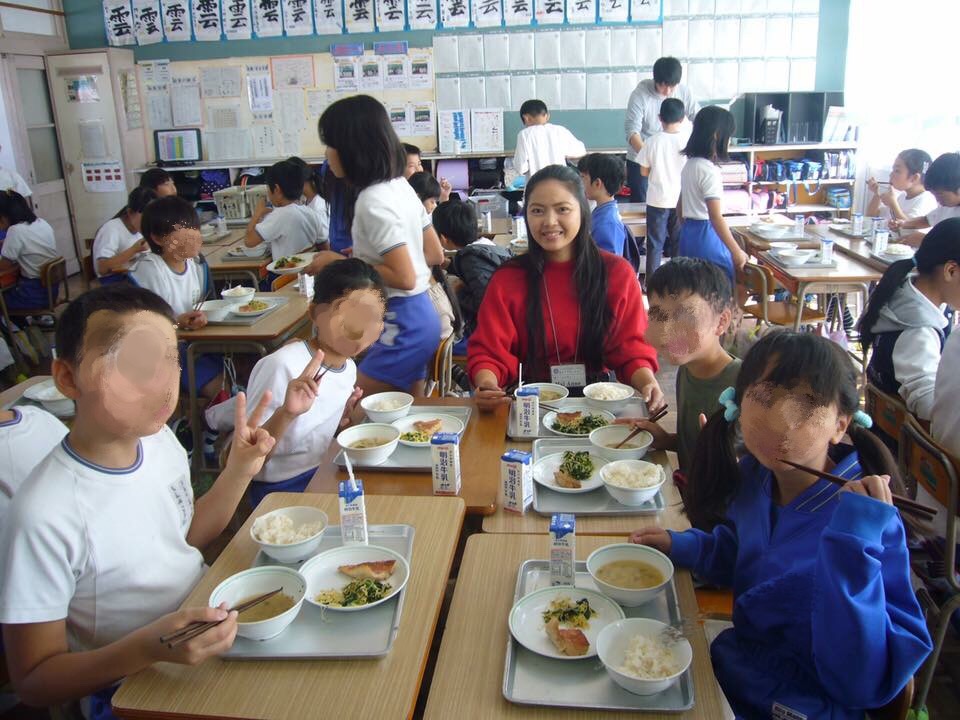
    Lunch with students
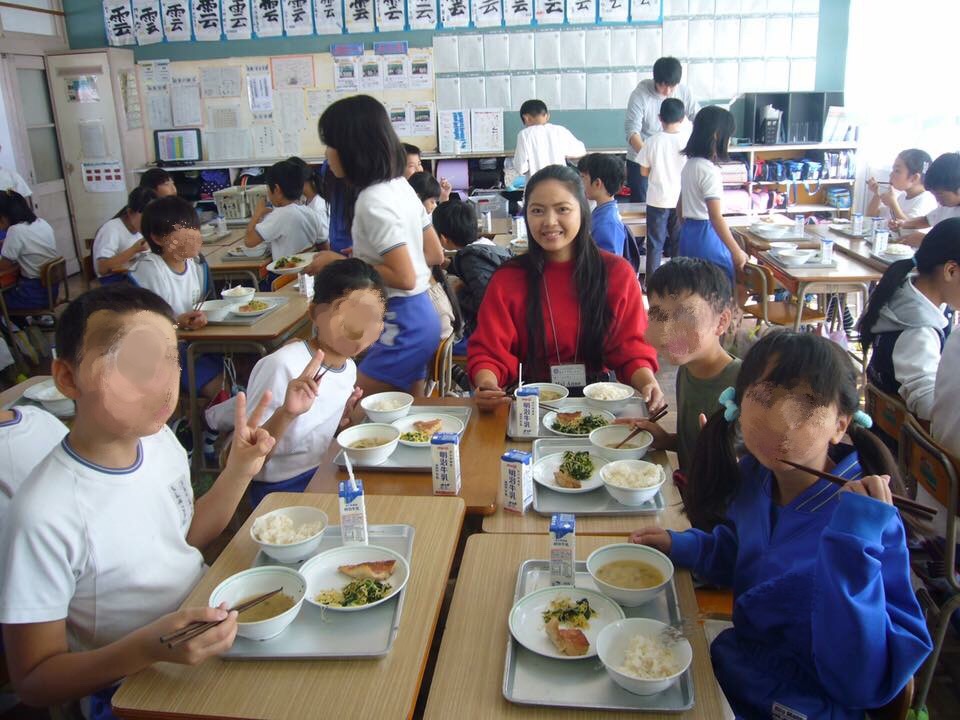
    I have experienced Japanese school lunch from working as an ALT for many years and I can say that this school lunch system is very crucial not only for the Japanese children’s physical development but also for there social and moral development as well. This serves as a very good training ground instilling in the children a deep sense of responsibility, teamwork, fairness and equality. Children are taught the importance of nutrition and having a balance diet. This awareness, I think, is one factor why Japanese people live the longest in the world.

    Menu

    A typical school lunch menu consists of rice, main dish, side dish, soup (usually miso soup) and milk. Once a week, they serve bread instead of rice. Water is not served in school lunch and I have never seen a student or teacher drink water after lunch. They drink tea (ocha).

    Below are photos of my school’s lunch menu in the month of October.

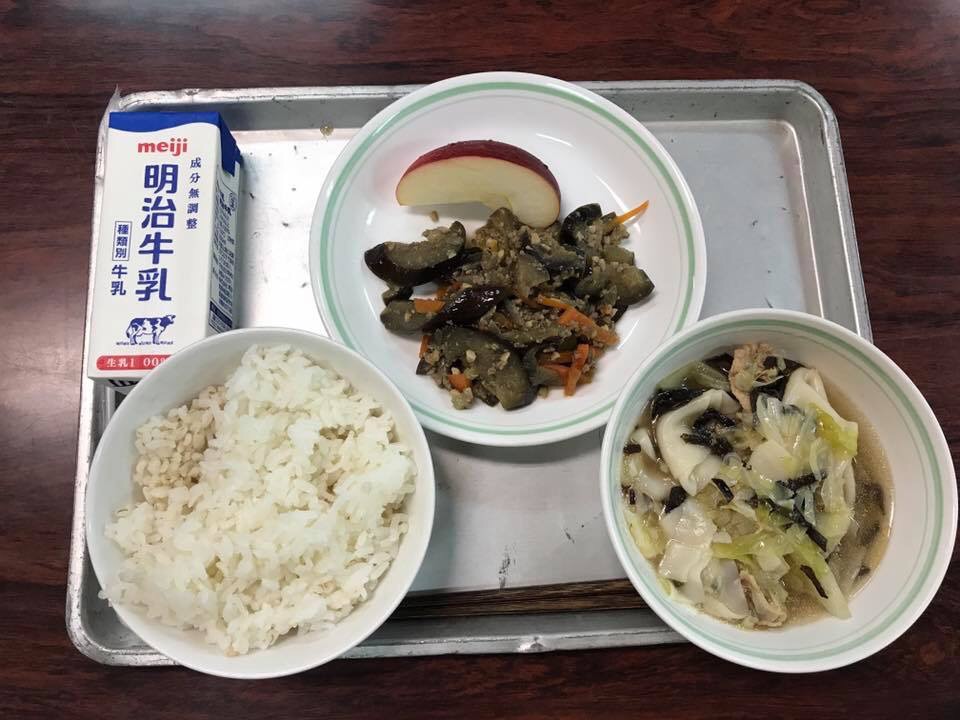
    Monday, October 2, 2017 (barley rice, stir-fried eggplant, won-ton soup, apple, milk)
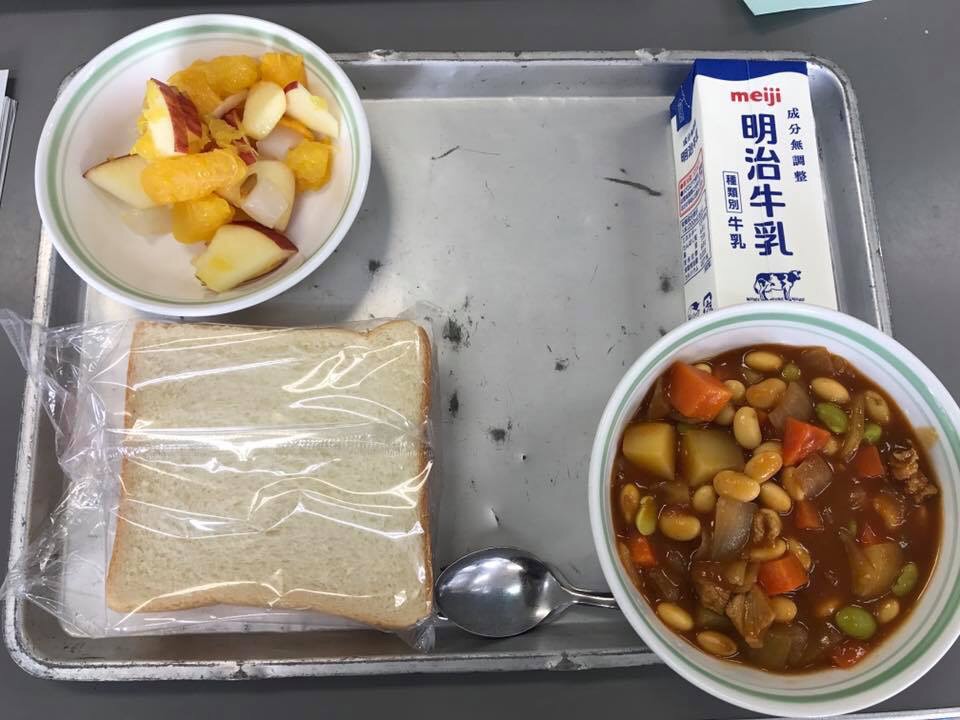
    Tuesday, October 3, 2017 (plain bread, pork and beans, assorted fruits, milk)
    Wednesday, October 4, 2017 (rice, chicken sukiyaki, komatsunanokurumiae, handmade tsukudani, lucky mooncake, milk)
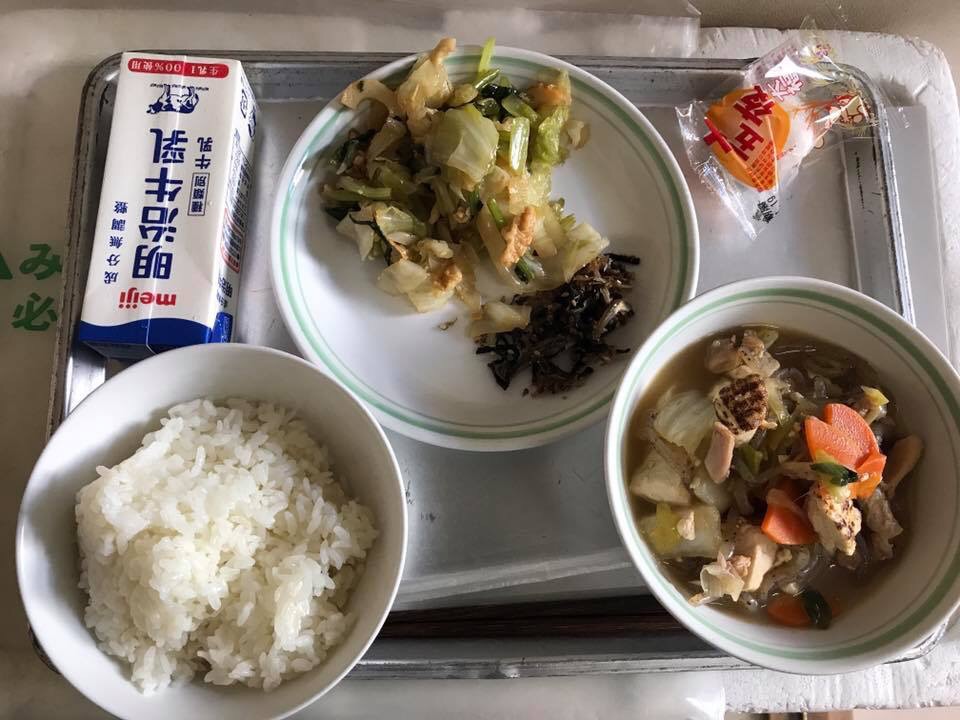
    Thursday, October 5, 2017 (barley rice, fried chikuwa (tube-shaped fish paste), radish salad, pork soup, milk)
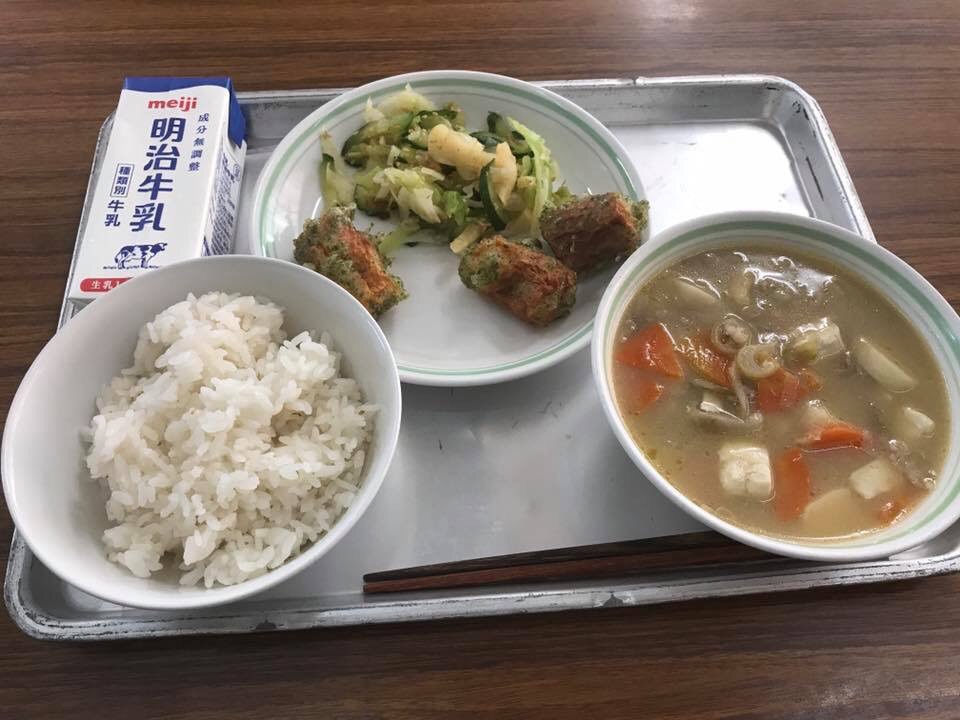
    Friday, October 6, 2017 (rice, sweet potato dish, seaweed salad, orange, milk)
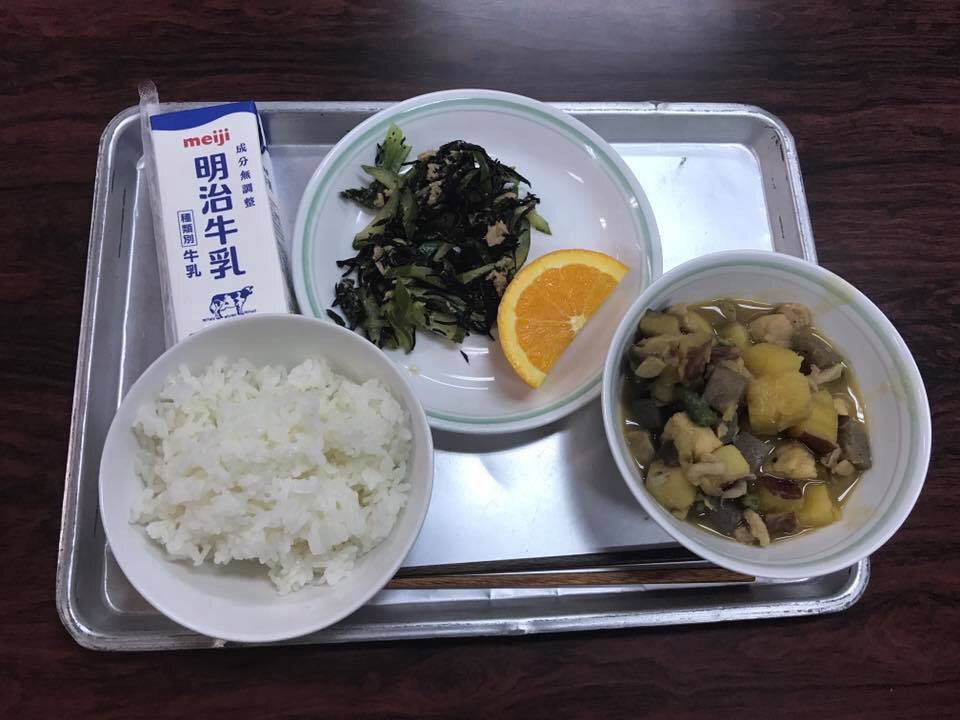
    Tuesday, October 10, 2017 (plain bread, spinach omelette, potato salad, minestrone, blueberry jelly, milk)
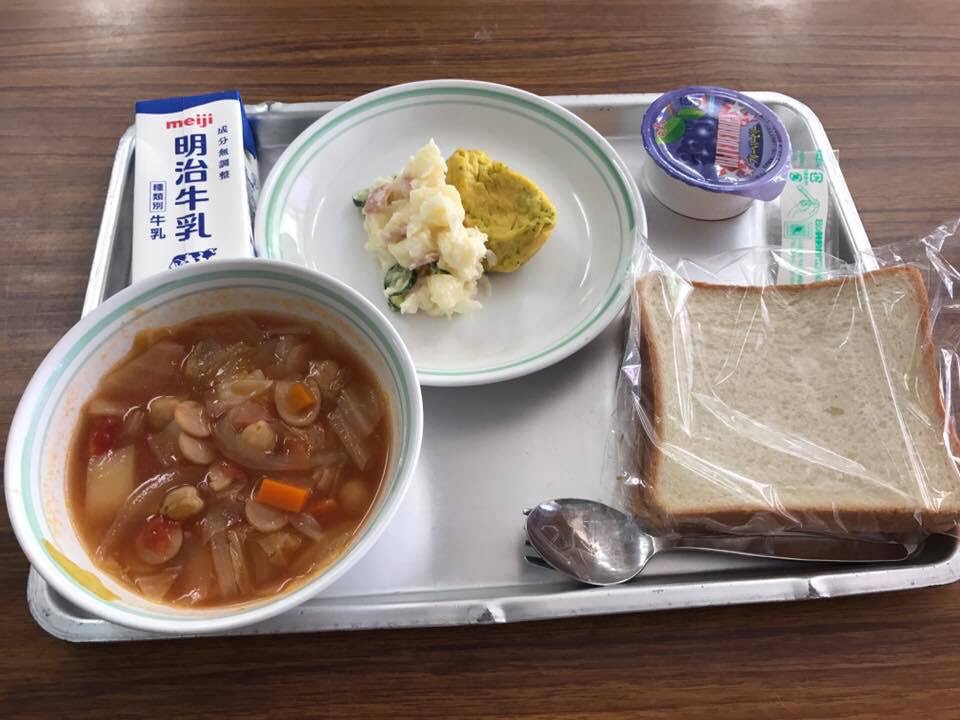
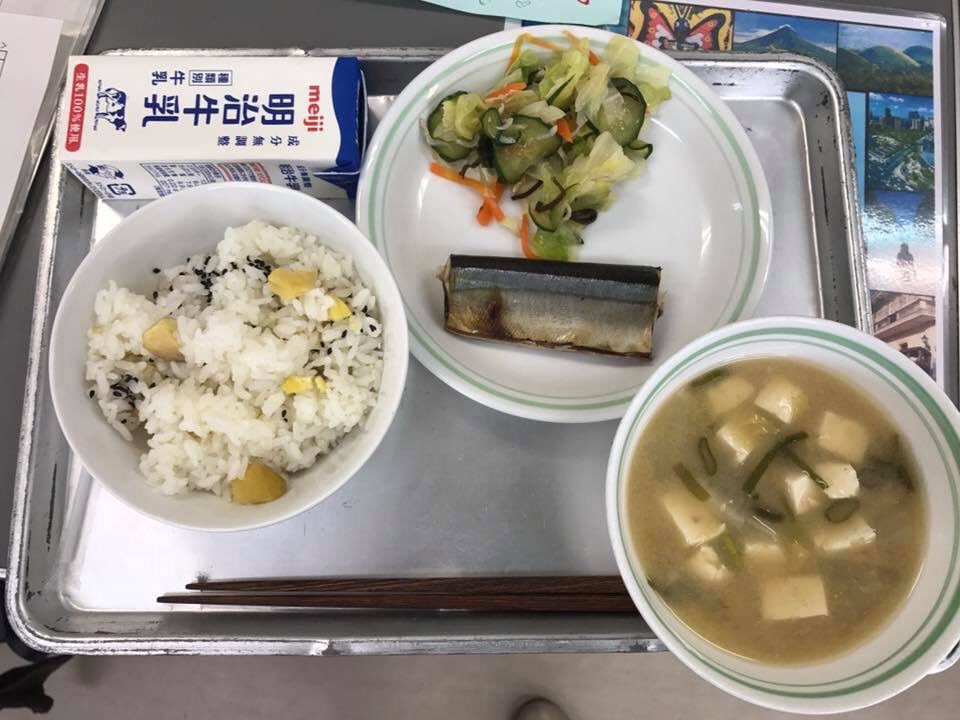
    Wednesday, October 11, 2017 (chestnut rice, salt-grilled saury, pickles, miso soup, milk)
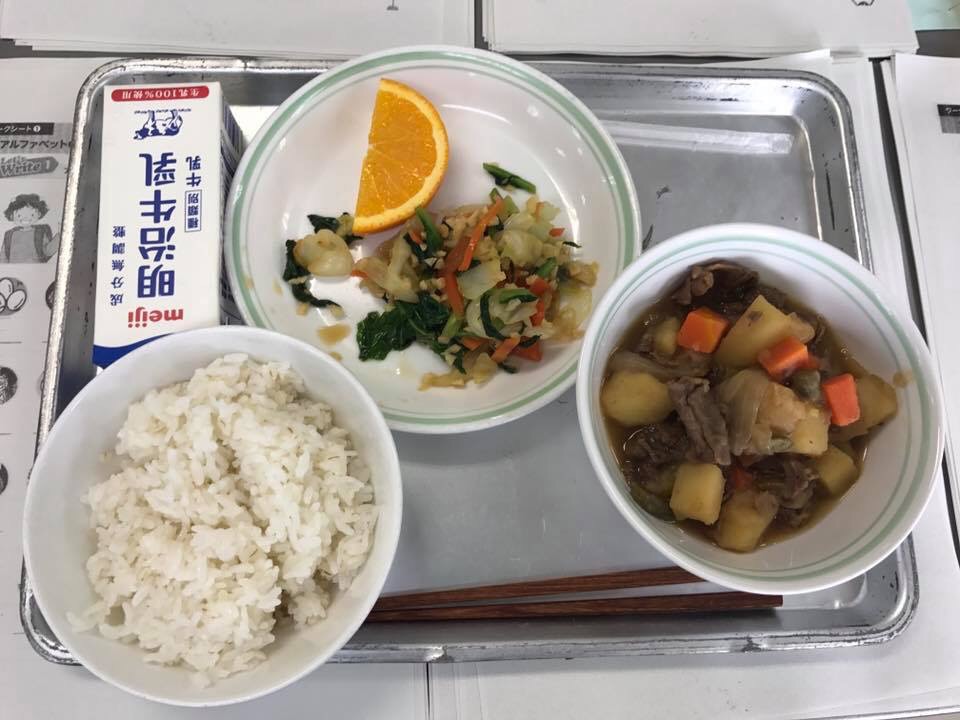
    Thursday, October 12, 2017 (barley rice, meat and potatoes, vegetable and almond salad, orange, milk)
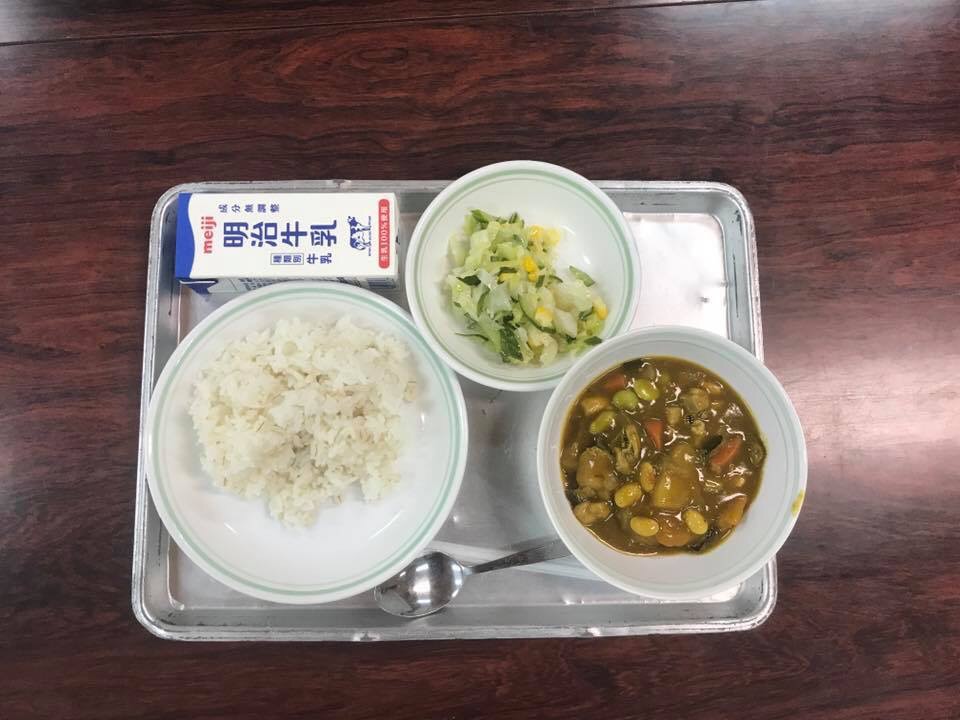
    Friday, October 13, 2017 (curry and rice, coleslaw salad, milk)
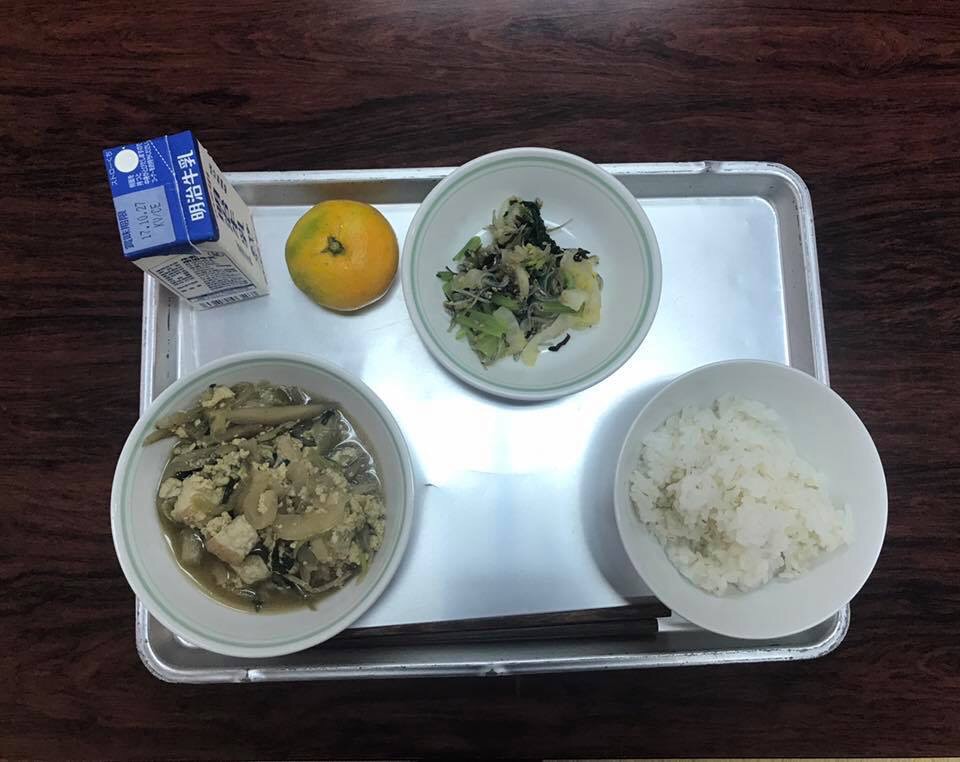
    Monday, October 16, 2017 (barley rice, chicken and egg dish, komatsuna salad, orange, milk)
    Tuesday, October 17, 2017 (carrot bread, chicken and kashiwa stew, kaisou salad, milk)
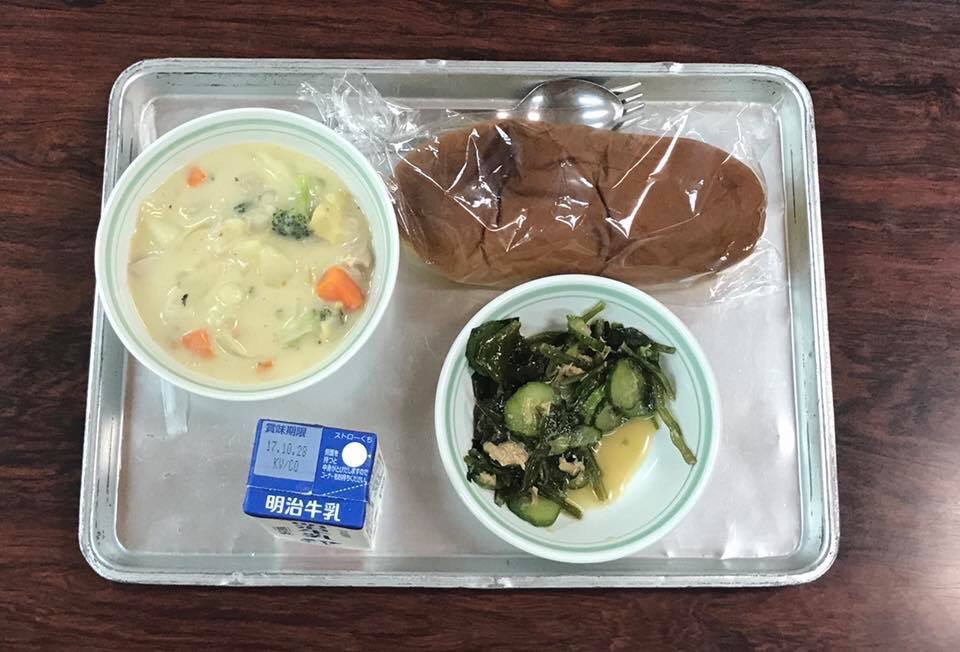
    Wednesday, October 18, 2017 (rice, grilled shishamo (capelin), persimmon salad, miso soup, milk)
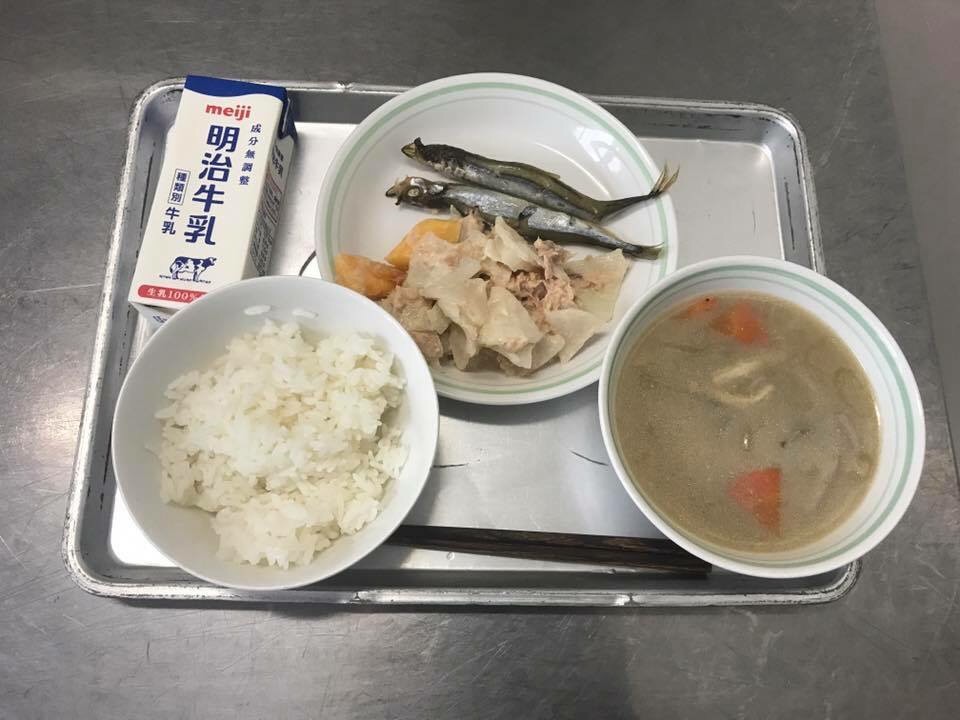
    Thursday, October 19, 2017 (barley rice, mabo tofu, bean sprouts salad, orange, milk)
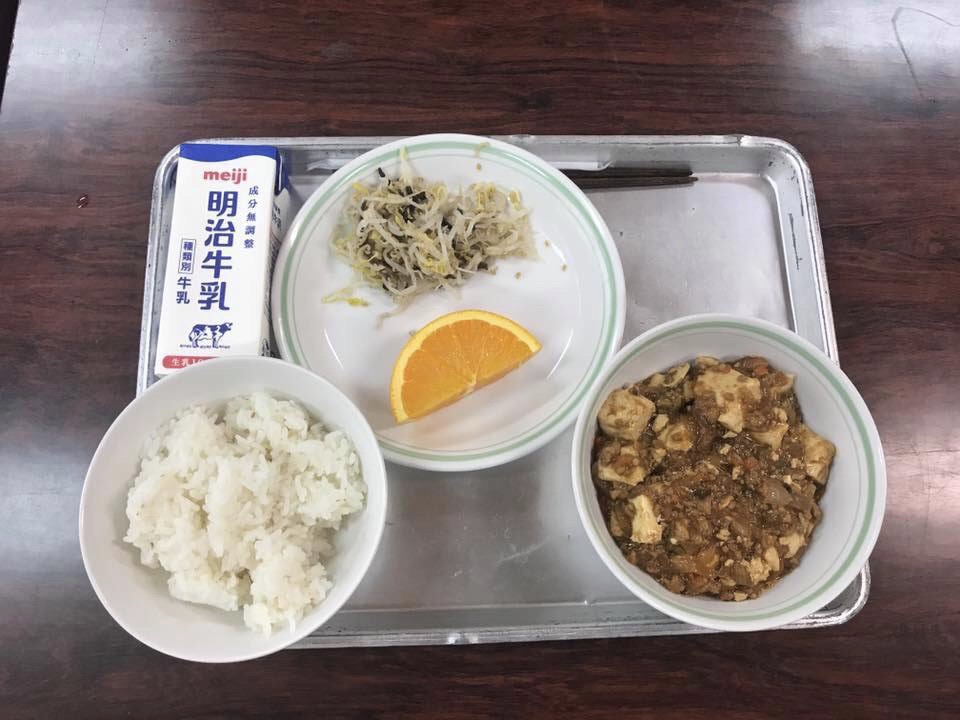
    Friday, October 20, 2017 (rice, omelet, kimchi kimpira, miso soup, milk)
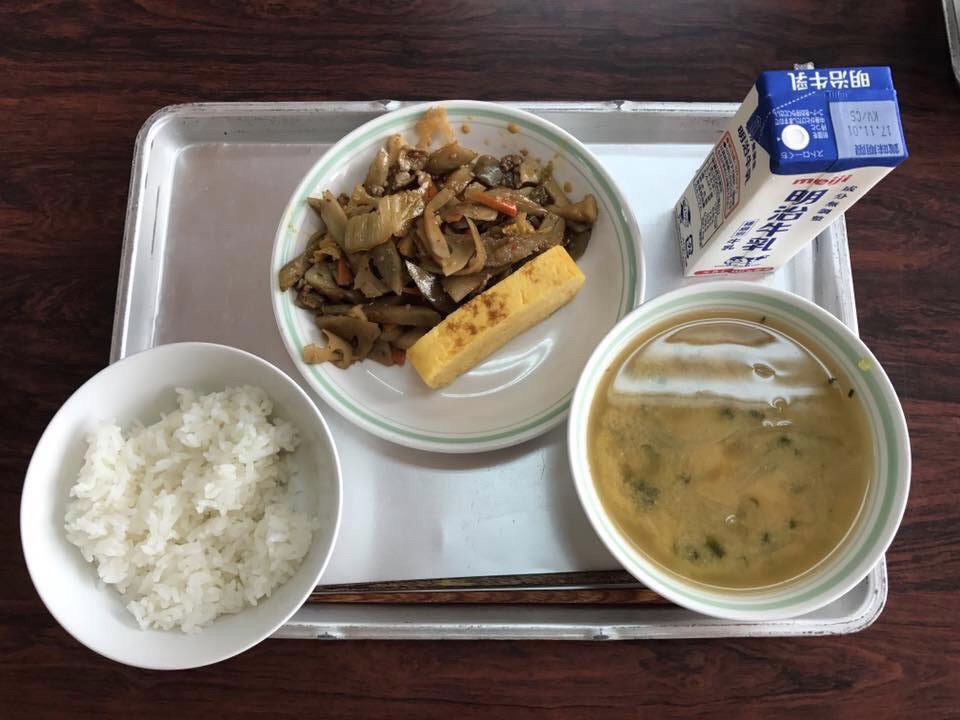
    Monday, October 23, 2017 (barley rice, fish, salad, miso soup, milk)
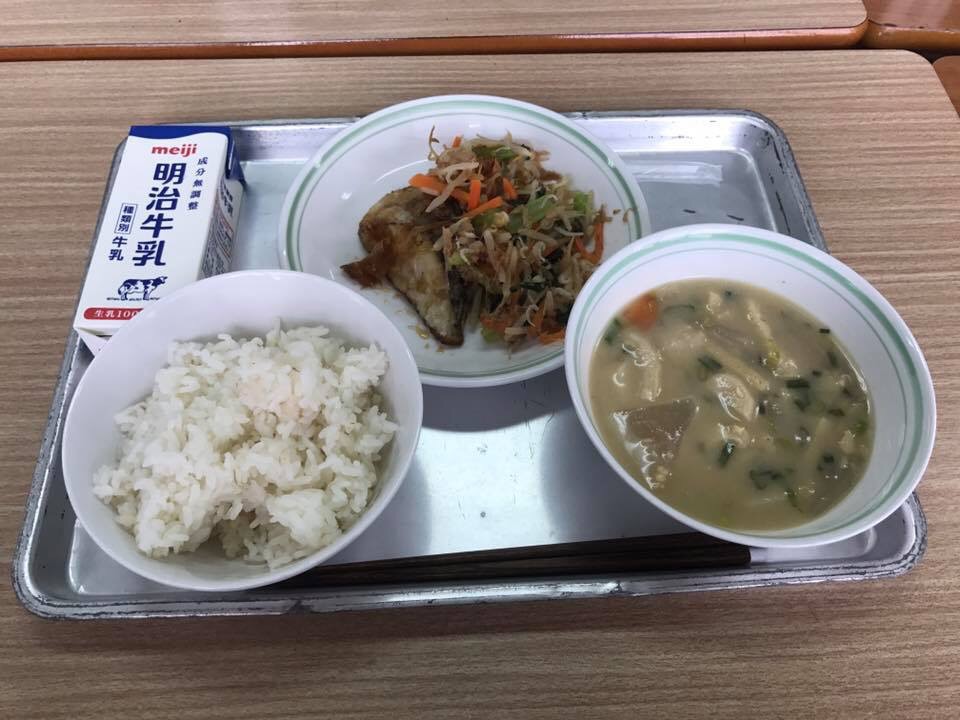
    Tuesday, October 24, 2017 (Pita bread, chili con carne, carrot salad, kiwi fruit, milk)
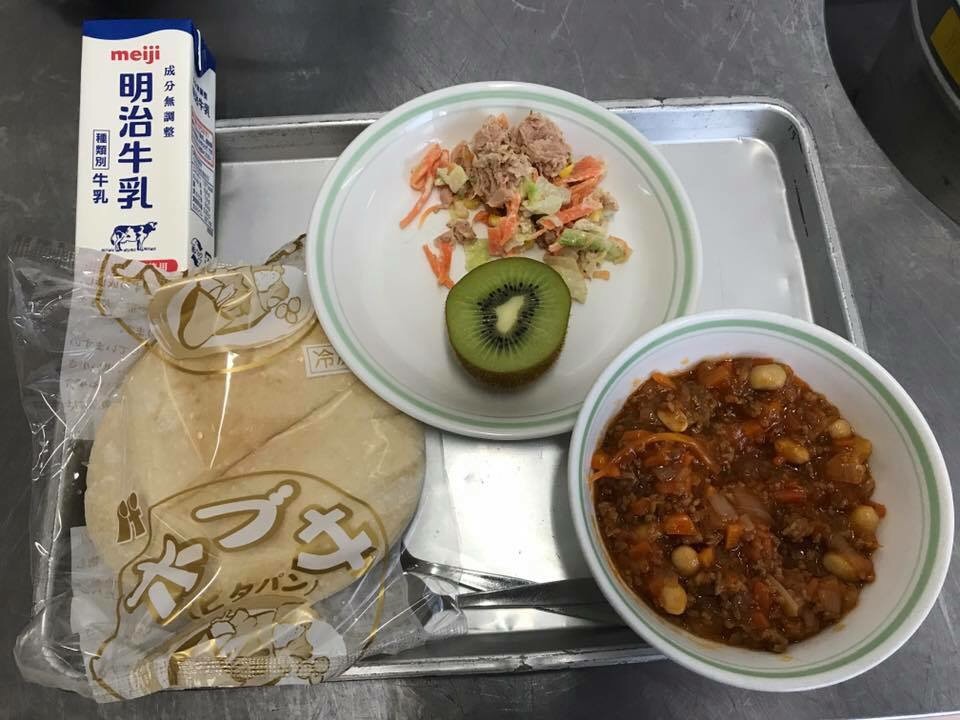
    Wednesday, October 25, 2017 (barley rice, fried fish, vinegared vermicelli, miso soup, milk)
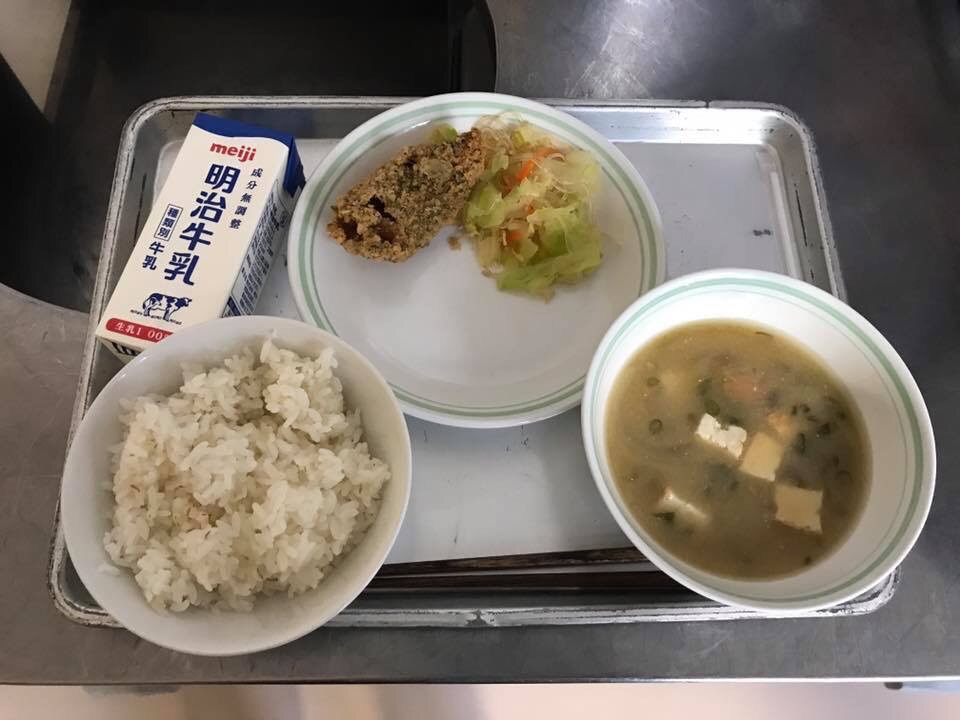
    Thursday, October 26, 2017 (rice, kimchi chigae, cucumber and bean sprouts namul, orange, milk)
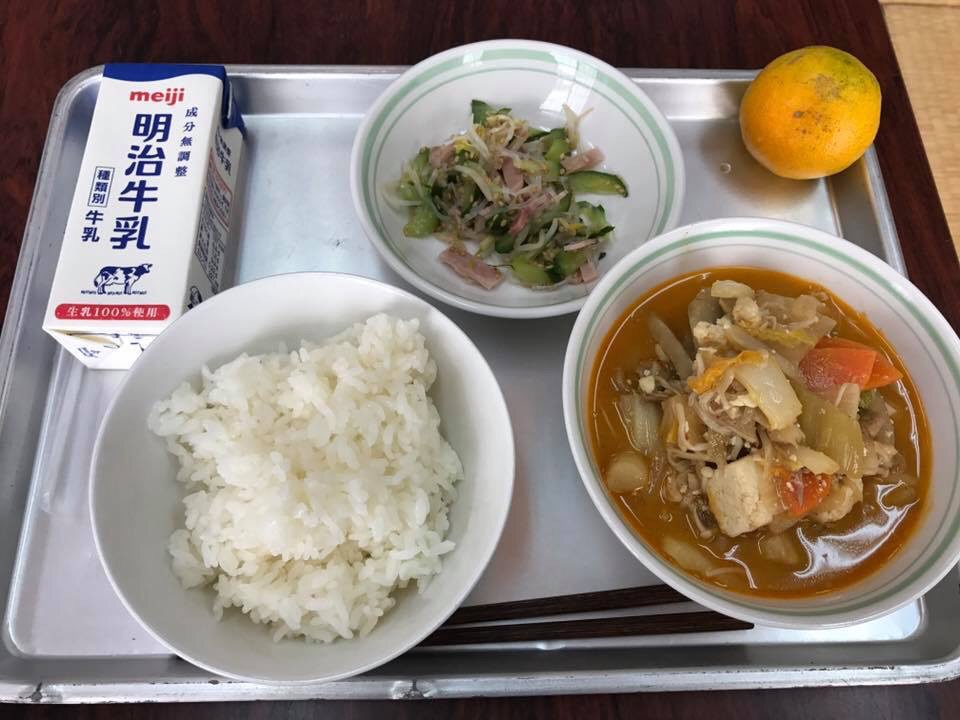
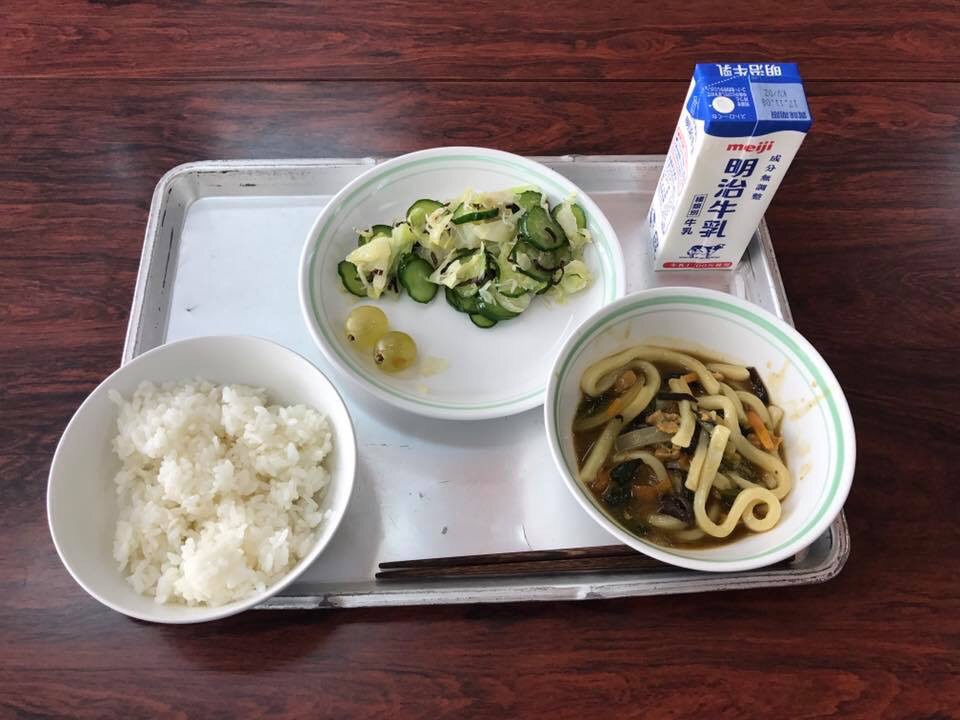
    Friday, October 27, 2017 ( genryou rice, curry udon, cucumber salad, kyoho grape, milk)
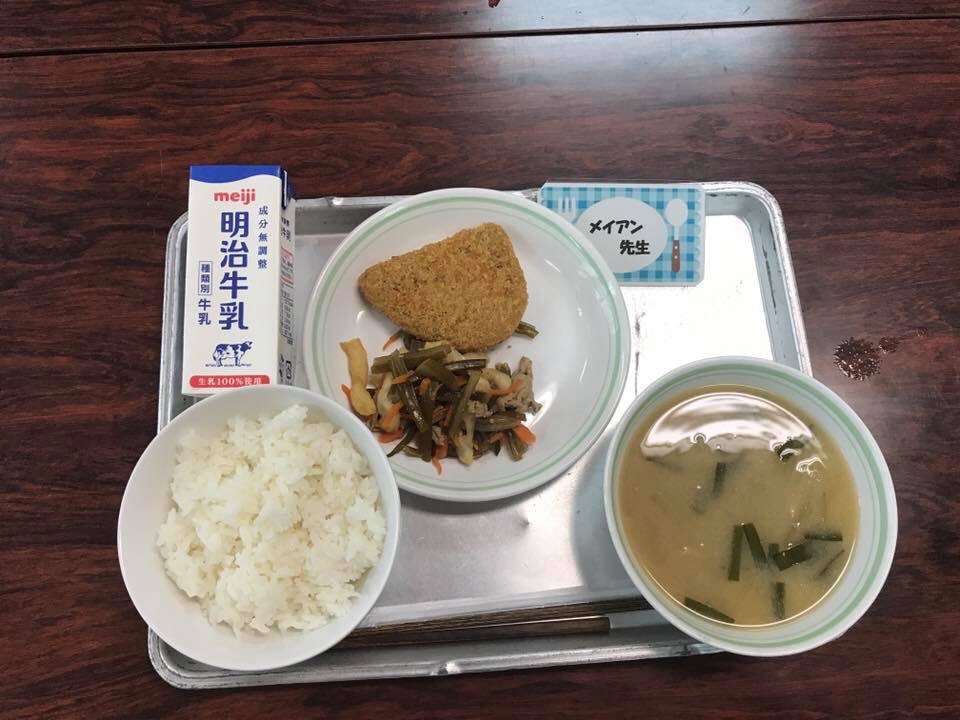
    Monday, October 30, 2017 (rice, fried pumpkin meat, stir-fried kikuwakame, miso soup, milk)
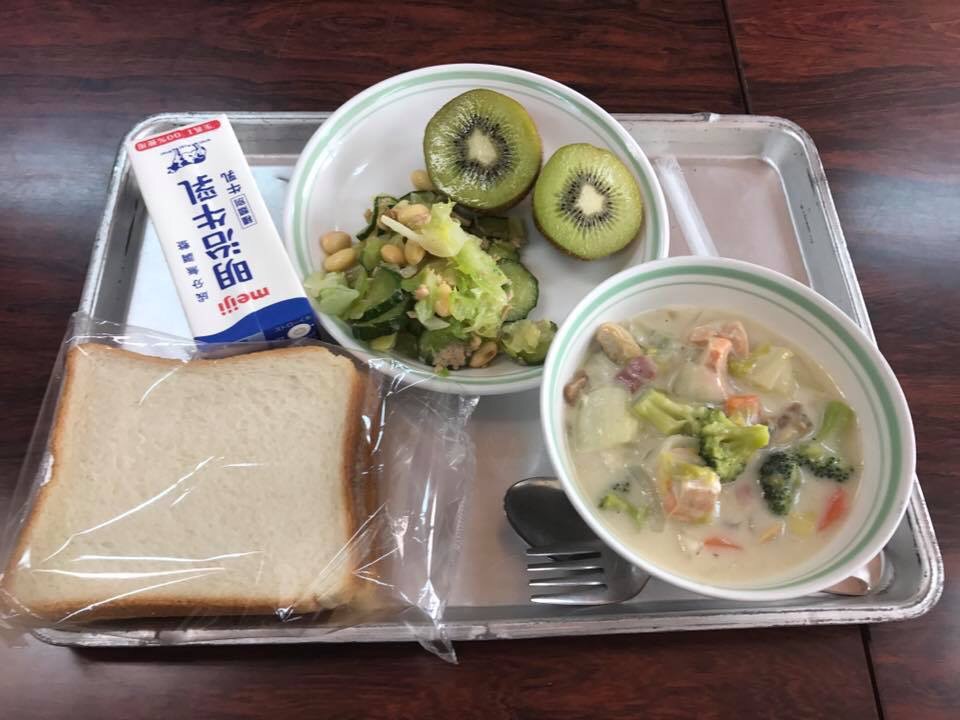
    Tuesday, October 31, 2017 (plain bread, salmon in cream, kiwi fruit, milk)
  • My first apartment as an ALT in Japan

    My first apartment as an ALT in Japan

    When I got a job in Japan as an Assistant Language Teacher (ALT), my company helped me find an accommodation. The company that I worked with had a contract with this apartment chain that I am not gonna name….okay, I changed my mind. I`m just going to tell you. It is Leo Palace. Here you go. Now, you know. Well, if you are planning to work in Japan as an ALT or something else, you might come across with this apartment. Many ALTs are familiar with Leo Palace since most first-timers have lived in one.

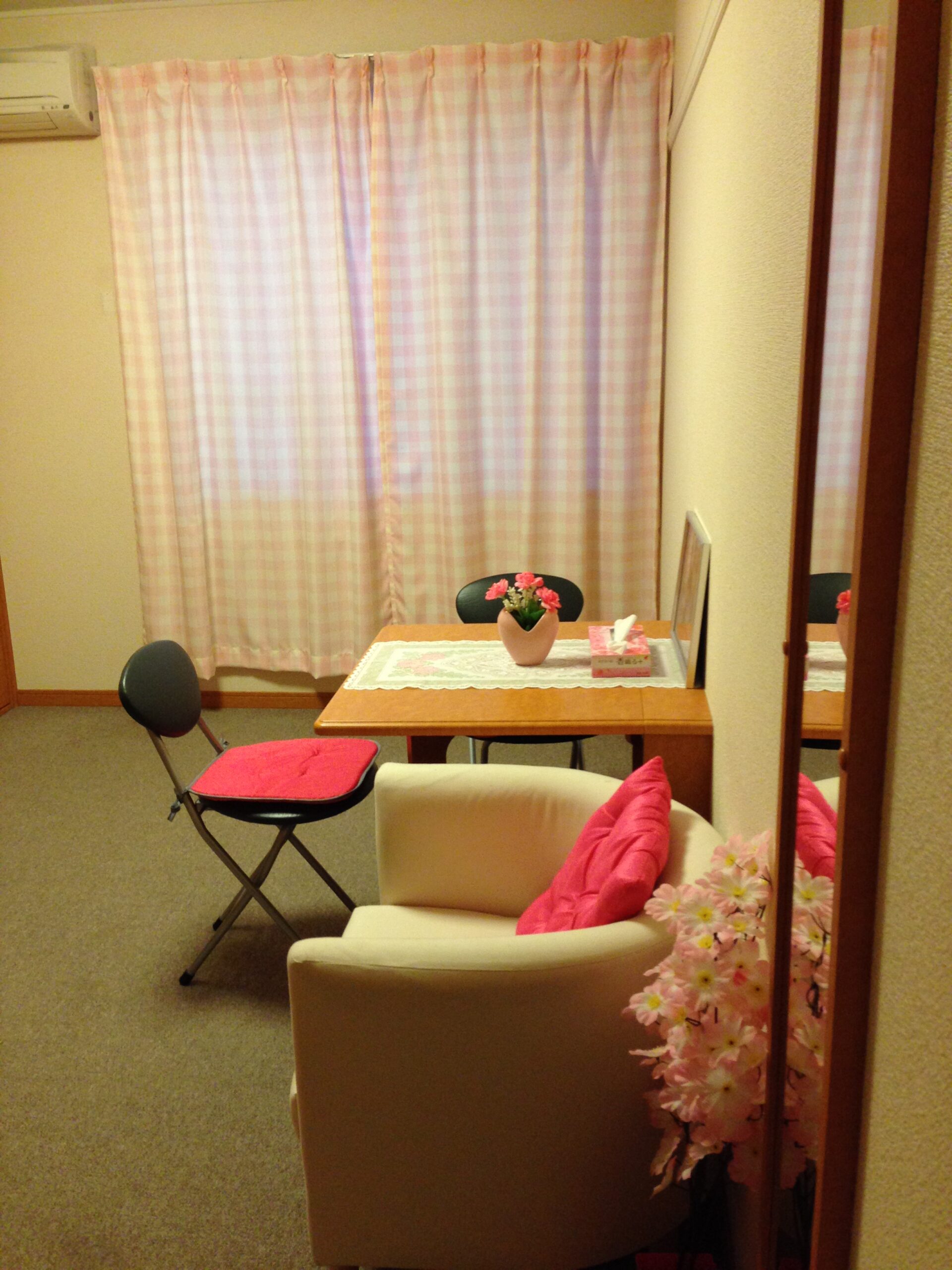
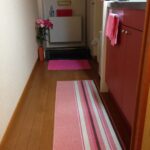
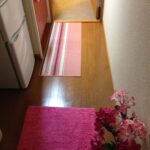
    Here are the pictures of my apartment.

    Pink is not my favorite color if that is what you think but it just happened that I had a pink blanket and curtains from my old apartment when i was still a student and so I decided to just match everything to create harmony, and peace, Amen. 🙂

    The rent was about ¥50,000 which is about 20,000 Philippine peso and about $500 US dollars. When you moved in, you have to prepare like ¥200,000 as first payment. I know. It`s crazy. This first payment includes two months advance, plus thank you money, plus this and plus that and that and so on. I was lucky (or maybe just a victim of  business opportunist) because my company provided loan and it covered my first payment, which in turn they had to deduct from my salary for a couple of months.
    This apartment is good for first-timers since it is a furnished apartment. You don`t need to buy a refrigerator, gas stove, air conditioner and microwave. They even provide curtains and it is internet ready. It is good for one person or 一人暮らし read as hitorigurashi meaning living alone by yourself.

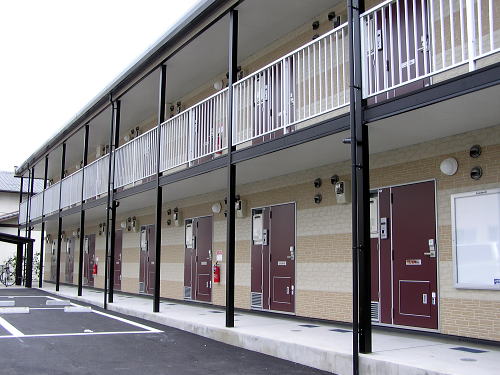
    Below is a common exterior of Leo Palace.

    Image result for leo palace room floor plan

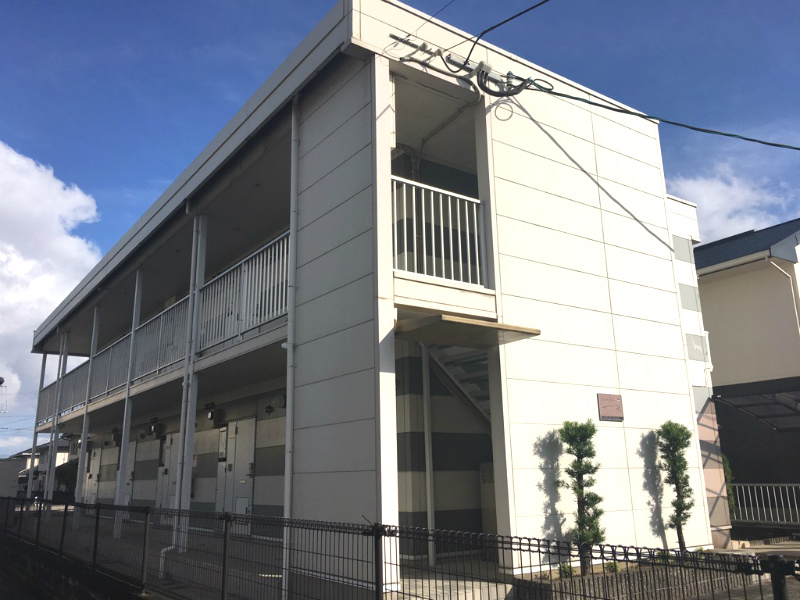
    My apartment was like this in the outside

    Image result for leo palace 宿町鳥栖市

    Image result for レオパレス 21宿町鳥栖市

  • Elementary School Recognition in the Philippines compared to Closing Ceremony in Japan

    Elementary School Recognition in the Philippines compared to Closing Ceremony in Japan

    In the Philippines

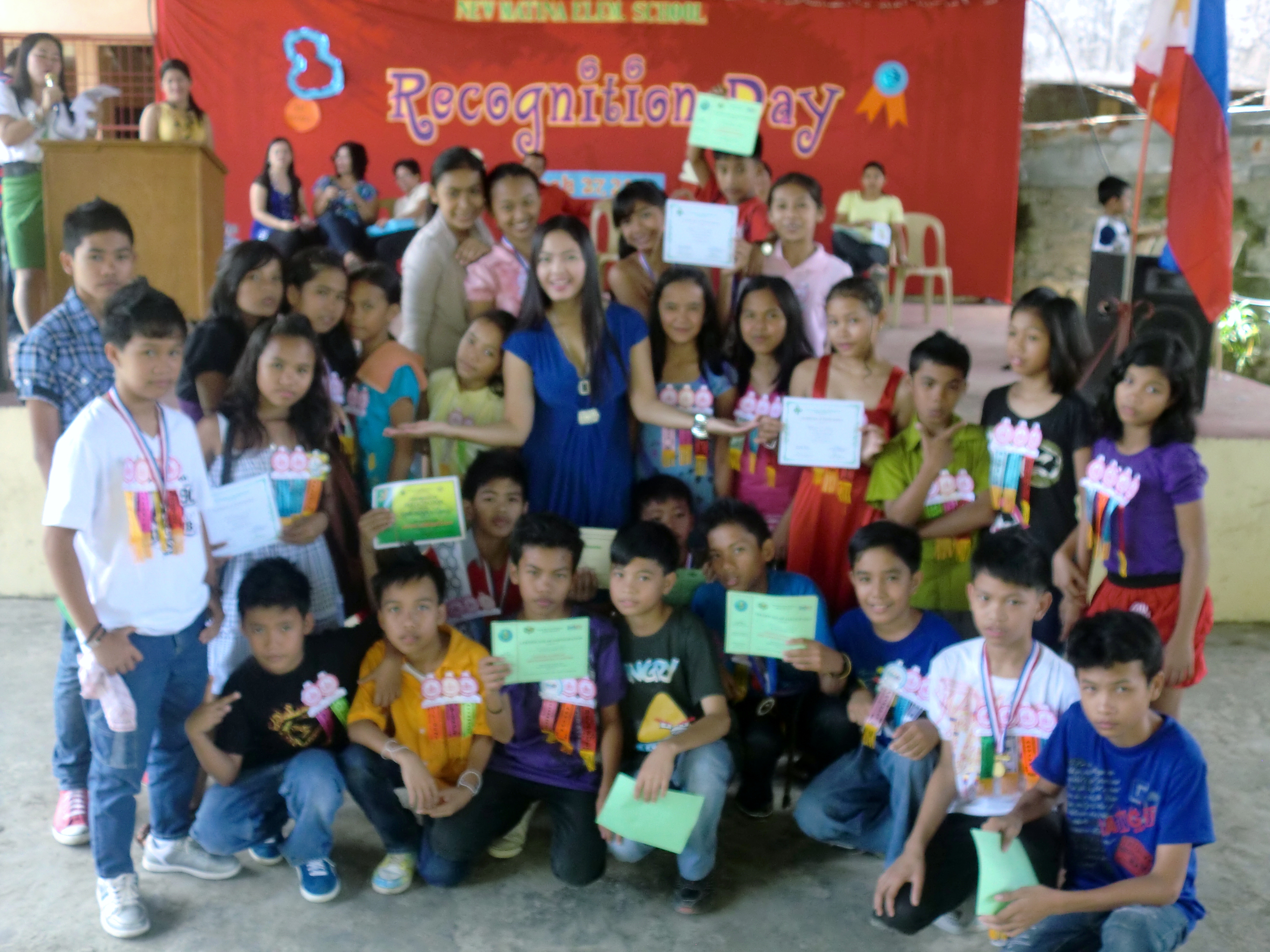
    Elementary School Recognition in the Philippines is always treated like a festival, a big event for honor students and a busy day (and days prior to it) for teachers. It is also being looked forward to in the beginning of class by students whether one can receive awards (and rewards) from parents.

    I remember when I was still an elementary student, my parents, especially my father, would always motivate me to get the highest honor if I want to get a reward. I was around second or third grade when I was told that if I get the first  honors, I could get a bicycle. I was only second, so I got a pair of shoes instead. But, that is how parents always motivate their children to do better in school. Or my family at least.

    School Recognition in the Philippines is the survival of the fittest and the battle of the brains and charms. Students are awarded according to their abilities and performance. We have the top awards: first, second and third honors. Sometimes we give fourth and so on. We also have the best awards: Best in English, Best in Math, Best in Science, Best in Filipino….name all subjects and we have “Best” awards for that. Another awards, the most awards: Most Neat, Most Diligent, Most, Behave, Most Punctual, Most Generous…name all adjectives and maybe we have an award for that..:-) Of course, we have the other awards: Boy Scout of the Year, Girl Scout of the Year, Drum and Lyre Member, etc.

    CIMG0416

    Students and parents work hard to get any of these awards. And some (if not most) teachers employ this “trophy” to motivate (or scare) students to do their best and get a passing or if not a failing mark.

    On Recognition Day, the school stage is well decorated complete with loud speaker and a podium. Students with awards and recognition are all excited and happy. They are dressed in mostly new clothes and shoes, very proud to go up to the stage together with their parents or guardians, who, in most cases, also wear nice clothes just for the event to receive their awards, a ribbon or a medal or a certificate.

    As for teachers, this is not a very easy task. When I was an elementary teacher, this recognition season somehow gave me a headache. I was the type of teacher who wants to acknowledge the students effort, may it big or small. I wanted to give all my students an award, even if it says Most whatever adjective to recognize the students` effort for the whole year. But of course, not all students do their best. And those things gave me headache thinking what award to give to all my students. My fellow teachers would tell me not to worry about that too much and just give a few. After all, it is not going to be an award or a special award in that matter if everyone can get it anyway. There was a year I remember that I  did not give anything to few students who I had a hard time dealing with. This was to teach a lesson to everyone that if you want to get something, you have to work hard for it. But, it did not turn out nice. Those students felt bad of course for getting nothing, and my heart was crushed seeing them sad. And since then, I always make sure that no matter how slow (or bad) some students are, I would work hard and motivate them to join something like Boy Scout so I can give them something on Recognition Day.

    In Japan

    On the other hand, in Japan, closing ceremony is a totally different scene. Japan is a country that values equality and simplicity. Things like competition for honors and awards, like what we have in the Philippines, doesn`t really exist. Days approachinrg the last day of school seem to be ordinary days. Students go to school and learn and teachers teach. In the Philippines, days approaching the last day of school, we tend to have “irregular” class since teachers are busy preparing for the Recognition Day and some students are busy rehearsing their dance and song presentation for the event.

    On the last day of school, before spring break in Japan, they have what is called 終了式 read as shuuryushiki, which means closing ceremony. All students and teachers gather in the gym usually in the third or fourth period. That means to say, they go to their classroom in a regular manner during the first and second period. Nothing really festive. Some classes do owakarenokai or closing party but it is not the party you have in mind. They just do a simple blackboard decoration and teachers and students do something which is really not big of a deal. It is a simple looking back-goodbye party. Most schools also have a school owakarenokai where all students gather in the gym and each grade will do a song or recitation performance. Nothing extravagant costumes or props. But for sure, a very good performance. They also make it special for the sixth graders who are leaving the elementary school life.

    [wpvideo vgPk6GfE ]

    During the closing ceremony, as everyone is gathered in the gym, teachers will remind the students how to spend spring vacation right. They talk about the do`s and don`ts and there is a lot of them. Some of the do`s are `Do your homework`, `Do go home early`, and more of don`ts like `Do not go to game centers`, `Do not talk to strangers`, `Do not go home after dark` and all these warnings to make sure that the children are safe and do well during spring break. They have some kind of awarding but in my experience, I have only seen the librarian gave award to students who read the most books and that`s it. When students go home, they bring with them their report card and that contains their performance in school.

    Cultural Difference

    I can see the cultural difference in both countries. In the Philippines where people are mostly competitive, fun-loving and and value honor and pride and in Japan where people prefer simplicity and equality. Of course, there are advantages and disadvantages of both but this is our way of life. This is our culture. This is what makes us us. When I came here in Japan and witnessed how simple their closing ceremonies are, and how the slow learner students don`t get their pride crushed and feel and discriminated during Recognition Days as in the Philippines, I wished that we could do the same thing in the Philippines. A simple closing ceremony just like in Japan. But, if we did the same, I would never have the memories of going up to the stage with my parents and have my ribbons and medal don on my neck and of course the picture-taking. Who can forget.


  • English Bulletin Board for February

    English Bulletin Board for February

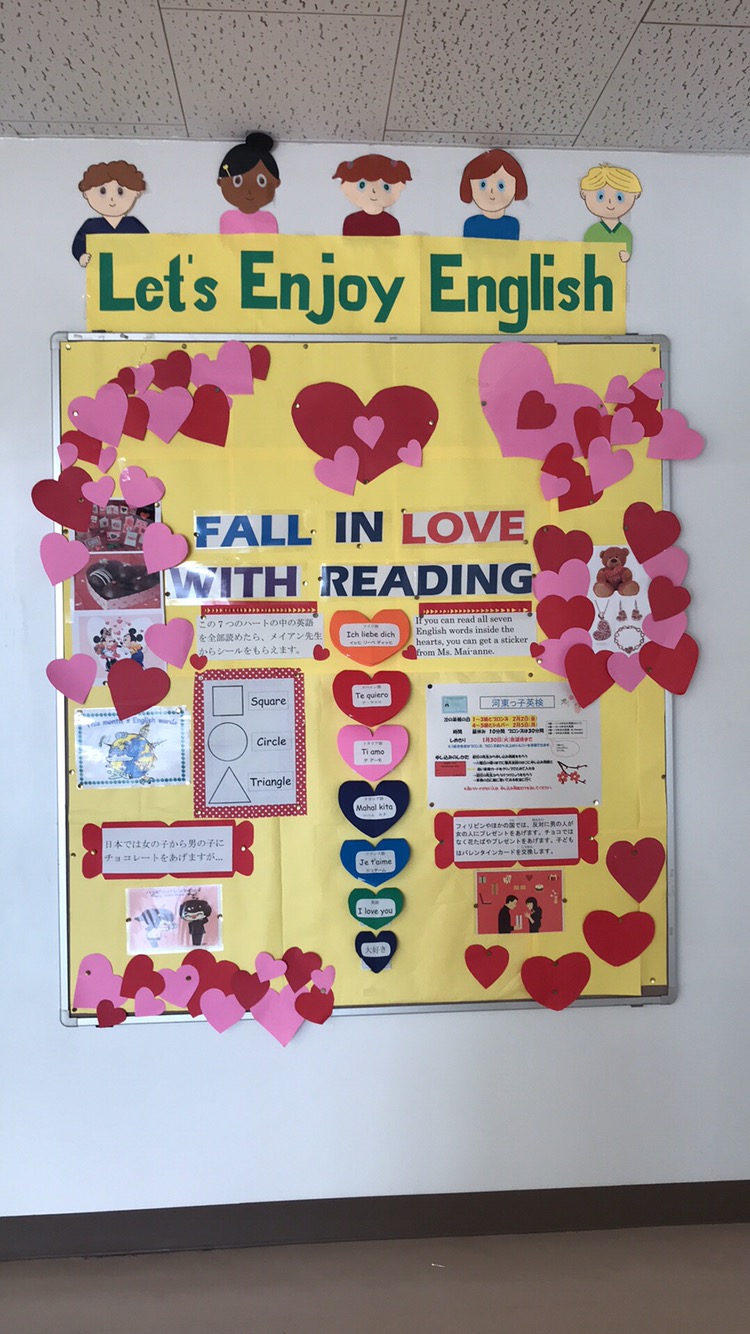
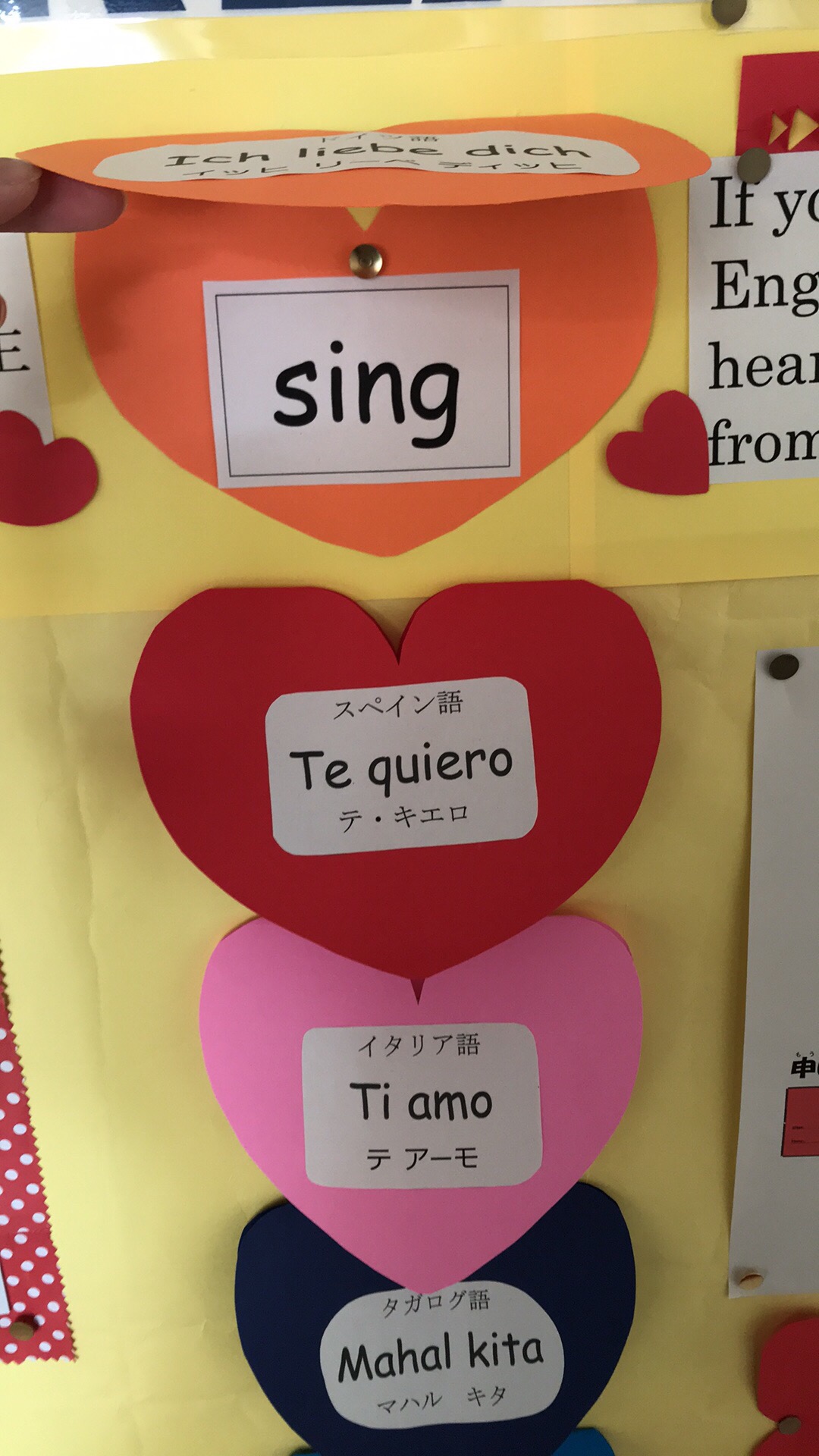
    The English bulletin board for this month, February, turned out to be the most interactive board so far and also the easiest one to make. We say that “Plan your work, and work your plan” , but this time, I really did not make a lot of planning for this board. I was scanning for ideas in google images and I found the line “The Language of Love” and so I decided to, again, translate a phrase to other languages, just like what I did in November and January. And since it`s Valentines, I chose the phrase “I Love You”. I researched the translation and printed them on an ordinary A4 paper and cut them out. I also found a line that says “Fall in love with reading”, and from that came the idea of making the board interactive.

    So, now I have to themes to choose from, the first “The Language of Love” and the other “Fall in love with reading”.

    While cutting folded heart shapes in different sizes, I was thinking of putting the “I love you” in many languages on top but I didn`t know what to put inside. Then, like a snap, the idea of putting random words inside the cut-out hearts was born.


    And came February 1st, the first day of the month, when I usually update the EB (English Board), I still couldn`t picture in mind what the final outcome would be.

    What I did first, was just use the old heart cut-outs I found in the English room that`s been sitting there in the cabinets for years. I put them on the sides to create a border effect. And then I put in the center, the theme of the month, the winning second choice `Fall in love with reading`. Below that, I lined up all the heart cut-outs and on both sides I put the instruction on how to do the challenge, in Japanese and in English.

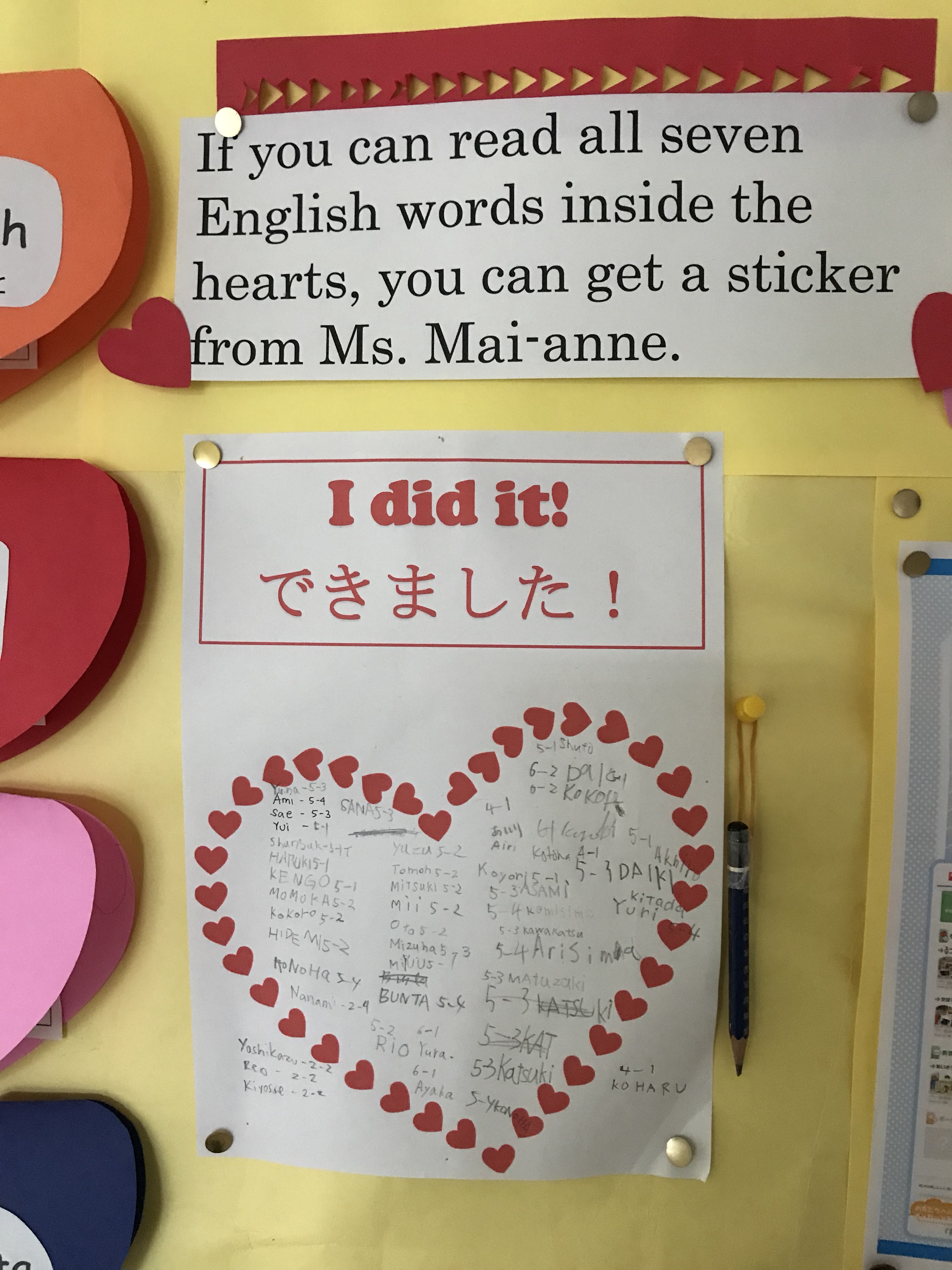
    I also put up a paper and a matching pencil where students can write their names after doing the challenge.

    After putting everything, there was still an empty space below so I decided to put up some pictures and explanation telling the difference of how Valentines is celebrated in Japan and other countries. I chose to write the explanation in Japanese because this is about culture, an aspect where they need to clearly understand what`s it is all about.

    The school principal said she liked it and I`m happy.

    In order to get the students do the challenge, I have to be near the EB during lunch break and recess time and encourage them to do it. Higher grades can basically do it, but with fourth graders, I have to teach them first or sometimes I just let them repeat after me.

    The words are actually very easy, but, you know, if it is not your primary language, it is a challenge. The words I used are sing (which students tend to pronounce as `shing`), like (they know from `I like apples`, but some would still say `lee-ke`), love (most of them get it, I don`t know why), bat (which students say `bato`), ten ( I would give them hint by counting 1-9), run, and finally the word win. Then, I award them with a sticker, one that they can never get in Japan (I got from the dollar store in the US). And finally, I let them write their names on the `I did it` paper.

    By the middle of the month, I got the paper full and I had to make another `I did it` paper to give space for new challengers.

    Few days from now I have to update the EB for March and before that I hope I can get more students do the challenge.

    March would be the last EB  I`d be making for this school since I don’t know what will happen in the coming school year (in April). Contracts might change and who knows if I`m staying or what. That’s ALT life in Japan. So, I have to make the March EB, the best. Pressure pa more. 🙂

  • English Bulletin Boards

    English Bulletin Boards

    One of the not so many tasks of an ALT (Assistant Language Teacher) in Japan is updating the school’s English Bulletin Board.

    In my school where I’m assigned, in fact, the only school I am assigned (normally ALTs are assigned to more than one school), I make sure to update our English Board every month.

    In the first semester (April, May, June, July), I kept the board pretty simple. I put up some world updates, some English greetings and words, and also a daily update of day, date and weather.

    I started changing the board according to the monthly event/theme in the second semester, that is from September, right after summer vacation in August.

    But, unfortunately, I forgot to take a picture of my September board.

    So let’s start with October.


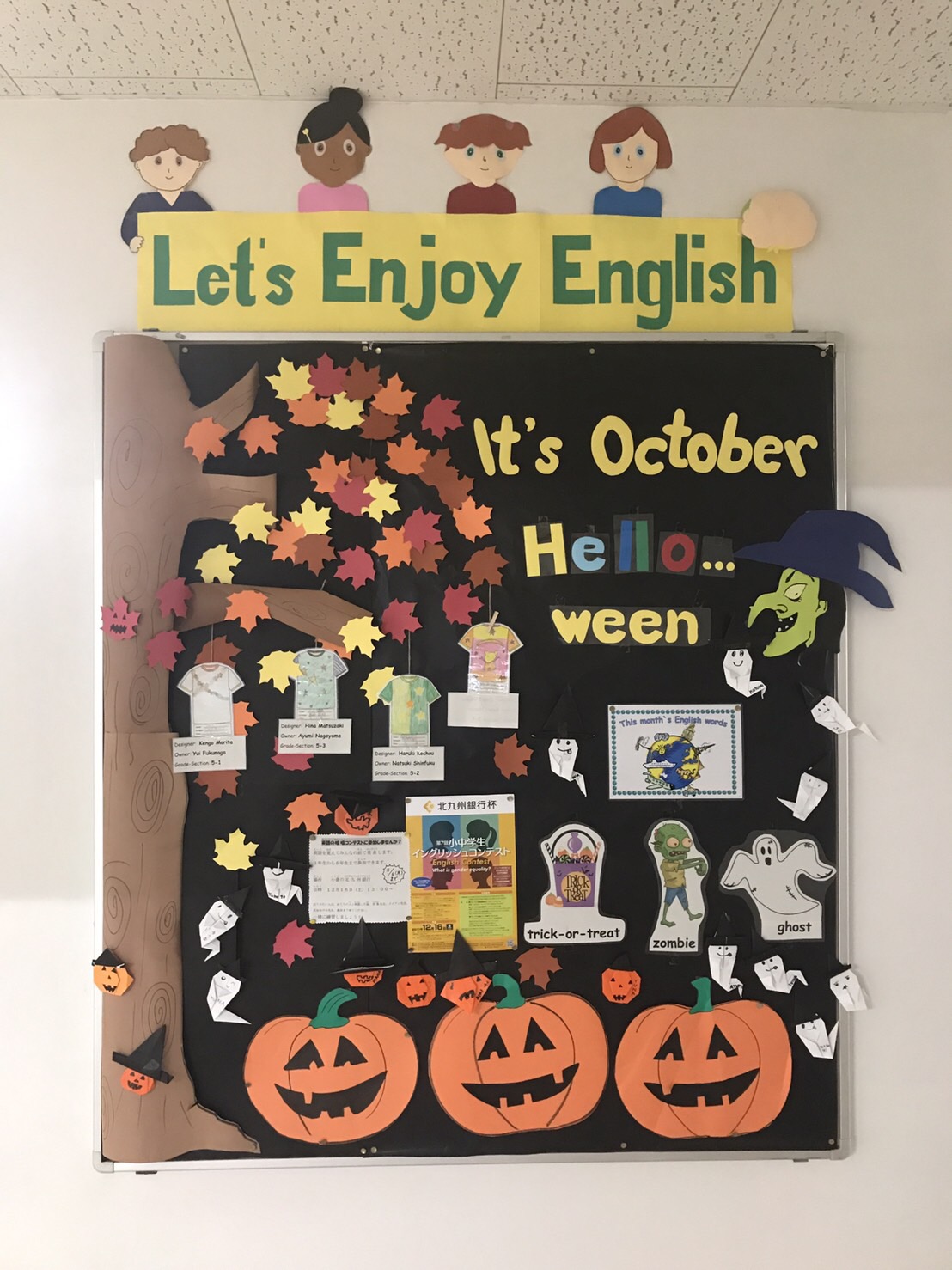
    As you can see, it’s Helloween, I mean, Halloween theme. I just put a little twist to the word to make it more catchy. I made three big jack-o-lanterns and aligned it under a maple tree. I printed one maple leaf and traced it to colored papers, of course autumn colors since it’s autumn and just put it all over the cut out tree. The origamis are made by students during lunch break, when they come to the ‘English Lounge’, well, basically just tables and chairs in front of the English board and we gather there and chat while making origamis.

    Next is November.

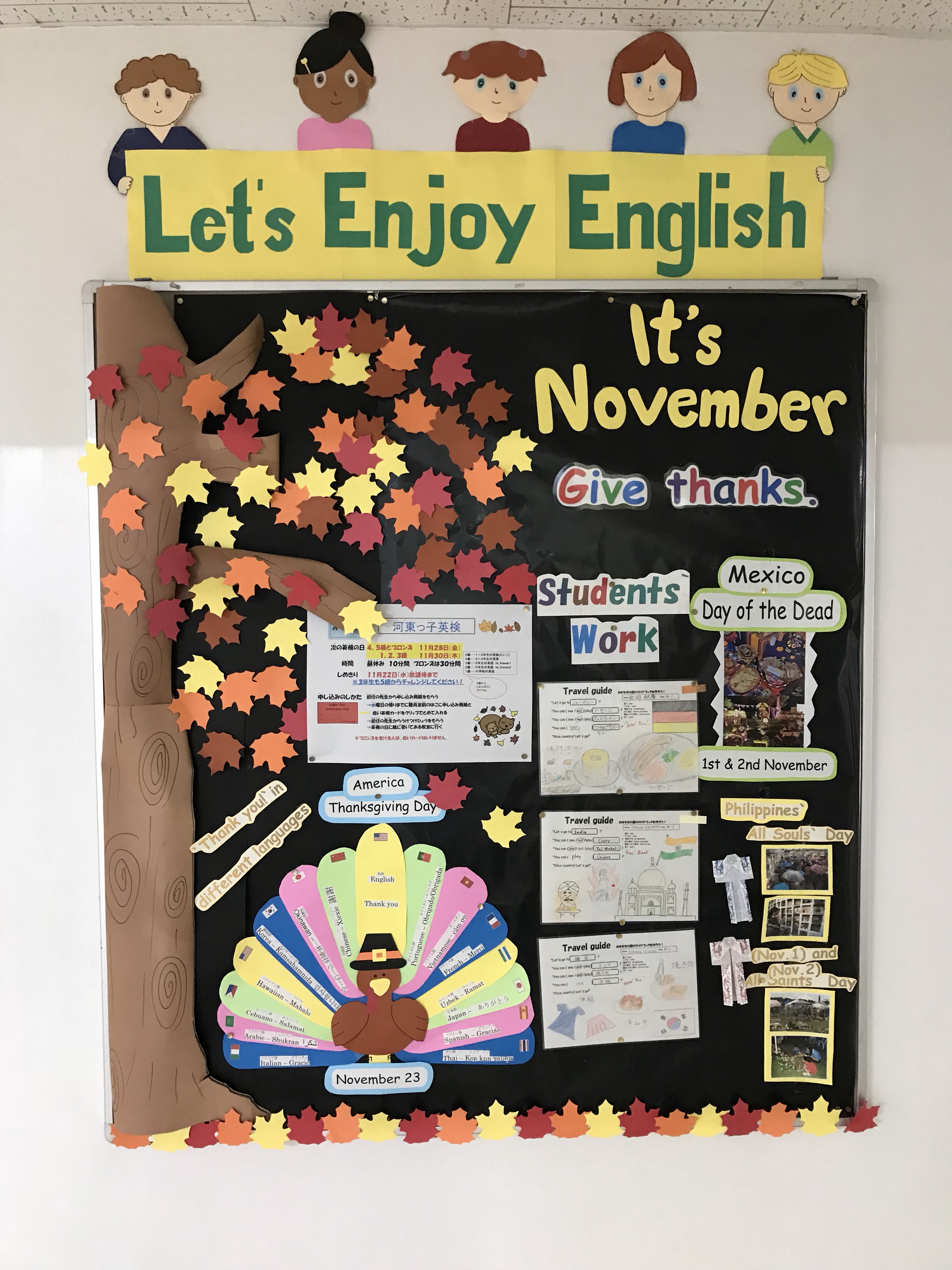
    I kept the maple tree in November board since it still autumn but I removed the jack-o-lanterns and other Halloween things and put a colorful turkey on it. November is Thanksgiving so that explains the ‘Give Thanks’, right? If you look closely, the turkey’s feathers contain ‘Thank you’ in different languages. Some (that Mexico thing) are reused from the previous years’ bulletin board. It’s a waste to throw them away. Why not recycle, right?

    Here comes December.

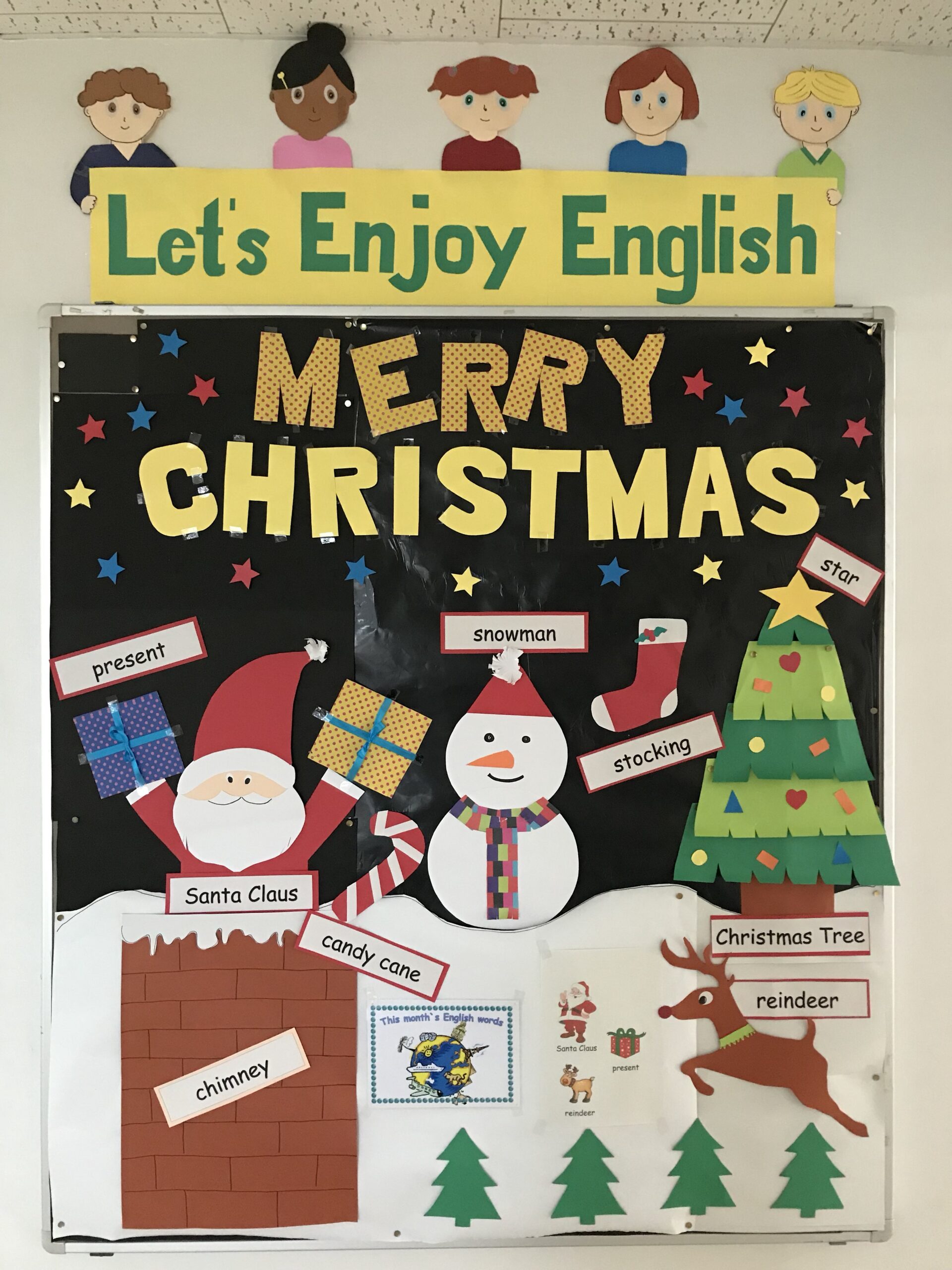
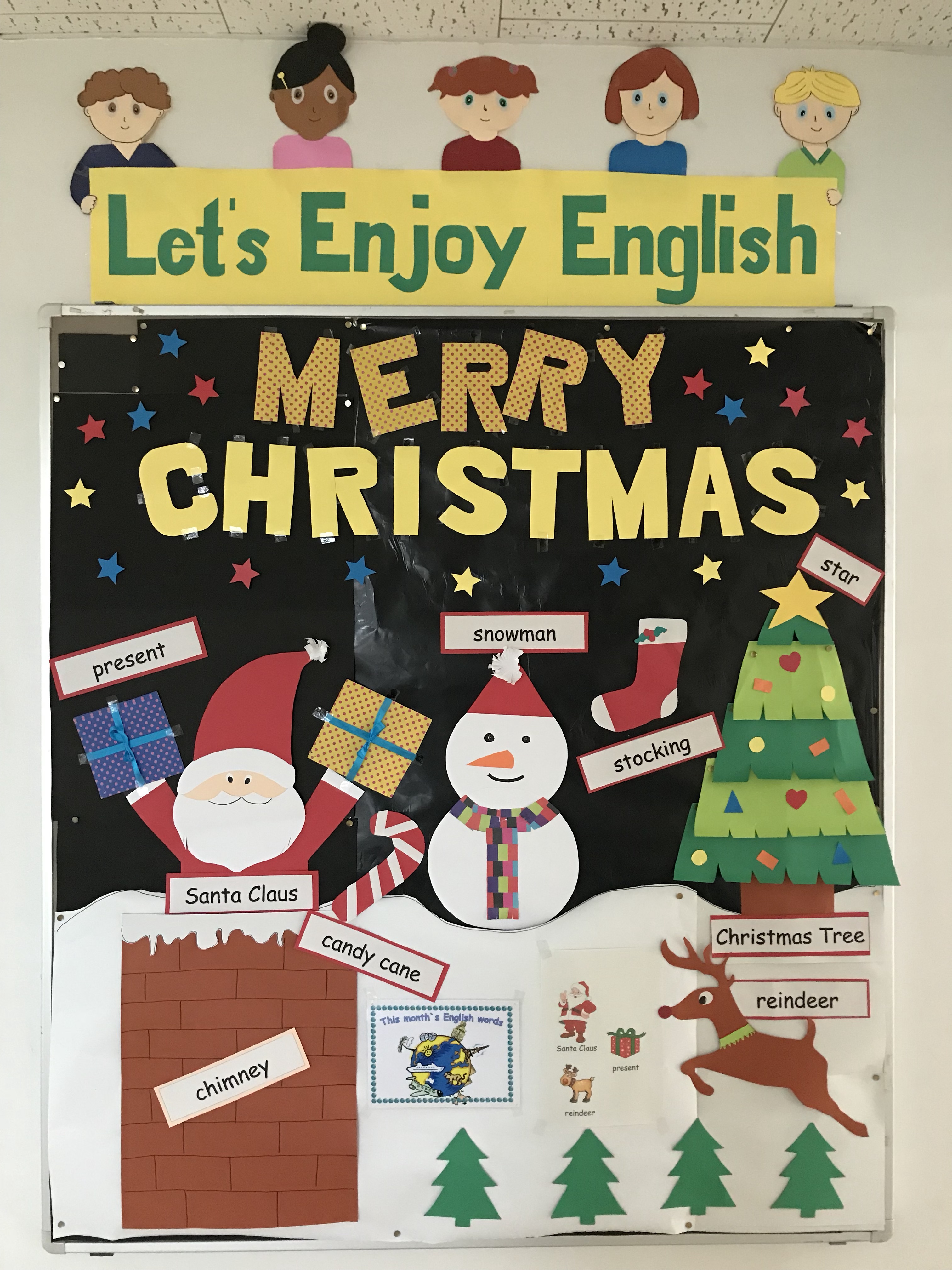
    The black background has been there for three months. I find black background so easy to decorate but I admit, I was getting sick of it, so I added white background below it to represent snow. The students like the snowman but I personally like the reindeer. Those are all cut-outs. Well, I had a plenty of time to make these things. 🙂

    The January board was not really the best but I have to tell you, this is the most, should I say, tedious, to make. I decided to make cut-outs of Snoopy and friends’ characters since it is year of the dog. All the red letters are cut-out too, but when I put a white background into it, it looked like printed words. :-/ The new year greetings in different languages are printed. Nothing complicated. And below is the outcome.

    Next week, I will update the bulletin board for February. I already prepared some heart cut-outs but I still don’t know the final outcome. Nothing in mind. We’ll just see.

  • Why is summer vacation in Japan not a vacation for students at all

    Why is summer vacation in Japan not a vacation for students at all

    Most kids around the world look forward to summer vacation. For most of them, it is the best time of the year. Free from the tiring things in school, listening to the teachers sermon, doing projects and endless homework.

    But, not in Japan. Although summer is fun in Japan with so many festivals that you can go and you can even watch fireworks while wearing your yukata (summer kimono), eating kakigori or shave ice, most kids, elementary and junior high school somewhat hate summer.

    Why? For one reason. Homework.


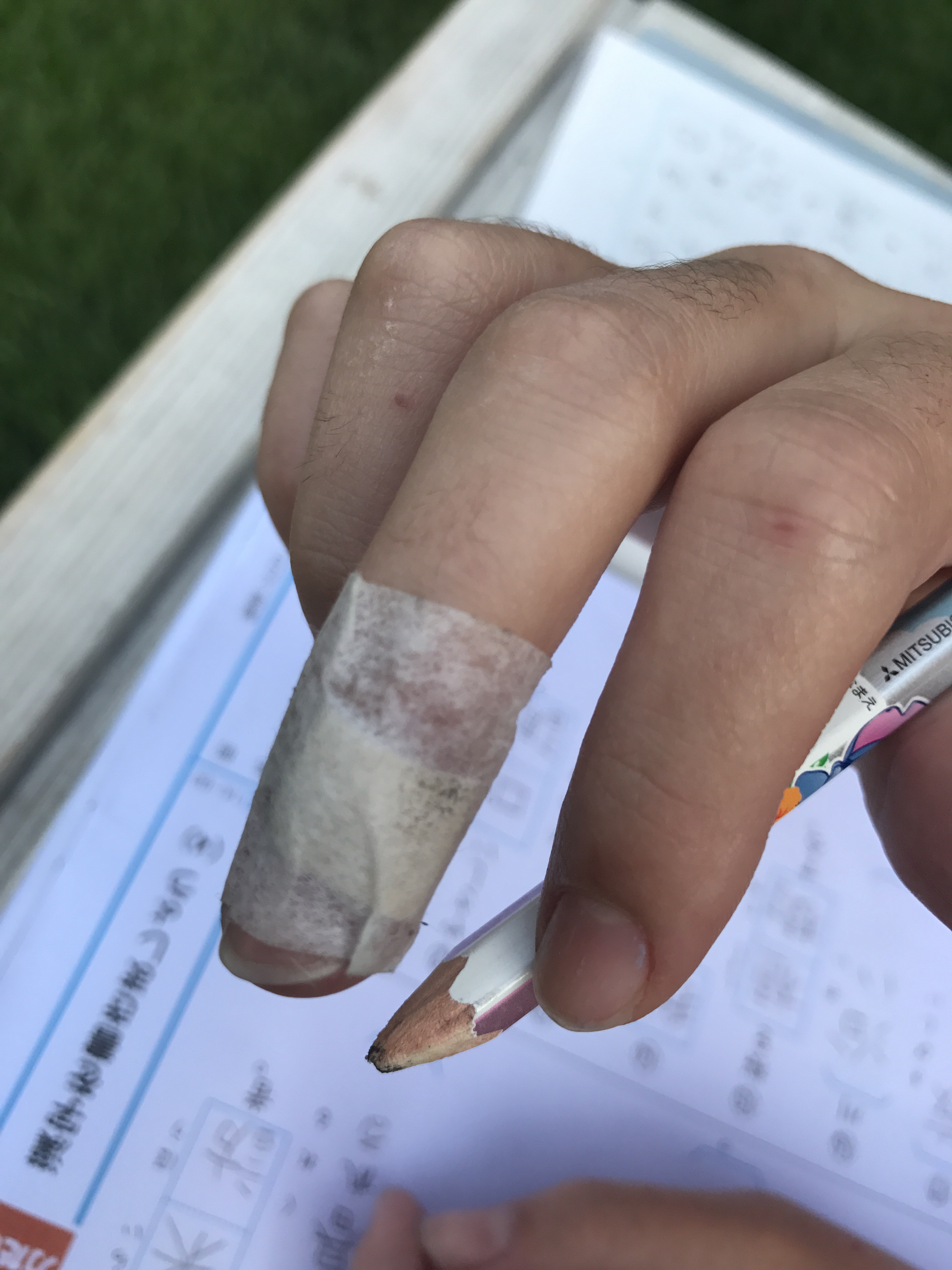
    And it’s not just a piece of paper with few mathematical problems to solve. It is a set of three to five book/booklets, some of them are inch-thick and most are half-inch thick. It can literally hurt a child’s finger because of doing too much  homework.

    Japan doesn’t consider summer break a vacation for students. They consider it a time for independent study. For students to study on their own in the convenience of their homes.


    Unlike the US and the Philippines, summer vacation in Japan is during school year, not between school year. April is when classes starts and mid-July to August is summer break. Classes resume in September and close in March. Between March and April, they have like  a two-week spring break, and that is between grades, when kids don’t get tons of homework like in summer break.

    Its not only the students who don’t like summer homework. Somehow, it becomes tedious for parents, too, who, during summer, becomes the “teacher substitute”, reminding their children to keep track of their homework. Parents are also the ones who check their children’s homework. Some parents make the schedule, how many pages a day and how many hours a day should their children dedicate for doing homework.

    The most stressful part of summer is the last week, when both parents and children realize that they only have few days to finish a bunch of unfinished homework , including the daily summer diary.

    Both Japanese and non-Japanese often discuss about whether this practice of summer homework is good or not. Some say that it’s a good way for training children to become independent and responsible. Some say that it’s too much in a way that it deprives children to enjoy their childhood.

    How about you? What’s your take on this?

    How do you spend your summer vacation?

  • Setsubun and Risshun: Say Goodbye to Winter and Hello to Spring

    Setsubun and Risshun: Say Goodbye to Winter and Hello to Spring

    The freezing cold of winter makes people long for spring. Spring, the time when flowers bloom. It is when the temperature goes up gradually. It is when people start going outdoors again. The weather is not too cold. Just “choudo ii”, as the Japanese say, meaning just right. The cold turns to cool. Everything turns bright and gay with flowers blooming and weather warming up. Adios to the dark and gloomy winter. But, when exactly is spring? In Japan, they have a celebration that marks the end of winter.

    What is Setsubun?

    Setsubun (節分) means seasonal divison. The kanji 節 means ‘season’ and the kanji 分means ‘part’. Setsubun’s original meaning is the last day of any season. Spring Setsubun, usually February third or fourth,is the last day of winter in the traditional Japanese calendar. Setsubun is said to be the old New Year’s Eve celebration basing on the Lunar New Year.

    How is Setsubun celebrated?


    On this day, Japanese people hold the mamemaki 豆まきor bean throwing ceremony for driving away bad luck and attracting good luck. It is a ceremony where they throw beans at the ‘devil’ and chant “Oni wa soto. Fuku wa uchi”, which means “Demons out. Blessings in.” Other translation says “Demons out. Happiness in.” Demons in this case represent bad luck. The chant is said to drive away all the bad things out, and bringing the good things in. People visit shrines and temples to pray. Big shrines sometimes hold a big throwing ceremony and lots of people come to attend. Shrines are beautifully decorated and somebody who is assigned as demons wear elaborate whole body costumes. Shrine priests also wear their special clothes. Sometimes, the city or town’s leaders come to attend to. When you go to supermarkets and grocery stores and even convenience stores, setsubun decorations are displayed. You can see the fuku or happy face and demon masks. Demons are usually in color red and color blue. Normally, Japanese people do their own ceremony at their homes. The demon is usually played by the father. After work, fathers wear a devil’s mask and come home to surprise the kids. The kids together with their moms throw beans at the ‘devil’ and chant.  Families with kids celebrate this ceremony more than those families without kids. Maybe, it’s because kids really believe that devils are real, while adults, they know it is just a pretend.

    What to eat


    goinjapanesque.com

    After having fun throwing beans at the devil, each family member picks up the beans and eats them with the number according to their age. That is to be said, five year-olds for example get to eat five beans and eighty-year olds get to eat eighty beans. It must be hard for grandpa and grandma to eat all those beans, I guess.
    Recently, about three to four years ago, my Japanese friend said that on Setsubun, Japanese eat ehoumaki (恵方巻き). Ehoumaki is a long sushi roll. It is said that eating ehoumaki attracts good luck. There are various kinds of ehoumaki. The one I had in school lunch consists of cucumber and crab stick. I saw in the television news that one shrine in Japan celebrated Setsubun by distributing ehoumaki to about a thousand shrine vsitors and they eat them altogether for good luck and happiness.

    My Experience


    I love festivals and I love learning Japanese culture. I have learned about Setsubun in the university where I studied Japanese. We did a short bean-throwing ceremony in the class and we chose our male classmate to act as the demon. It was fun but it was short and we wanted more. Upon hearing that there was a big bean-throwing ceremony in town, my friend and I decided to attend. We went to Kushida Shrine in Hakata, Fukuoka. 〒812-0026 Fukuoka Prefecture, Fukuoka, Hakata-ku, Kamikawabatamachi, 1, 博多区上川端町1−41

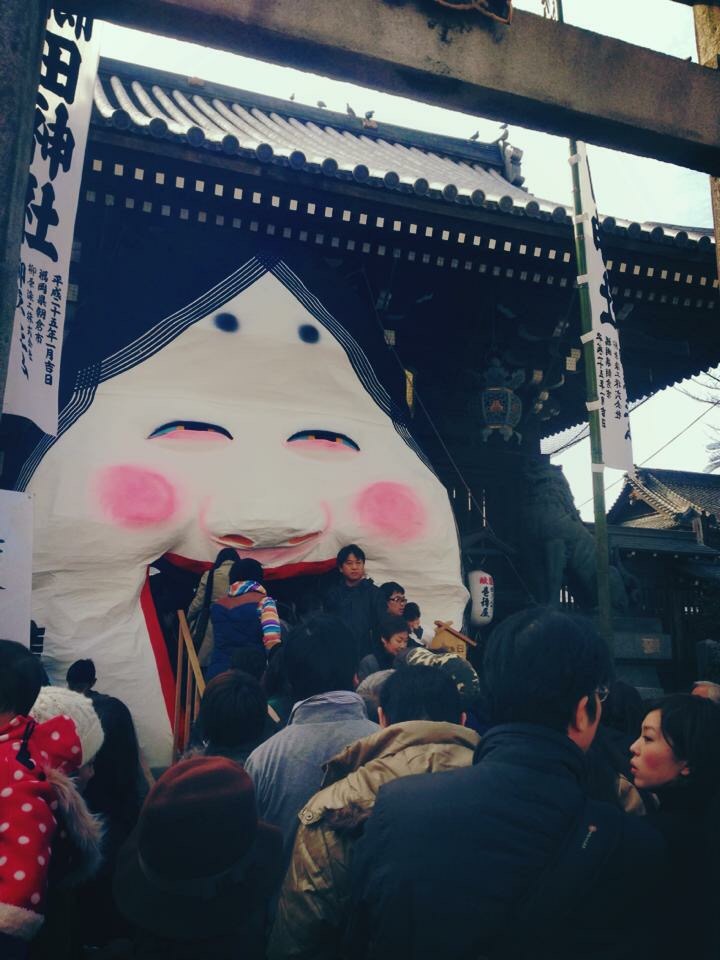
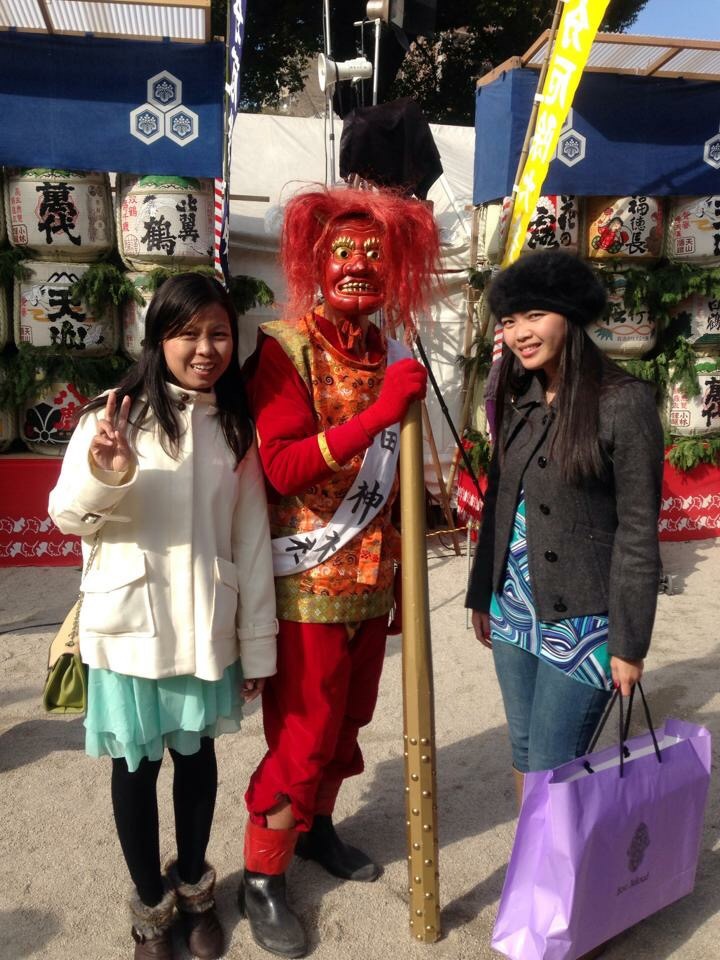
    In the entrance of the shrine was a big face of Fuku or the happy face. You can enter the shrine only through the mouth of the Fuku. The lines were long but my friend and I waited for our turn. Just waiting in line made us feel so excited. We could feel the energy around. The shrine was so full of people. Everybody was excited to get inside and join the ceremony. Inside, the shrine was so beautifully decorated. We saw Japanese priests in costumes and we saw some demons, too. The red demon was kind of cute so my friend had our picture taken with him.


    During the highlight of the ceremony, the guests and priests on the stage throw the beans while saying the chant and the people on the ground tried to catch the beans. We tried to catch some beans, too. We had so much fun. It was a very good experience for me and my friend. Now that she left Japan back to her country for good, while I stayed here and work, we always look back to those times we went to Kushida Shrine every Setsubun.


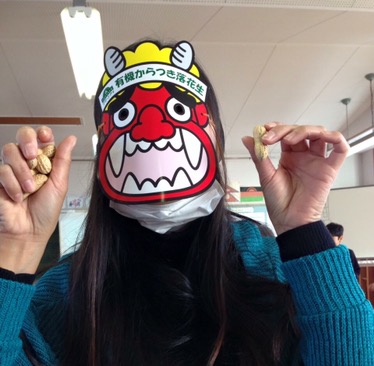
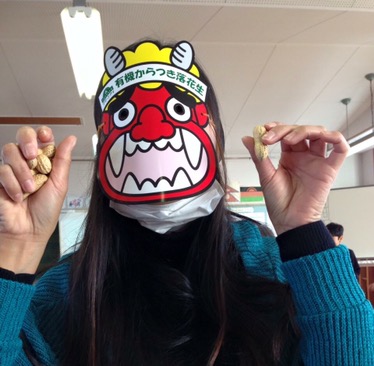
    As a teacher here in Japan, I myself experienced becoming the demon. I wore the demon mask and my students throw peanuts at me. I ran around trying to avoid there throw but, you know, kids are very energetic; of course, and I got hit many times. I lost, as it should be. It was so much fun. We picked up the peanuts after and ate according to our age. Well, I had lots of peanuts as you guess. In my school this year, we had ehoumaki for lunch and everyone got a pack of fukumame. Everybody was happy.

    Risshun (立春)


    Comes the next day, February fourth, is the risshun, or the first day of spring according to the traditional lunisolar calendar. Even though it is still cold around the month of February, even though many people still wear all their winter clothes, with their necks still wrap with thick scarves, it is not as cold compared with the previous months of January and December. Around the month of February, plums start to blossom. Plum blossom is the early sign of spring. And this time, we can say, “Indeed, spring has come.”

  • Japanese Elementary School Tour Part 1

    Japanese Elementary School Tour Part 1

    Japan is a highly educated country. It’s government invest a great amount of its resources on the education sector which is evident on the school resources and facilities. Educational institutions all over Japan are  fully equipped and is therefore a very good training ground for schoolchildren.
    In this article, I will take you inside a Japanese elementary school for you to see and take inspiration in creating an excellent learning environment. Let’s now start our school tour.

    Entrance (Genkan) 

     
    seturakai.seesa.net
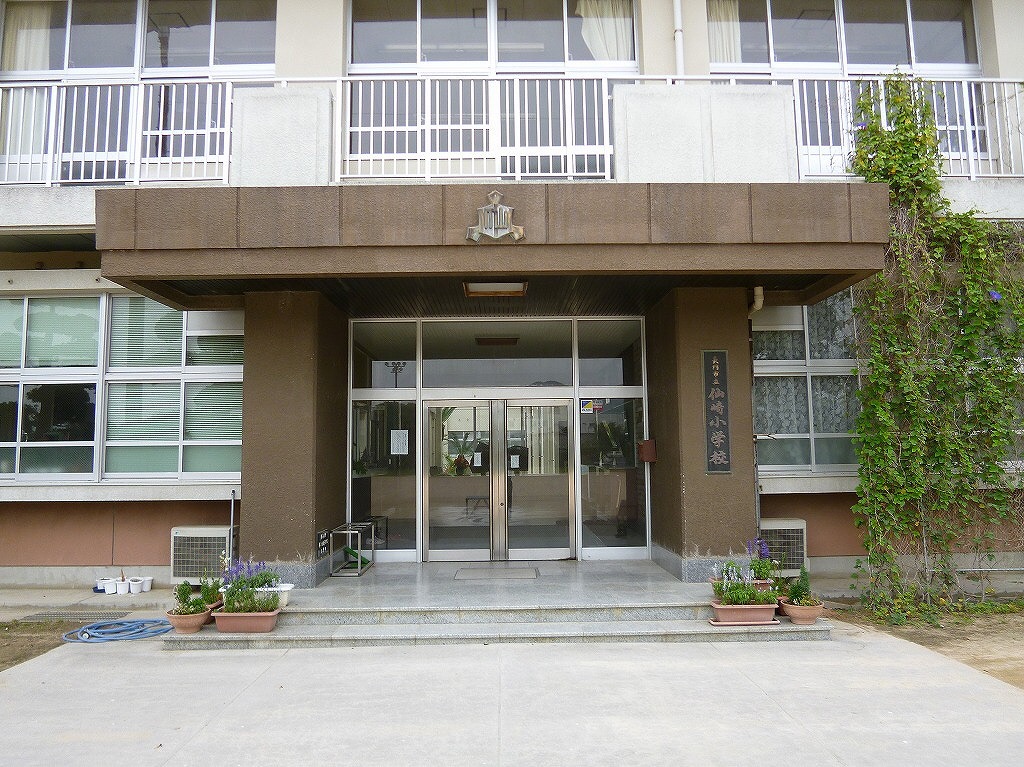
    It is very common to have a floor step (a step or two) in the school entrance. It is always elevated from the ground. In the entrance, you will see the school logo and the school name. Take note that the entrance for students is separate from the entrance for teachers and other school workers.

    Shoebox (kutsubaku)

     
    suginami-school.ed.jp

    schoolnet.edu.city.yokosuka.kanagawa.jp
    In Japan, one needs two sets of shoes when going to school. Outdoor shoes and indoor shoes. Upon entering the school entrance, outdoor shoes are put in the shoebox and indoor shoes are used. These shoeboxes are labeled per grade, per class, and per students on each box. The same goes with the teachers. Don’t worry if you visit a school. There are always indoor slippers ready for visitors.

    Hallway (Roka)

    todagumi.com
    Right after the entrance and the shoeboxes is the hallway. The hallway leads to the different parts of the school. This is also where posters and announcements are being displayed.

    Principal’s Office (Kochoshitsu)

    asahi.com
    tokiwae.blog.fc2.com
    The Principal,’as the school’s highest official has a very nice working space, the Principal’s office. It usually has sofa to entertain special guests and a nice long table to conduct important meetings.

    Teachers’ Room (Shokuinshitsu)

    tatemono.art-saitama.jp
    education.city.nonoichi.ishikawa.jp
    The teachers before and after their classes stay, meet and work in the Teachers’ Room. Each teacher has her own table and chair. The tables are lined-up side by side and fronting each other. The tables are grouped according to grade level. The top three school officials (Principal, Vice-Principal and Head Teacher) are positioned in one side of the room with their tables also lined up.

    Registrar’s Office (Jimushitsu)

    tue.edu.city.iwakuni.yamaguchi.jp
    tochigi-film.jp
    The Registrar’s office is where the non-teaching personnel work. School visitors can inquire from here. Teachers also get their school supplies from this room. Everything a teacher needs in class: paper, clips, rubber bands, laminating film, etc.)

    Printing Room (Insatsushitsu)

    cms.gifu-gif.ed.jp
    As the school is a paper tiger, a printing room is indeed necessary. Here teachers can do their photocopying and other printing needs. This room is complete with paper cutters and all sizes and sorts of paper.

    Toilet (toire/benjo)

    komei.or.jp
    Toilets are found on each floor of the school. Boys are separate from girls, as well as the teachers toilet with separate females and males.
    Toilets are supplied with unlimited tissue and hand soap. It is kept very clean. Indoor slippers are not used inside the toilet. Toilet slippers are used instead.

    Library (toshokan)

    caritas.or.jp
    Usually on breaktime between the second and third period and after lunch students go to the library. Japanese elementary schools really promote reading among students. They even have a chart to show who has read the most number of books and they also have a regular list of reccomended books to read.

    Clinic (hokenshitsu)

    weblog.citi.hamamatsu-szo.edu.jp
    School clinics are so cool and relaxing. A very accommodating place for kids who get sick while in school. Plus, the school nurse is very kind. The school clinic gets crowded when it’s time to measure students height and weight or if they have dental or eye check up, and in winter when flu spreads.

    Pantry (kyuushokushitsu)

    kurodamich.exblog.jp
    Most schools have their own pantry where the school lunch is being prepared. This area gets very busy during lunchtime when students get their food and utensils and later when they return them after eating. Other schools don’t have pantry but there is a separate area called kyushoku center located where they prepare the lunch for the school’s within the community.
    Let’s have a break. Sit back and relax. Let’s continue our school tour in the next article. In the next part, let’s go outside the main building of the school and see what’s around. See you in a short time.