Category: Culture

  • Sports Festival, the Japanese way

    Sports Festival, the Japanese way


    happystorm.x.fc2.com

    Many schools are having their annual Sports Festival or what they call “undokai” (運動会). The entire school and the community, especially the teacher-advisers and students are pushing themselves very hard to come up with a very organized and fun undokai. Strenuous rehearsals are done many times a week.

    Everyone is looking forward to the big day, which is usually a Saturday or a Sunday. With all their might, strength and agility, kids perform in various events.

    1.      Oodama okuri 大玉送り
           tsubaki-e.esnet.ed.jp
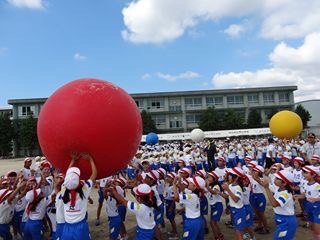
    This is a really fun and exciting Sports Festival event and is sure to make you shout and tingle. Literally, “oodama” means giant ball and “okuri” means to send. Students are divided into teams (two-four) and are given a giant ball (colored according to their team) which they have to push with their hands above their heads starting from the front line to the back and forth in the shortest possible time. You can view this video and see how fun it is.
    http://youtu.be/X3VbYoO0P9k


    2.      Tama ire 玉いれ
    allabout.com.jp

    [wpvideo Yl64nq5b]

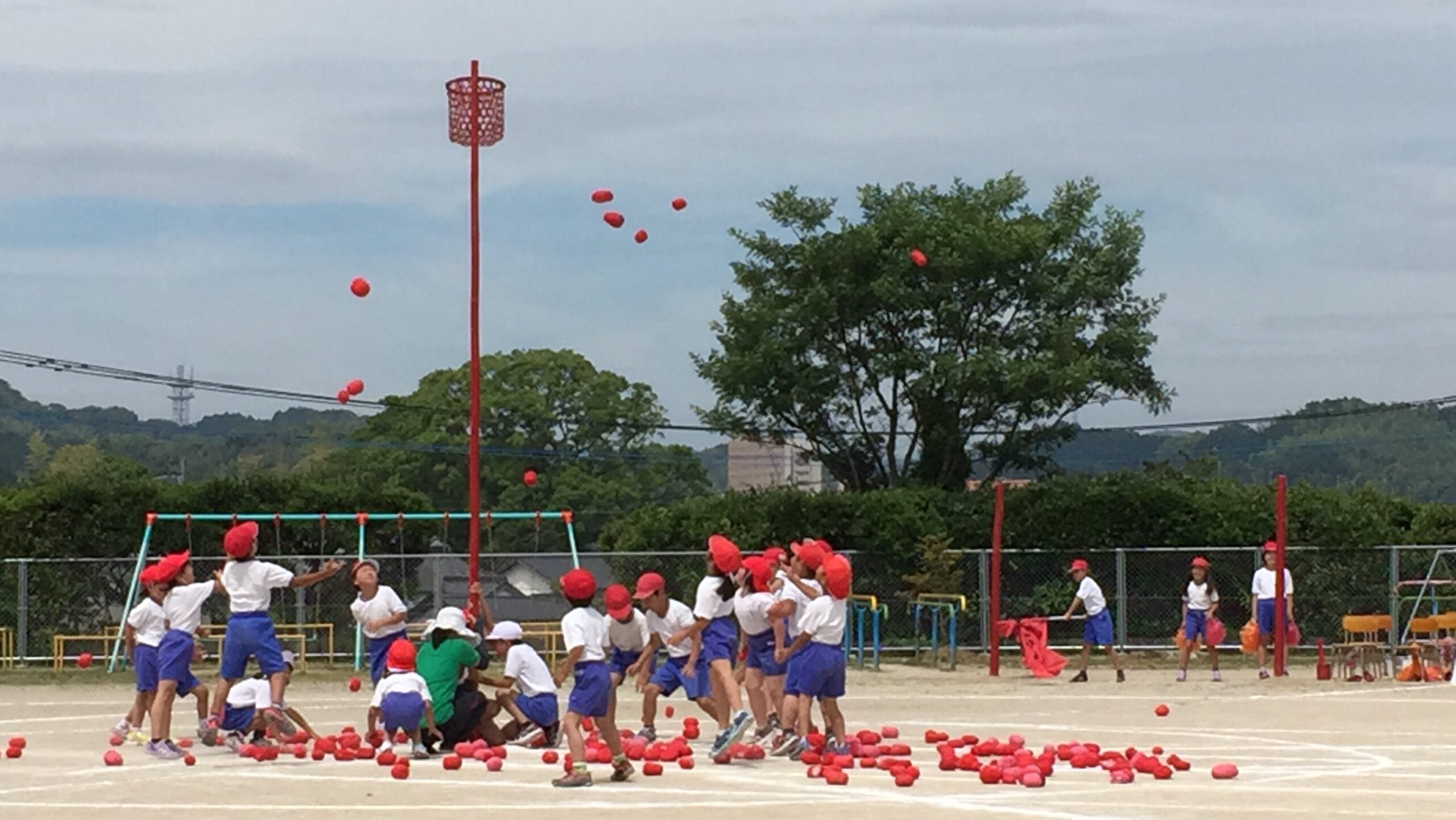
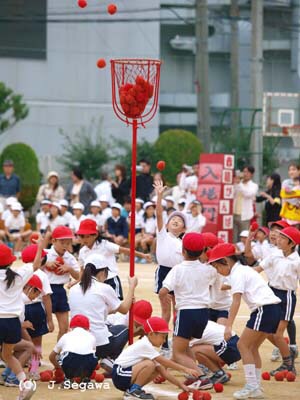
    ​Another fun event that uses ball, tama ire (ball-toss game) requires speed and accuracy. To explain, “tama” means ball and “ire” means to enter, it is a game which balls (usually made of cloth) are thrown into a basket on a high pole within a specified time. The team that has more balls in the basket wins. Watch the video here


    3.      Mukade 百足     
           ar75ts.exblog.jp
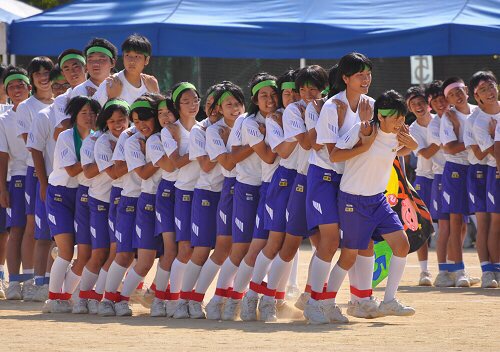
    “Mukade” means centipede. It’s not a game using that creepy centipede bug, so don’t be scared. It is centipede race. It is a running contest where students in the same team form a line or two and tie their legs together and run. Coordination and timing is very important in this game. Just imagine running fast with one of your legs tied to another leg.


    4.       Taifu no me 台風の目
          cms.edu.city.hiroshima.jp
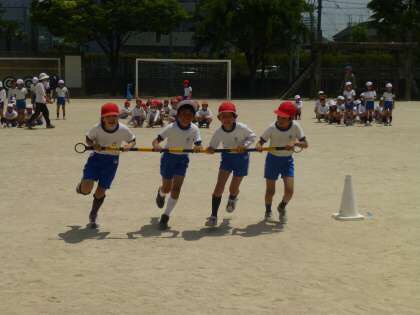
    The mechanics of this game is first, a group of students from a team carry a pole and then run as fast as they could and must rotate on a barrier twice like the eye (me) of a typhoon (taifu). I think that this is the only time that the word “typhoon” means fun.


    5.       Kumitaiso 組体操 
           hiromiphoto.com
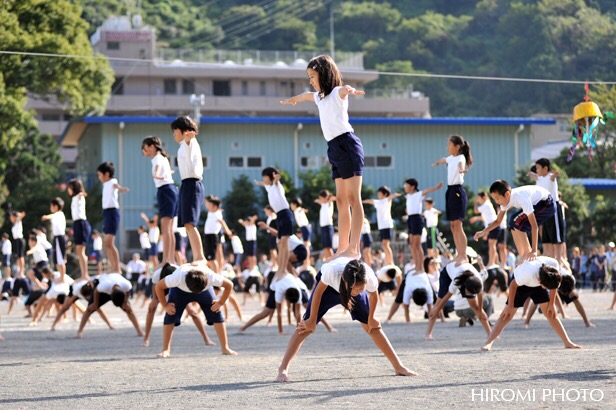
    I consider this as the ultimate event in the Sports Festival. Kumitaisou is a coordinated group gymnastics. It is breathtakingly awesome. It requires strength, concentration, coordination, teamwork and balance. Kumi組み means group, tai 体  means body, and sou操means maneuver. Watch the video and see for yourself.
    http://youtu.be/PEMdfqZFiR0
  • The May 9 Journey

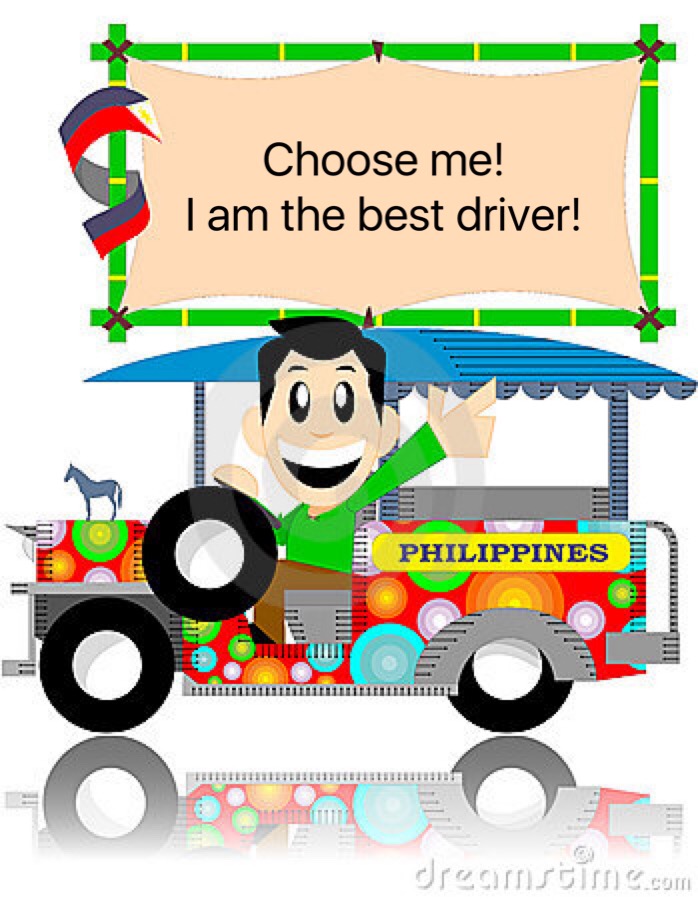
    A new journey is set to start on May 9 in a community located down southeast. People will choose who will drive the jeepney. To be the driver is the most coveted position in the community.

    Driver 1,2,3,4&5: I am a good driver. I can take you to a better place. Choose me.

    Most of the Passengers: Yes! Thank you Driver 1! You are our savior! You are the only one who can take us there.

    Driver 2, 3, and 4 and their supporters : Driver 1 is incapable. He is arrogant and boastful. He is sick. He is on drugs. You should not let him drive. It’s dangerous! Heed!


    Driver 1’s supporters: You are jealous because we like him! Back off! We like him and only him can take us to a better place.

    Driver 2:
    But, he is a killer-driver. Yes, he killed bad people but he killed some innocent people as well. Especially kids. They were kids playing on the street and because he thought kids should not play on the street, he bumped onto them, crashed and killed them. He is dangerous! Let me drive you and I will take you to a better place. I will give the poor a free ride.

    Driver 1’s supporters:
    That’s good for those kids! They should be killed! They’re a menace to the society! They disturb traffic! No! We won’t let you drive. We don’t like you because of rumors that you are a thief.

    Driver 2:
    That’s not true! I did not steal anything. They just said that to ruin me. They can’t even prove it.

    Driver 1’s supporters:
    We still like Driver 1. He is so cool. He is the only one. He keeps his house clean. In fact, his house is the cleanest and safest house in the community.

    Driver 3:
    No! It’s not clean. I know. There are roaches all over! Roaches eat the rotten food. They’re everywhere. His son feeds the roaches and he can’t even stop him. I know where we can get the rotten food in his house. I can show you.

    Driver 1’s supporters
    : You are crazy! You can show us?? Hmmm… Maybe you also play with rotten food. You are a roach-feeder yourself! Back off! We don’t like you! You said you will take us to a straight road but we don’t believe you!

    Driver 4:
    Don’t let him drive! Let me drive instead. I am calm and I don’t say bad words like him and I have a good plan for our journey. I value women because I am a woman myself. He is a womanizer. He joked about rape. Not a good example. He even cursed the priest. It’s not godly.

    Driver 1’s supporters:
    Shut up! It’s just a joke. We like it. It’s funny. It’s so cool. He is one of us. You are ambitious! You are just an inexperienced woman. You are not even a pure member of this society! You just moved in! 

    Driver 5:
    I am the best! Choose me. I am intelligent and has a length of experience. I am tough.

    Driver 1’s supporters:
    We know you are good but you are sick and you may die anytime. So, we will choose Driver 1. Will you just stop your dream to be the driver and support Driver 1 instead?

    Conductor Aspirant: 
    Driver 1 is a thief! A secret thief! He steals your money just like Driver 2. I know his secret box. Ben P. Isidro is keeping it in his house. I know how much money is in the box. I counted it. It’s true! I quit my job if it’s not true!

    Driver 1’s supporters:
    You are bad! You are a barking dog! How did you know about the secret box? Hmmm…Ben P. Isidro is not good, huh! Why can’t he protect a secret? We’re not going to trust Ben P. Isidro anymore. We thought he is a good secret-keeper but he’s not. Friends, let us boycott Ben P. Isidro.

    Those are all accusations! We love Driver 1. He is the only one who can save us! 

    Driver 1: Thank you, thank you! Yes, don’t believe them. You don’t need to scrutinize. Just believe me. I will take you to a better place.

  • How to distinguish Japanese from Korean and Chinese

    How to distinguish Japanese from Korean and Chinese

    Can you tell if a person comes from a specific country? Before coming to Japan, I had no idea how to distinguish Japanese, Korean and Chinese from one another. I had quite a few experience (when I was in the university as an international student) of trying to speak Japanese to a fellow student who I thought is Japanese, but after all, turned out to be Korean or Chinese (who is new to Japan and cannot speak Japanese). To avoid future embarrassment of assuming someone is not, let me discuss their similarities and differences. This is according to my observations and the opinions of my friends with who I discussed the subject.

    twitter.com

    Similarities

    1. Skin.

    preview.ph

    Japanese, Korean and Chinese, generally, have the same skin characteristics. It is popular that their skin is more resistant to aging and that they have fair, light porcelain-like skin. It is due to extreme sensitivity to environmental factors and chemical effects of some products, which can disrupt the pH balance. For this reason, advertising about skin beauty care in Asian countries is very economical as Japanese, Korean and Chinese (especially girls) have to be more careful with products and treatments they use on their skin. It is even impressive to see the number of skin care products build on the myth that Asian skin would look amazing and healthy for a long time. so, it is hard to tell who is who if you only look at their skin. 


    2. Body built


    theatlantic.com

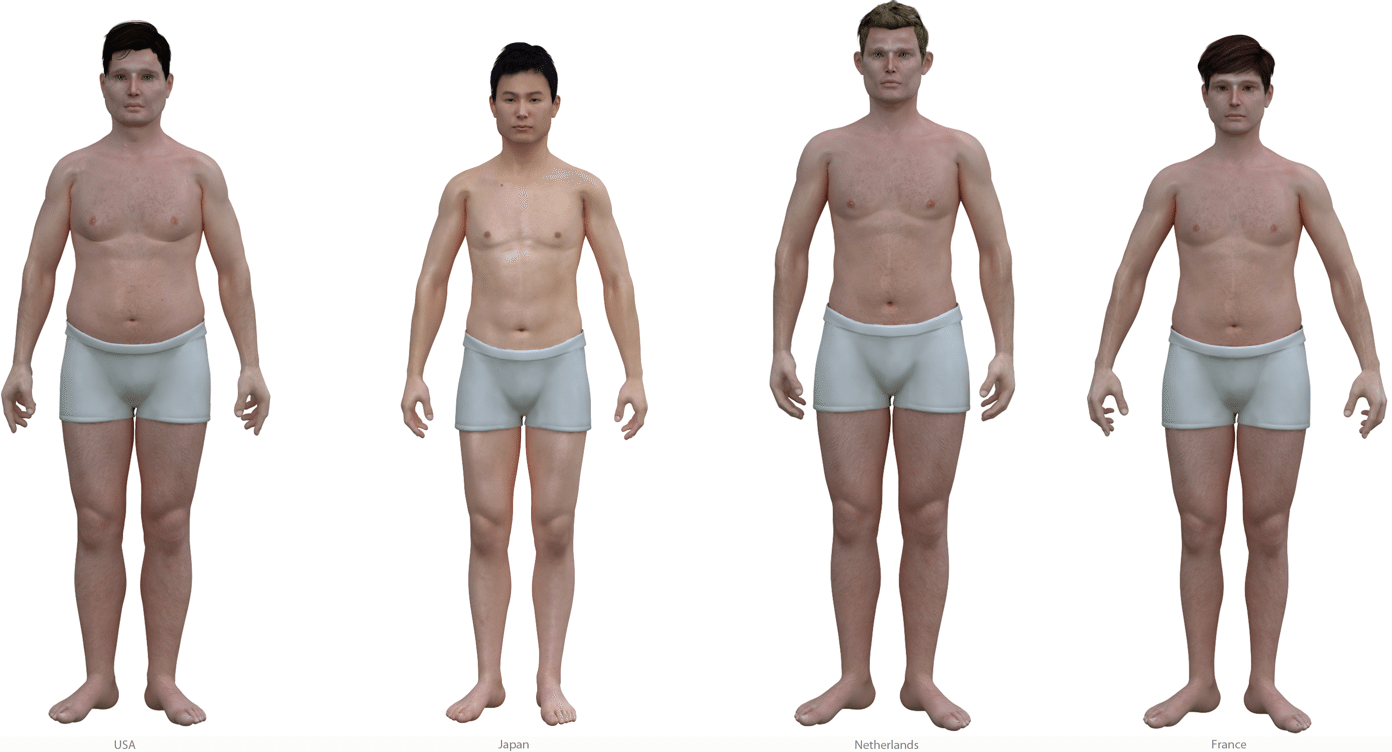
    There are of course differences in body built among Japanese, Korean and Chinese people.  As human as we are, we can be fat, thin, big or small. It all depends on our individual diet and consumption, not to mention our genes. Although we have a general impression as to how, for example, an American body tend to be (tall and big). Asians, specifically Japanese, Korean and Chinese, are typically of slim body built and kind of short in terms of height. But be careful not to label all of them slim and short, because, as I have said, everyone is different. Some can still be tall, big and fat.


    Differences

     1. Facial Features.

    onehallyu.com

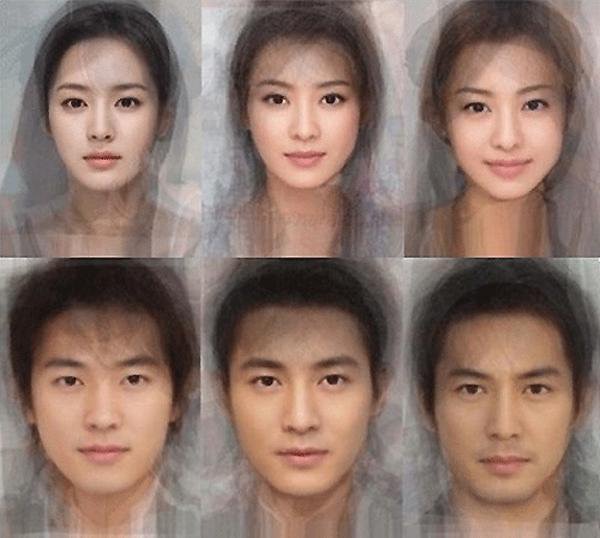
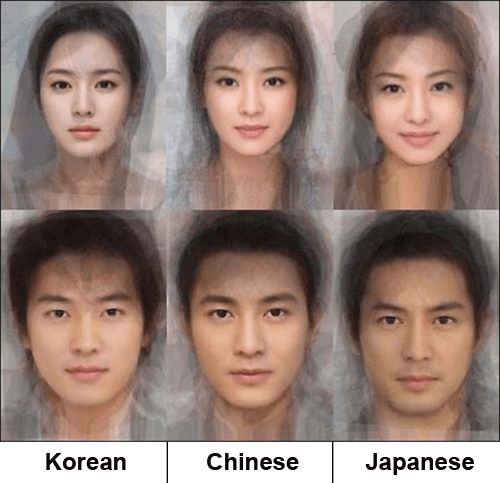
    They may look the same, but if you are a keen observer, there are a few distinguishing characteristics. The Japanese face is generally longer and wider, while the Korean face often has a more prominent jaw and high cheekbones. The Chinese face is typically round in shape. When it comes to the windows of the soul, the Japanese eyes are often described as angled upwards, contrary to the Chinese eyes which are usually angled downwards. Koreans often have smaller eyes.


    2. Dressing style

    Japanese street fashion


    thetokyogirl.com

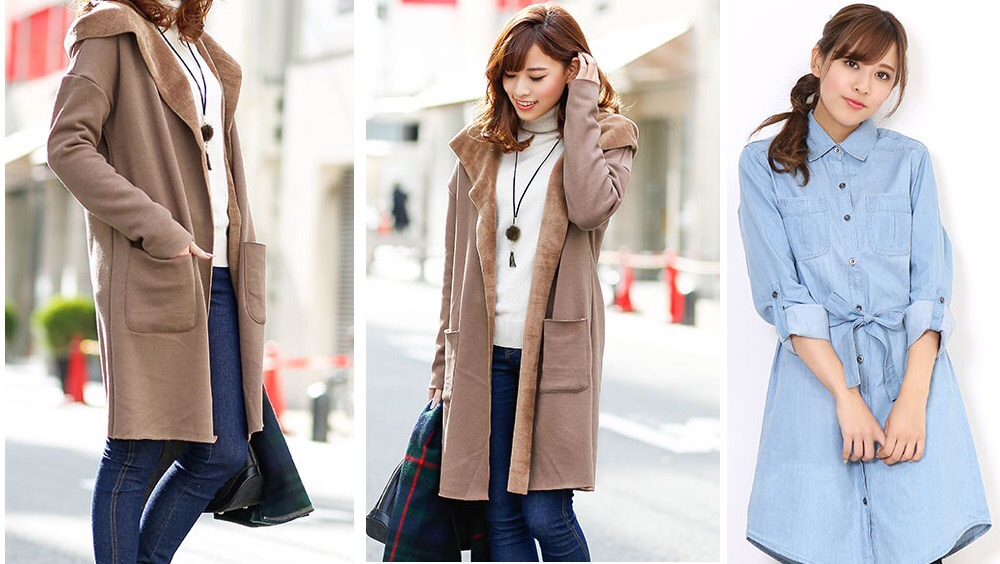
    My Japanese friend told me it is easy to tell whether a person is Japanese or Korean. Just look at how they dress. Japanese people value harmony and uniformity, hence, when they dress up, it is something aimed to blend with the majority. Plain, simple and subtle colors are the key to typical Japanese attire. Nothing that stands out. I observed that wearing suit is very common in Japan. May it be a final (research) presentation in school, a job internship, a job interview, graduation; Japanese usually wear suits, in black and white (inner). Very seldom you can see a coloured inner. 

    kore.am

    Contrary to Japanese, most Koreans wear bright and more colourful attire. I remember my Korean friend said in her culture presentation in school, that, unlike in Japan, they can wear nice colourful dresses when they do their internship and especially during job interview. Chinese, on the other hand, due to its high cultural diversity is difficult to distinguish


    Even up to now, after living for quite some time in Japan, it is still challenging for me to tell which is what, and who is who. Even people of the same race can look different. It is hard to generalize. We can never actually generalize. As the saying goes “Everyone is unique”.

  • Rose Festival in Huis Ten Bosch

    Rose Festival in Huis Ten Bosch

    Rose and festival – two completely different words but are both related to love, happiness and celebration. Just imagine these two words being used together. It is indisputably pleasurable experience.

    The Location

    Huis Ten Bosch is a Dutch-inspired theme park in Nagasaki. It is a huge park where the buildings and surroundings would make you feel you are in Europe, but in fact you are in the island of Kyushu, Japan. Here is the location: 1-1 Huis Ten Bosch Machi, Sasebo, Nagasaki Prefecture 859-3292

    You can do so many fun things in this park, but here I will talk primarily about the theme parks Rose Festival occurring in spring(around May to June).


    All About Roses

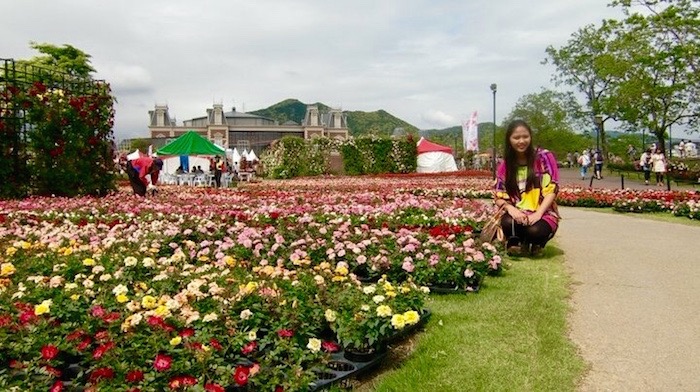
    One of the grandest flower celebrations in Huis Ten Bosch in Nagasaki is the Rose Festival. By the name itself, rose fanatics will certainly go crazy about it. The park boastof its one thousand varieties of rose which blooms in full during this event. There you will see that roses are not just red. There are so many different shades of colors. There are shades of red, pink, purple, yellow, orange. A blast of colors everywhere. Also you will see roses in different sizes and forms. Big, small, tiny. There are even single-petalled roses.The kinds or roses that you may have never seen before. Its absolutely amazing!

    My Experience 

    I can still remember even now how unexplainable the feeling was when I first experienced it four years ago. It was like heaven on earth. I was surrounded with roses. Everywhere I turned, there were roses. I smelled the air, smiled and said ‘cheese’ to my camera. And almost everyone who was there was doing the same. The sweet smell of the air was so amazingly pleasant. It was like I was in a fragrance commercial tipping my head back smelling the air.  It was ecstasy! That spot where roses of all colors and all sizes bloom is more than a ‘bed’ of roses. It was a ‘world’ of roses. 

    Conclusion

    If you like the pictures, how much more in  person? With its pretty colors, soft petals and pleasant fragrant, roses are just wonderful. A true nature’s gift. No wonder why so many girls are named Rose. It doesn’t only mean a flower. It means beauty. It means magnificence.

  • Mask, a Must?

    Mask, a Must?

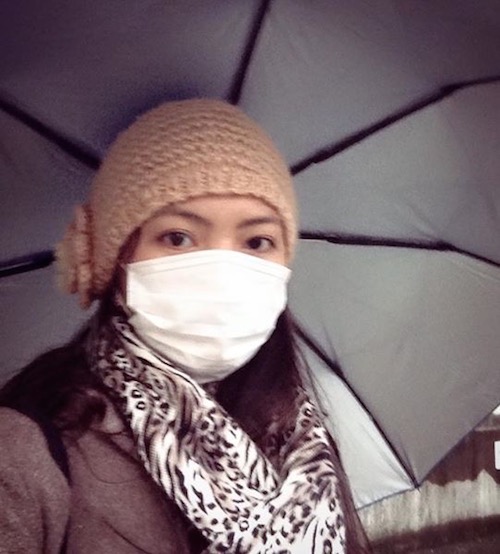
    When I first came to Japan as a visiting relative, I was surprised to see a lot of people wearing masks. “What’s going on? Is there an epidemic?”, I curiously asked my sister who is married to a Japanese and has been living in Japan for many years. She explained that in Japan, it is normal for people to wear masks as protection from diseases and allergies.
    (Photo from http://www.arishaintokyo.com/stuff-and-things/mask-yourself-from-the-flu/)
    Back in my home country, if you wear a mask in any public place or even in the comfort of your own house, you will get that kind of look from the people around you as if you are suffering from a serious disease.
    In my short visit to Japan, I could not avoid feeling weird every time I see a number of people around me wearing masks in public places. I felt like I was in a danger zone or in a scene from a disaster movie that anytime I can get sick and that I need to wear a mask, too, to protect me from the invisible enemy.
    Out of curiosity, I tried wearing one. I was not feeling comfortable with my nose and mouth covered. I felt suffocated. I did not like it. The first time I wore it was not a pleasant experience for me.
    When I came back to work in my country as a teacher, I tried wearing one while writing on the board to shield me from chalk dust and as expected, my students asked me if I was sick.
    Fast forward two years later in a public elementary school in Japan where I worked as an English teacher, I was so surprised when one winter morning, all my studentts wore masks, except me.
    Most of the teachers, too, wore masks . It was the flu season, so  everybody wore masks to avoid catching and spreading the virus.
    It is the one of the Japanese way of being polite and considerate to others. If you’re sick, wear it so as not to spread the virus.
    You can’t get sick and be absent. It’s a crime! But, that is, of course, an exaggeration. Japanese are very work-oriented people and being absent from work or school will mean a big deal.
    Masks are worn not only to avoid catching and spreading disease but I was told that it is also a way of keeping you warm in winter days. Winter in Japan gets really cold so wearing layers of clothing and a mask helps to keep you warm.
    So, is it a must to wear a mask? Well, come and experience Japan and decide it for yourself.
  • 12 Things People Miss About Japan When They Leave

    DSC_0043
    DSC_0043

    Japan is such a wonderful country. Most of whom I know, Japanese and foreigners alike express their fondness of the many aspects of the country: its people, food, celebration and culture in general. Most of them, when they leave the country, they wish they could go back and experience again the many things that they like about Japan. For those who are not in Japan anymore or are planning to leave Japan soon, let’s see how many of these random things below will make you long to be back or stay longer.

    1.       Automatic toilet.

    antalainen.wordpress.com

    One of the many surprises (if not confusion) that a foreigner can experience in Japan is the automatic toilet. All you need to do is sit, relax and press the right button. Be careful which button to press though, otherwise you’ll end up in a mess or an emergency call.

    1.       On-time trains and buses.

    japanvisitor.com

    When it comes to transportation, I can say that Japan is world’s number one. Trains and buses are always on-time and are very reliable. The technology is so superb that in some areas, you can check in a monitor how many more stops away the bus is.

    1.      Food

    princehotels.com

    Wherever we go, wherever we are from, it’s normal to miss the food in the country we stayed. Japan is not an exemption. Japanese food is great and will surely make you crave for more when you leave. How can you not miss sushi, ramen, yakiniku, yakitori, onigiri, miso soup, and the list goes on.

    1.       Onsen.

    lipstickalley.com

    A great stress-reliever in Japanle is going to the onsen or hot springs. Japan is blessed with many natural hot springs and it is part of their customs to go to hot springs, all year round, most especially in winter. I like going to onsen and when I leave Japan, I always wish I could go back right away and soak myself in Japanese onsens.

    1.       Ofuro.

    kabuchon.com

    In Japan, all bathrooms have bathtub and the Japanese people take a bath (ofuro) at night. Bath time is a great bonding time for parents and kids when they do it together and it is a good time to relax when done alone. Well, in my country, we rarely have bathtubs in the house. We take a shower in the morning instead.

    1.       Nomikai.

    sudy.co.hu

    Nomikai means drinking party. Yes, we do have drinking parties in our country but the experience in Japan is different. The party is started with a message from the group leader. Then, everyone holds their glasses up and says the word ‘kampai”. And the drinking and talking goes on. I miss having my glass filled by my friends. In Japan drinking parties, one should fill each other’s glasses instead of just pouring your own, as what we are used to in our country.

    1.       Nomihoudai tabehoudai.

    japanistas.com

    Houdai means as much as you can, which translates nomihoudai as drink-all-you can and tabehoudai as eat-all—you can. I think, it’s only in Japan where you can eat really good food and drink assorted alcohol like there’s no tomorrow.

    1.       Sakura viewing

    Author’s photo

    When I think of Japan in spring, there’s no other thing that comes into my mind but sakura or cherry blossoms. People all over Japan celebrate the coming of spring by watching the bloom of this amazingly beautiful pinkish-white flower through an activity called hanami or sakura viewing.

    1.       Purikura

    deviantart.com

    Purikura is a booth where you take your pictures and edit them with different designs. With purikura, you can look like a celebrity. It is so much fun to do especially when done with your friends. The pictures are pocket-size. I did purikura once with my friend and I almost couldn’t believe that was me in the picture.

     10.    Fruit-picking

    Author’s photo

    One thing I always miss about Japan is the fruit-picking activity. Orange-picking, strawberry-picking, blue-berry picking, grape-picking. Fruit picking depends upon what season but usually it is in autumn and winter.

     11. Konbini

    supercheap.japan.com

    Konbini or convenience stores are everywhere in Japan. There are lots of them but the big ones are Family Mart, Lawson, Mini-stop and 7-Eleven. These stores open 24-hours and sell a wide range of product more than enough to make our lives easy and convenient.

         12.  Anime and Manga

    atelier801.com

    The anime and manga enthusiast are sure to wish they’re in Japan to watch more anime and read more manga (comics) right here in the country where these originated. Although you can watch them in YouTube or buy the book online, there is nothing compared when you have it here, fresh and updated.

    I know that there are still many things I haven’t mentioned here which makes people miss Japan when they leave the country. Some of you may be juggling thoughts in your mind recalling all those good things you have experienced in Japan when you were here. After all, those things are just a thought away.  Feel free to remember and never forget. For if you keep thinking of those memories, those will never fade. Keep the memories in your heart.


  • Celebrating Birthdays in Japan and the Philippines

    Being a Filipino living in Japan for a while, I have experienced how birthdays are being celebrated in a different manner in my homeland Philippines and in my current country, Japan. There are a number of differences worth noting, for the love of knowledge about cultural differences.

    image

    (Photo from en.wikipedia.org)

    Celebrating birthdays, I bet, is universal. Whatever race we are, wherever we are born, it is a fact that a birth of a person calls for celebration. It is done every year to commemorate one’s existence and life on earth. Like in most countries, birthdays are also celebrated in Japan and the Philippines. How is it celebrated? That’s the question I will try to answer.

    1. Most Celebrated Birthdays

    In the Philippines, the most celebrated birthday of a child is the first birthday. Expect balloons and party hats, souvenirs and cake, food and music. And expect all your invited and uninvited neighbours to come and celebrate. When a girl turns eighteen and if the parents can afford, a Debut Party is to be expected. It is the grandest birthday celebration of a young woman.

    image

    The Debut is the Philippine’s traditional coming-of-age birthday celebration. For the woman, it is celebrated with the traditional 18 roses, 18 candles, 18 tokens, the debutante’s pretty gown in a wedding-like celebration. For the man, the coming-of-age is at the age of 21, but with less formal or no grand celebration at all. The next grand celebration is at the age of retirement, which is 60 (voluntary retirement) or 65 (compulsory retirement).  Filipinos life span is shorter compared with the Japanese, so expect big celebrations at old age (70, 75, 80 so on).

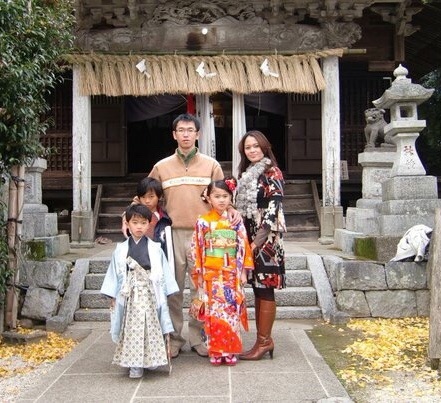
    In Japan, where uniformity is an important aspect of the society, birthdays are somewhat celebrated on a nationwide level. For children aged seven, five and three, families celebrate on a national festival called “Shichi-go-san”, which literally means seven-five-three. Girls of age three and seven and boys of age three and five are celebrated, and parents pray for their children’s good health and growth. Children are dressed in their traditional clothes – the very expensive and fine kimono, and parents take them to the shrine to pray. Shichigosan is nationally celebrated every 15th of November.

    image

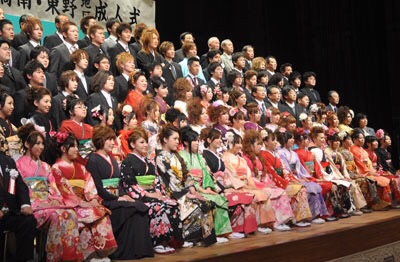
    For the coming-of-age celebration, men and women aged twenty, gather in the city or town hall and celebrate “seijinnohi” or the Coming of Age Day. Women wear their finest and very expensive kimono called furisode with matching make-up, while men wear their finest suit or their traditional dress called hakama.

    image

    (Photo from minamishinshu.jp)

    1. Simple or Grand?

    In the Philippines, birthdays are big events. It is highly celebrated within the family and relatives and the circle of friends. Sometimes, weeks or even months before the big day, everyone looks forward and prepares for the big celebration.  Of course, not every year is a big celebration. It depends on the individual family’s financial capacity. If you have the gold, celebrate like a star. But, if you just have a dime, settle for a simpler celebration. Rich or poor, may it be a hotel celebration with a hundred guests or pansit (noodles) celebration with the family, birthdays are hailed in the Philippines.

    In Japan, birthday celebrations are usually celebrated in a simple manner. No extravagance, no big celebrations. Parents usually celebrate their kid’s birthday by simply preparing a small and family-exclusive party. Adults may go out with their intimate friends and celebrate.

    1. Give or take?

    One thing I observed about celebrating birthdays in Japan is that the celebrant is exempted to pay part of the bill. On my first birthday in Japan, my Japanese friend set up a dinner party with our other international friends and at the end she did not allow me to pay since it is my birthday. It is the complete opposite of my experience in the Philippines. When I celebrate my birthday, my friends and co-workers expect me to give them a treat. Take them out to a nice restaurant and pay for their meal or invite them in your house and prepare food for everybody to feast. In the Philippines, generally, the celebrant is the one who spends.

    1. Feast or meal?

    Big birthday celebration in the Philippines is like having a feast. Filipinos love to cook and eat and love to entertain guests. Expect lechon (whole roasted pig) on the table which everybody loves, and a lot more food, including pansit, lumpia and adobo. Not to mention the drinking session that will follow after. There are also games and karaoke singing.