Tag: kanji

  • How I learned Japanese in 3 months

    Before coming to Japan, I only knew two words. Oishi (Yummy) and arigatou (thank you).

    When I came to visit for one month in 2011, I learned a few more words.

    Words that are used in everyday life:

    ohayou gozaimasu (good morning)

    konichiwa (hello)

    konbanwa (good evening)

    oyasumi (good night)

    itadakimasu (grace before meal)

    gochisosamadeshita (grace after meal).

    ittekimasu (I’m going – when leaving the house)

    itterashai (take care – to someone leaving the house)

    tadaima (I’m home)

    okaeri (I’m happy your back in the house)

    And words used by my sister raising her children (just by listening to her everyday)

    oide (come here)

    dame (No/not allowed)

    yamete (stop)

    abunai (dangerous)

    hamigaki (brush your teeth)

    shukudai (homework)

    tabete (eat)

    sugui (wow)

    The following year when I came back as a government scholar, learning Japanese was the main objective for the first semester.

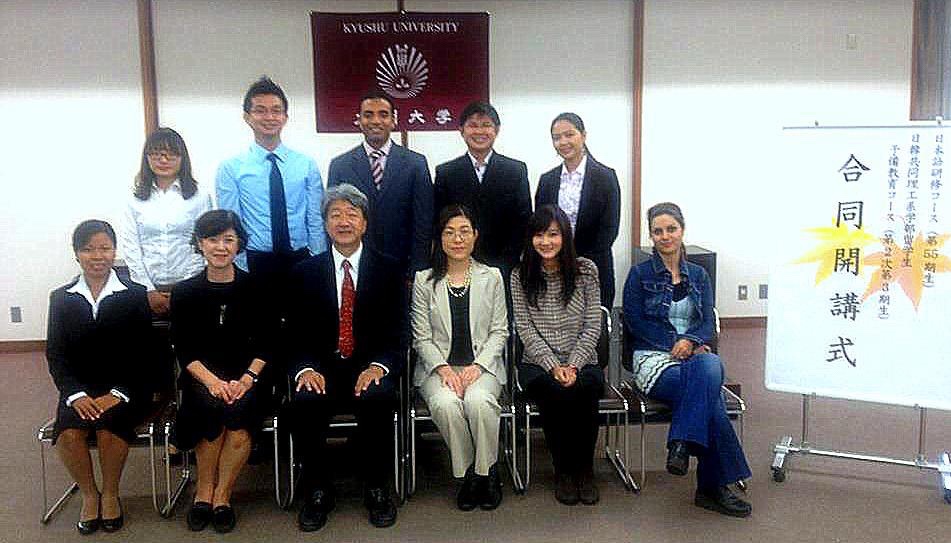
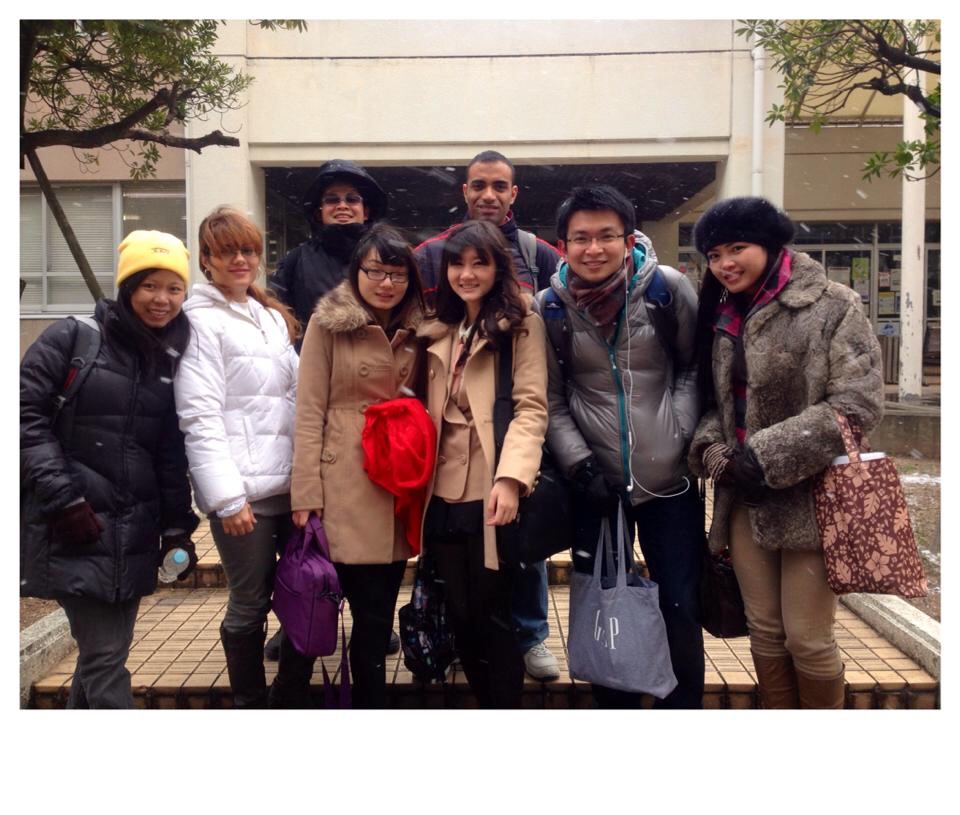
    We were eight students in our class. One from each country: Philippines (me), Myanmar, Thailand, Iran, Laos, Egypt, Malaysia, and China.
    So, how did I learn Japanese? Let me enumerate the methods below.

    1. Memorize hiragana and katakana. These are the basics like the alphabet. Katakana are for foreign/loan words and hiragana are for Japanese words. My university asked me to memorize katakana and hiragana even before coming to Japan. I can’t remember exactly if it was both or just one of the two but I’m sure it was the first task as a student.

    2. Increase vocabulary. By mastering hiragana and katakana, I learned to read words and thus increased my vocabulary. In my university, we were taught tons of new words everyday like twenty to thirty words depending on the lesson. We have to master those words because we were given a quiz everyday, five to ten words. And if we make a mistake, we had to write the words several times to fit on a whole sheet of paper. You don’t wanna do that, trust me.

    We also learned vocabulary by reading stories and learning the dreaded kanji.
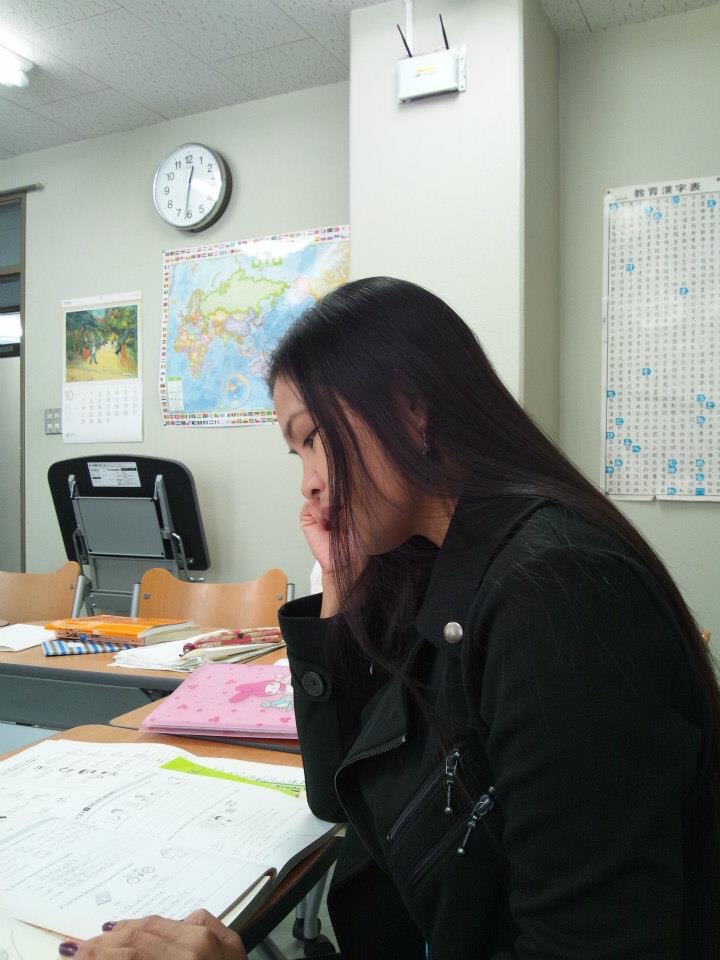
    3. Conversation practice. This is the most important part, putting the learned language into practice. In my class, we always have kaiwa no renshu (conversation practice). We were paired with our classmates to do specific conversations and sometimes converse with the teacher. There was a recorded kaiwa test where we had to talk to the teacher and answer her questions. We listened to the record for evaluation.

    4. Make a (PowerPoint) presentation. Believe it or not, with very little vocabulary, we were told to make a presentation of our country almost every week. The purpose is to increase vocabulary, share our culture and gain confidence in speaking. We had Japanese tutors who helped us in our Japanese. I remember the first presentation was Watashi no Kuni no Asagohan (My Country’s Breakfast). We also presented about our countries houses, tourist spots and many more. And the final presentation- about our major.

    5. Write a diary. Once a week, every Monday, we were asked to submit a diary. This was also very hard in the beginning because of not enough vocabulary and knowledge of the language. But this really helped us learn the language on our own, translating every word and sentences we wanted to say in Japanese. This was when google translate became handy. And the app imiwa? is also very helpful. I highly recommend it. After the teacher checked our composition, we were asked to read it in front of everybody. Oh, I still remember a few times I couldn’t read my own writing. Lol.

    6. Watch movies and anime. This was my way to learn Japanese outside of class. Even before coming to Japan, I started watching Japanese movies and anime. A few of my favorites are Sen to Chihiro no Kamikakushi (Spirited Away), Hotaru no Hakka (Grave of the Fireflies), and Hachiko. I watched it in Japanese with English subtitles. I know it’s hard to learn a language this way but I kind of picked up some Japanese words and phrases. I was drowned in tears with the last two movies. My ultimate favorite anime is Chibi Maruko – which I still watch even up to now. I used to watch it everyday. I learned many things from Chibi Maruko- from daily Japanese family life to school life and events and Japanese culture and celebrations. The language used is fairly easy too because the main character is a third grade student.

    7. Talk to locals. There’s no better way to learn a language than using it to talk to the natives. You will be surprised how much you will learn naturally by engaging in conversations with the Japanese. I learned a lot talking to my Japanese tutor and my Japanese friends words and phrases I never learned in class. I was advised to have more Japanese friends and spend more time with them than hanging out with fellow foreigners/kababayan where you tend to use English or Filipino/Bisaya.

    Japanese Intensive Course

    I started learning Japanese officially in late October 2012 and we finished in early February 2013. It was called the Japanese Intensive Course. I salute all my teachers. They were all really good.

    During that rough three months, I learned to speak basic conversational Japanese and I was even able to give a (memorized) speech in full Japanese at the podium in front of everyone during the closing ceremony.

    Never Enough

    But, that was not enough. Japanese is a difficult language to master given that it uses many characters – hiragana, katakana, romaji and kanji, and it has many forms – basic, polite and honorific.

    Lifelong Learning

    Even after more than seven years I am still trying to learn more. I learn new words by dealing with everyday life – medical terms when I got sick and when I gave birth, construction and real estate terms, bank terms, neighborhood association terms and the list goes on.

    It’s like filling a sack with grains everyday. But the sack will never get full but surely the grains will get plenty enough to survive.
  • What makes kanji difficult and challenging and what are the ways to overcome it?

    What makes kanji difficult and challenging and what are the ways to overcome it?

    Many Japanese language learners express difficulty about the language and most of them say that learning kanji is what makes it hard.

    Kanji is one of the three set of characters, together with Katakana and Hiragana, which make up the Japanese language. While Katakana and Hiragana symbolize sounds, Kanji symbolizes meaning.

    So, what makes kanji difficult and challenging? The answer is simple -it’s the way they are written and read. Let’s discuss them one by one.

    A. Writing

     The way to write kanji is based on strokes – number of strokes, stroke pattern. For example, the kanji for number one 一 read as ichi consist of only one stroke. That is from left to right. More complicated kanji, for example the kanji for difficult, 難しい read as muzukashii, 難 itself consists of eighteen strokes.

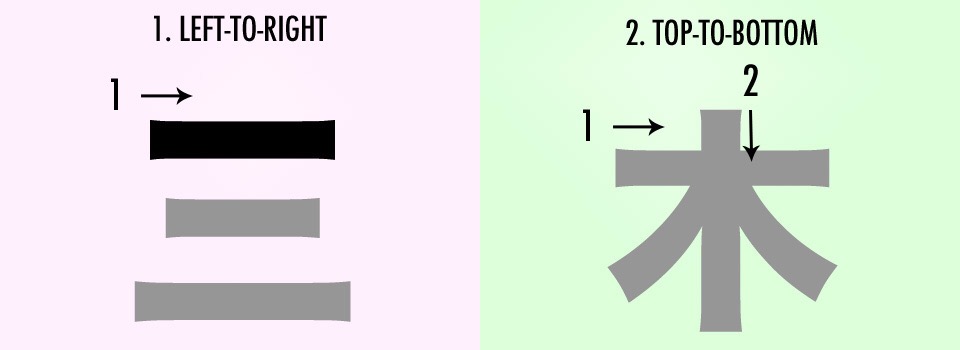
    When writing a kanji, the stroke should follow the following order:

    1. Left to right

    2. Top to bottom

    I was always amazed by how our Kanji teacher always could tell how I wrote the kanji in the wrong order. How could she know the order just by looking at the lines? Isn’t it amazing?

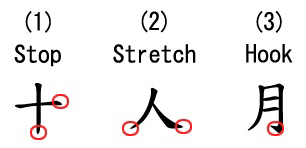
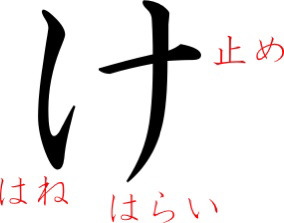
    Moreover, the way to end a stroke is categorized into three.

    1. Stop. Stop stoke is done by completely stopping your writing tool at the end and lifting it to start on to the next stroke. To make it simple, it looks like a straight line.

    2. Stretch. Stretch stroke is done by lifting your writing tool as you end the stroke. It looks like a curvy line.

    3. Hook. Hook is done when you make a small hook at the end of the stroke.

    If you fail to follow this rule, the meaning can completely change. The kanji for thousand 千 read sen, chi and dry 干 read as ho(su), kan for example look alike but they are, of course, different. The first stroke for千 is a slash stroke from right to left while干 is a stop stroke from left to right.

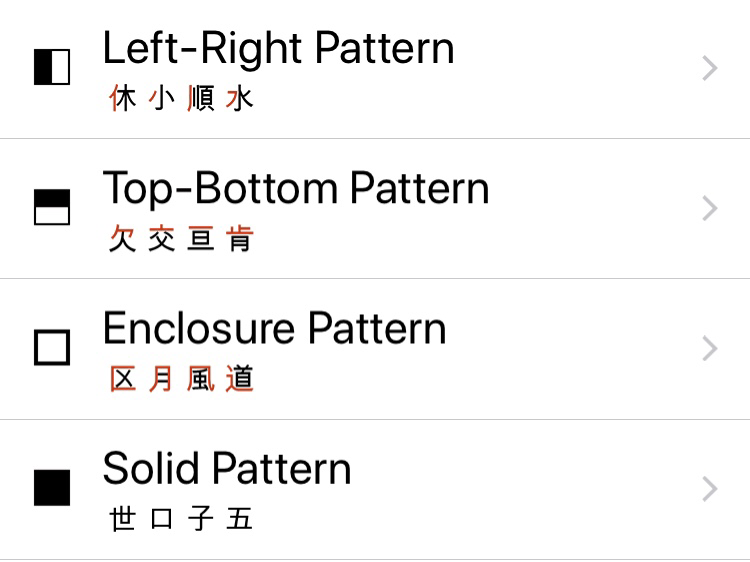
    Kanji characters are categorized into four patterns

    1. Left-Right

    2. Top-Bottom

    3. Enclosure

    4. Solid

    B. Reading

    Reading kanji is the most challenging part. This is where your memorization skill is tested and harnessed. Kanji has two basic kinds of reading, onyomi and konyomi.

    a. Onyomi 音読み, the Chinese reading. From the word itself, this reading is derived from the Chinese reading, although many of my Chinese friends say that they read kanji completely different from Japanese way of reading.

    A kanji character can have one on’yomi or more. It can have only on’yomi without kun’yomi or it can have both. On’yomi is used when two or more kanjis are put together to form a word. Say for example the word for teacher 先生 read as sensei. That is to say the on’yomi for the first kanji 先 is sen and the second kanji 生 which has two on’yomi sei and shou, uses sei in this case. But, it is not always the case. The kanji for birthday which is 誕生日 does not use on’yomi for each kanji character. There is only one reading for the kanji 誕, that is the on’yomi tan and no kunyomi. The kanji 生, this time uses shou which is changed to jou (and that is another way of switching sound), and the last kanji 日, uses not the on’yomi nichi or jitsu but the kun’yomi bi.

    b. Kun’yomi 訓読み, the Japanese reading, on the other hand, can be single or multiple. It is commonly used for reading a word with one kanji alone or kanji and hiragana combined. Let’s go back to our example word sensei 先生 (teacher). If 先 is used alone, this is read as saki or masu. 生, is one of the many kanji characters which has many kun’yomi. It can be read as the following:

    生きる ikiru (to live)

    生かすikasu ( to make use of)

    生けるikeru (to arrange, to plant)

    生まれる umareru (to be born)

    生れるumareru (to be born)

    生まれ umare (birthplace)

    生む umo (to give birth, to deliver, to produce)

    生える haeru (to grow, to spring, to sprout)

    生やす hayasu (to grow, to cultivate, to wear a beard)

    生 ki (pure, undiluted, raw, crude)

    生る naru (to bear fruit)

    生す nasu (to build up, to establish)

    生す musu (to grow of moss, etc.)

    Most words made up of multiple kanji use on’yomi and kanji-hiragana combinations use kun’yomi, but not in all cases. Say for example the word for Sunday, nichiyoubi 日曜日, where the first 日 uses the on’yomi nichi while the second 日 uses the kun’yomi bi.

    C. Meaning

    Since kanji are pictograph, each kanji represents a particular meaning. Can you tell why the following basic kanji carries each meaning?:

    人 person

    大 big

    山 mountain

    川 river

    口 mouth

    木 tree

    火 fire

    Most of the kanji above look like the object they represent, aren’t they? Some even has stories about how they come up to such meaning. Like the kanji for rest 休 (yasu-mi). the left part represents a person while the right part represents a tree. In short, a man “resting” under a tree. But, wait! It’s not that easy. Not all kanji can be explained by how it looks like. Most kanji are irrelevant to their meaning, that even Japanese cannot explain and the only thing you can do is memorize them. Look at the following examples and see if you can explain why such kanji carries the following meaning:

    瓶 bottle

    飲む drink

    蛙 frog

    色 color

    別 separate

    These are only a few. There are thousands of kanji that you have to learn. Don’t get discourage. Even Japanese don’t memorize all kanji there are. We only need to learn a few (like three thousand) to survive Japan

    Tips in learning kanji

    1. Write them down. That’s the only way to learn how to write it right. You have to learn the strokes. And you need to write it many times. Many many times. That’s how the Japanese learn kanji, too. Elementary kids have Japanese writing homework everyday where they have to write a set of kanji many times. And not only the single kanji itself but the word it forms. And not only the word, you have to write the sentence it is used. That way, it will stick in to your head.

    2. Find a meaningful connection of a kanji character to something that makes it easy for you to memorize. Imagine a story out of a character. For example, 低い hikui (low, short). The first stroke on the left is a person and the strokes on the right represents two legs stepping on something to be equal the height of the person because she is ‘short’.

    3. Read stories with audio background so you can listen while reading silently. After that, try reading it aloud. I found a website that has many Japanese stories with audio files. I like it very much because it shows me the kanji of the words I already know but never seen the kanji before. It helps a lot.

    4. Watch Japanese TV whether it’s news or drama. Don’t watch with English subtitles. Watch it with Japanese subtitles. Most Japanese news and some programs have Japanese subtitles.

    5. Read labels and packaging and try to understand some words you don’t know. Research. Research. Research. I tell you. One of the words that came out in JLPT N2 Vocabulary section is a word always seen from food packaging. And I regretted why I didn’t try to learn it before the test.

    6. Love it. If you hate kanji then you’ll never learn. You have to find the passion to learn each stroke, it’s meaning, it’s reading. You have to learn to appreciate how wonderful it is that a single character can mean many things when combined with many other characters. If you say you can’t, then you won’t. Our mind is so powerful. If you set your mind to refuse to learn then it will shut down and will never understand. It will only see the negative side of learning. Train your mind to open up to new things and new knowledge like learning a new kanji everyday and one day you’ll see the fruits of your labor.

    That’s all for now.

    If you want to say anything about this article, just leave your comments below.