Category: All About Food

  • Biko-making

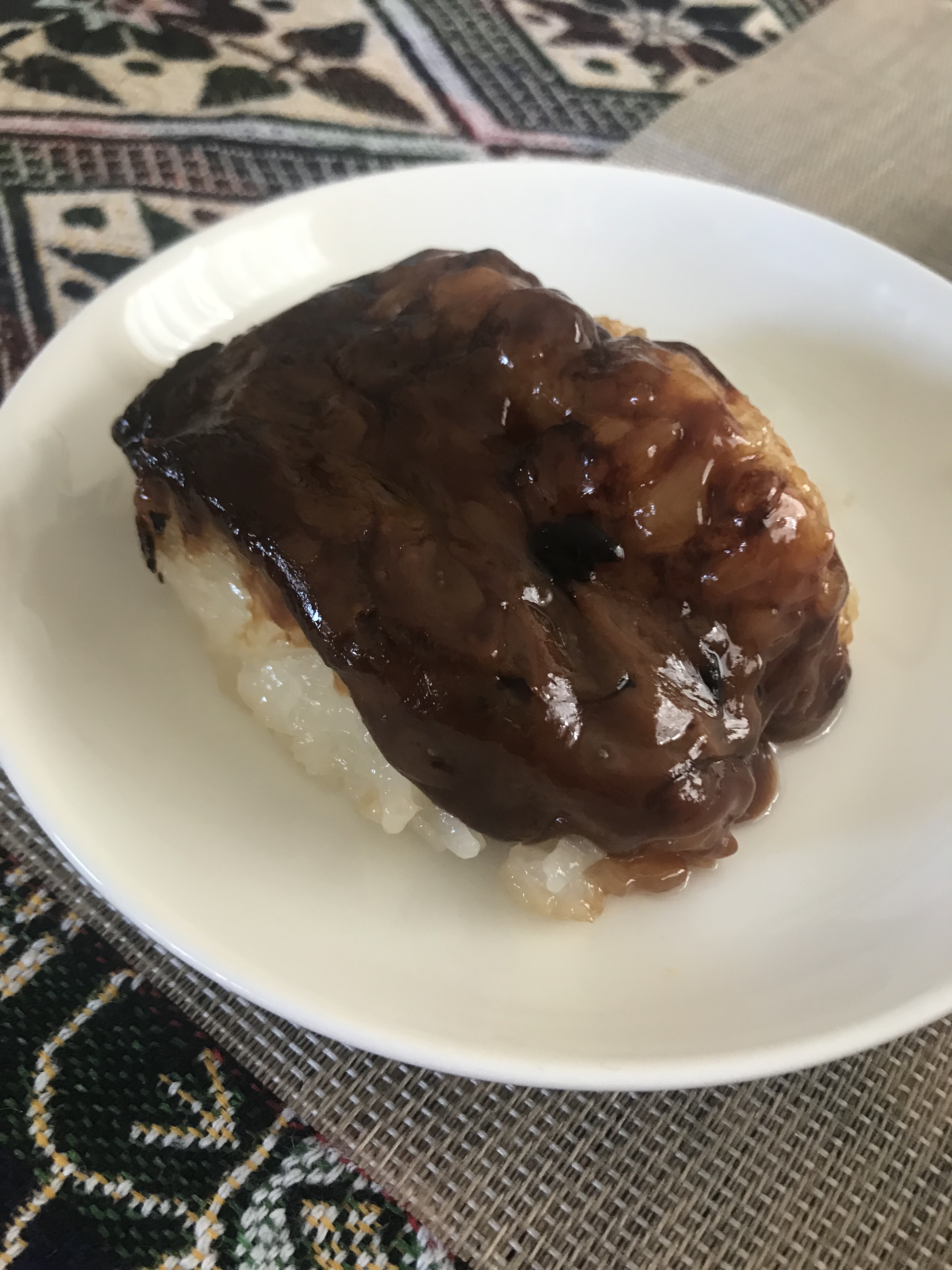
    Biko (bee-ko) is a Philippine dessert made from glutinous rice, coconut milk and sugar.

    We use black glutinous rice or white or mix of both.

    My mother usually do mix. We love mama’s biko. I still remember when we were young and mama makes biko. My sisters and I help stir the latik (caramelized sugar in coconut milk) and of course have a taste when it’s done. We would have our own spoon and scoop the remaining latik on the kawali/kaha (wide cooking pot). Mama would tell us to be careful coz it’s still hot and it would choke us.

    My mama’s recipe is simple. Cook the glutinous rice and make latik and mix them together.

    I’ve been wanting to make biko for a long time but I just didn’t have the time or complete ingredients to make it.

    And finally today, I did it.

    I did not follow my mama’s recipe this time and tried something else.

    I watched a video on Facebook and my friend also made something similar. It’s the style of biko where you put the latik on top and bake it.

    I also the ingredients to my preference.

    [wpvideo osqv2tir ]

    Ingredients

    2 & 1/2 cups glutinous rice

    1000 ml coconut milk

    1 cup white sugar

    1 cup brown sugar

    Procedures

    1. Wash and cook the glutinous rice. You can use regular pot or a rice cooker. I used a rice cooker. It’s easier.

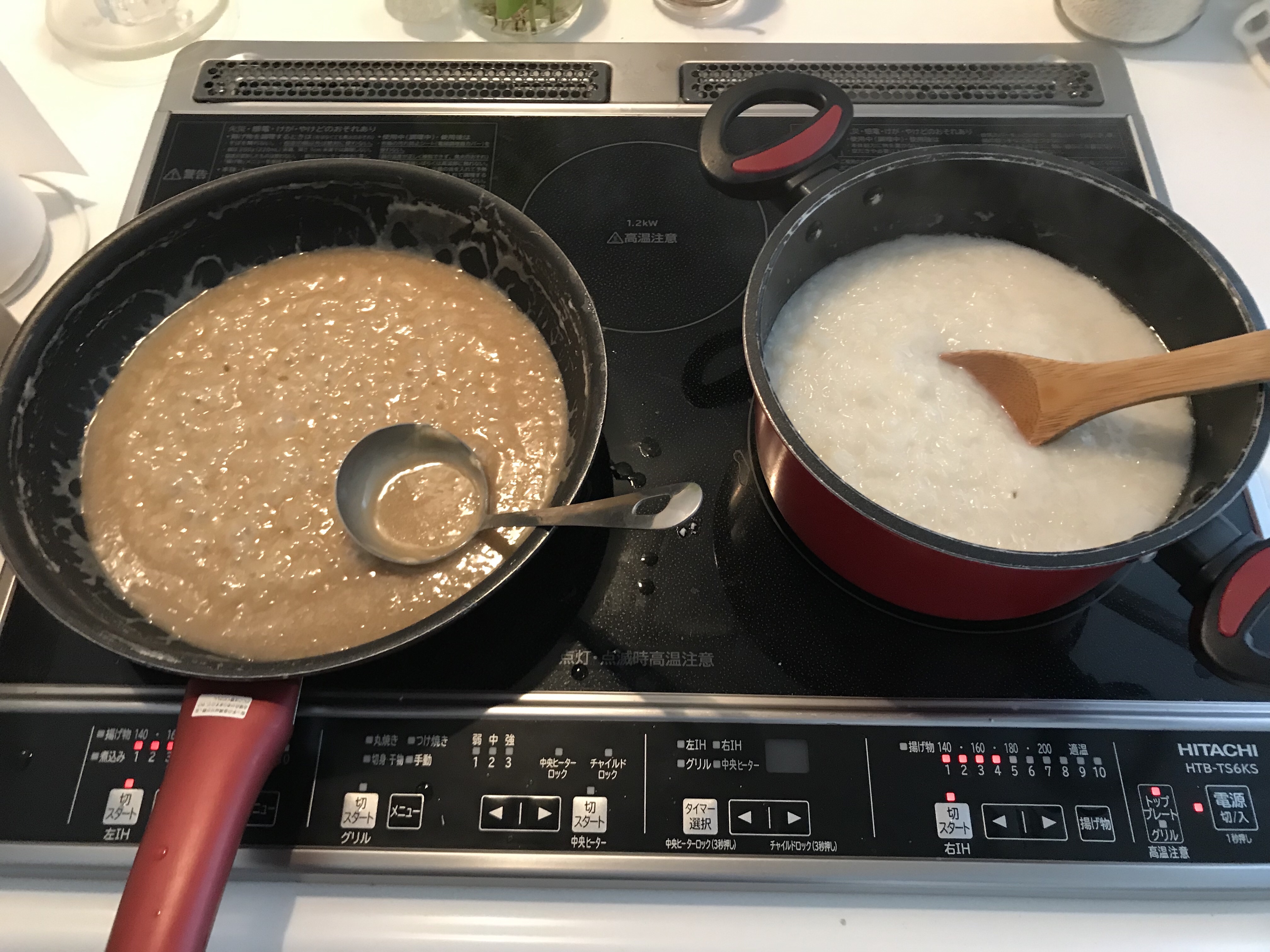
    2. While waiting for the rice to cook, put the coconut milk about half and half into two pots.

    3. Put 1.5 cups of white sugar into one pot and 1.5 cups of brown sugar into the other. Turn on the stove to low-medium heat.

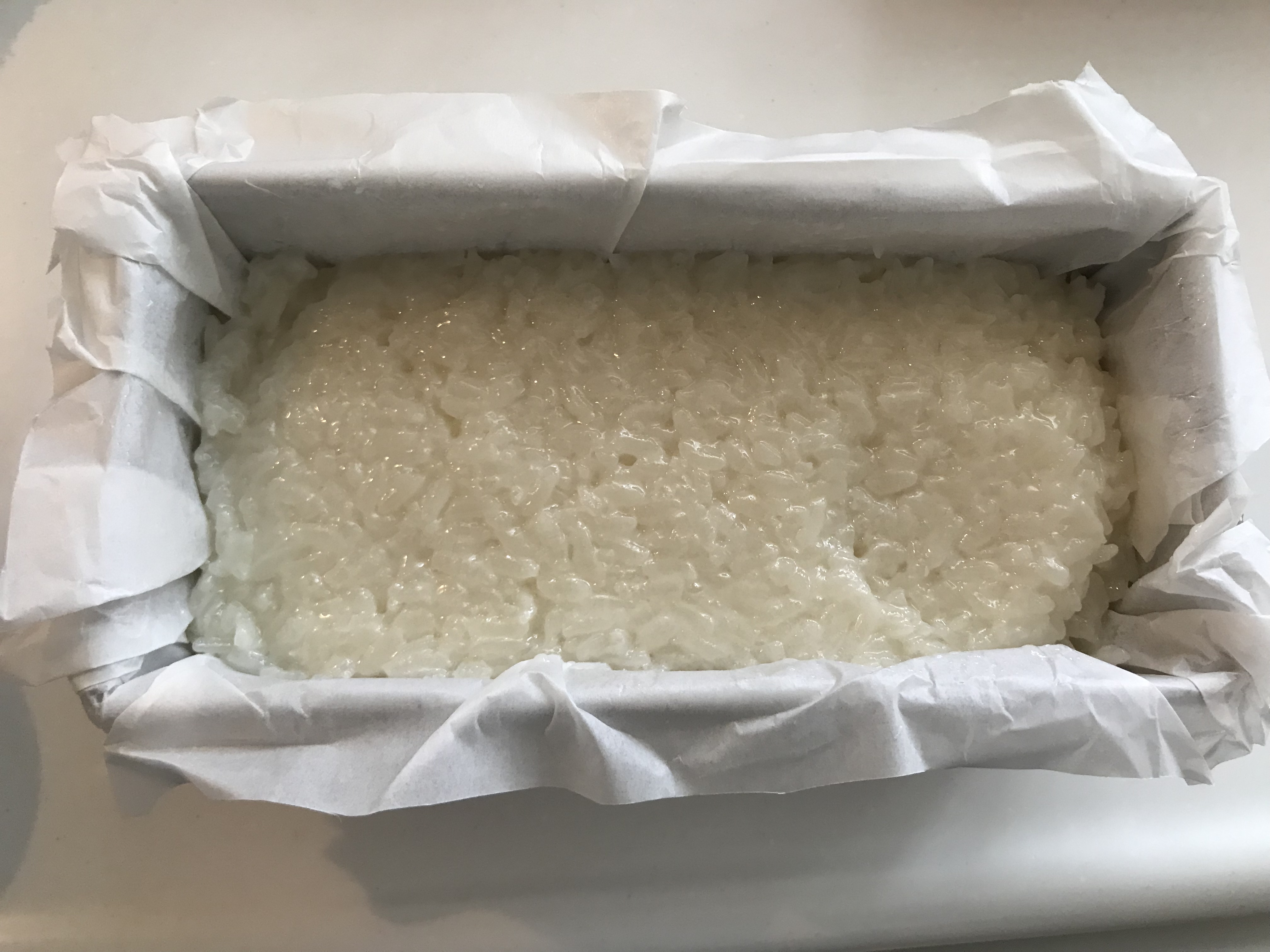
    4. Bring to boil the coconut milk with white sugar and put the cooked glutinous rice into it. Mix until liquid is absorbed. (I had to turn off the stove and wait for the rice to cook).

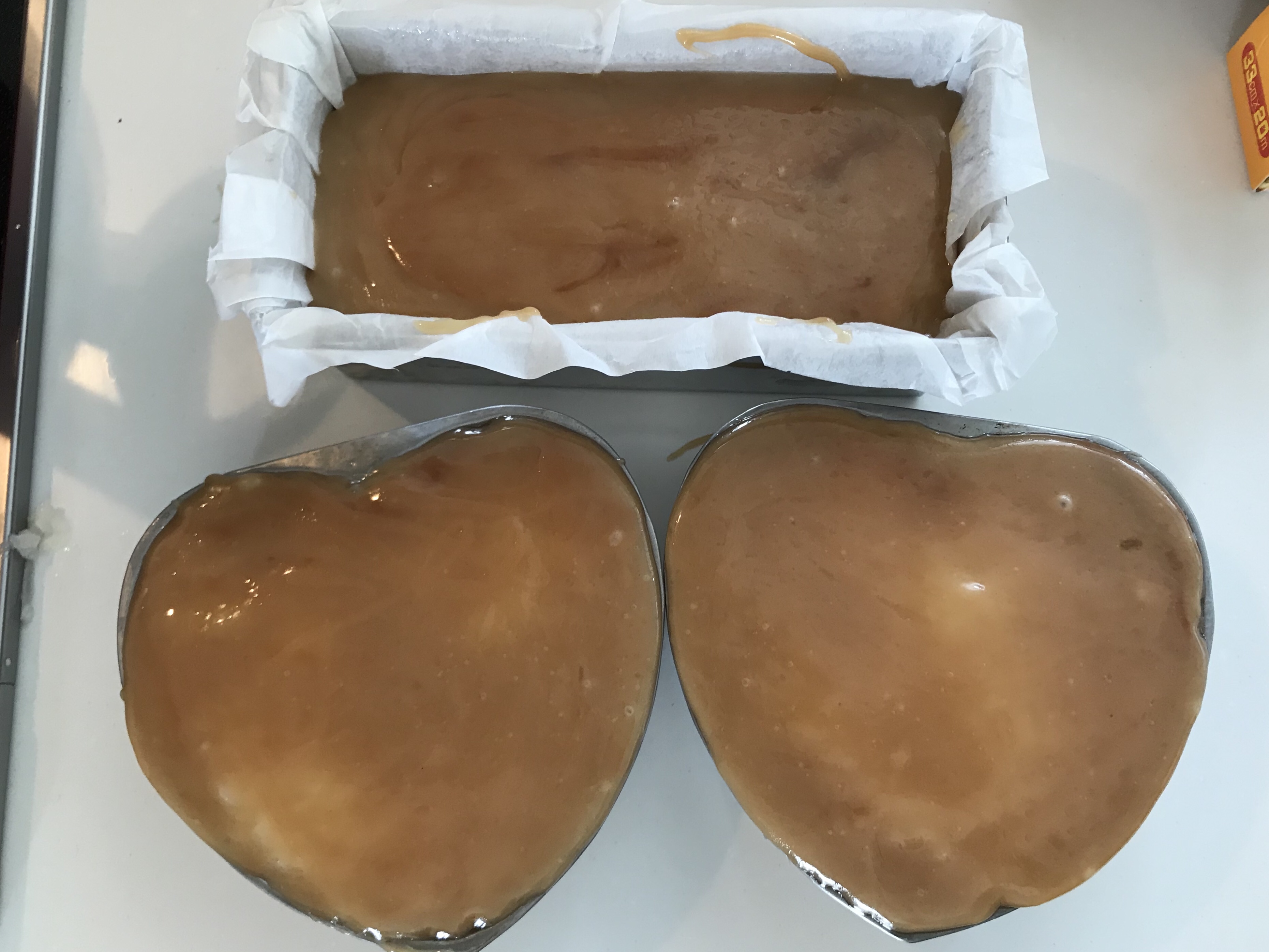
    5. Simmer the coconut milk and brown sugar mixture. Keep stirring in low heat until it gets sticky and brown.

    6. Put the rice in a container and pour latik on top. (I did not have the right container so I just used my leche flan heart molder and another rectangular cake tray. I also did not have banana leaves to put on the tray so I just used parchment paper.)

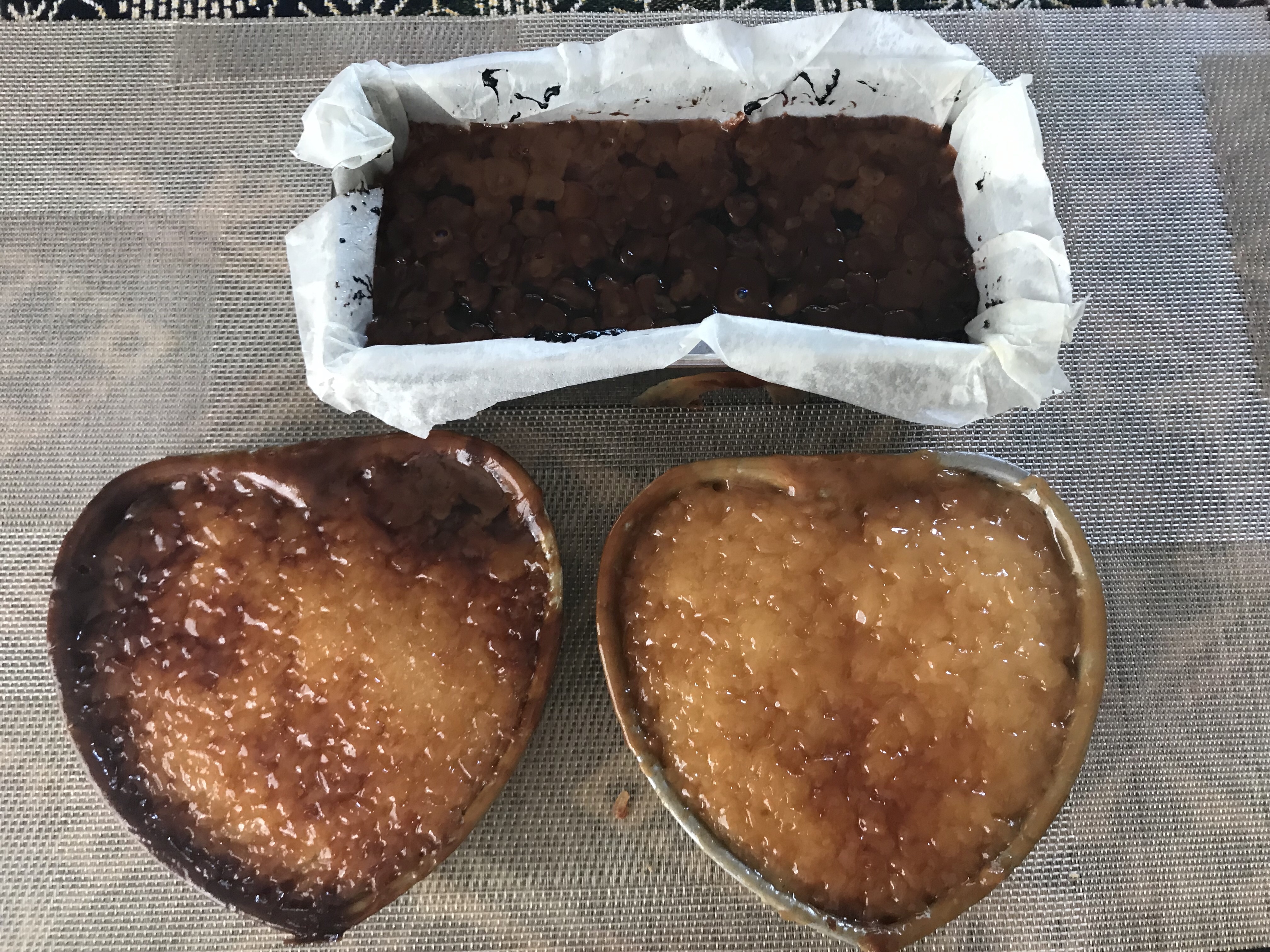
    7. Bake for 30 minutes at 380 degree Fahrenheit. I used our air fryer so it’s a preset function. I just chose “Bake” function.

    8. Let it cool and enjoy.

    Things I wished I should have done

    1. I should have mixed the rice and coconut milk and sugar mixture longer and waited it to dry a little bit.

    2. I should have used a bigger container and only fill it half with rice so there’s space for the latik. Mine just flowed out of the heart molder and left a mess in our air fryer oven.

    ……………………………………………………

    There you go. My first time making biko with latik on top. Not bad but I could have done better. Till next time.

  • New Year’s Celebration in Japan and the Philippines

    As a Filipina living in Japan for many years now, I can compare how New Year’s Day is celebrated in both countries. There are few similarities and many differences between Philippines and Japan celebrating New Year’s Day that I would like to share according to my observation and experience.

    Decorations and Preparations

    In the Philippines, whatever is decorated for Christmas will be carried over for the New Year’s. In fact, the greetings “Merry Christmas and a Happy New Year” is commonly displayed in houses, offices, shops, restaurants and malls.

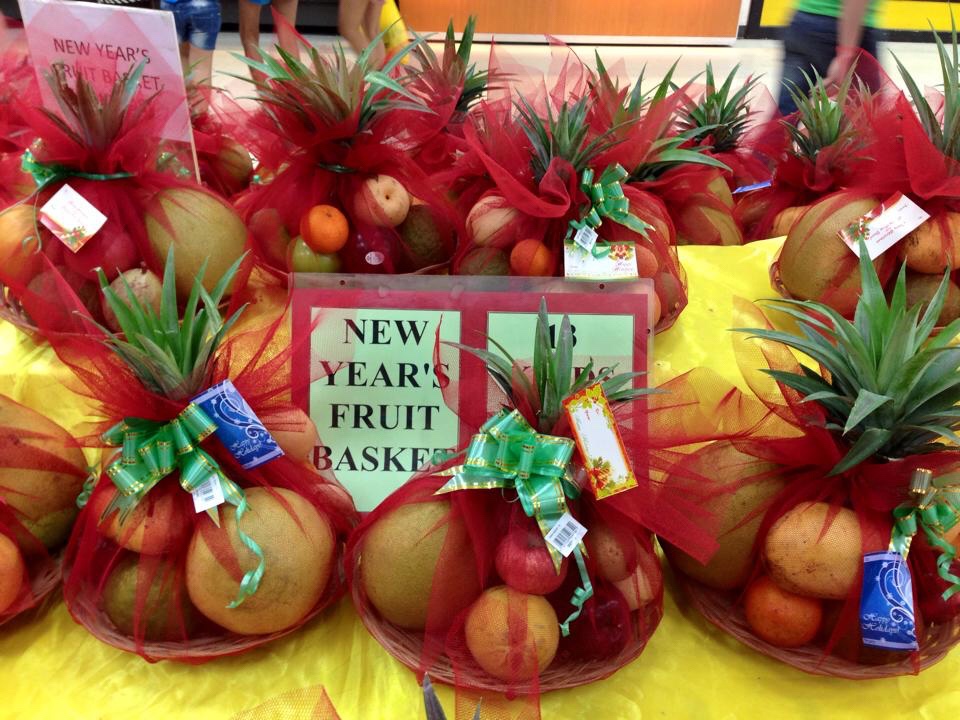
    To welcome the year, a tradition of displaying 12, which is recently changed to 13 round fruits – we call the lucky fruits on the dinner table on New Year’s Eve, is practiced in the Philippines. 12 represents each month and 13 represents an extra month which means abundance. Round signifies infinity, no beginning and no end of good luck and good fortune. Round objects are considered lucky so it is common to see people wearing polka dots. Round and sweet foods like leche flan, puto cheese, kalamay are considered lucky.

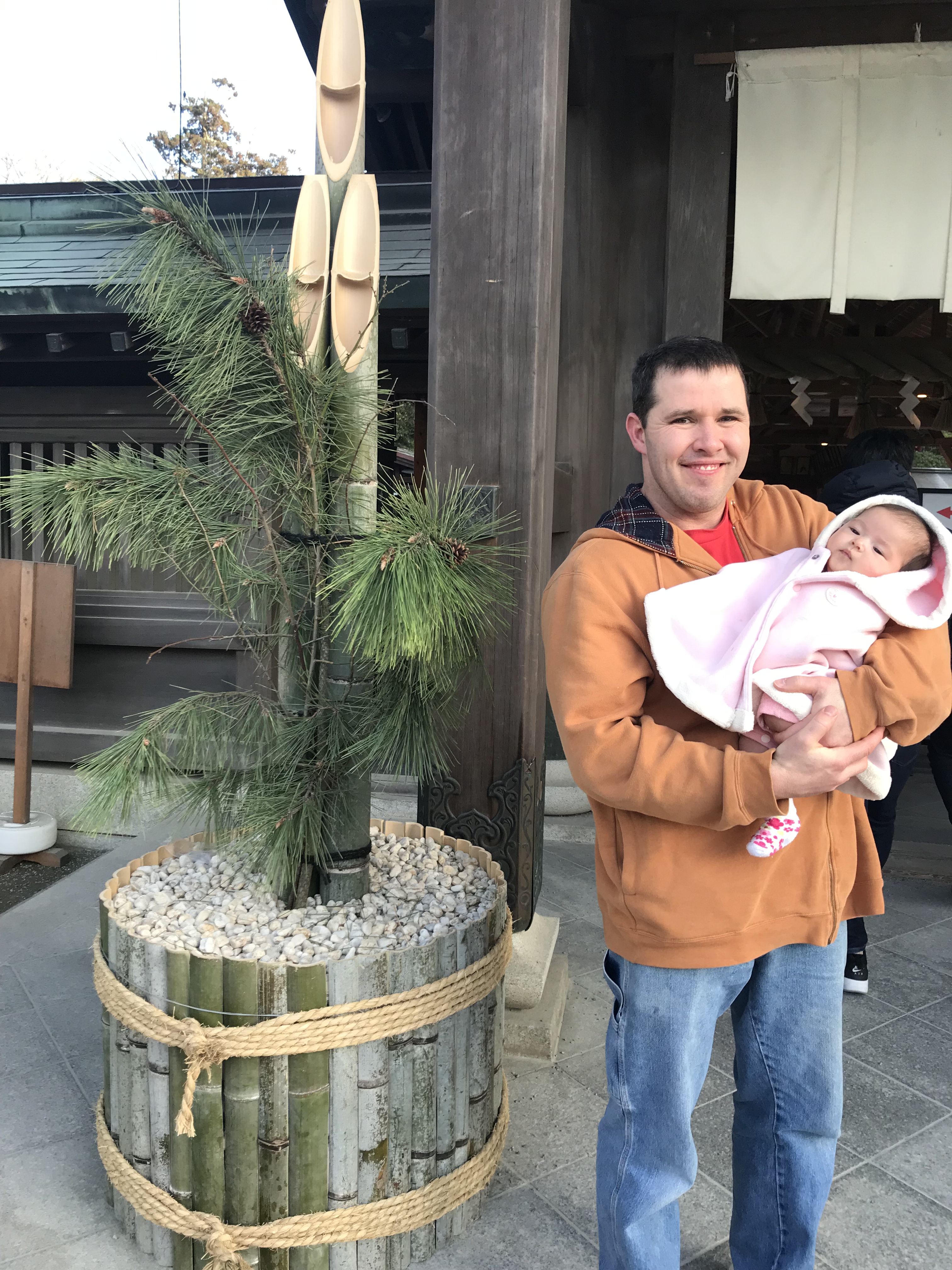
    In Japan, New Year’s is the biggest event of the year. Japanese start preparing for the New Year’s by doing a general cleaning which they call osoji. People clean their houses and offices from the main door to the windows, waxing floors , bathroom and everything in between. Shimenawa (sacred straw rope) also called shimekazari and kadomatsu (bamboo and pine decoration) are seen in main doors and gates. Shimenawa are seen in shrines all throughout the year but houses only display these in New Year’s season. There is also kagamimochi (mirror rice cake) and a display of the year’s animal symbol. These decorations are believed to welcome the ancestral spirits and gods to enter the home.

    Kadomatsu at Munakata Shrine

    Food

    In the Philippines, people rush to the market at the break of the dawn on the 31st and expect the supermarket to be flooded with shoppers to prepare for media noche. There is a long list of food prepared for media noche but the regulars are lechon (whole roasted pig), pansit (noodles), lumpia(spring rolls), fried chicken, macaroni salad and spaghetti and of course the lucky fruits. Mostly people prepare food that are either round and sweet and those believed to make the year lucky and abundant.

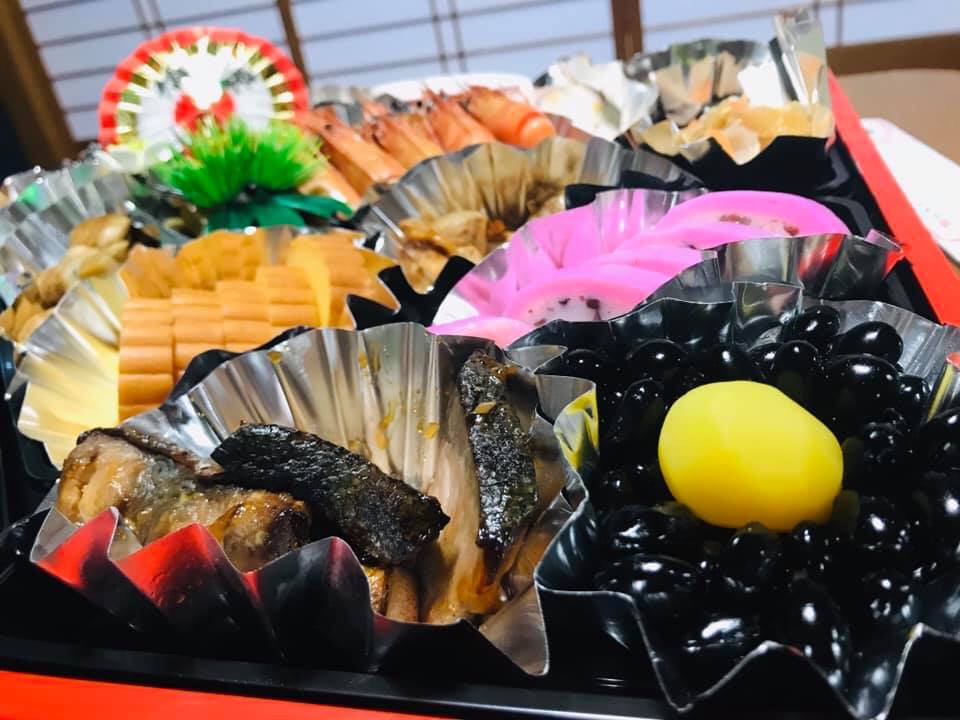
    In Japan, there is toshikoshi soba and osechi ryouri. Toshikoshi soba is eaten on New Year’s Eve as a symbol of crossing to a new year. Osechi consists of many different kinds of food in a box. Each food carries a meaning. For example, shrimp means long life as the shrimp is curved like an old person.

    Our first osechi ryouri in our house 2018-2019
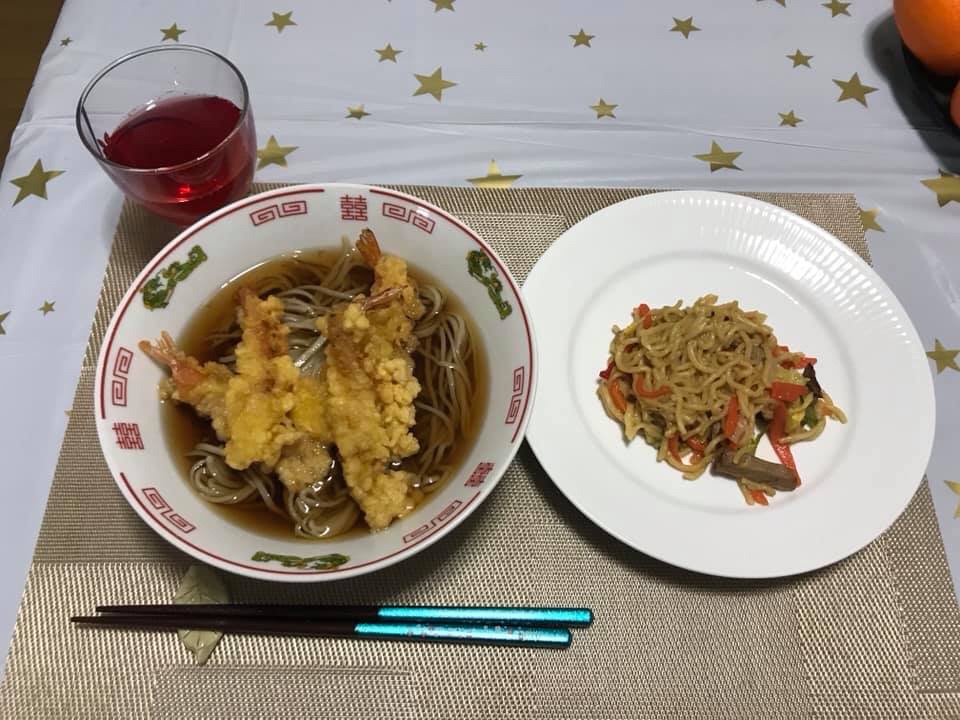
    Toshikoshi soba (Japan) on the left and pansit (Philippines) on the right

    New Year’s Eve

    It’s hard to keep up with the energy of the Filipinos when it comes to welcoming the new year. The most exciting countdown begins hours before midnight ( three more hours, two more hours, one more hour) and the closer it gets, the higher the energy and the louder the noise. Party starts when darkness hit or even before that. The neighborhood turns into karaoke bar and disco bar with people drinking and dancing on the streets. The ten minutes before 12 and the first ten minutes of January first is the noisiest, loudest, craziest, happiest time of the year. Before the ten-second countdown, people scream of excitement, get ready to jump (for those who wants to get tall), turn on all the lights in the house, turn on the car or motorcycle engine, blow the horns incessantly, get something even the pot cover to make noise. Everyone counts the last ten seconds “10-9-8-7-6-5-4-3-2-1! BOOM! The fireworks, the blowing of horns, the noise of cars and motorbikes, the jumping, the dancing, the shouting “Happy New Year” is endless. You don’t say it once, nor twice, nor three times. You say it to everyone in the house and to the neighbors. People go crazy with New Years. And many goes live on Facebook. It is believed that noise shoo the bad lucks. Some people wear polka dots (rounds objects are lucky), put coins in their pockets and shake them to make noise, and sometimes throw coins for the people to catch (rain of money – paulan ug kwarta). And after the countdown is the feast. Everyone gathers in the dinner table for the media noche.

    This scenario might not be the same in the entire Philippines. I am speaking of my experience and my neighborhood and I am sure many can relate.

    I remember the first time my husband spent New Year’s in the Philippines, he couldn’t stand the noise. It was too much for him it gave him headache. He wanted to go somewhere quiet but I told him, it’s the same everywhere we go.

    On the contrary, in Japan, New Year’s eve is a very silent night compared to the Philippines. All is calm, all is normal.

    Last year I spent New Year’s in our newly-bought house (the reason why we spent New Year’s in Japan). I was kind of disappointed or let’s say frustrated. It was just me, my husband and our daughter (my step daughter). Yes, we had our special dinner. I cooked special menu. But when it was almost 12 o’clock my energy as a Filipino was really high, I was the only one who was very excited to welcome the new year. I turned all the lights in the house, went upstairs and downstairs. I got really excited. But when I looked outside the window nobody was there, it was a very silent night. I was like a burning fire thrown a bucket of water. This is not the Philippines. This is Japan. But I’m not saying Japanese don’t celebrate. They do but in a different way.

    Most people in Japan go back to their jikka (実家) or parents’ home to celebrate. On New Year’s Eve, Japanese eat toshikoshi soba and greet each other ‘akemashite omedetou gozaimasu’ (Happy New Year). They don’t normally do countdown at home, but you can go to clubs/bar in the city where the young party people go and party like there’s no tomorrow and welcome the new year. That’s how I spent New Year’s in Japan in 2014. It is a peaceful and simple celebration at home. On the 31st, after doing the general cleaning (osoji) and preparing or buying the special food osechi ryouri , most Japanese families gather and watch NHK’s Kohaku Uta Gassen or commonly called kohaku. This is a TV program where Japanese singers are divided into competing teams of red and white. This finishes shortly before midnight and judges and audiences vote which group perform better.

    Some people visit temples and shrines. At the temple, or if you live nearby, you will hear the bell ringing on New Year’s Eve. This is called joyanokane (除夜の鐘). They ring the bell for exactly 108 times at New Year’s Eve which symbolizes 108 human sins in Buddhist belief.

    First Day(s) of the Year

    It is very common for Filipino families to go swimming on January first or anytime during the first days of the week.

    Family Samal Outing 2017

    The party and merry making continue. Left-over lechon will turn into lechon paksiw. There is also a belief that whatever you do on the first day of the year will forecast what will happen for the rest of the year. If you wake up late on January 1, expect that you will always wake up late. If you spend, you will always be spending. If you cry, then your year will be full of tears. In bisaya, we say “malihian“. My mama would say to us to do good things on the first day of the year and we will be lucky the whole year. “Magpalihi ug swerte.” She also told us not to spend a single cent or else money will fly away and we will keep spending the whole year and we will go broke. Lol.

    In Japan, it is very famous to watch the first sunrise of the year (hatsuhi/hatsuhinode) and people go to temples or shrines to pray (hatsumode).

    [wpvideo JxWGAn34]

    The first day of the year is one of the happiest days for children because they get otoshidama, which is money gift from parents and relatives. People flock to the stores for its hatsuuri (first sales) and buy their fukubukuro (lucky bags). These lucky bags are sold for a certain price with random unknown things inside. The total value is more than the sale price.

    If you notice – hatsuhi, hatsuhinode, hatsumoude, hatsuuri, all starts with hatsu. It’s because hatsu (初) means first and that is how Japanese values and enjoys the “firsts” of the year.

    My sister’s Japanese family gather on the first day of the year in the parents’ house and review the year that passed. They also express their aspirations for the new year and they drink otoso (お屠蘇) New Year’s sake. The drinking of otoso starts from the youngest in the family up to the oldest.

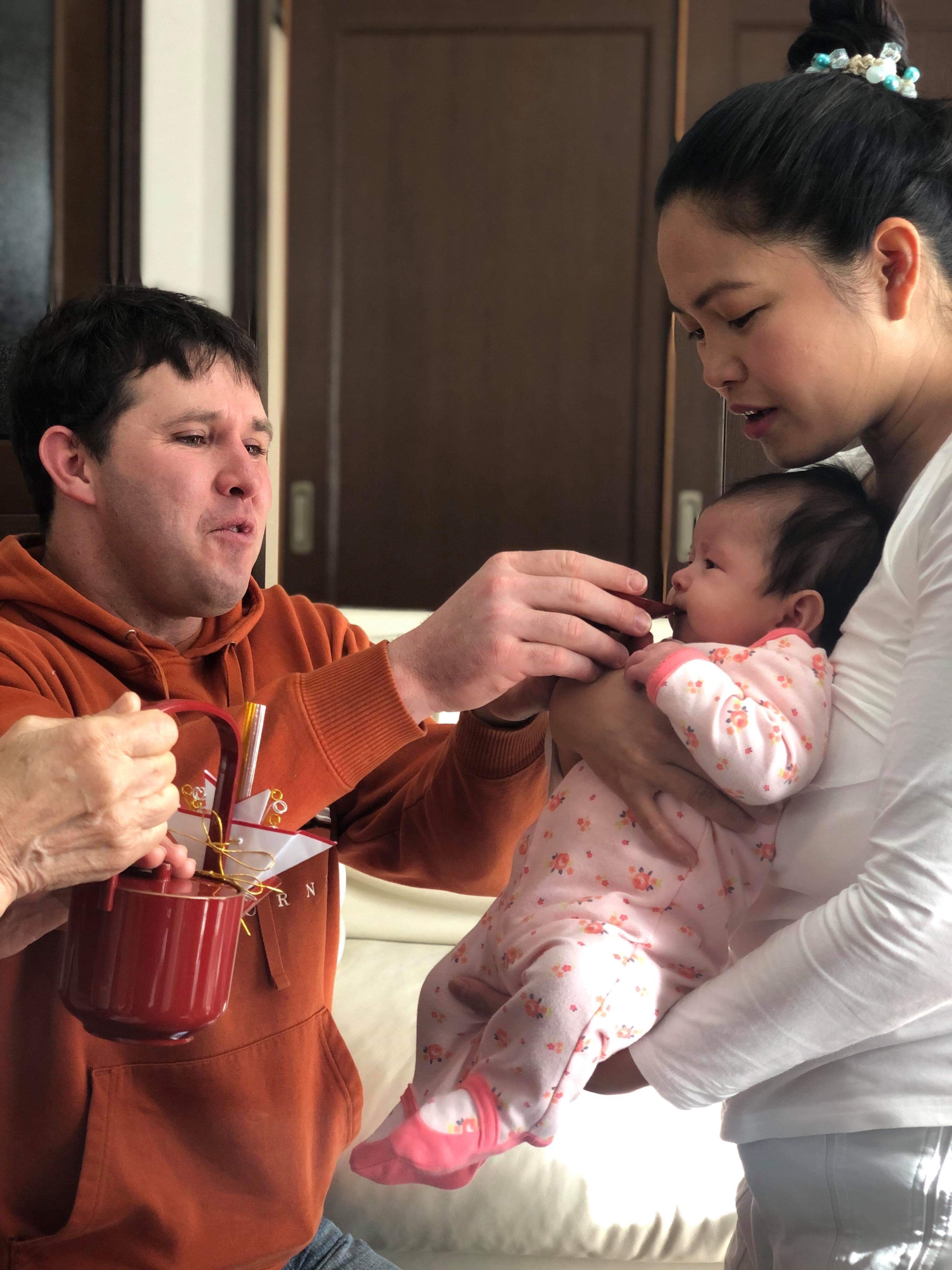
    Mari ‘s first new year and first otoso

    Conclusion

    New Year’s is the most celebrated event around the world. It doesn’t matter where you are from or what race you belong. People celebrate New Year’s regardless of religion.

    Both Filipinos and Japanese celebrate it. Both value the gathering of families to welcome the new year. It is in the same manner that most go back to their parents’ home to celebrate and do things (although done differently) to attract good fortune for the whole year to come. Filipinos party and make noise to welcome the new year while Japanese enjoy the firsts of the year. Although the food prepared is entirely different, they share the idea of good luck, hope for good health and longevity.

    If you ask me which celebration I prefer, I am sure I will have a hard time answering your question. It is hard for me to choose. Of course, there is no place like home. I like to celebrate this event with my family, with the merriment, with parties left and right, with the noise of excitement and bliss. But I also like the simplicity, the practicality, and the idea of enjoying the firsts of the year.

    If you have reached this part, thank you for your time reading this article. I hope you enjoyed it and learned something from it and I hope you enjoyed your New Year’s celebration where ever in the world you are from.

    Happy new year!

    Akemashite omedetou gozaimasu!

    あけましておめでとうございます!

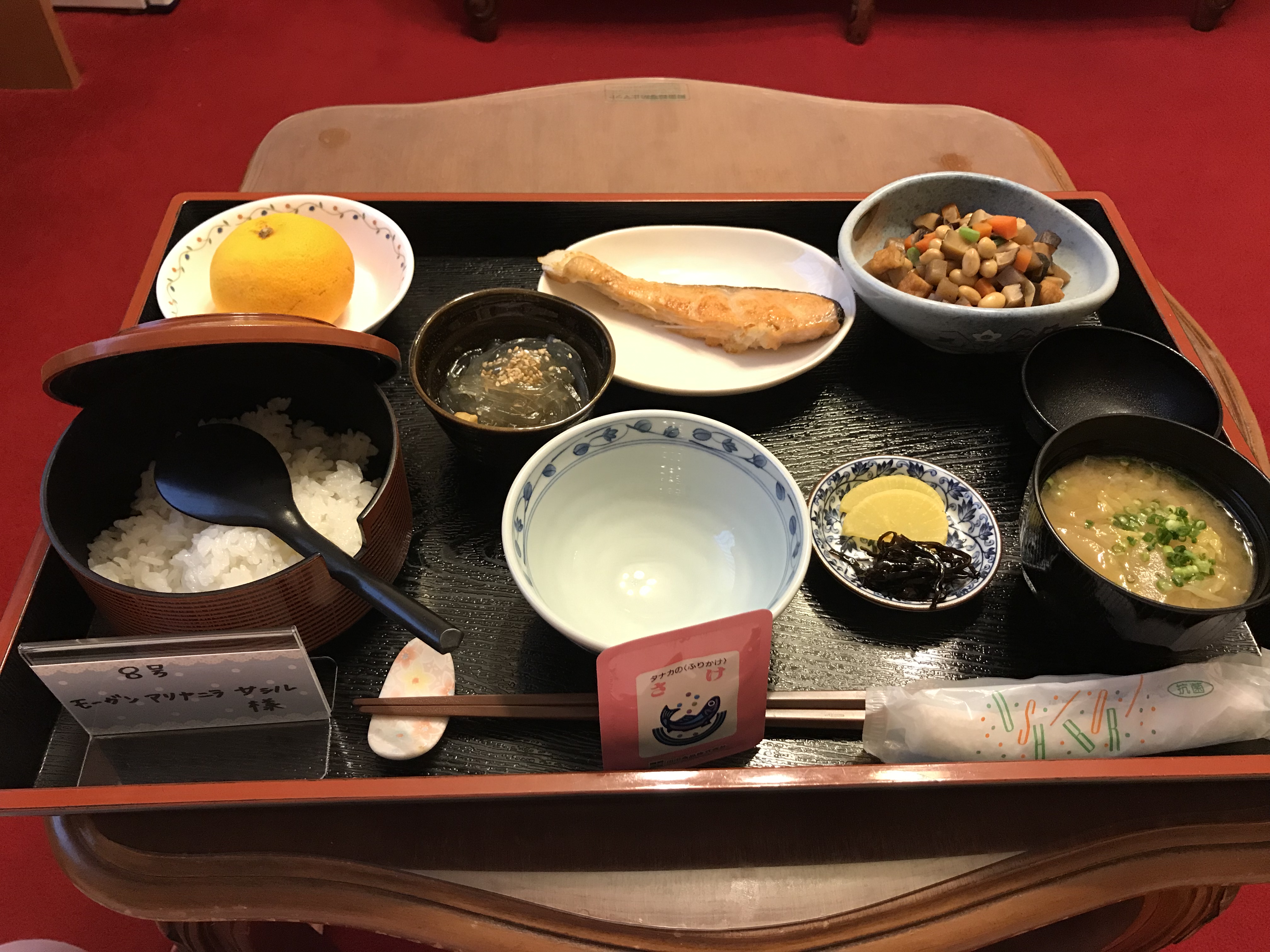
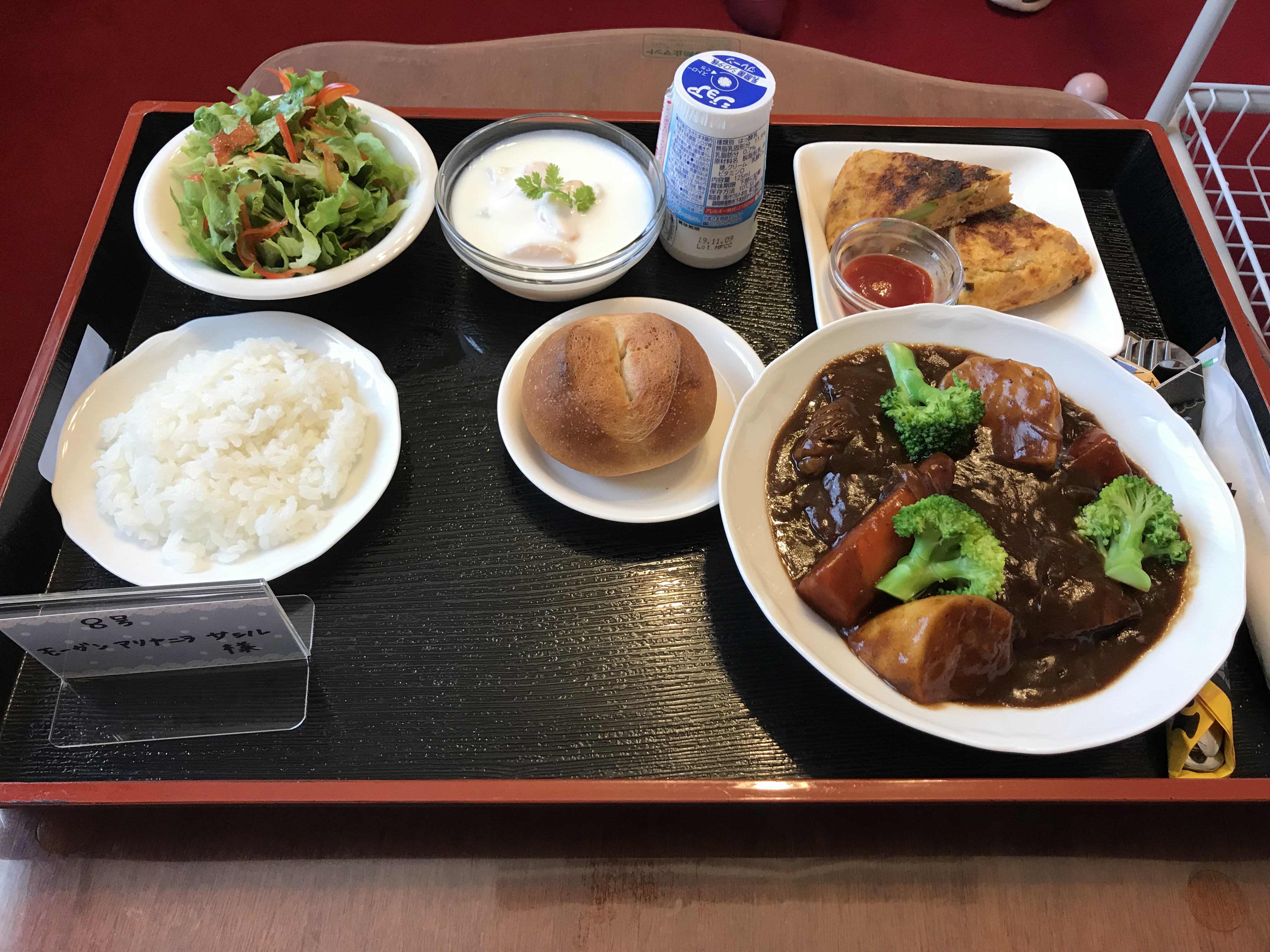
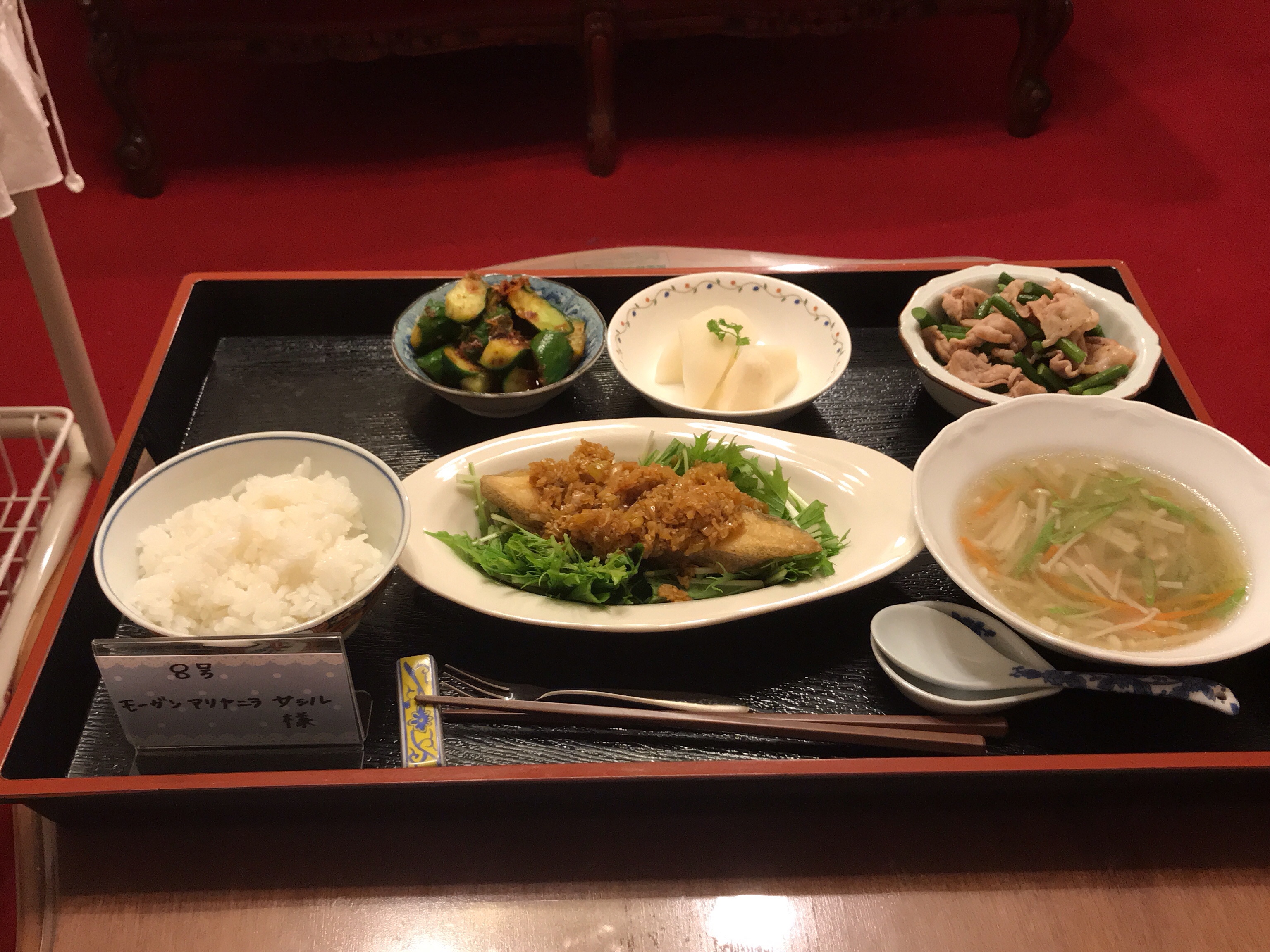
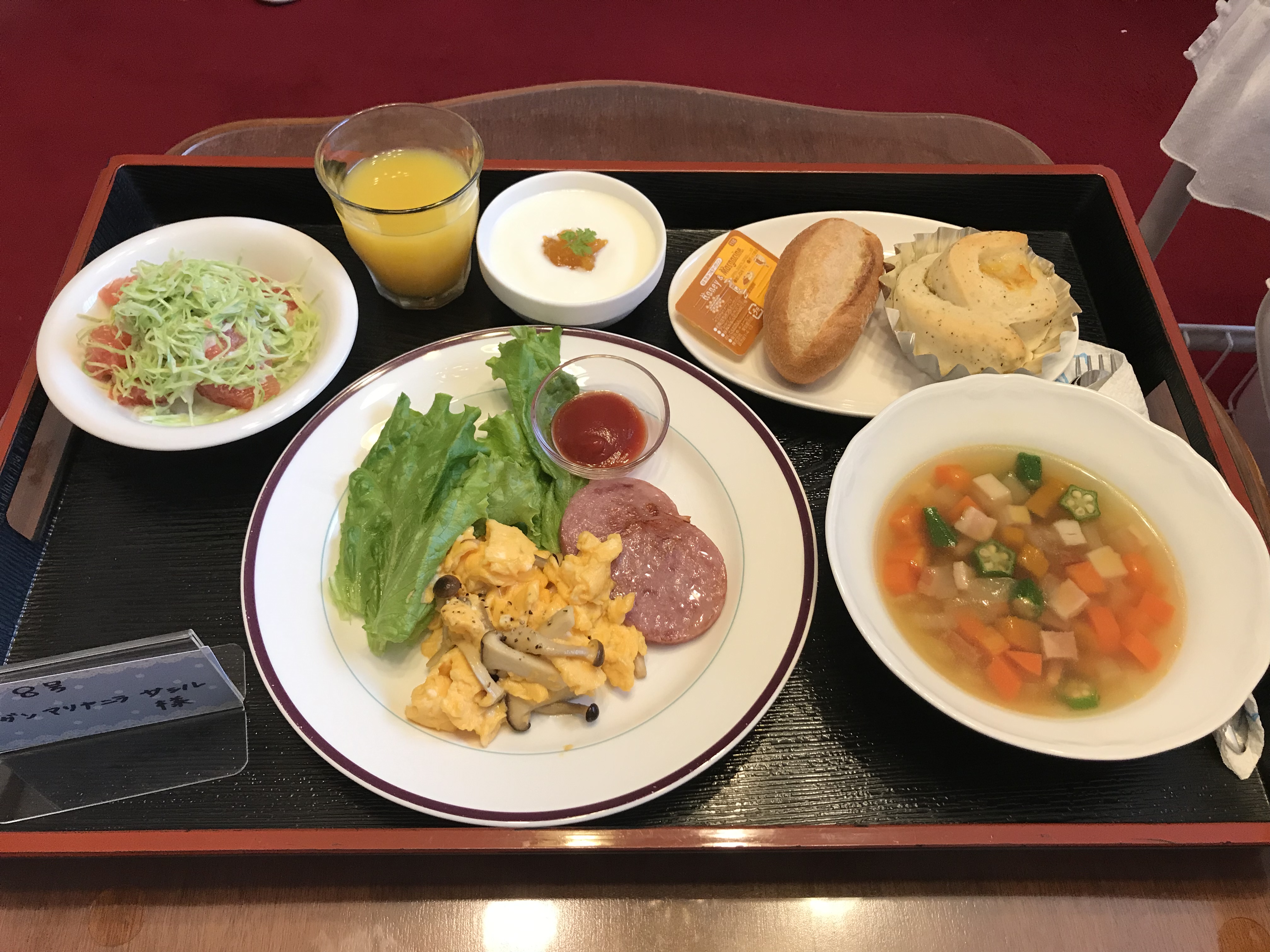
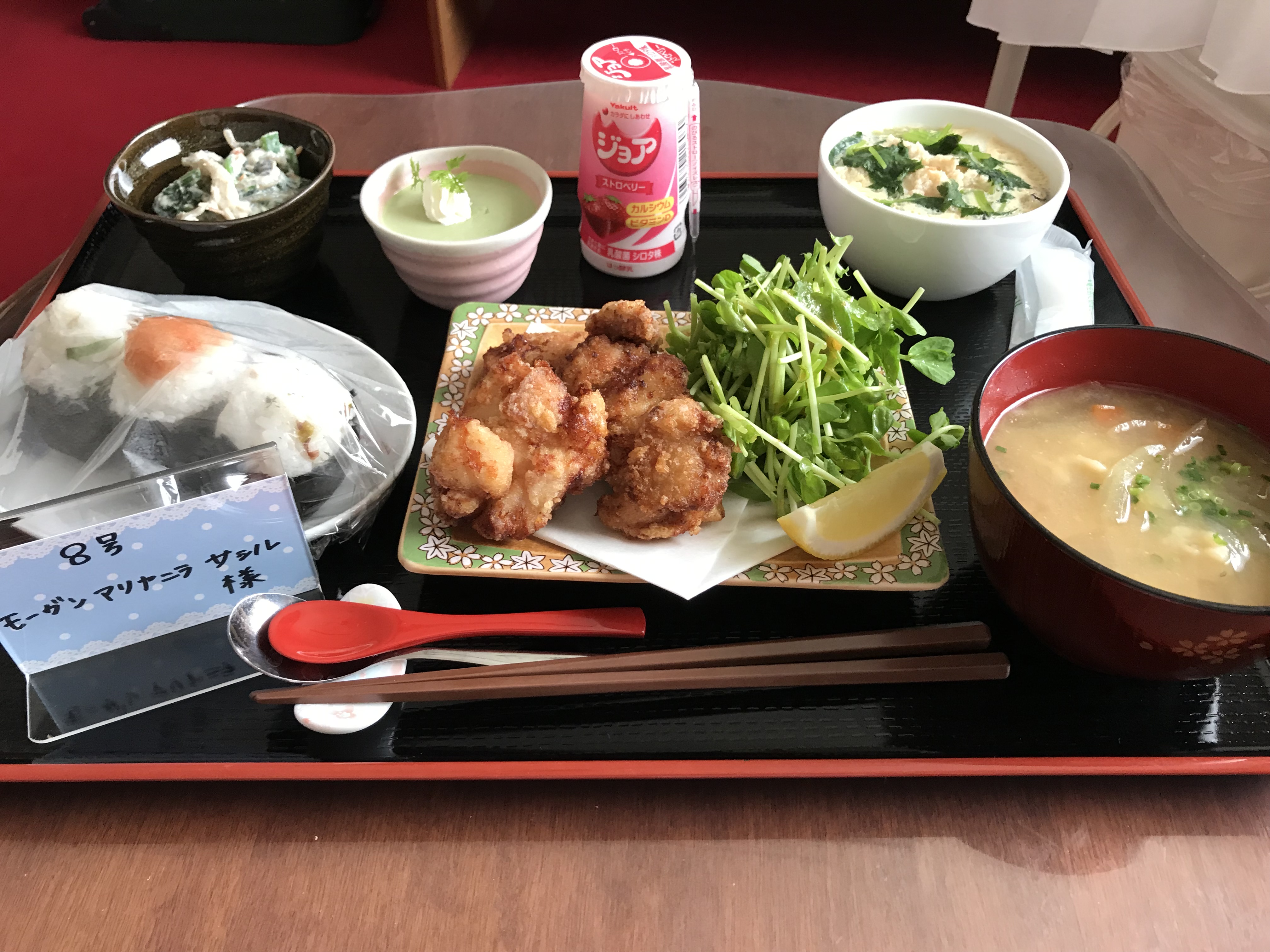
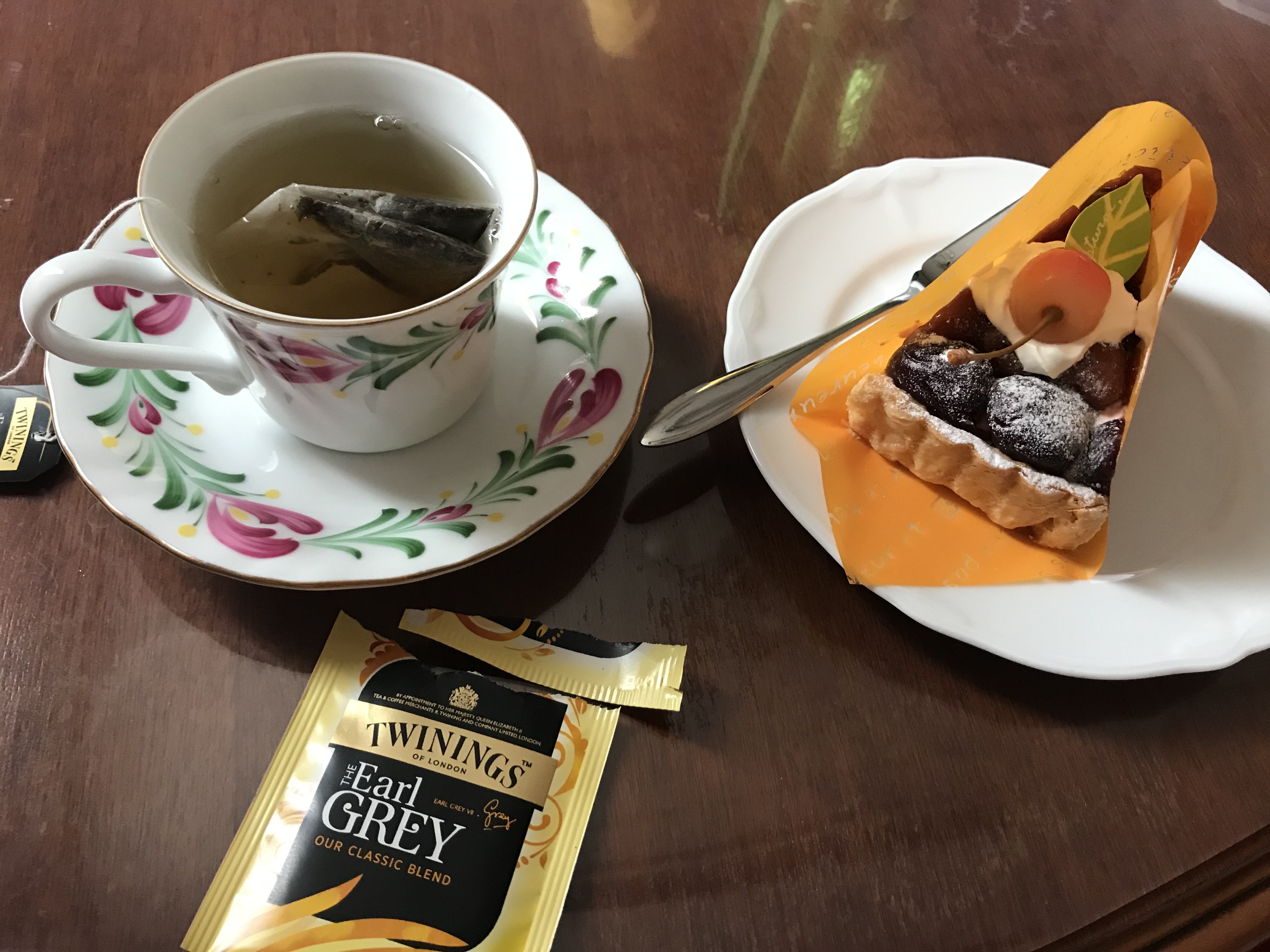
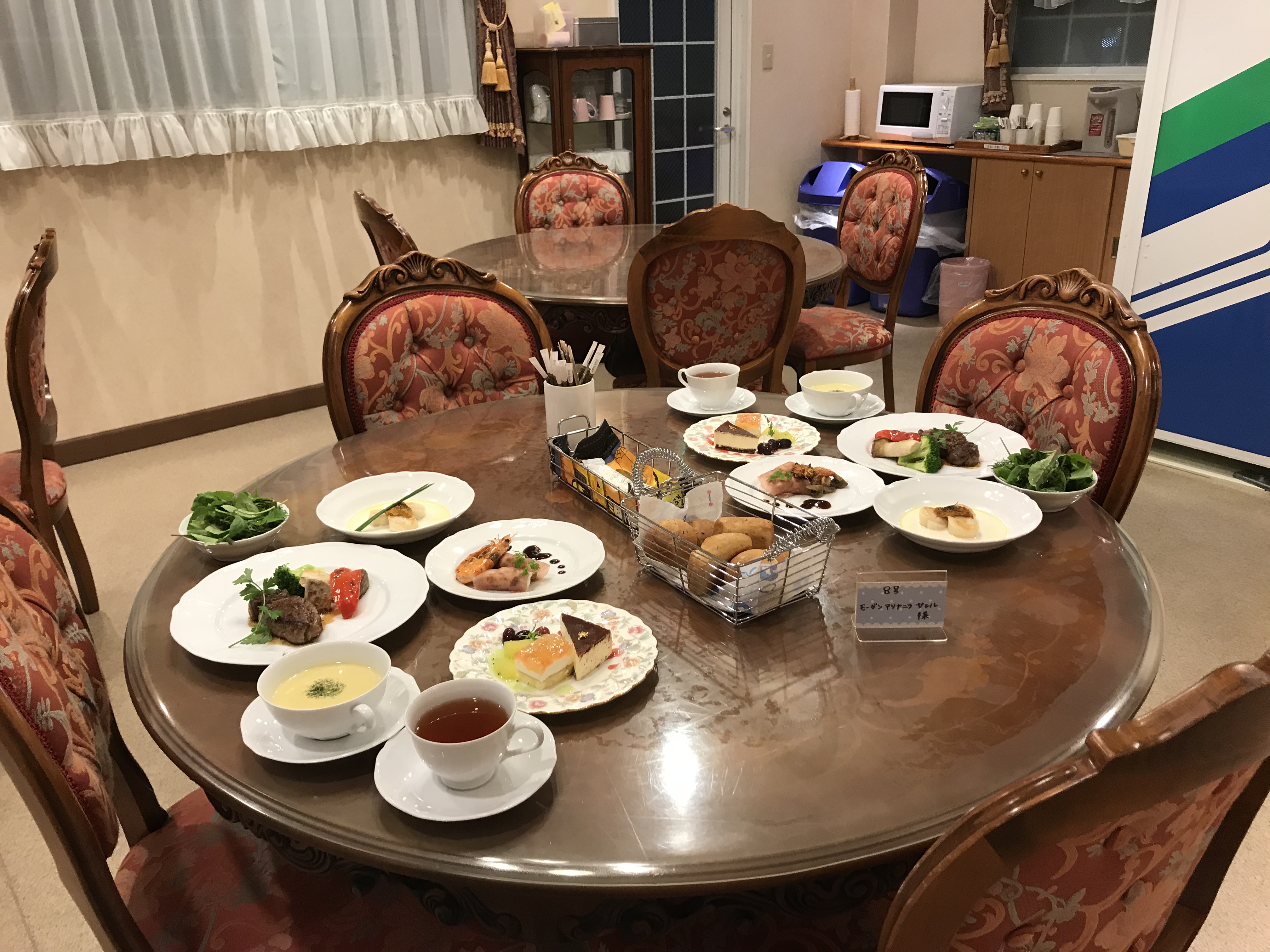
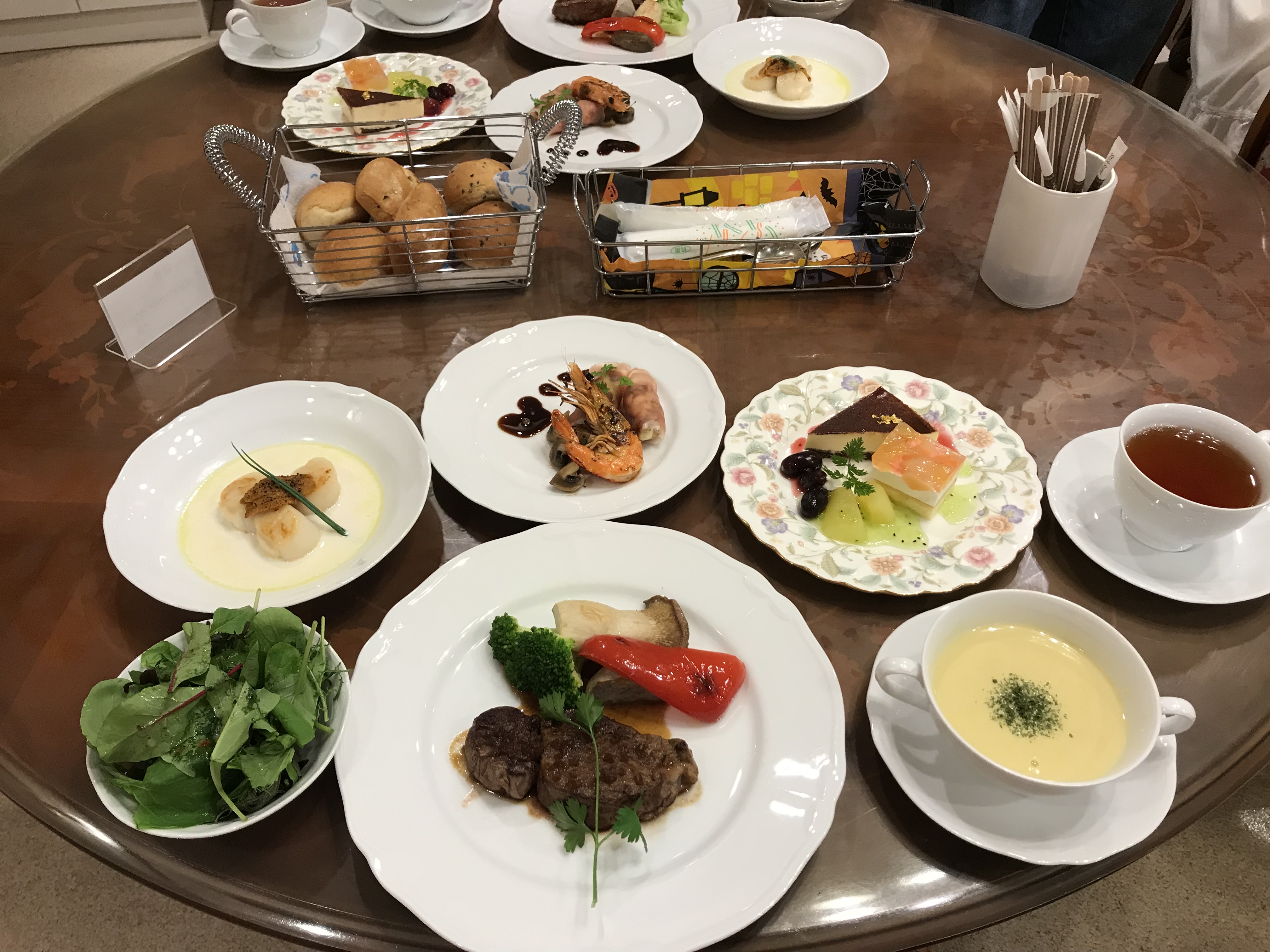
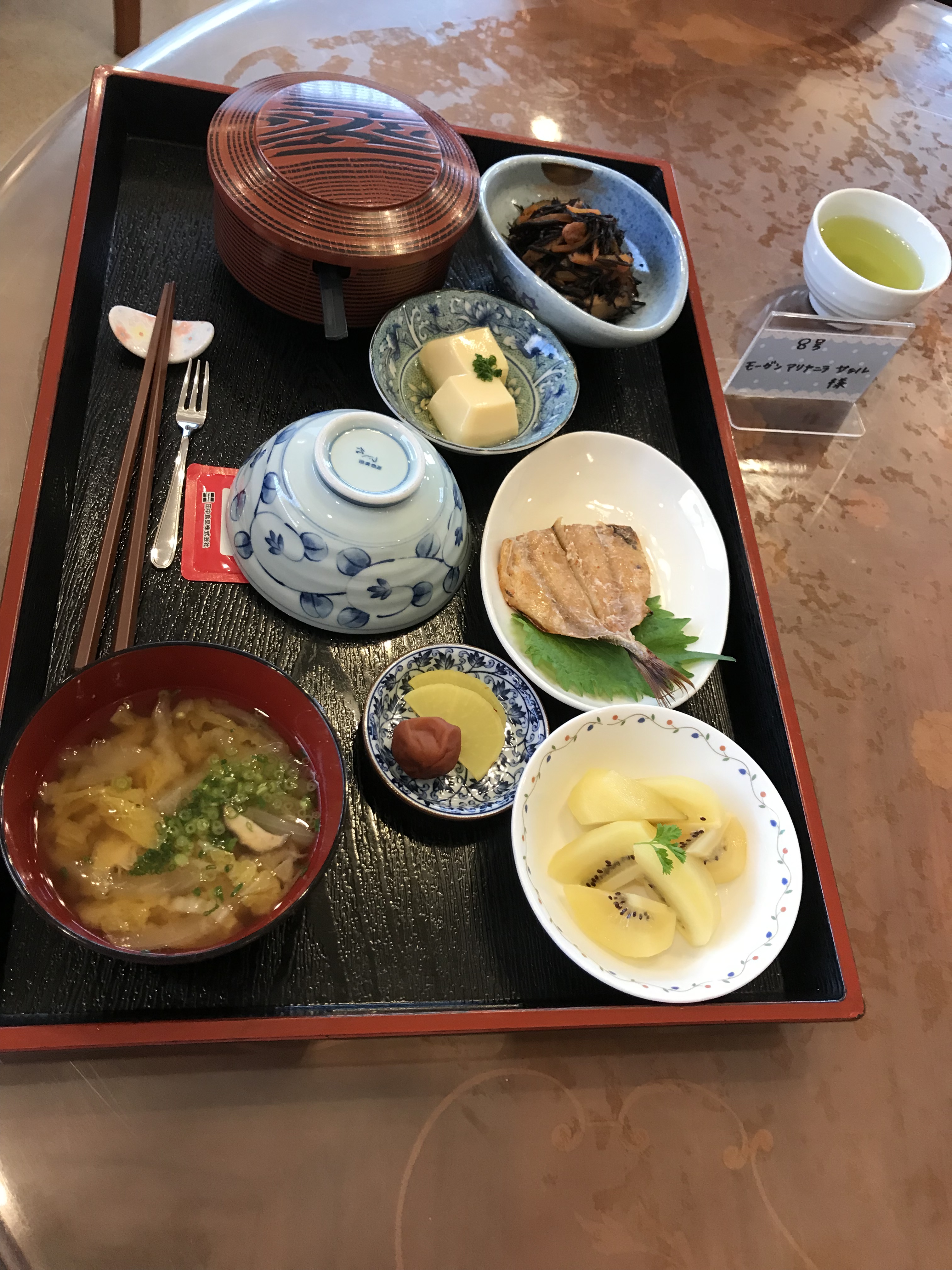
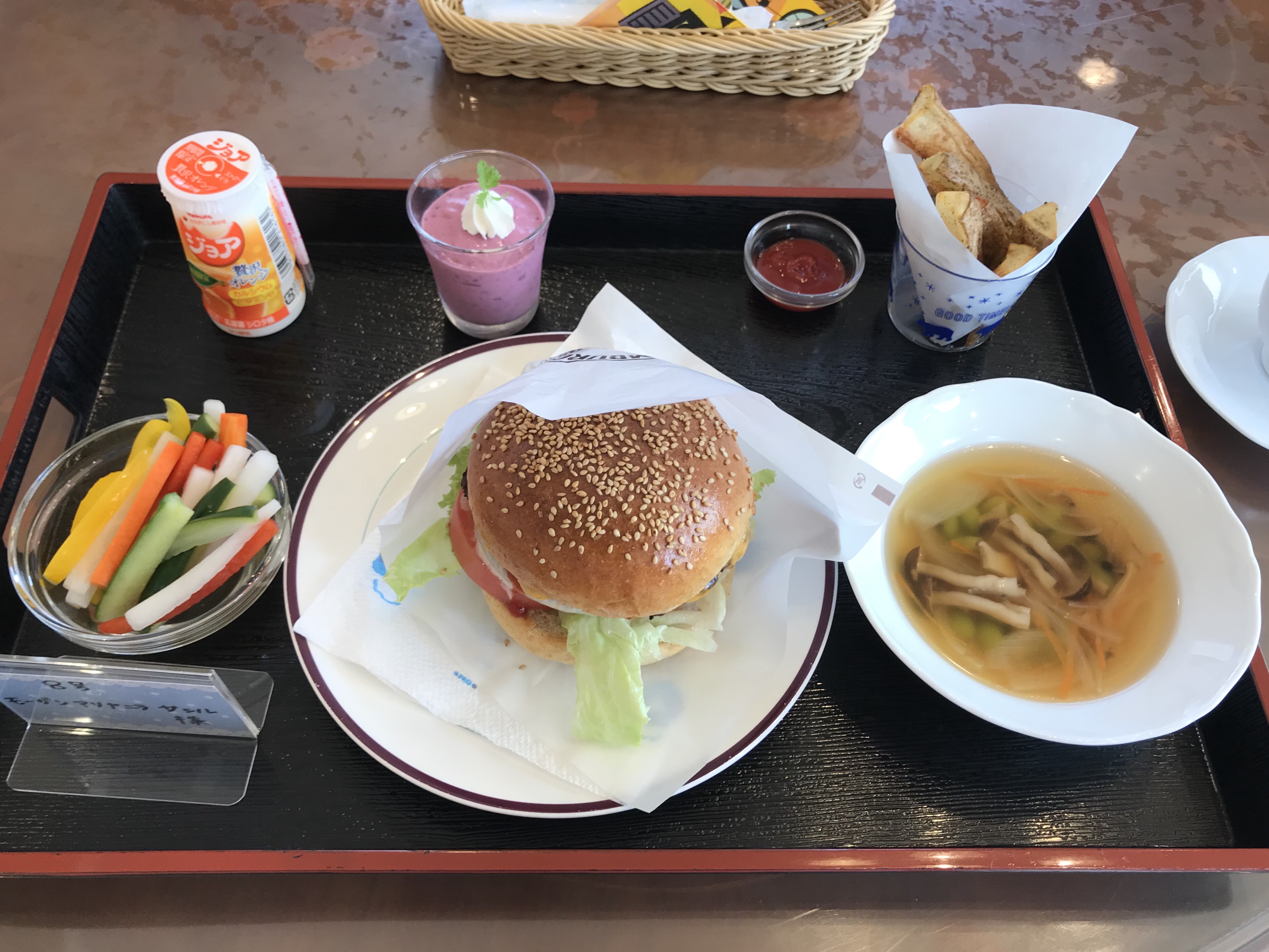
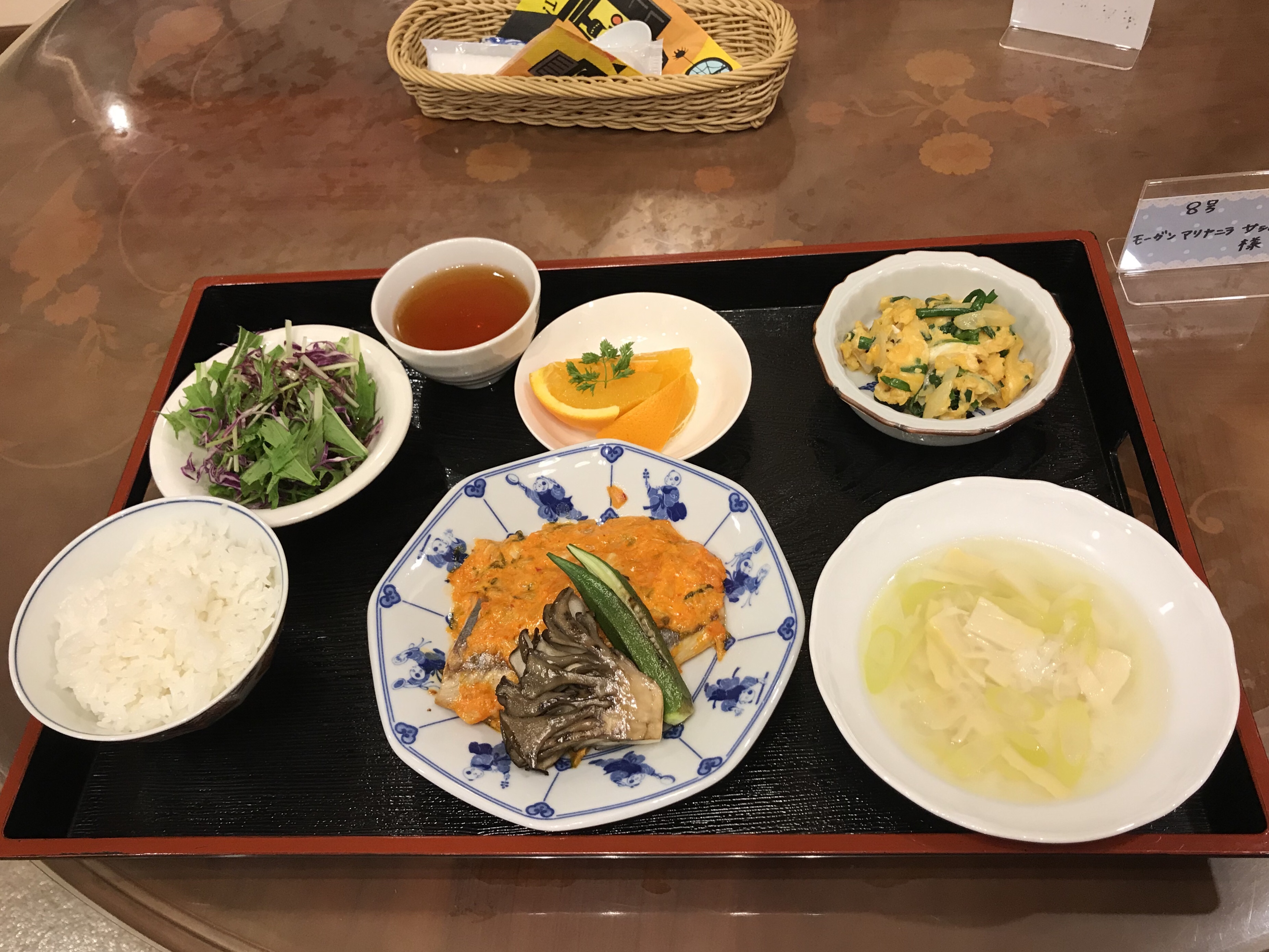
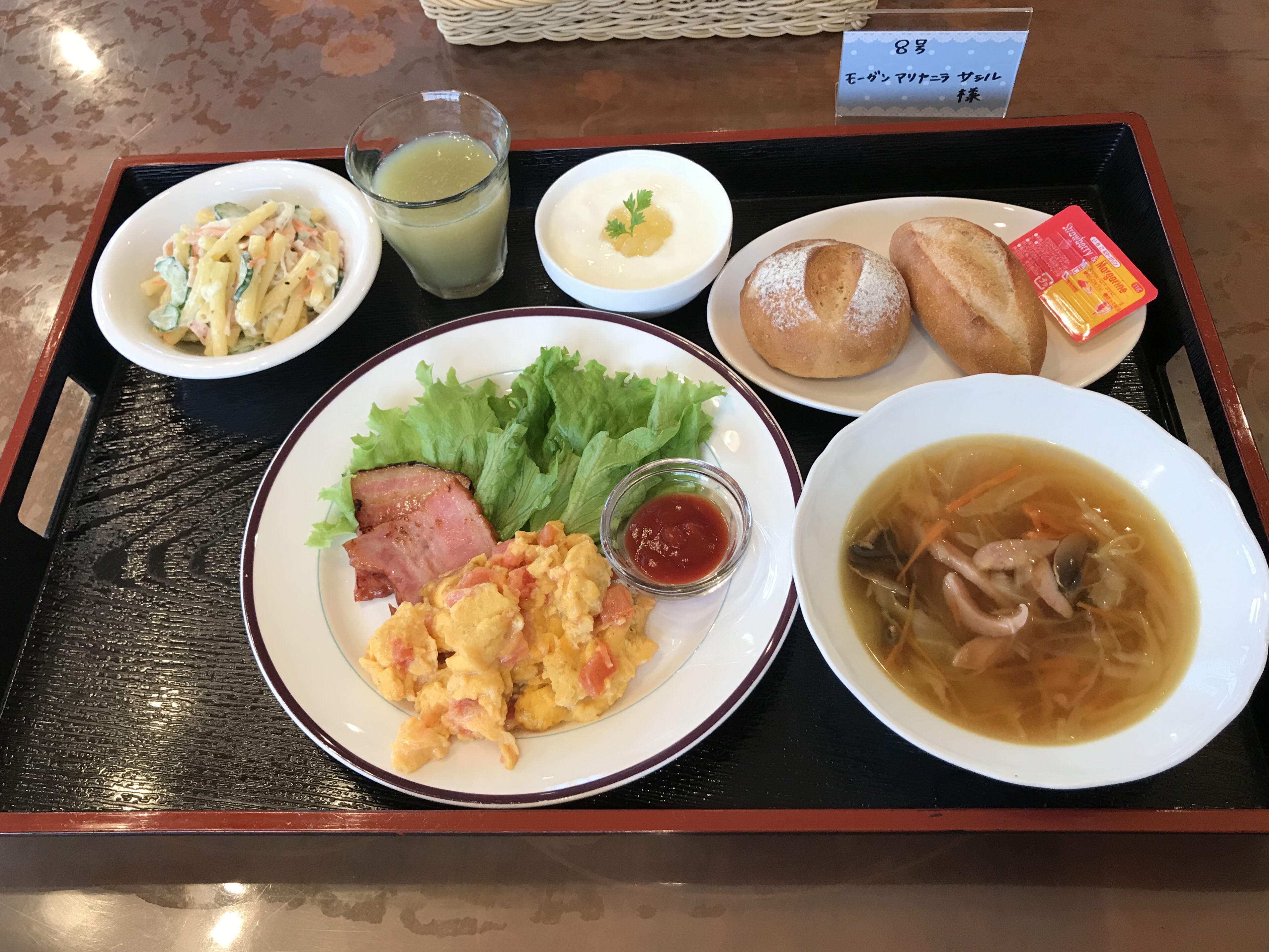
  • Food Served at my Maternity Clinic

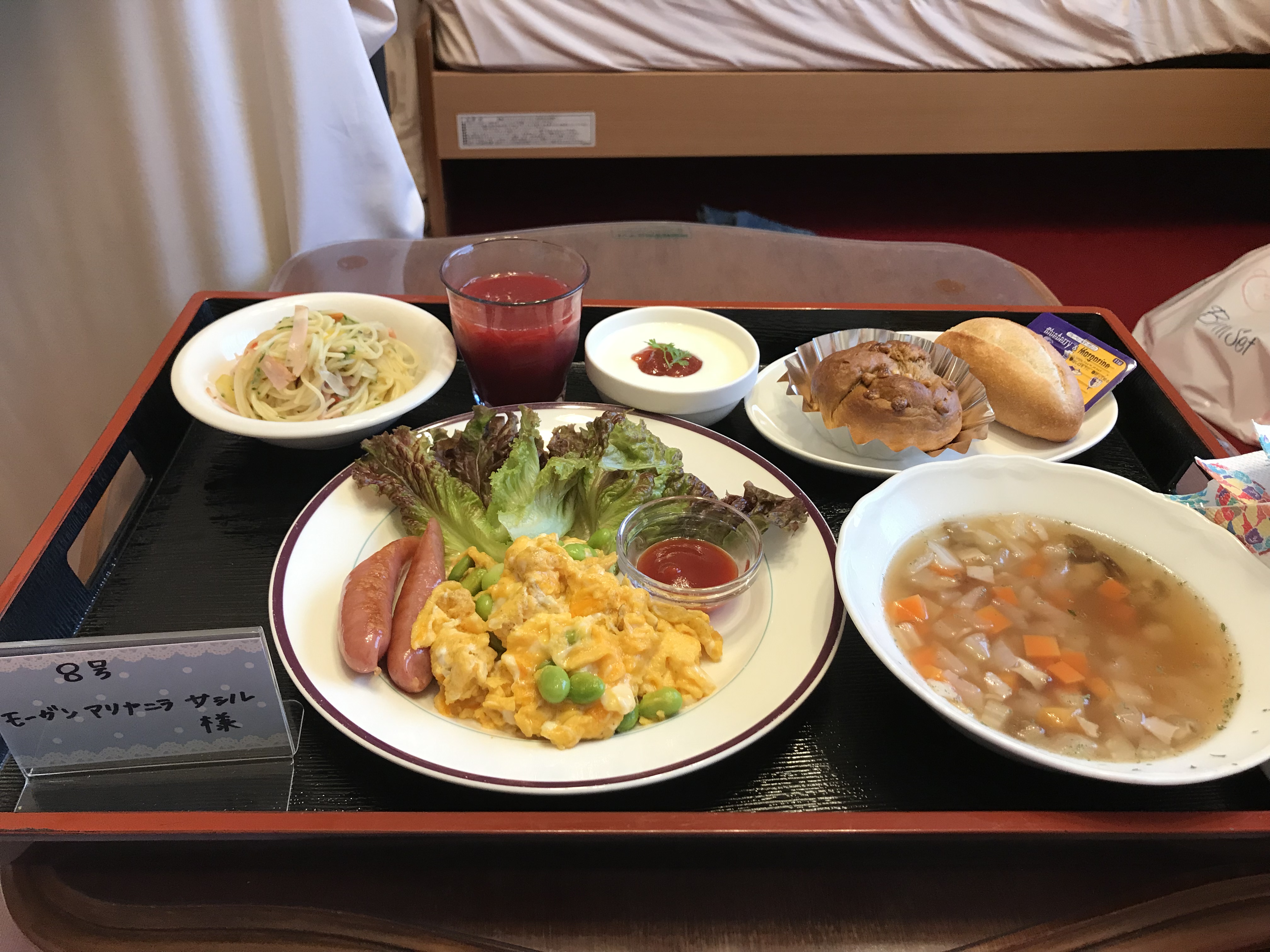
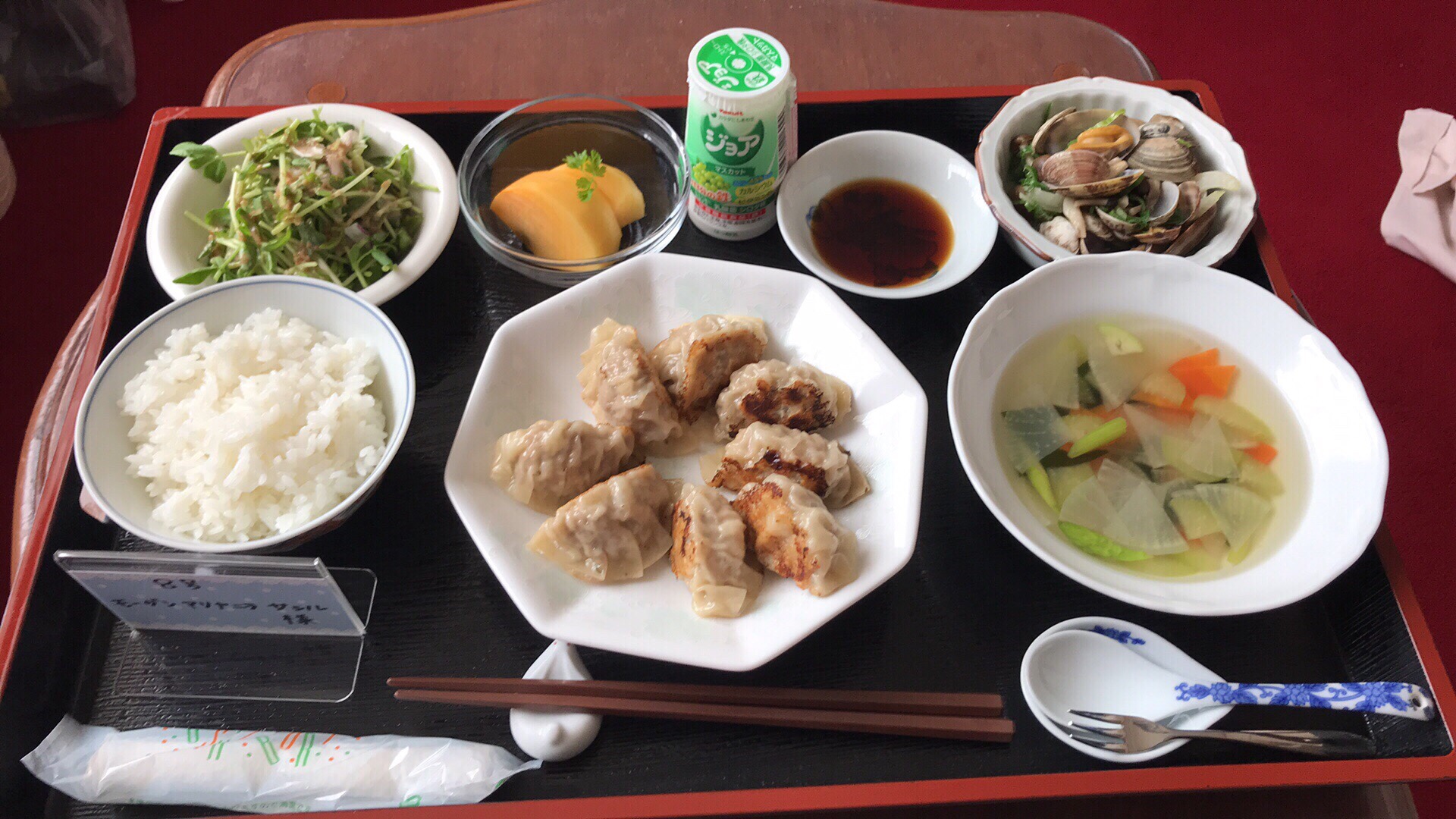
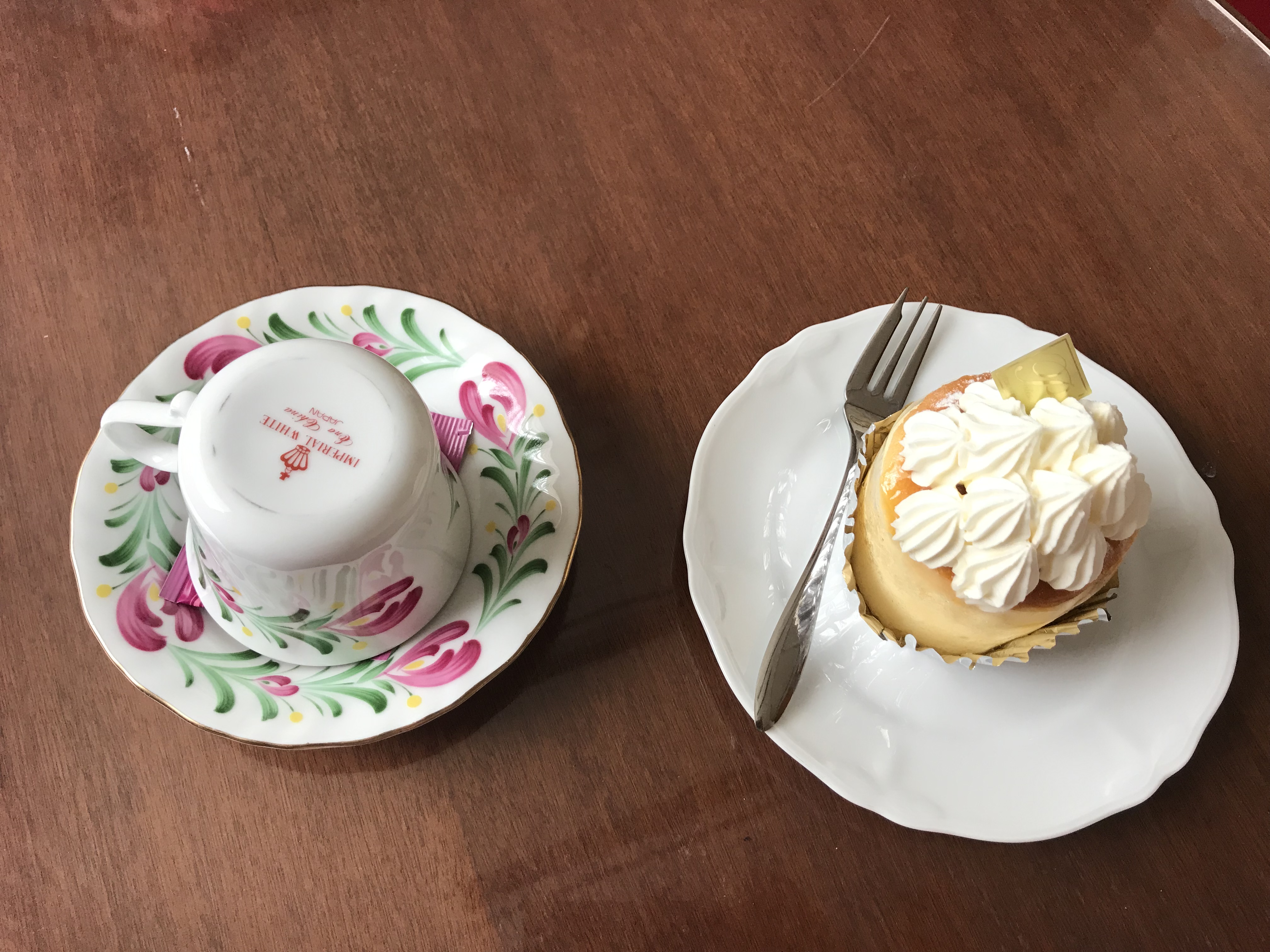
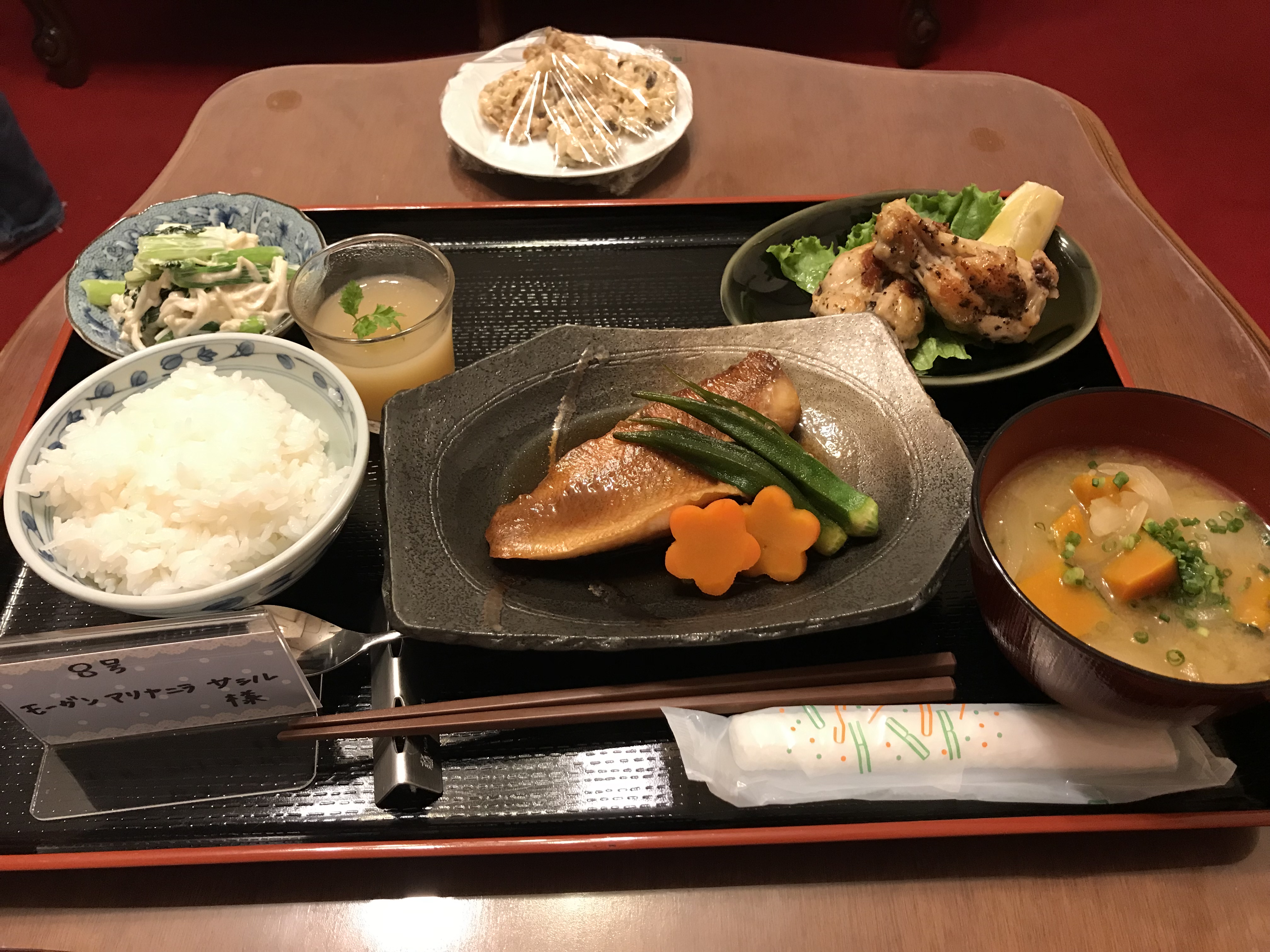
    Food Served at my Maternity Clinic

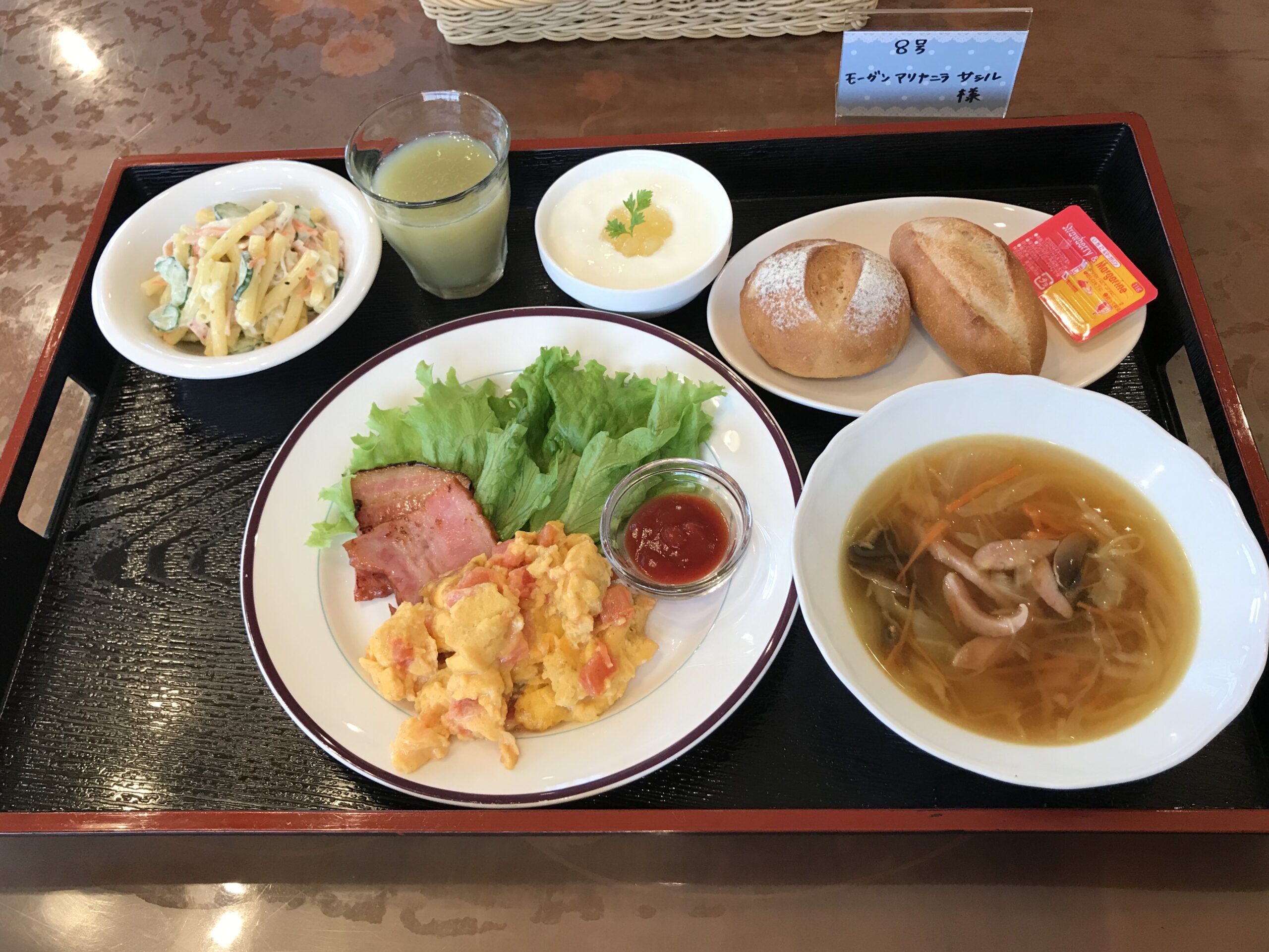
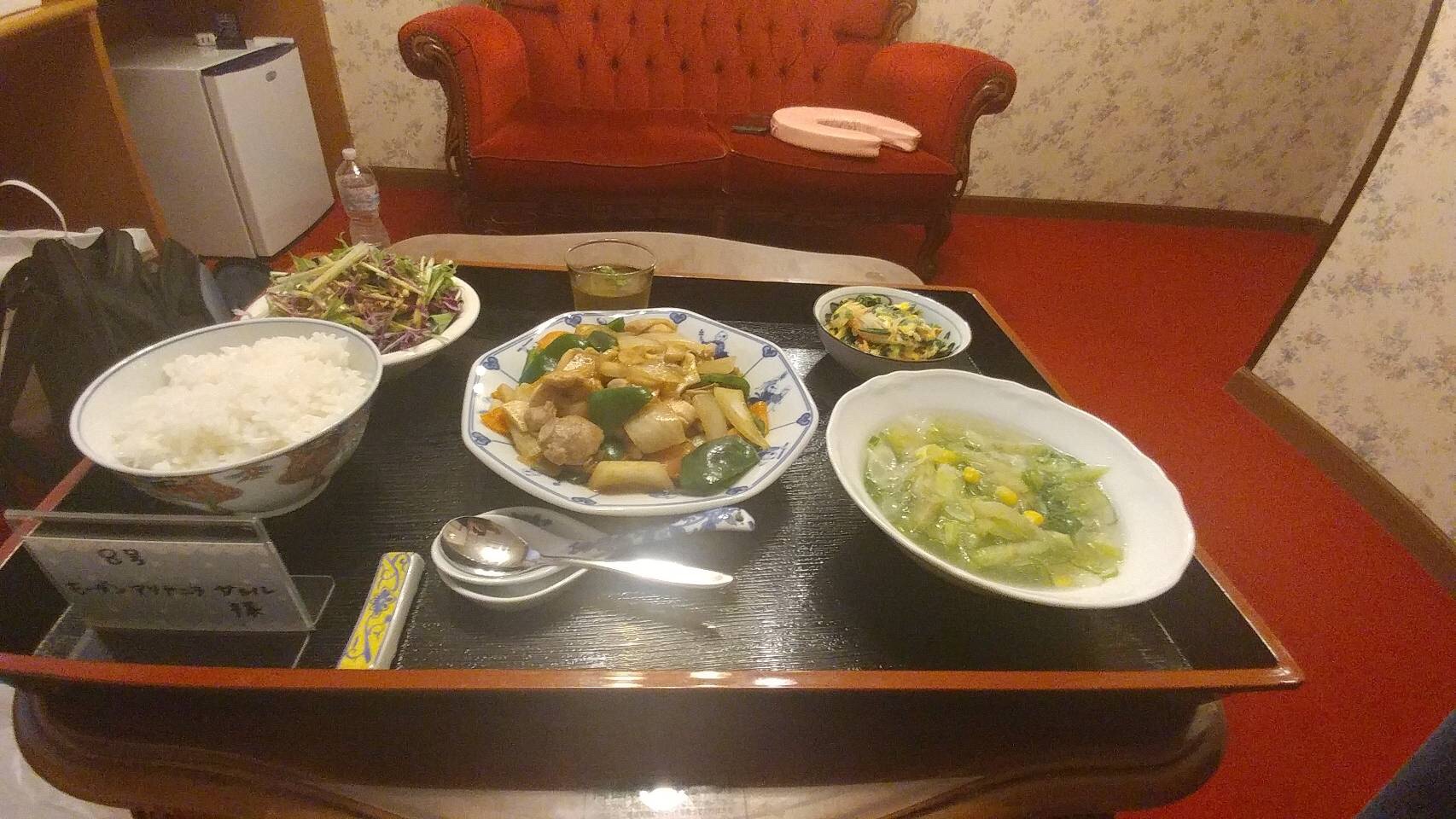
    Food and good nutrition is an essential part in recovery from delivering a baby.

    I would like to share the meal prepared in my entire stay (six days, five nights) in my maternity clinic.

    I got admitted in the morning of Tuesday, October 22, 2019, past breakfast time (around 7:30). I delivered the baby at 12:34 in the afternoon.

    Day 1 (Tuesday, October 22,2019)

    Lunch – so exhausted I couldn’t even eat much more take a picture.

    Dinner

    Day 2 (Wednesday, October 23,2019)

    Breakfast

    Lunch

    Snack time

    Dinner

    Day 3 (Thursday, October 24,2019)

    Breakfast

    Lunch

    Dinner

    Day 4 (Friday, October 25,2019)

    Breakfast

    Lunch

    Snack time

    Oiwai (Celebration) Dinner

    Day 5 (Saturday, October 26,2019)

    Breakfast

    Lunch

    Dinner

    Day 6 (Sunday, October 27,2019)

    Breakfast (Last meal in the clinic)

  • School Lunch in Japan

    School Lunch in Japan

    School lunch in Japan is such a very organized system. It is either prepared in the school by the school lunch teachers and the school nutritionist or in some area, in a school lunch center serving a group of schools.

    The school nutritionist makes the menu for the whole month and distribute it to each teachers in the school one month in advance. The teachers post the menu in the bulletin board for everyone to see. That means to say, students already know what they are going to eat on a specific day the following month.

    The school lunch teachers prepare and cook food every day and make sure that everything is complete in each lunch wagon according to the number of classes and  students including the teachers as well as volunteer teachers. About 30 minutes before lunch time, lunch wagons are ready for pick-up in the pantry and the nutritionist take the food sample to the school principal for evaluation. The school principal will be the very first person in the school to try the food and her comment and evaluation is necessary. Students with food allergies are noted and given special menu.

    What do students do during school lunch? Let us discuss them into three categories: 1) preparation time, 2) eating time, and 3) clean-up time.

    1. Preparation time.

    Each classroom has `kyushoku toban` or lunch committee who`s assigned to prepare lunch. The first thing they do is wash their hands and wear their white apron, hair mask and face mask. Then, they go to the pantry  to pick up their lunch wagon. When they come back to their classroom, each one of them do their assigned tasks. There would be one or two students who would wipe the tables, some serve rice, main dish, side dish, and soup. Another student would distribute milk and straw. This system (slightly) changes between classrooms depending on the management of each individual teacher. Some teachers use a timer and measure how fast the students can finish the preparation. Some teachers would assign student leaders who call out which group of students can go line up and fill their lunch trays.

    2. Eating time.

    One good thing about school lunch is that students are trained to be patient to wait for everyone to have their lunch trays ready. No complain about being hungry or whatever. When everyone is ready, the student leaders (they call`​nichoku)would go in front and lead everyone to say `Itadakimasu`. But, no, it`s not eating time yet for everyone. Those who think they’re serving is too much for them can do `herasu` (to reduce) and take a portion back into the food containers. This should be done before eating and never after touching your food. The students can only reduce the amount of food and never allowed to be picky and say no and put everything back into the food containers. Everyone has to eat what is being served unless they have food allergies. After the `herasu` is the `fuyasu` (to add). Students who want more servings can go line up and get more food.

    The most exciting part is when they have “nokori” (excess food). Everyone who wants to get more will do ‘janken‘ (rock, scissors, paper) and the winners who are lucky can get more servings. The most famous is the ‘gyunyuu janken‘. Gyunyuu means milk and kids go crazy to win it.

    School Lunch Broadcasting Committee

    During eating time, the ‘kyuushoku iinkai” (school lunch committee) goes to the broadcasting room and do the daily broadcast about the day’s menu. They will broadcast the name of the menu, the ingredients and the nutrition they can get from each ingredient. They do it every single day.

    Back in the classrooms, while eating and chatting and suddenly you hear the student leader says “Mogumogu taym desu“, that means everyone has to stop talking and concentrate on eating. Timer is set and everyone should finish their food when the time is up.

    3. Clean-up time

    When all the food is served, the classroom lunch committee will have the trays ready for clean-up. Everything on one’s plate should be consumed. Not a single grain of rice or a drop of milk should be left. Everything is cleaned like it’s washed. Before putting the utensils and tray back to the wagon, each student should get the approval of the teacher or in some classrooms, their seat mates/group-mates wether their trays are clean and there’s no left-over.

    The classroom lunch committee together with the teacher adviser then push the wagon back to return to the pantry.

    (Those slow eaters will have to finish their food and return their own trays to the pantry by themselves.)

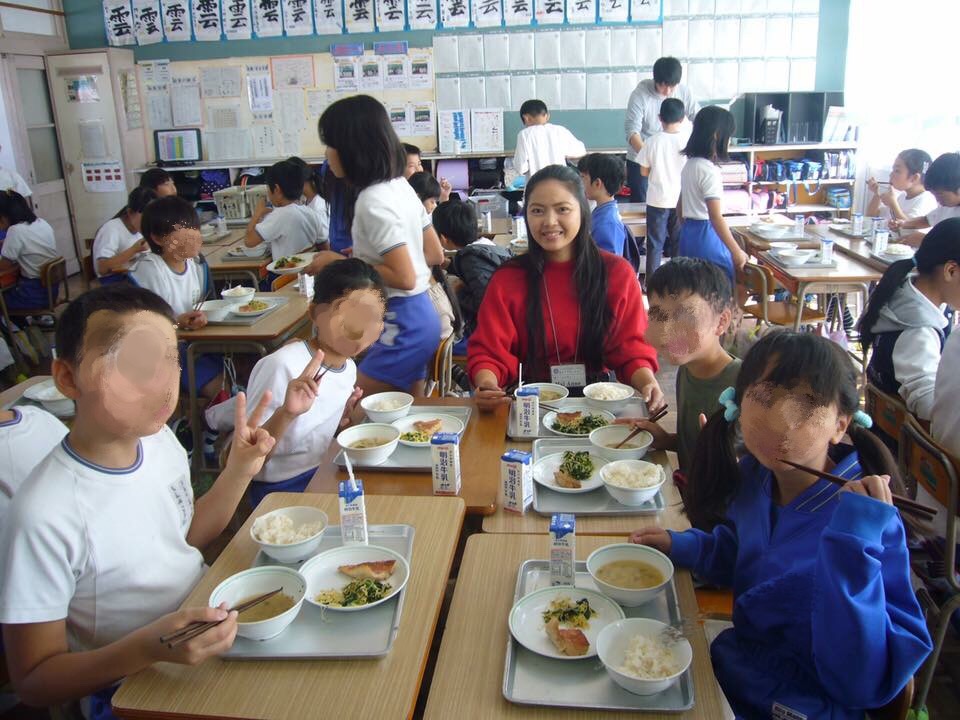
    Lunch with students
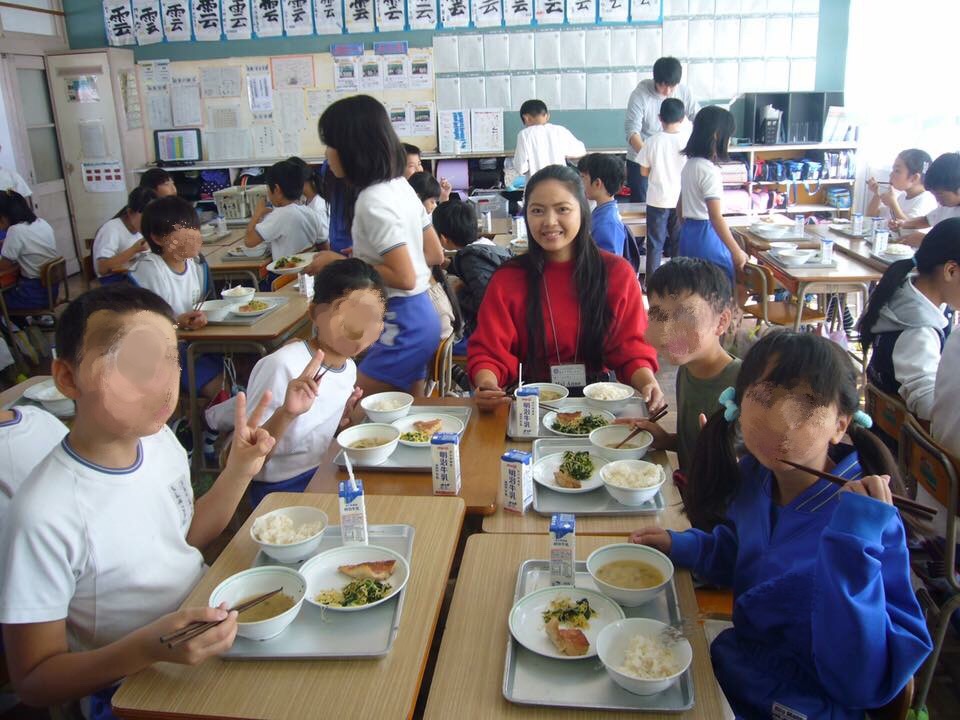
    I have experienced Japanese school lunch from working as an ALT for many years and I can say that this school lunch system is very crucial not only for the Japanese children’s physical development but also for there social and moral development as well. This serves as a very good training ground instilling in the children a deep sense of responsibility, teamwork, fairness and equality. Children are taught the importance of nutrition and having a balance diet. This awareness, I think, is one factor why Japanese people live the longest in the world.

    Menu

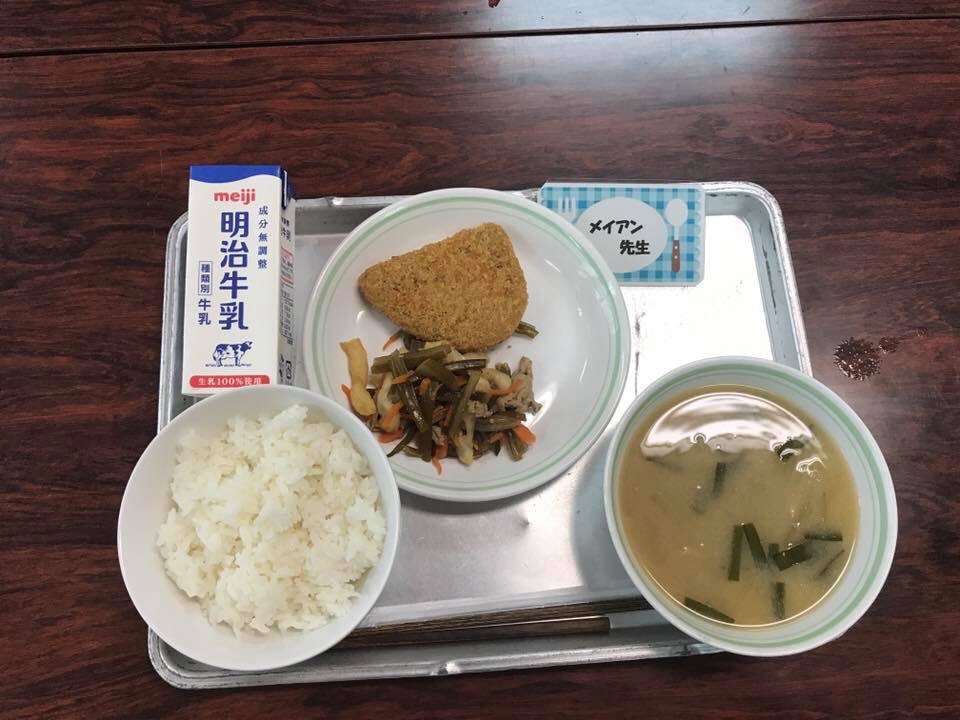
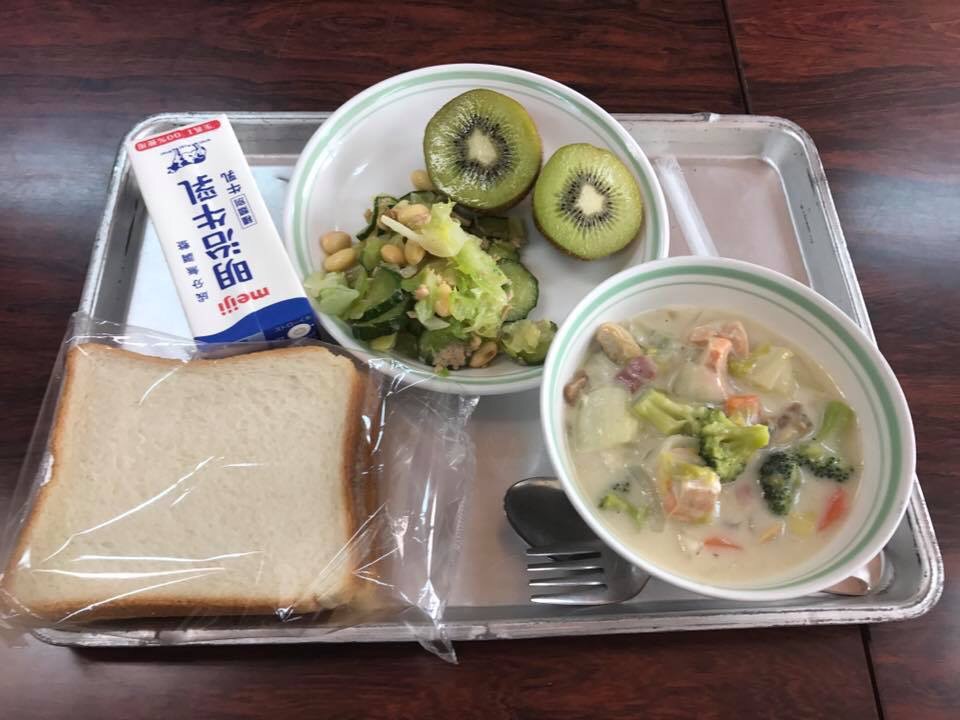
    A typical school lunch menu consists of rice, main dish, side dish, soup (usually miso soup) and milk. Once a week, they serve bread instead of rice. Water is not served in school lunch and I have never seen a student or teacher drink water after lunch. They drink tea (ocha).

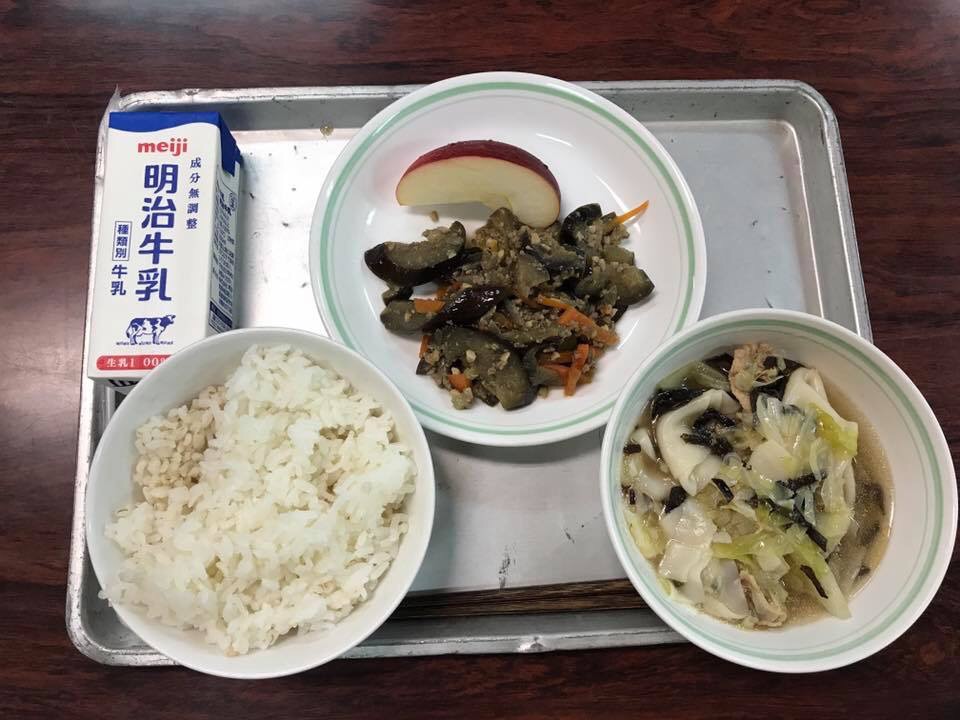
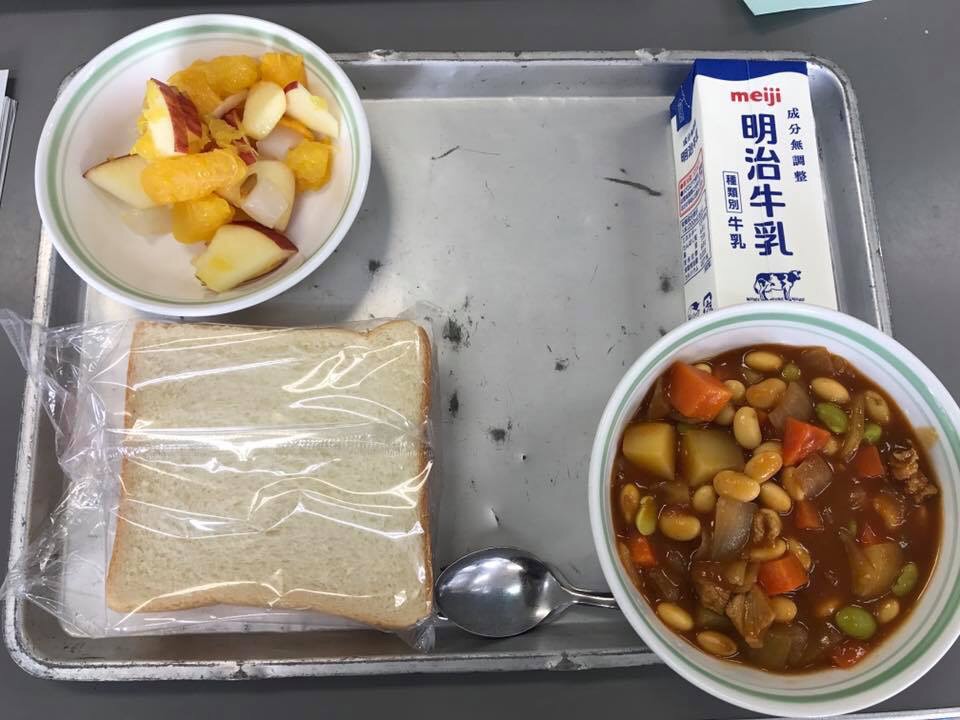
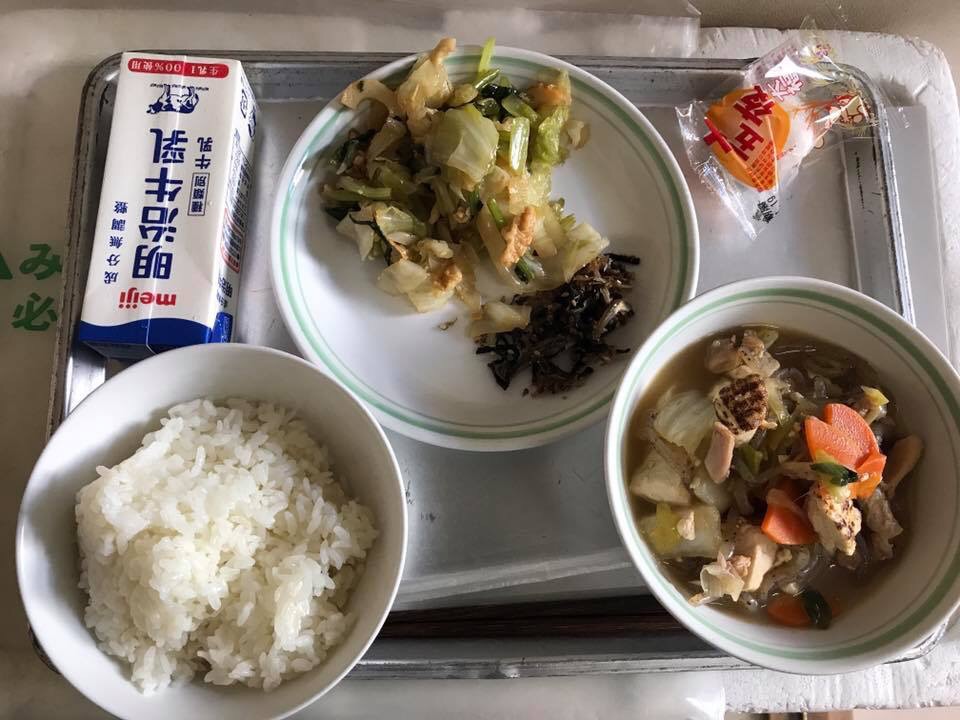
    Below are photos of my school’s lunch menu in the month of October.

    Monday, October 2, 2017 (barley rice, stir-fried eggplant, won-ton soup, apple, milk)
    Tuesday, October 3, 2017 (plain bread, pork and beans, assorted fruits, milk)
    Wednesday, October 4, 2017 (rice, chicken sukiyaki, komatsunanokurumiae, handmade tsukudani, lucky mooncake, milk)
    Thursday, October 5, 2017 (barley rice, fried chikuwa (tube-shaped fish paste), radish salad, pork soup, milk)
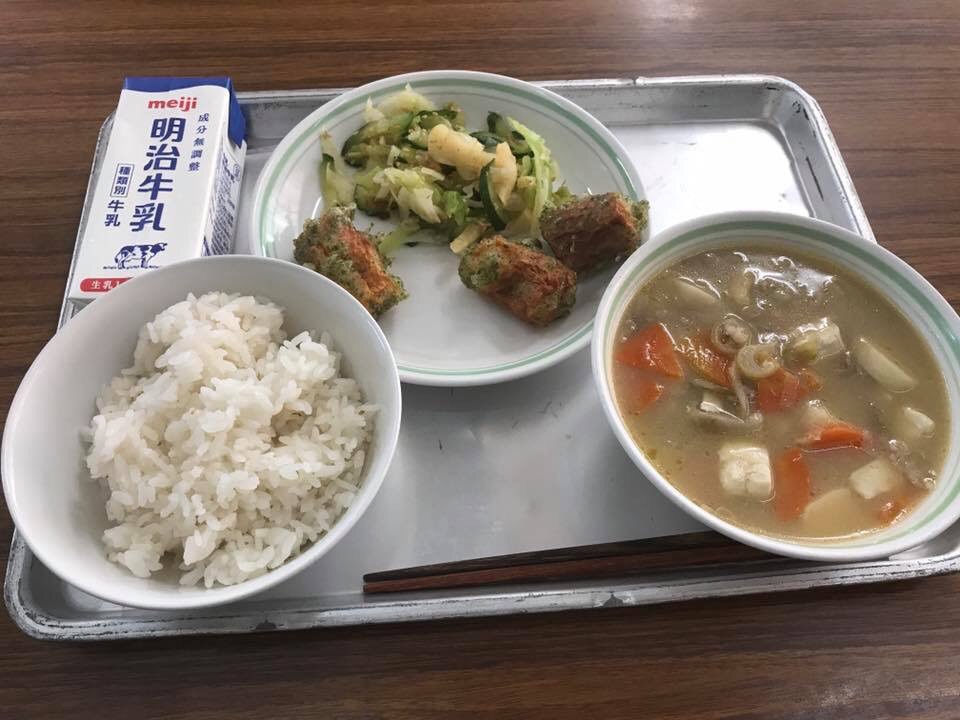
    Friday, October 6, 2017 (rice, sweet potato dish, seaweed salad, orange, milk)
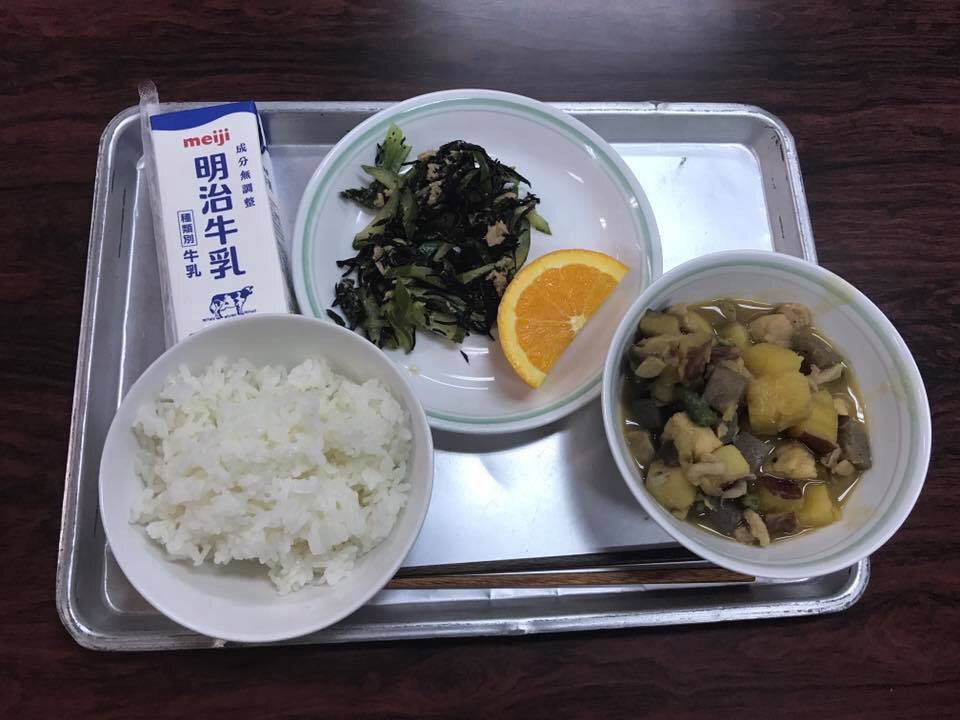
    Tuesday, October 10, 2017 (plain bread, spinach omelette, potato salad, minestrone, blueberry jelly, milk)
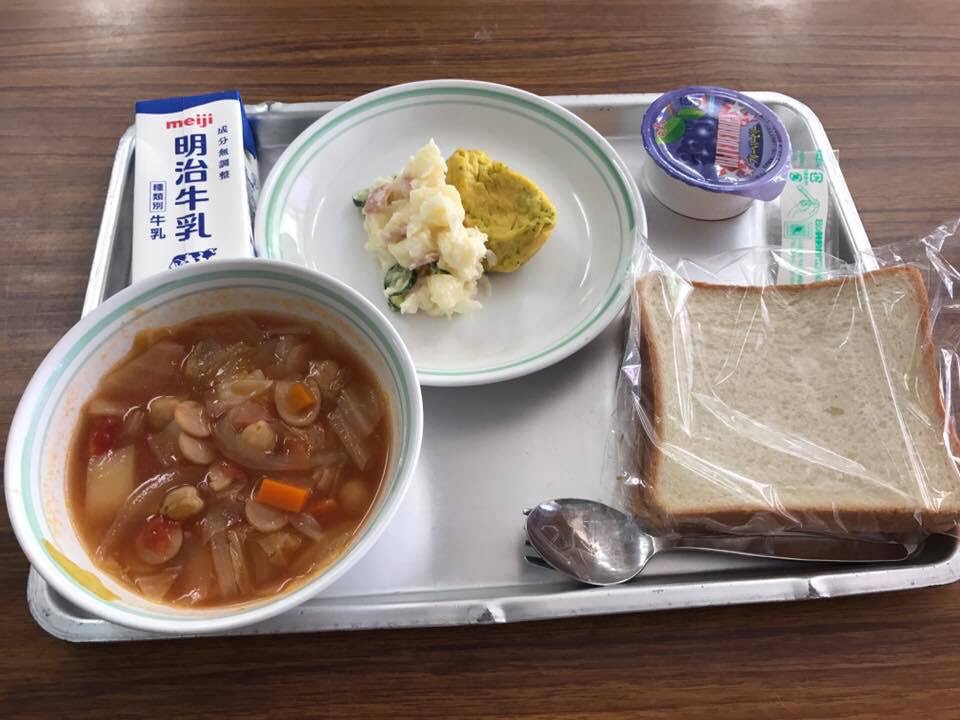
    Wednesday, October 11, 2017 (chestnut rice, salt-grilled saury, pickles, miso soup, milk)
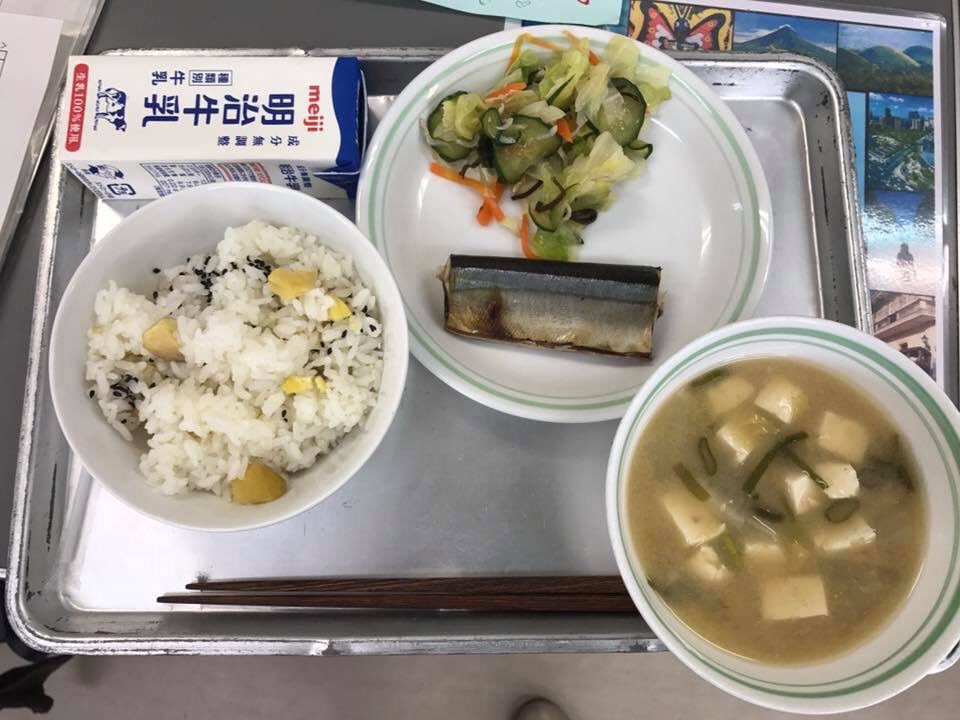
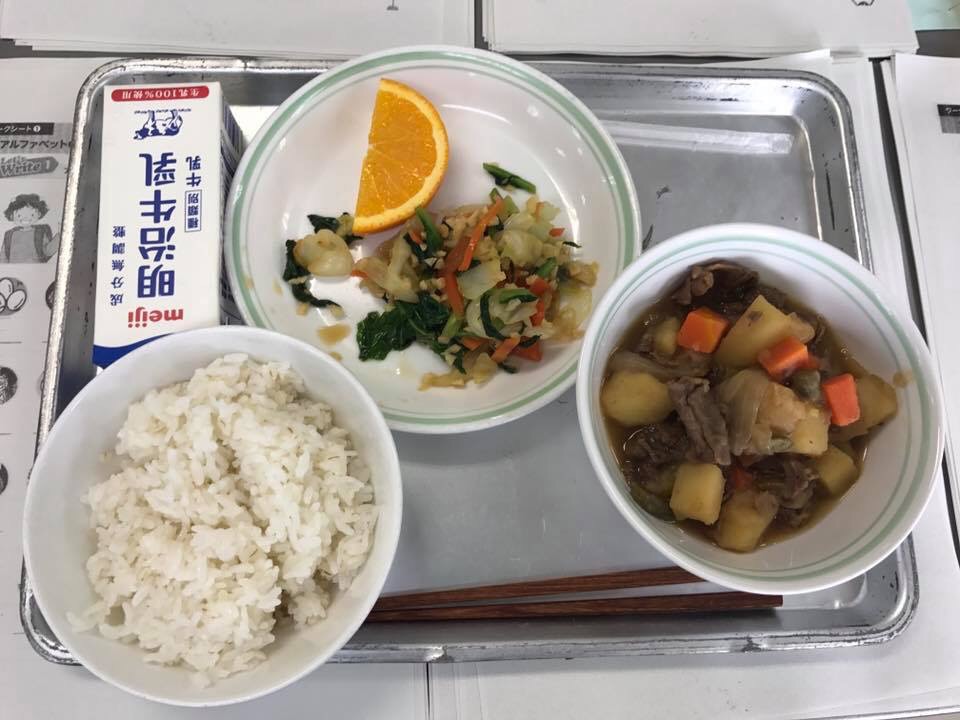
    Thursday, October 12, 2017 (barley rice, meat and potatoes, vegetable and almond salad, orange, milk)
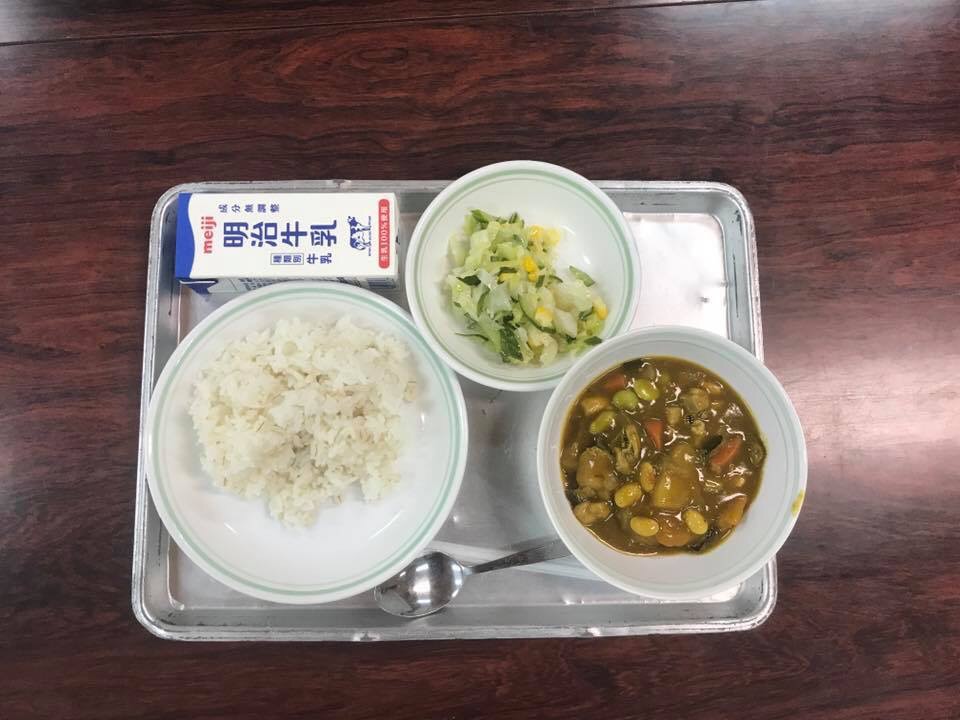
    Friday, October 13, 2017 (curry and rice, coleslaw salad, milk)
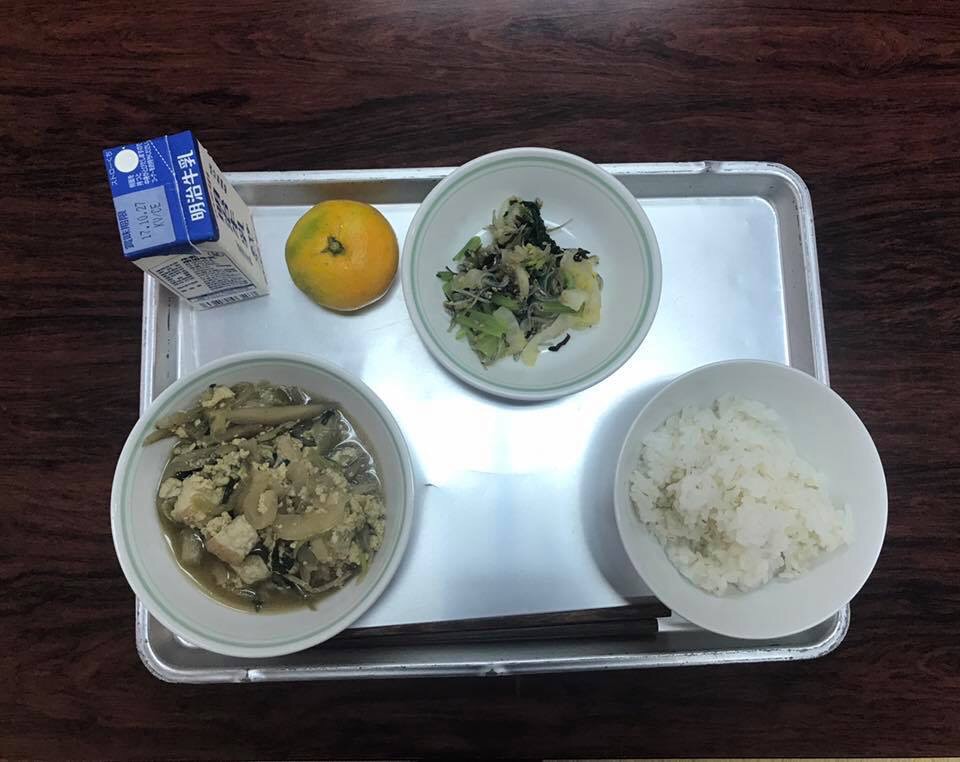
    Monday, October 16, 2017 (barley rice, chicken and egg dish, komatsuna salad, orange, milk)
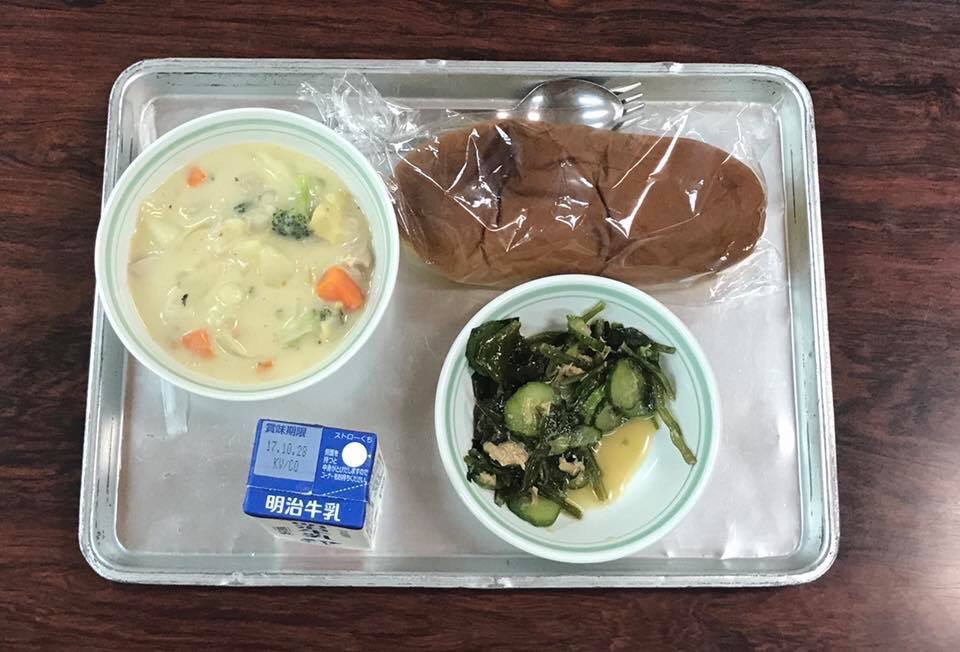
    Tuesday, October 17, 2017 (carrot bread, chicken and kashiwa stew, kaisou salad, milk)
    Wednesday, October 18, 2017 (rice, grilled shishamo (capelin), persimmon salad, miso soup, milk)
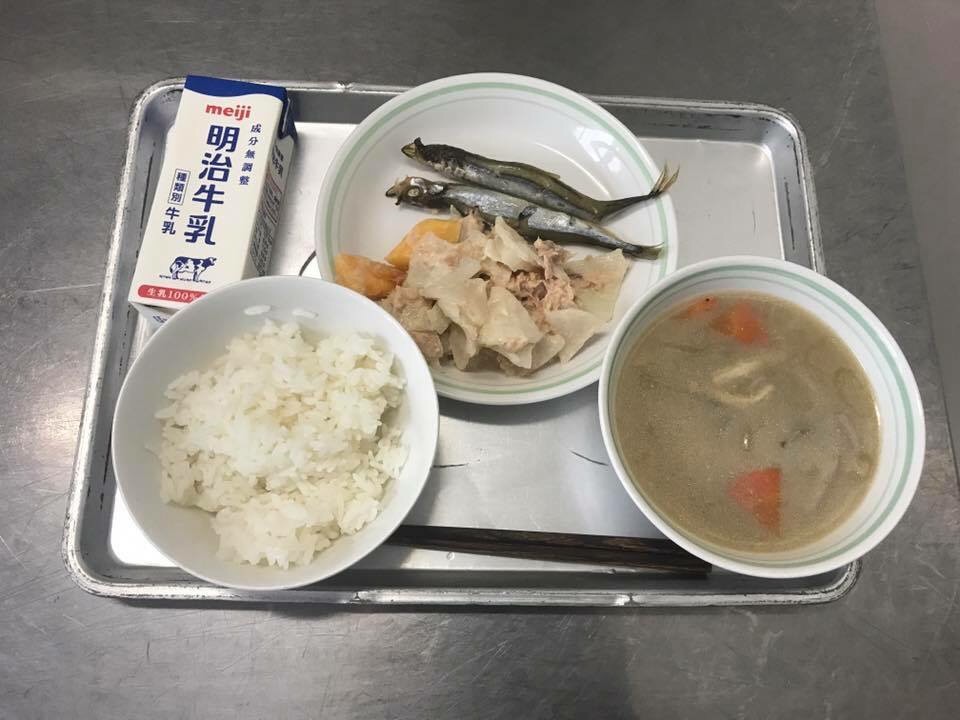
    Thursday, October 19, 2017 (barley rice, mabo tofu, bean sprouts salad, orange, milk)
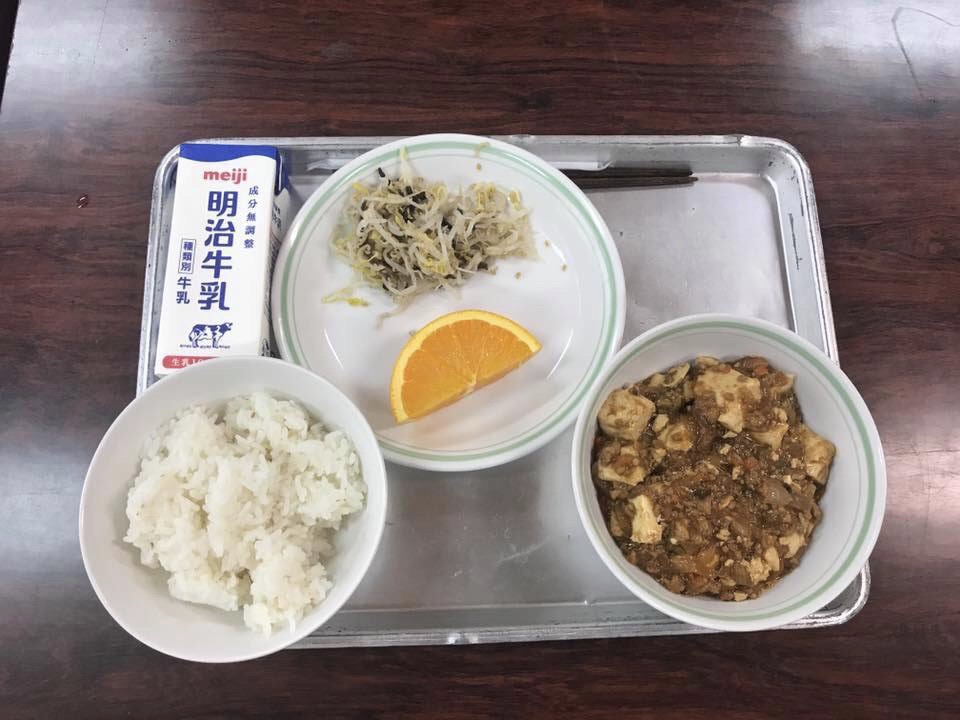
    Friday, October 20, 2017 (rice, omelet, kimchi kimpira, miso soup, milk)
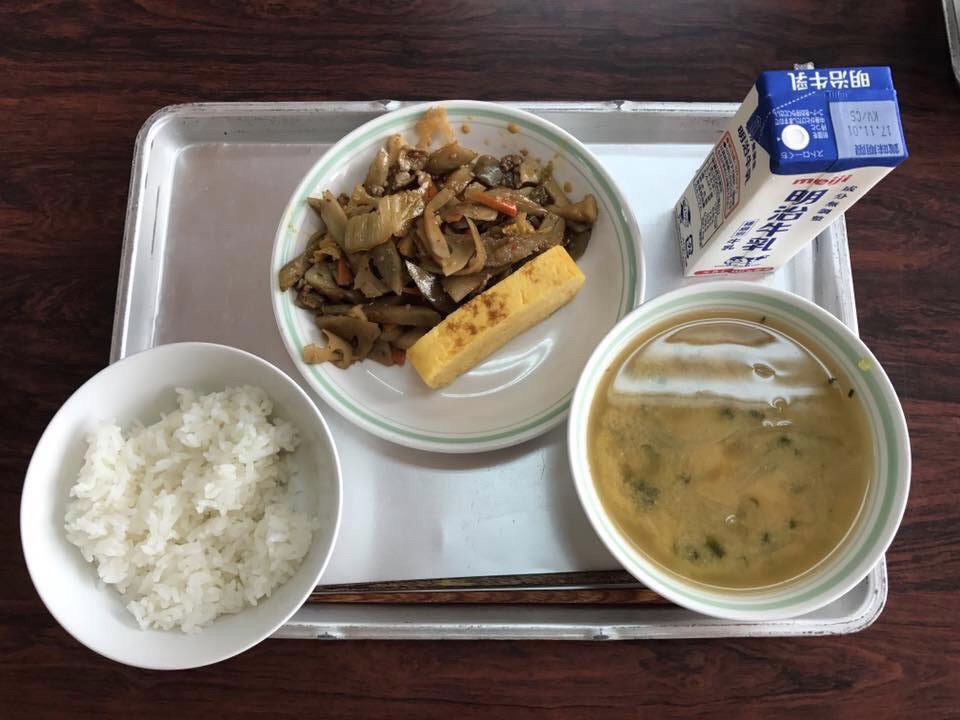
    Monday, October 23, 2017 (barley rice, fish, salad, miso soup, milk)
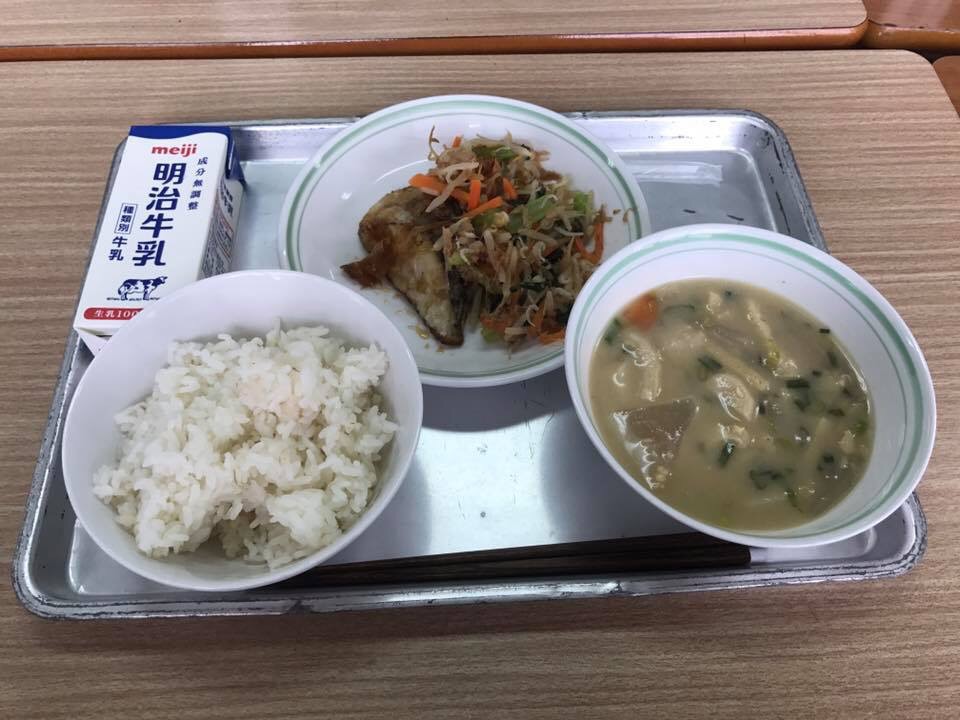
    Tuesday, October 24, 2017 (Pita bread, chili con carne, carrot salad, kiwi fruit, milk)
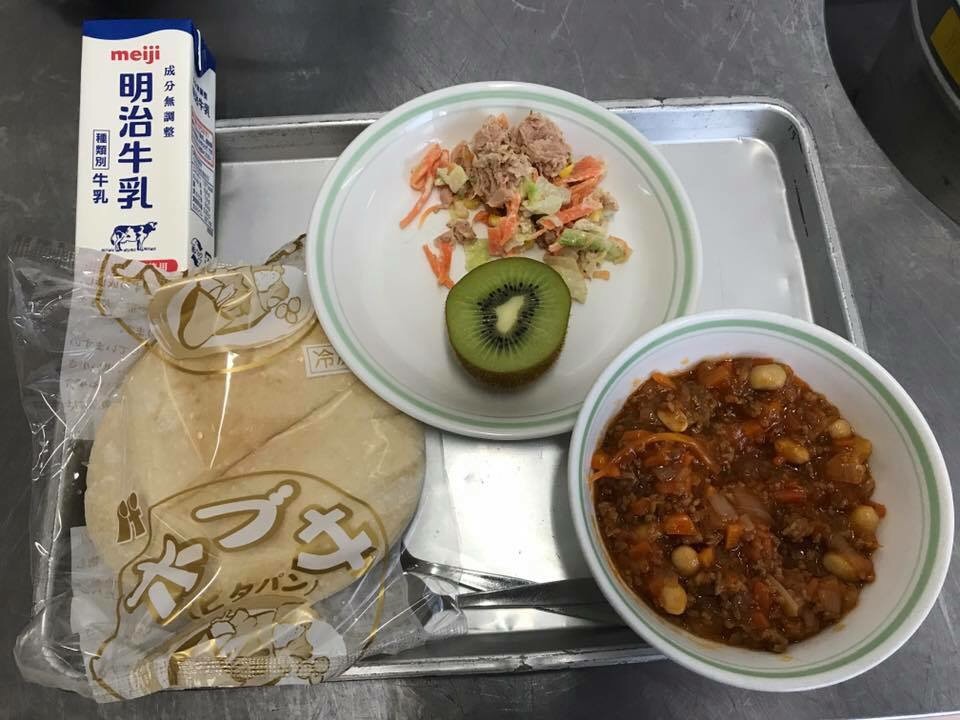
    Wednesday, October 25, 2017 (barley rice, fried fish, vinegared vermicelli, miso soup, milk)
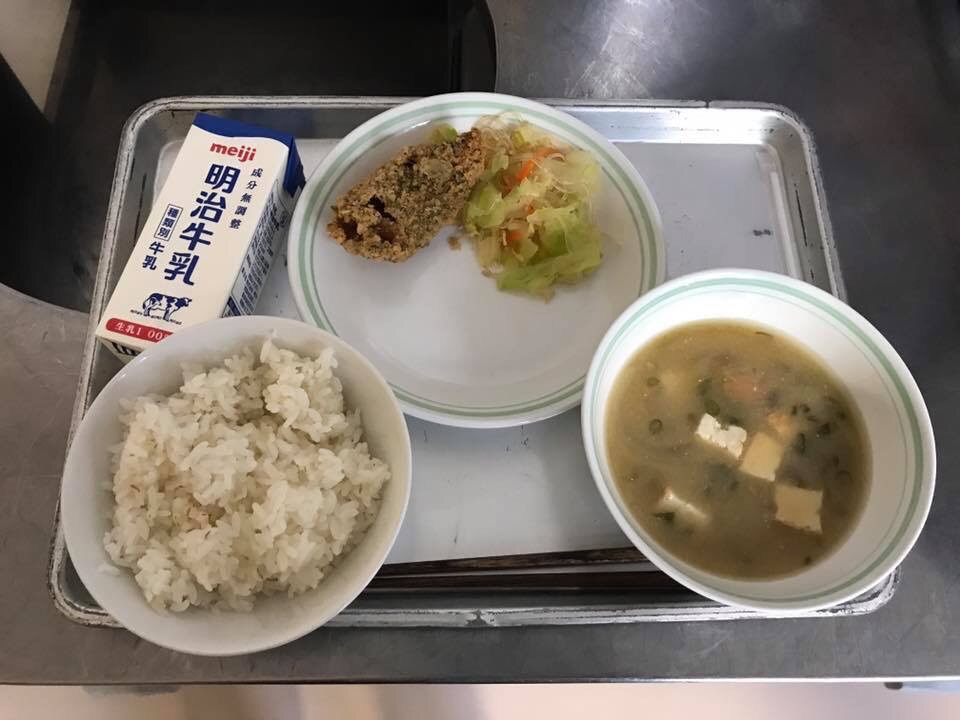
    Thursday, October 26, 2017 (rice, kimchi chigae, cucumber and bean sprouts namul, orange, milk)
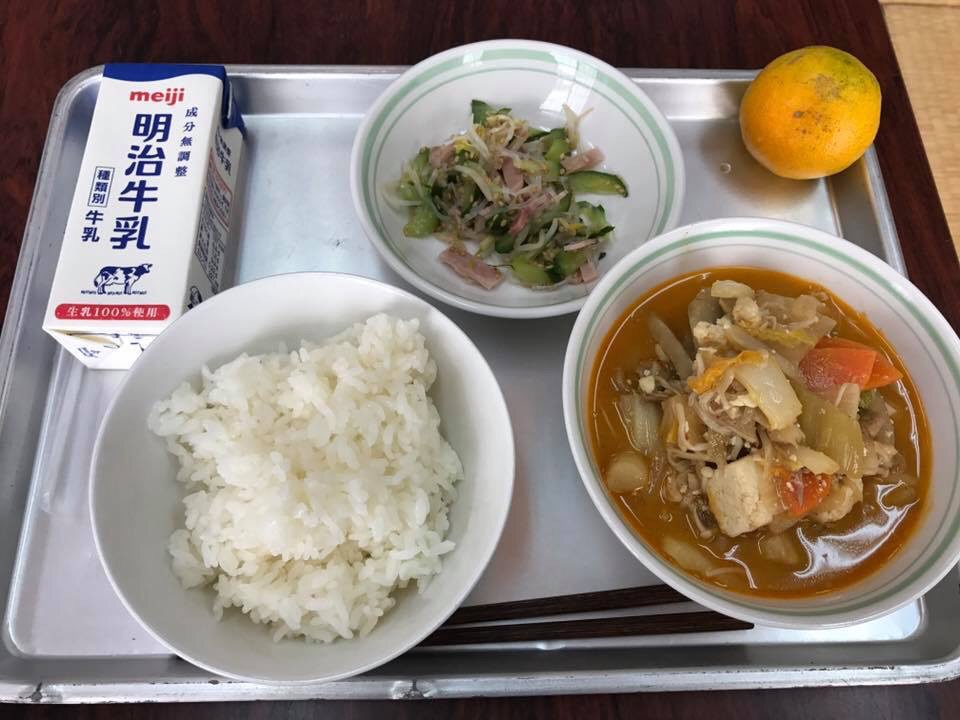
    Friday, October 27, 2017 ( genryou rice, curry udon, cucumber salad, kyoho grape, milk)
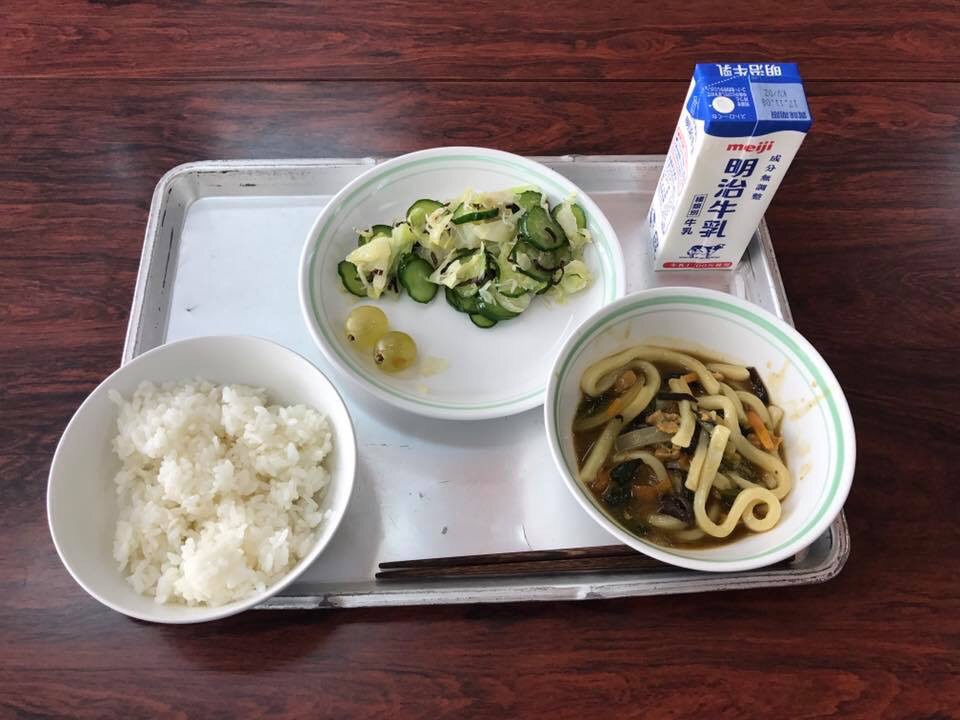
    Monday, October 30, 2017 (rice, fried pumpkin meat, stir-fried kikuwakame, miso soup, milk)
    Tuesday, October 31, 2017 (plain bread, salmon in cream, kiwi fruit, milk)
  • Whale for School Lunch and Other Stories of Food Culture Shock

    Whale for School Lunch and Other Stories of Food Culture Shock

    Whale

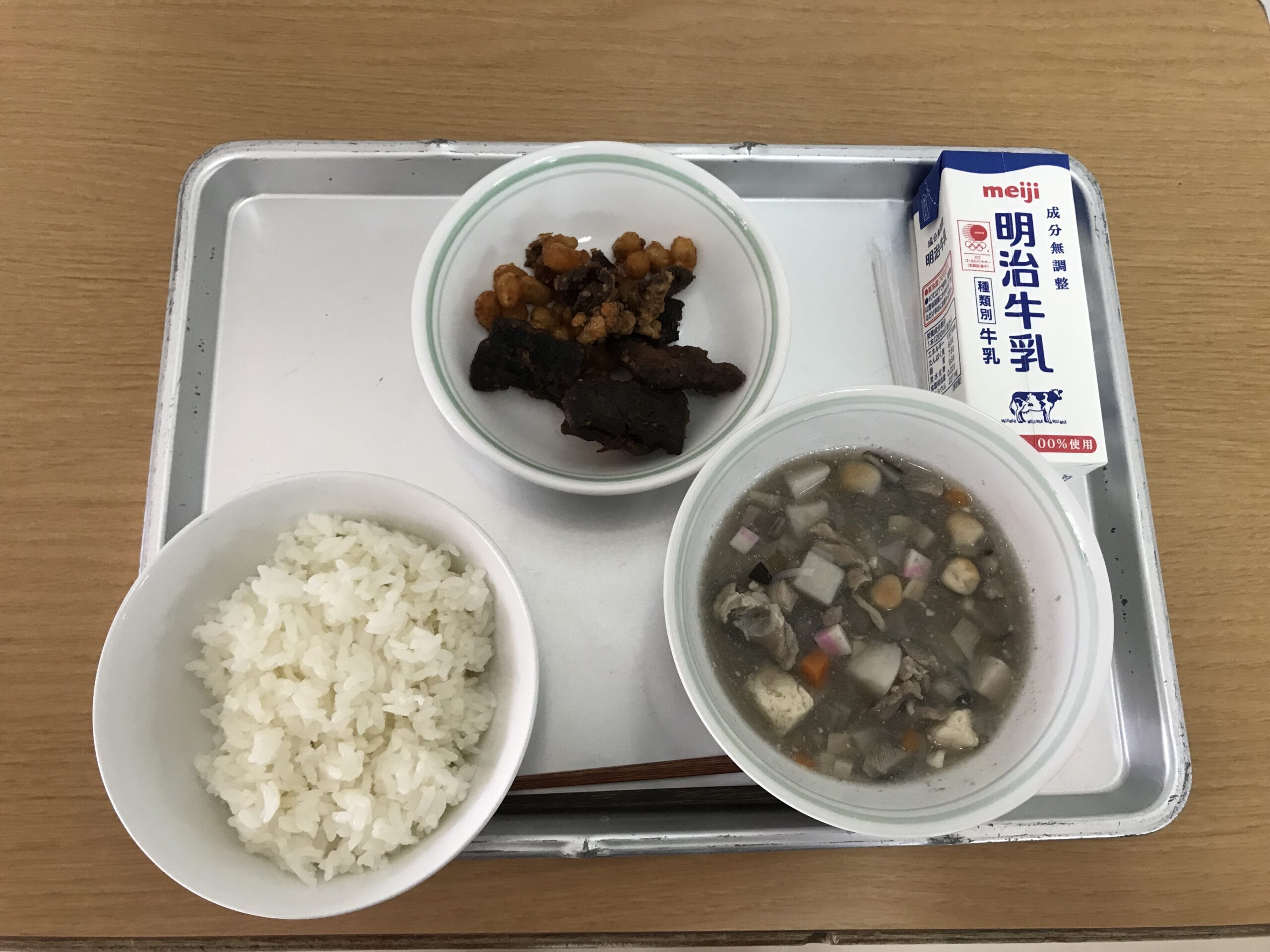
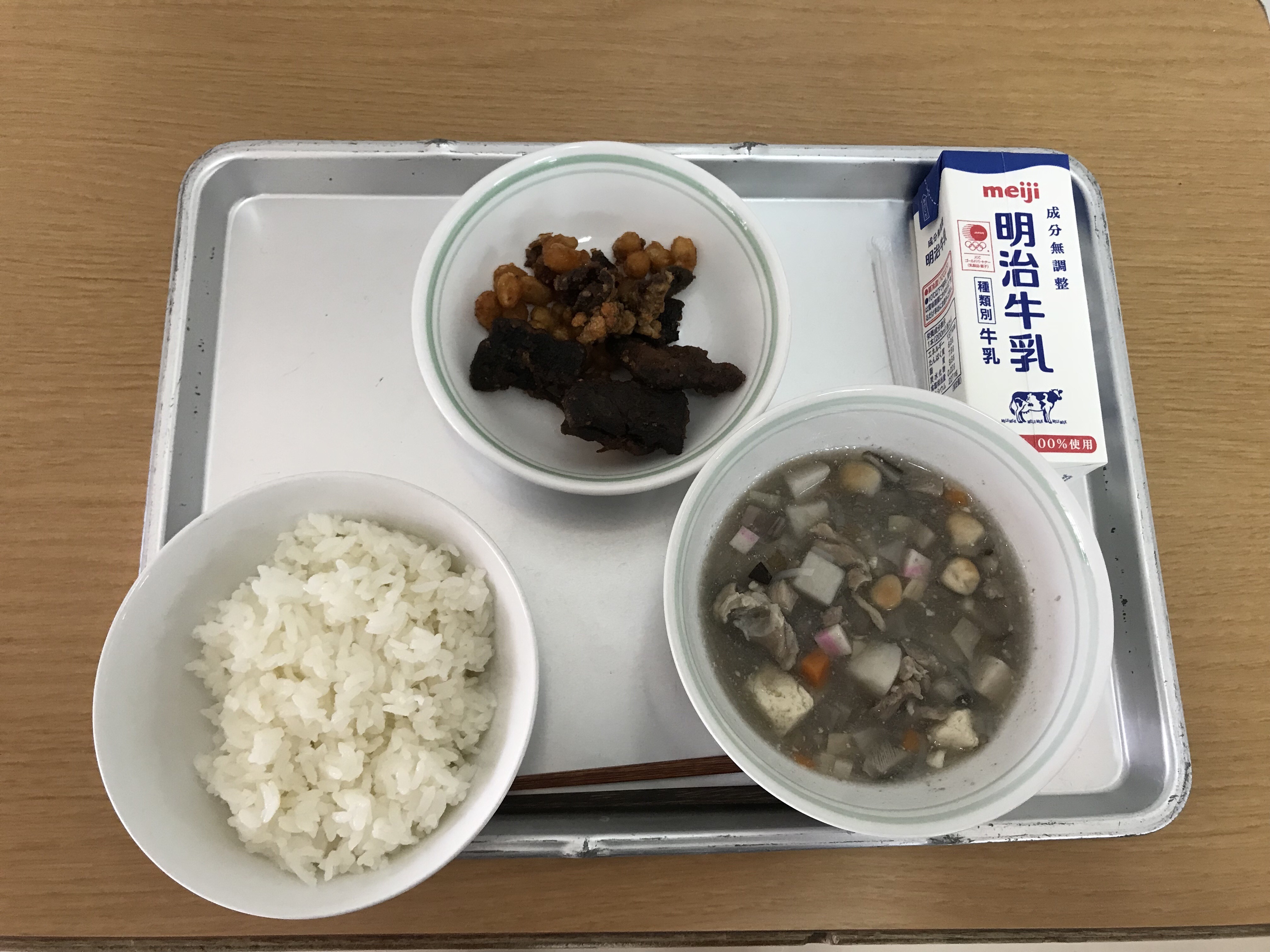
    Yes. I had whale for school lunch! It was a shock for me. I heard the teachers say ‘kyou wa kujira da ne’ (today is whale) during lunch preparation. I help in setting up lunch for non-adviser teachers. And that day, I was the one serving the main dish, which was, yeah, you guessed it right, whale.

    I said ‘hontou desu ka?’ (Is it really?) and they confirmed it, yes. I didn’t know what to do at first. It was in front of me. I don’t know. I’m not a picky person when it comes to food but when I think of whales, I think of Free Willy, the movie, and I consider whales as some sort of pet. And isn`t it they`re considered as endangered now? I know I have to do more research about this but that exact moment I couldn`t imagine myself eating it.

    I found myself in a predicament. I can’t be saying no. I’m in Japan and I’m in school as a teacher. Japanese are very particular about eating what’s on your plate. You have to eat everything on your plate like it is washed and cleaned. Nothing should be wasted.

    One of my co-teachers said ‘If you don’t like it, just put it back, it’s okay’, but no. I’m not doing that. I have to be a Roman since I’m in Rome. So, I said it’s okay. I’ll just think it’s a fish, a big fish.

    And so I went to my assigned classroom to eat lunch with students. Everyone seemed fine and enjoying their lunch. I was scared at first bite but it was not really bad. It was good actually. It tasted almost like chicken. Or something like beef. Something like tuna black meat.

    The next time my school will serve kujira for lunch, my reaction will not be the same for sure. There is always first time for everything and that was mine for whale meat. And the interesting part is that it happened in the school.


    Basashi

    Image result for basashi

    That situation reminded me of the first time I had basashi (horse meat), only that it was a little bit different. I was having a good dinner at my sister`s house and they were serving sashimi of different kinds of fish. And then, they served something they called `special sashimi` on the table and they let me try it. It was good and after a few more bites, I was told it was horse meat. And you can imagine my face like I have a straight mouth that extends up to my ears. I was enjoying the food until I was told what it was. And that was because of the image I had in my head, that horses are pet. They provide some sort of transportation in my father`s hometown, bukid, as we call it in our language. The taste was not bad, it was good, and I never heard of any Japanese died from eating basashi. Basashi is in fact, one of the most expensive kind of sashimi.
    How about in China?

    When I was in a Japanese class of eight students, each of us came from different countries (Philippines, Myanmar, China, Thailand, Laos,  Egypt, Iran, and Malaysia), I learned many things about the differences in food culture. I remember one day when we had the topic `Breakfast in my Country`, my Chinese classmate showed us a map of China showing the different regional specialties. We were surprised to see pictures of animals in the map that we considered pet (cat) or dangerous (scorpion), but for them they consider it is a delicacy. I couldn`t tell if it was a joke or for the sake of fun when she mentioned that they eat anything in their country.

    Lechon

    Image result for lechon

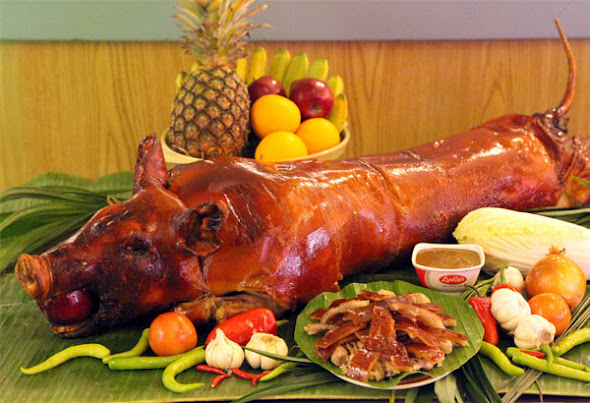
    In the Philippines, the most special food you can serve in any occasion is lechon or roasted pig. For us, a big occasion without lechon is not special. `Happy birthday, walay lechon` as we jokingly sing. `Walay lechon` means `no lechon`. The crispy skin of lechon is the trademark favorite. And it is usually displayed whole with an apple in its mouth. For us, Filipinos, it`s a beautiful view in any dining table. But, when I showed it to my Japanese friend and to my students in school, they were all surprised. They couldn`t believe what a whole pig with an apple in its mouth and sometimes with a knife stuck on it`s body doing on the table.

    Balut

    Image result for balut

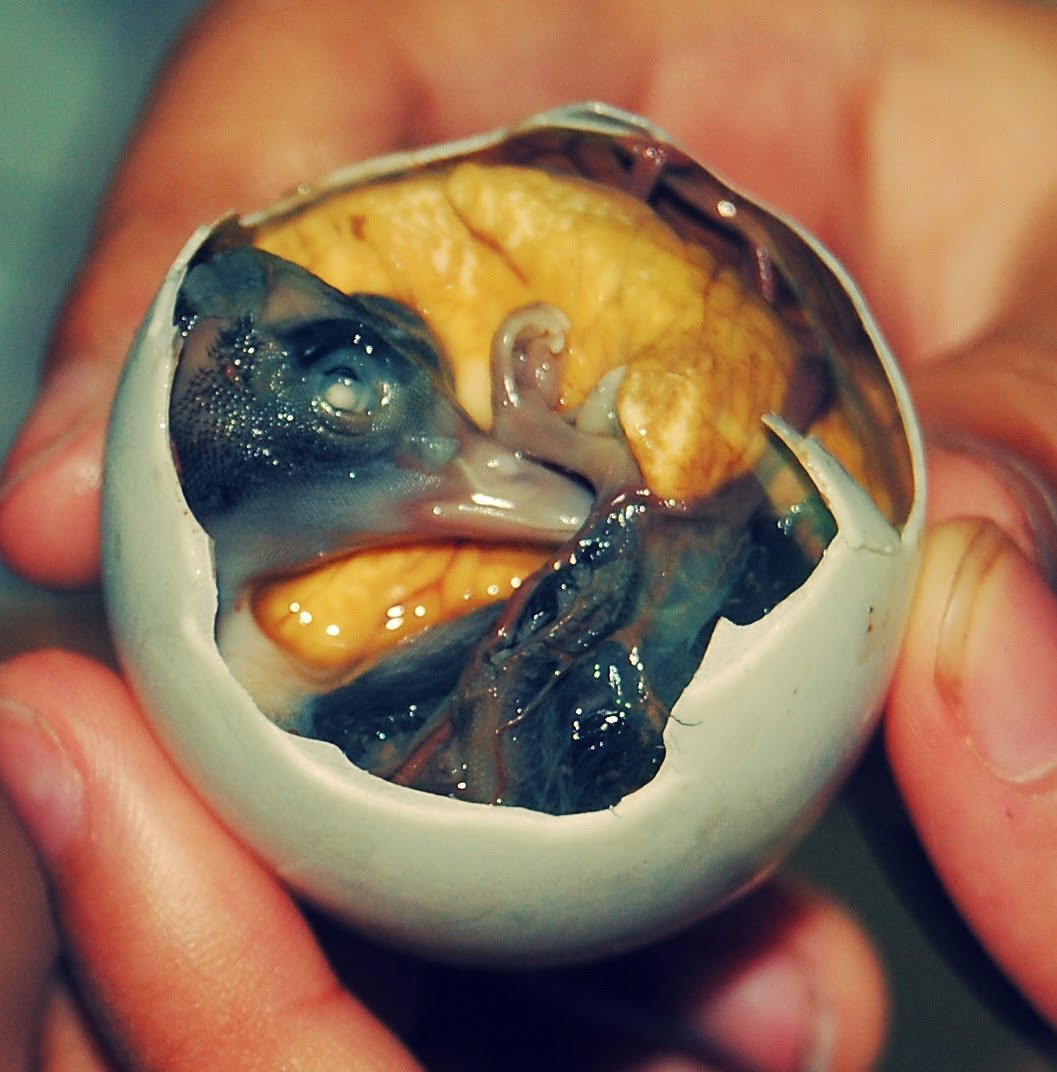
    The same with balut (duck egg with embryo). For most non-Filipinos, eating balut is gross. As in GROSS. Well, not all Filipinos like balut but I have to tell you, I do eat balut and most of us in my family like it. It`s good and nutritious. You should try. 🙂

    It is very interesting to talk about differences in food culture. I will talk about it more in my next article.


  • Setsubun and Risshun: Say Goodbye to Winter and Hello to Spring

    Setsubun and Risshun: Say Goodbye to Winter and Hello to Spring

    The freezing cold of winter makes people long for spring. Spring, the time when flowers bloom. It is when the temperature goes up gradually. It is when people start going outdoors again. The weather is not too cold. Just “choudo ii”, as the Japanese say, meaning just right. The cold turns to cool. Everything turns bright and gay with flowers blooming and weather warming up. Adios to the dark and gloomy winter. But, when exactly is spring? In Japan, they have a celebration that marks the end of winter.

    What is Setsubun?

    Setsubun (節分) means seasonal divison. The kanji 節 means ‘season’ and the kanji 分means ‘part’. Setsubun’s original meaning is the last day of any season. Spring Setsubun, usually February third or fourth,is the last day of winter in the traditional Japanese calendar. Setsubun is said to be the old New Year’s Eve celebration basing on the Lunar New Year.

    How is Setsubun celebrated?


    On this day, Japanese people hold the mamemaki 豆まきor bean throwing ceremony for driving away bad luck and attracting good luck. It is a ceremony where they throw beans at the ‘devil’ and chant “Oni wa soto. Fuku wa uchi”, which means “Demons out. Blessings in.” Other translation says “Demons out. Happiness in.” Demons in this case represent bad luck. The chant is said to drive away all the bad things out, and bringing the good things in. People visit shrines and temples to pray. Big shrines sometimes hold a big throwing ceremony and lots of people come to attend. Shrines are beautifully decorated and somebody who is assigned as demons wear elaborate whole body costumes. Shrine priests also wear their special clothes. Sometimes, the city or town’s leaders come to attend to. When you go to supermarkets and grocery stores and even convenience stores, setsubun decorations are displayed. You can see the fuku or happy face and demon masks. Demons are usually in color red and color blue. Normally, Japanese people do their own ceremony at their homes. The demon is usually played by the father. After work, fathers wear a devil’s mask and come home to surprise the kids. The kids together with their moms throw beans at the ‘devil’ and chant.  Families with kids celebrate this ceremony more than those families without kids. Maybe, it’s because kids really believe that devils are real, while adults, they know it is just a pretend.

    What to eat


    goinjapanesque.com

    After having fun throwing beans at the devil, each family member picks up the beans and eats them with the number according to their age. That is to be said, five year-olds for example get to eat five beans and eighty-year olds get to eat eighty beans. It must be hard for grandpa and grandma to eat all those beans, I guess.
    Recently, about three to four years ago, my Japanese friend said that on Setsubun, Japanese eat ehoumaki (恵方巻き). Ehoumaki is a long sushi roll. It is said that eating ehoumaki attracts good luck. There are various kinds of ehoumaki. The one I had in school lunch consists of cucumber and crab stick. I saw in the television news that one shrine in Japan celebrated Setsubun by distributing ehoumaki to about a thousand shrine vsitors and they eat them altogether for good luck and happiness.

    My Experience


    I love festivals and I love learning Japanese culture. I have learned about Setsubun in the university where I studied Japanese. We did a short bean-throwing ceremony in the class and we chose our male classmate to act as the demon. It was fun but it was short and we wanted more. Upon hearing that there was a big bean-throwing ceremony in town, my friend and I decided to attend. We went to Kushida Shrine in Hakata, Fukuoka. 〒812-0026 Fukuoka Prefecture, Fukuoka, Hakata-ku, Kamikawabatamachi, 1, 博多区上川端町1−41

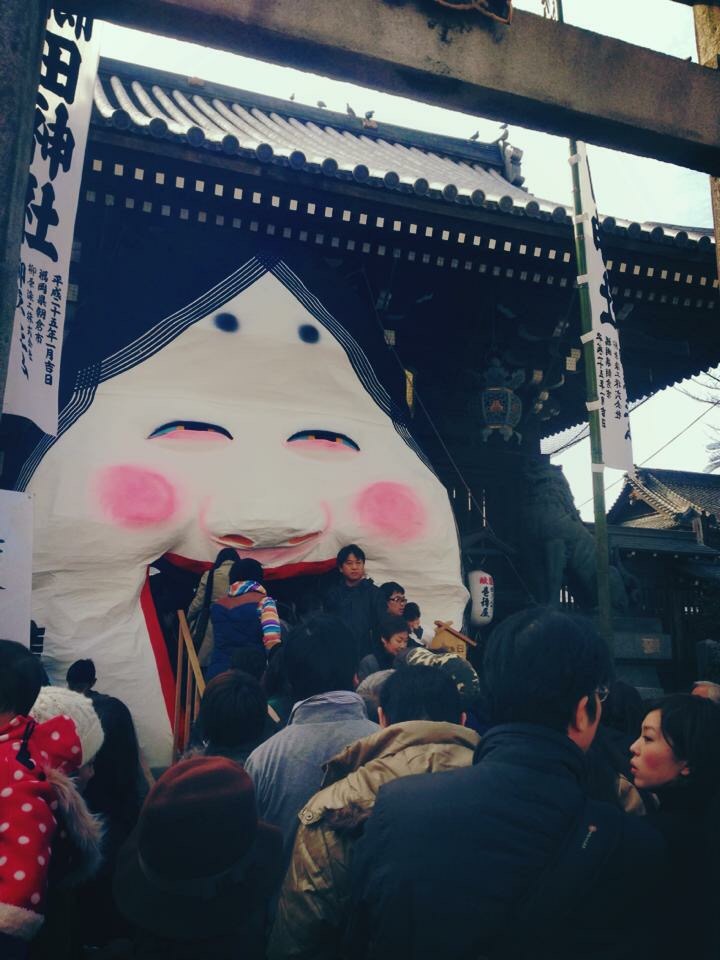
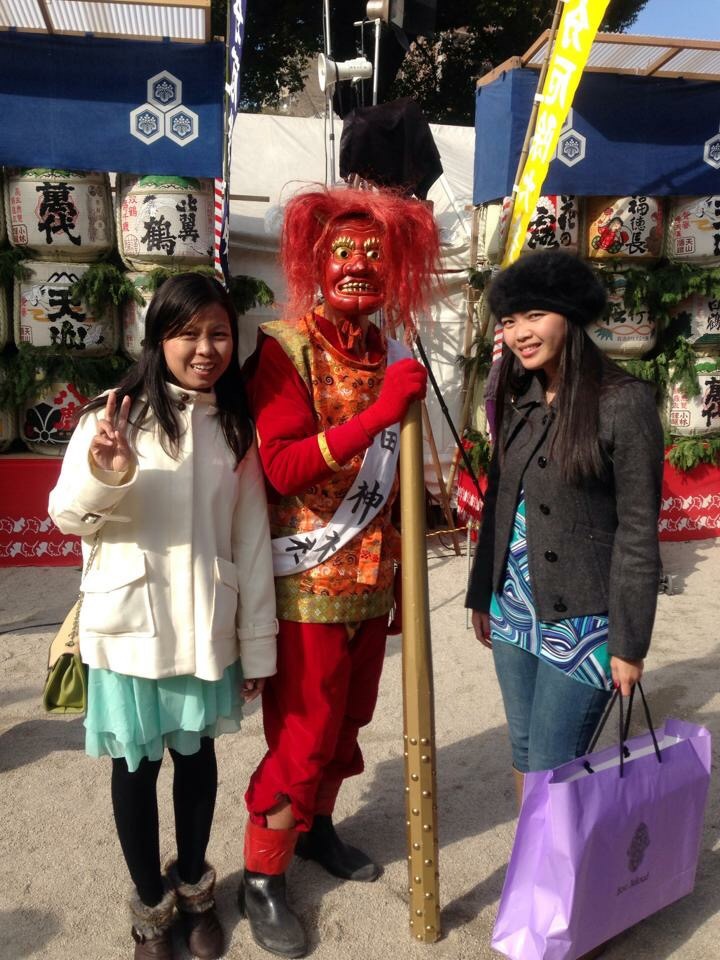
    In the entrance of the shrine was a big face of Fuku or the happy face. You can enter the shrine only through the mouth of the Fuku. The lines were long but my friend and I waited for our turn. Just waiting in line made us feel so excited. We could feel the energy around. The shrine was so full of people. Everybody was excited to get inside and join the ceremony. Inside, the shrine was so beautifully decorated. We saw Japanese priests in costumes and we saw some demons, too. The red demon was kind of cute so my friend had our picture taken with him.


    During the highlight of the ceremony, the guests and priests on the stage throw the beans while saying the chant and the people on the ground tried to catch the beans. We tried to catch some beans, too. We had so much fun. It was a very good experience for me and my friend. Now that she left Japan back to her country for good, while I stayed here and work, we always look back to those times we went to Kushida Shrine every Setsubun.


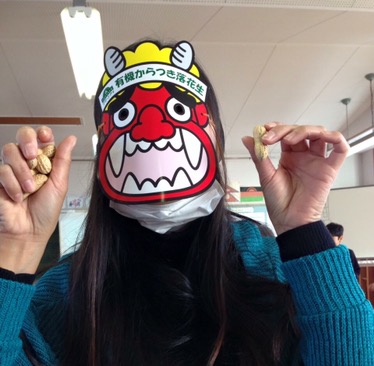
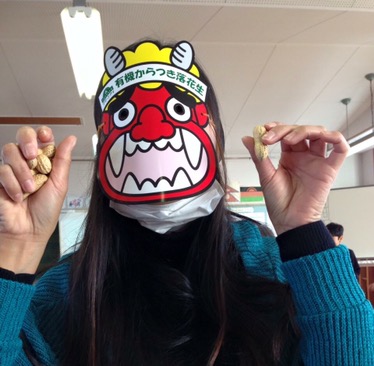
    As a teacher here in Japan, I myself experienced becoming the demon. I wore the demon mask and my students throw peanuts at me. I ran around trying to avoid there throw but, you know, kids are very energetic; of course, and I got hit many times. I lost, as it should be. It was so much fun. We picked up the peanuts after and ate according to our age. Well, I had lots of peanuts as you guess. In my school this year, we had ehoumaki for lunch and everyone got a pack of fukumame. Everybody was happy.

    Risshun (立春)


    Comes the next day, February fourth, is the risshun, or the first day of spring according to the traditional lunisolar calendar. Even though it is still cold around the month of February, even though many people still wear all their winter clothes, with their necks still wrap with thick scarves, it is not as cold compared with the previous months of January and December. Around the month of February, plums start to blossom. Plum blossom is the early sign of spring. And this time, we can say, “Indeed, spring has come.”

  • Eat Indian Curry in a Rustic Japanese House

    Eat Indian Curry in a Rustic Japanese House

    Have you ever been to a restaurant that looks nothing like the modern restaurants in the busy streets of big cities but more like grandma’s house  or an ancestral house situated in residential and quiet place?

    There is one Curry restaurant in Koga, Fukuoka Prefecture, Japan, that we always frequent to.

    The Restaurant

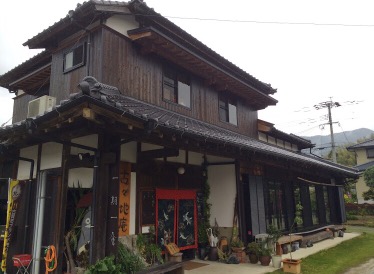
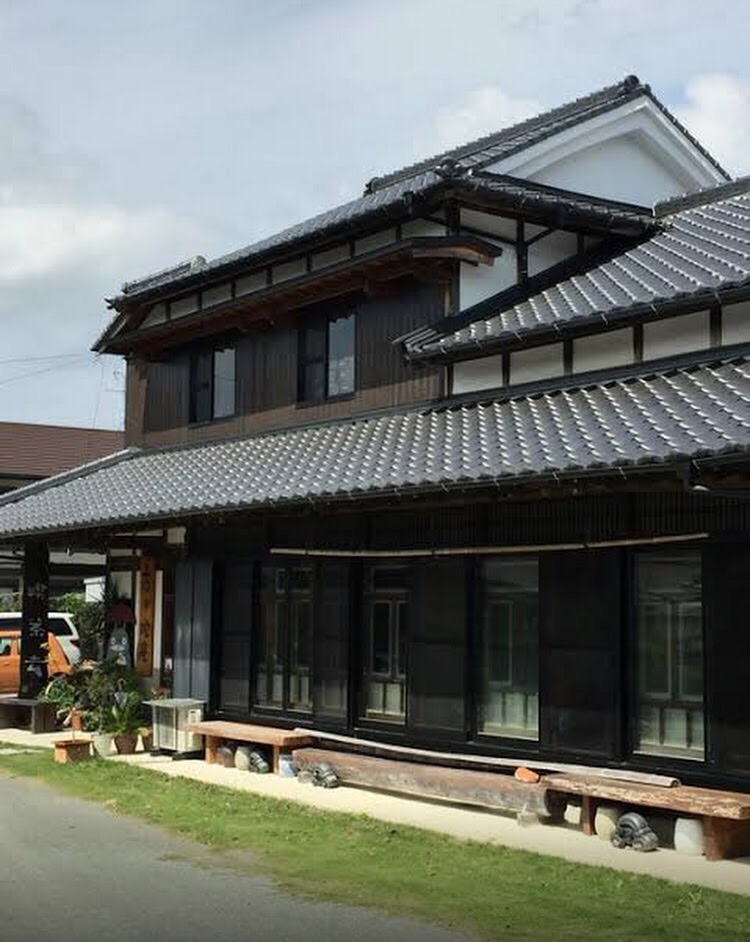
    The restaurant’s name is  古々地庵 read as Kokojian. It specializes on Indian curry. The restaurant building is actually an old Japanese house.

    Below are pictures from outside the building.

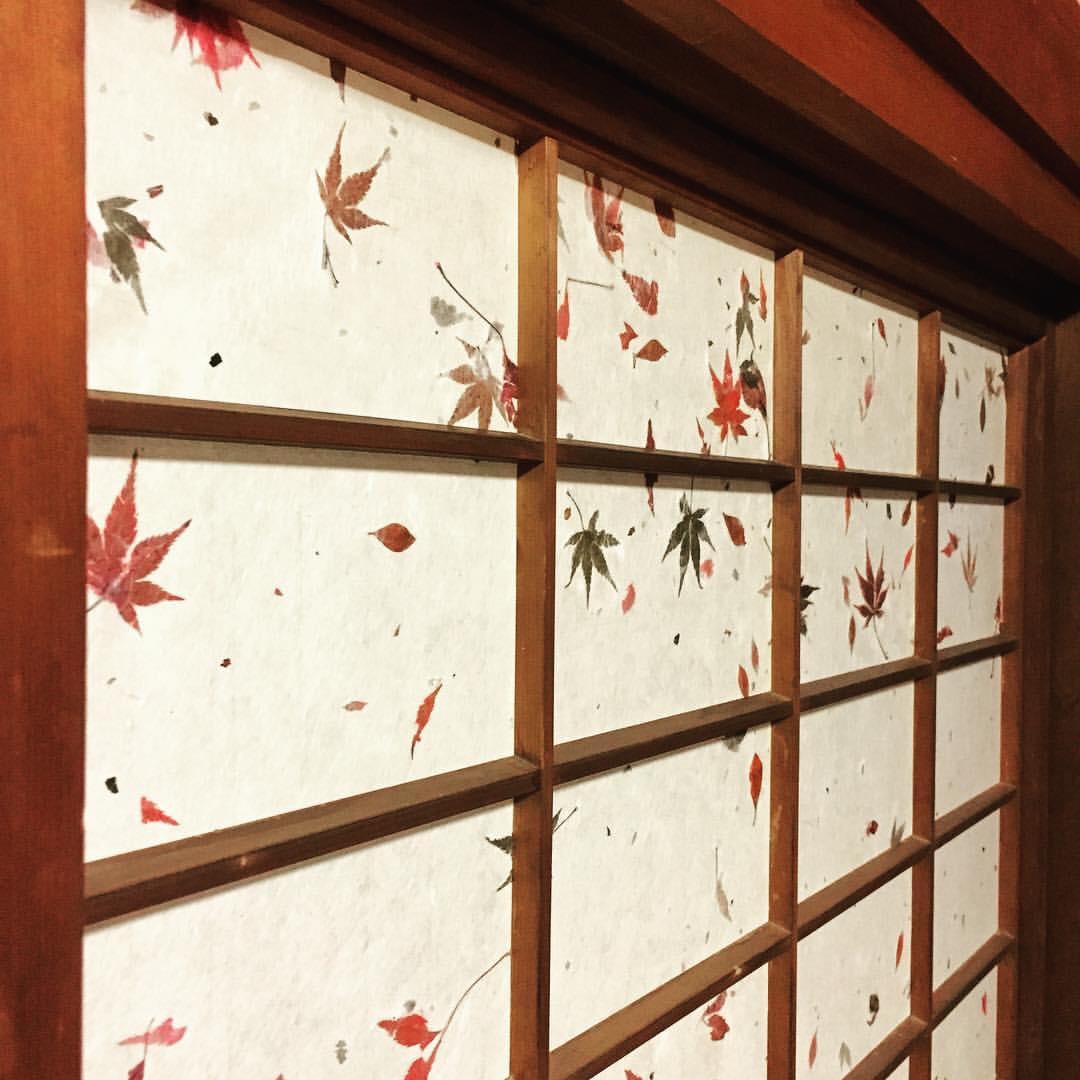
    Inside the house turned into a restaurant, you can see the Japanese sliding door on your left that leads to the main serving area.

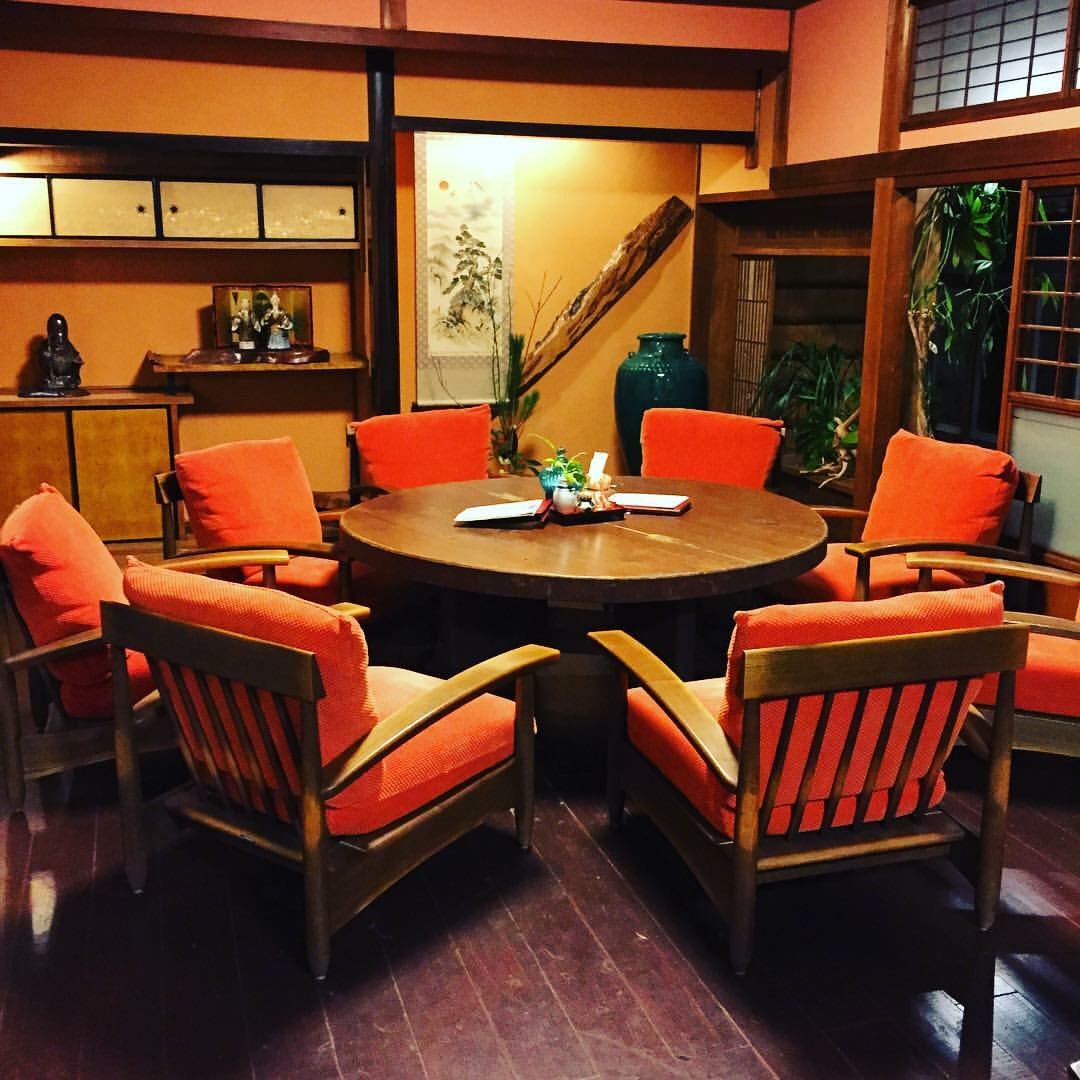
    Below is one of the rustic tables that will greet you once you enter the serving area.

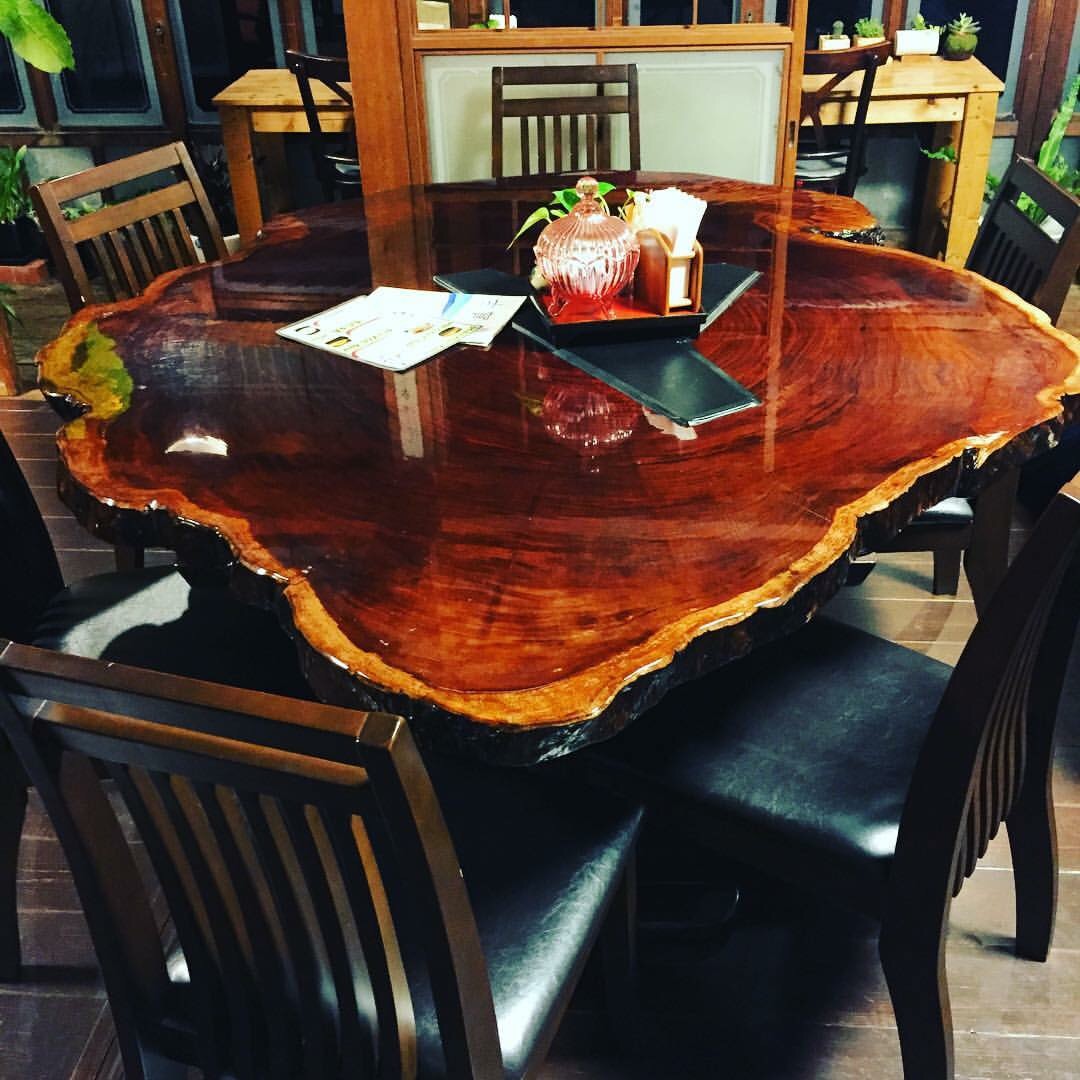
    The biggest table that will catch your attention.


    There are still many other things that will fill your eyes once you visit this restaurant.

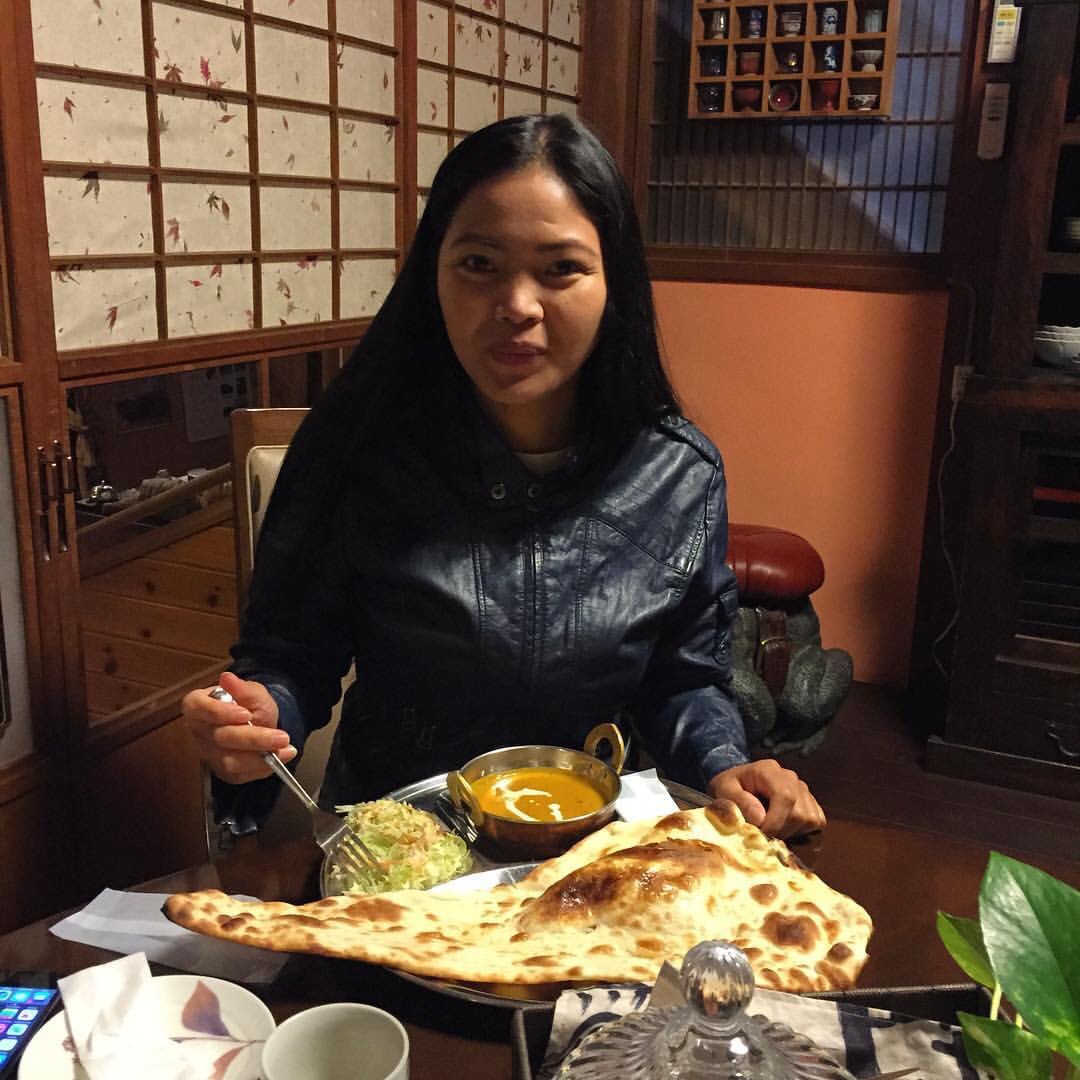
    The best part of it is to enjoy their delicious Indian curry.

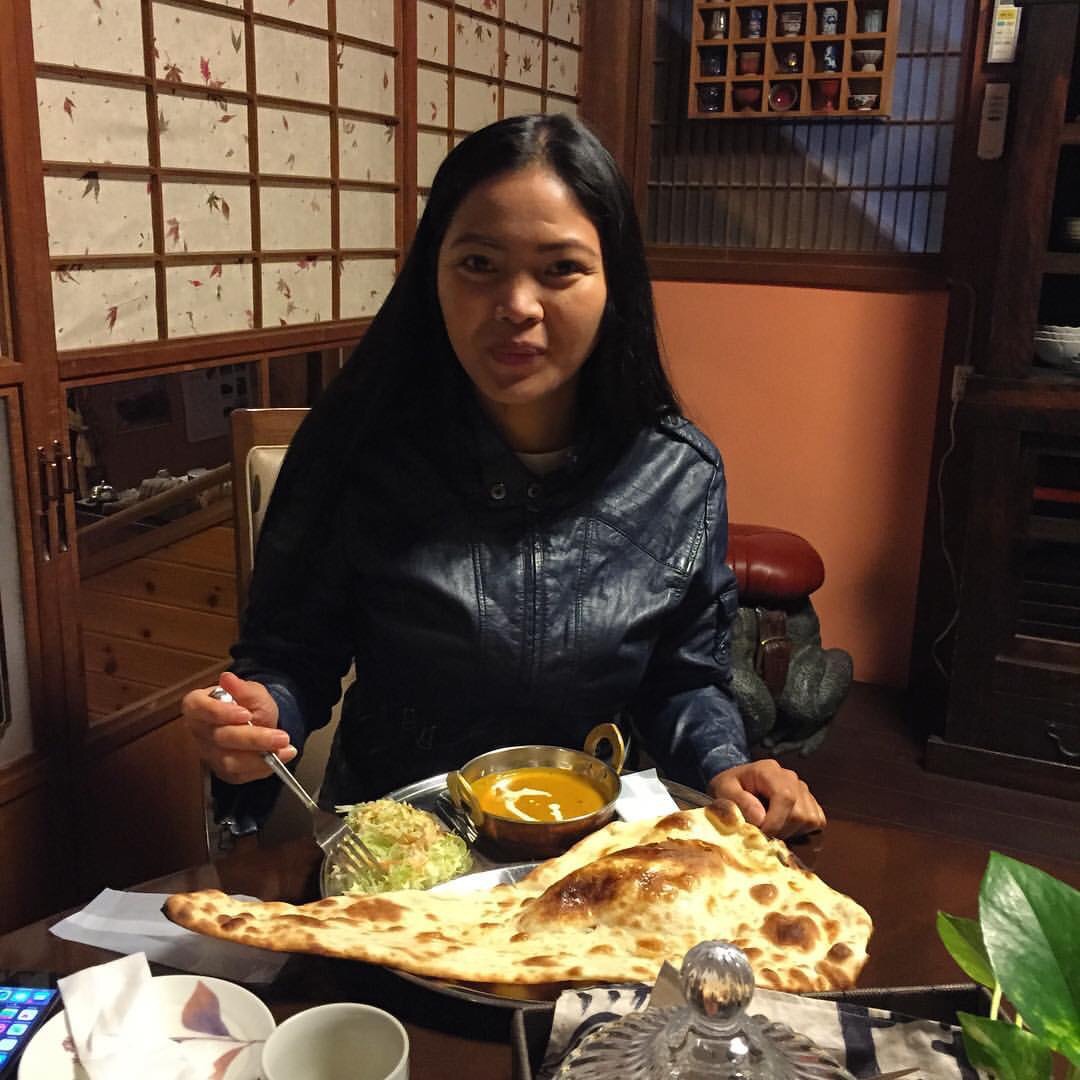
    You can enjoy eat-all-you-can Nan or cheese nan. You can also choose the level of spiciness from 3-10 stars.

    Location

    Japan, 〒811-3122 Fukuoka-ken, Koga-shi, Komono, 福岡県古賀市薦野1302−1

  • Pork dishes I love that you probably hate!

    Pork dishes I love that you probably hate!

    Are you a vegetarian? ‘Coz I’m not. I eat meat. And my favorite is pork. I love sinigang (pork in sour soup), adobo (pork cooked in soy sauce and vinegar), meatballs, porkchop, menudo, pork steak…Oh! Naming these dishes makes me wanna eat again.

    Below are some of the (not so common) pork dishes I love to eat. These may not appeal to you but if you’re interested how to make it just comment below.

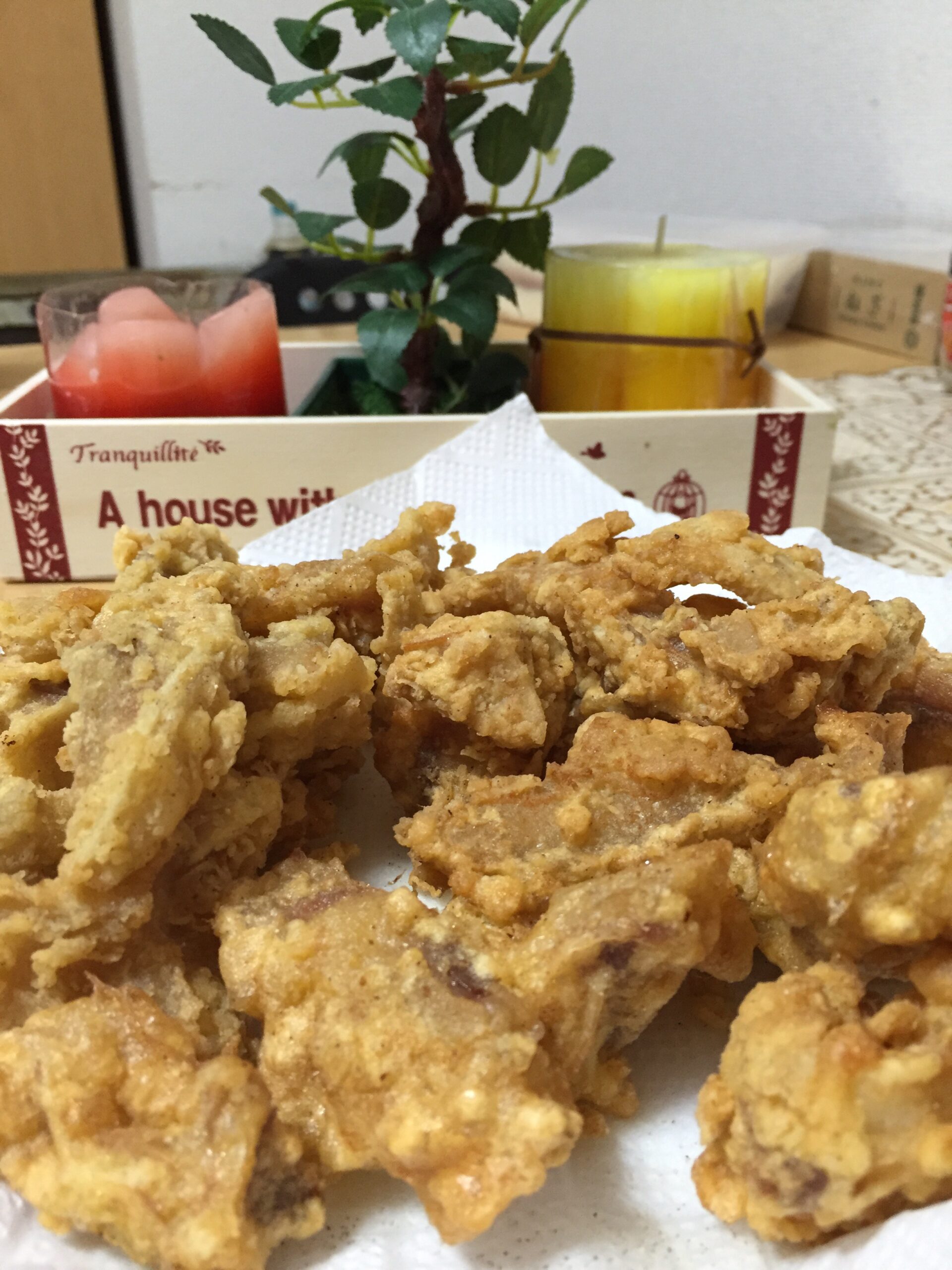
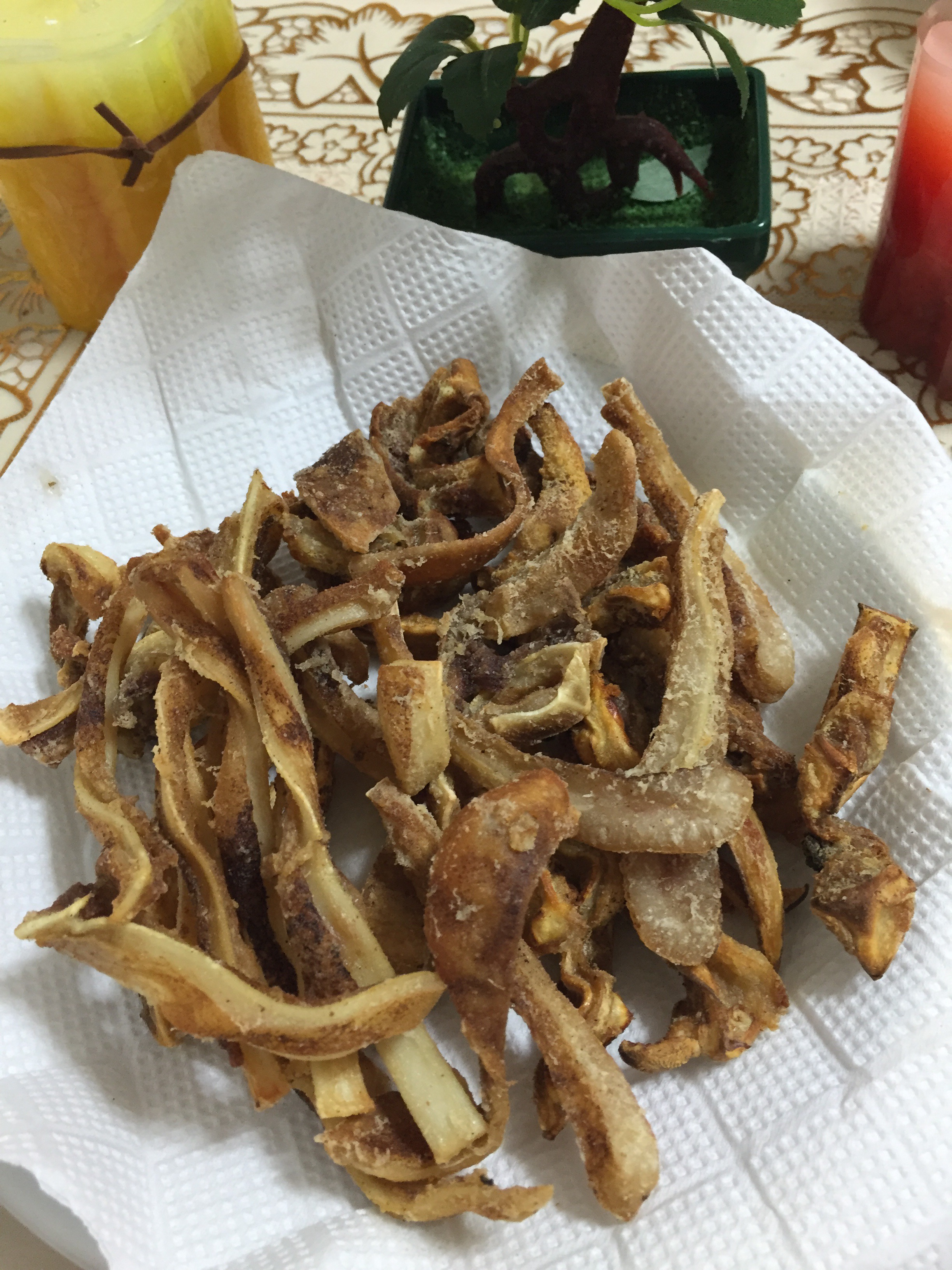
    Fried pig’s ears.

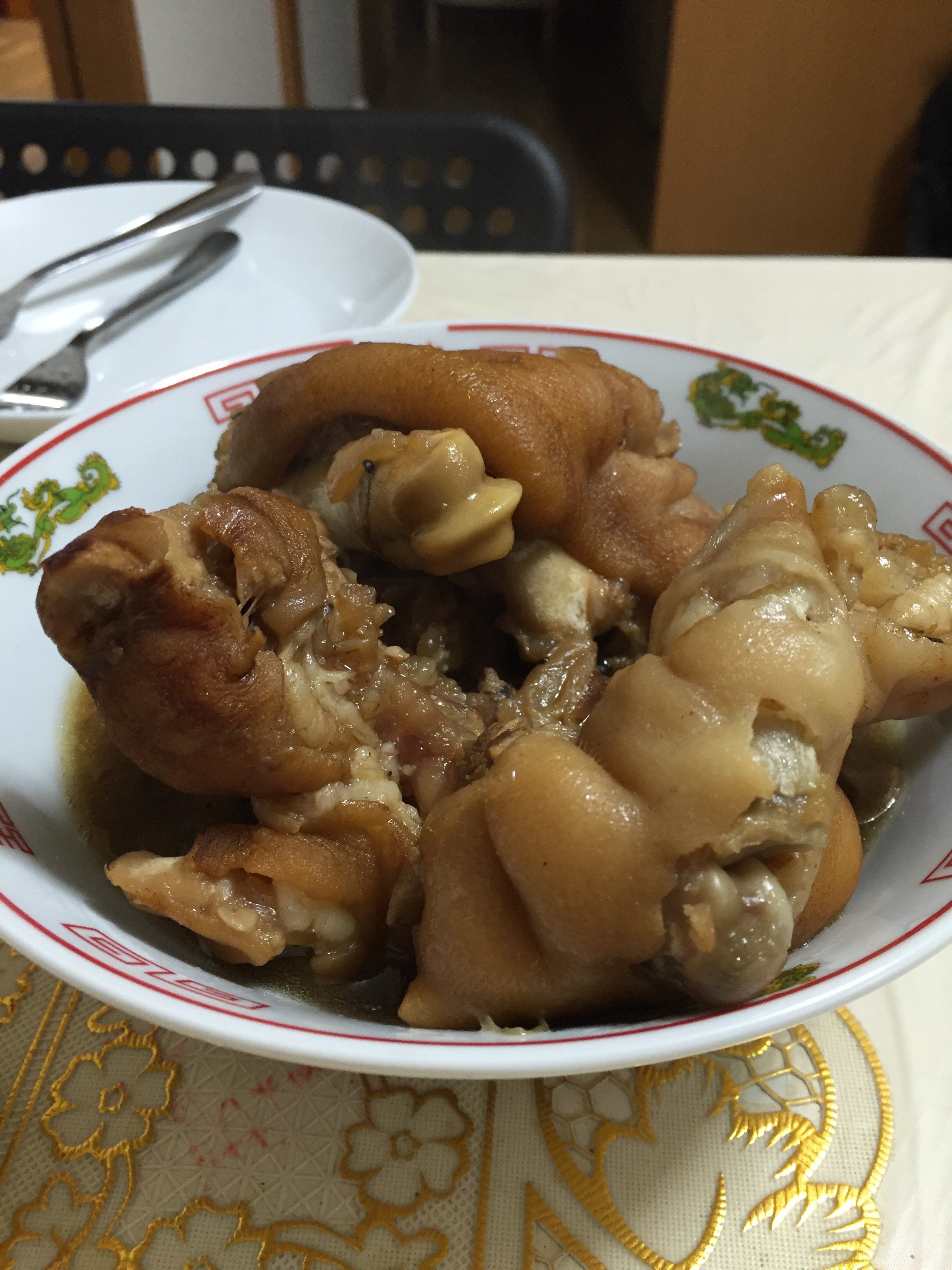
    Pig’s feet adobo.

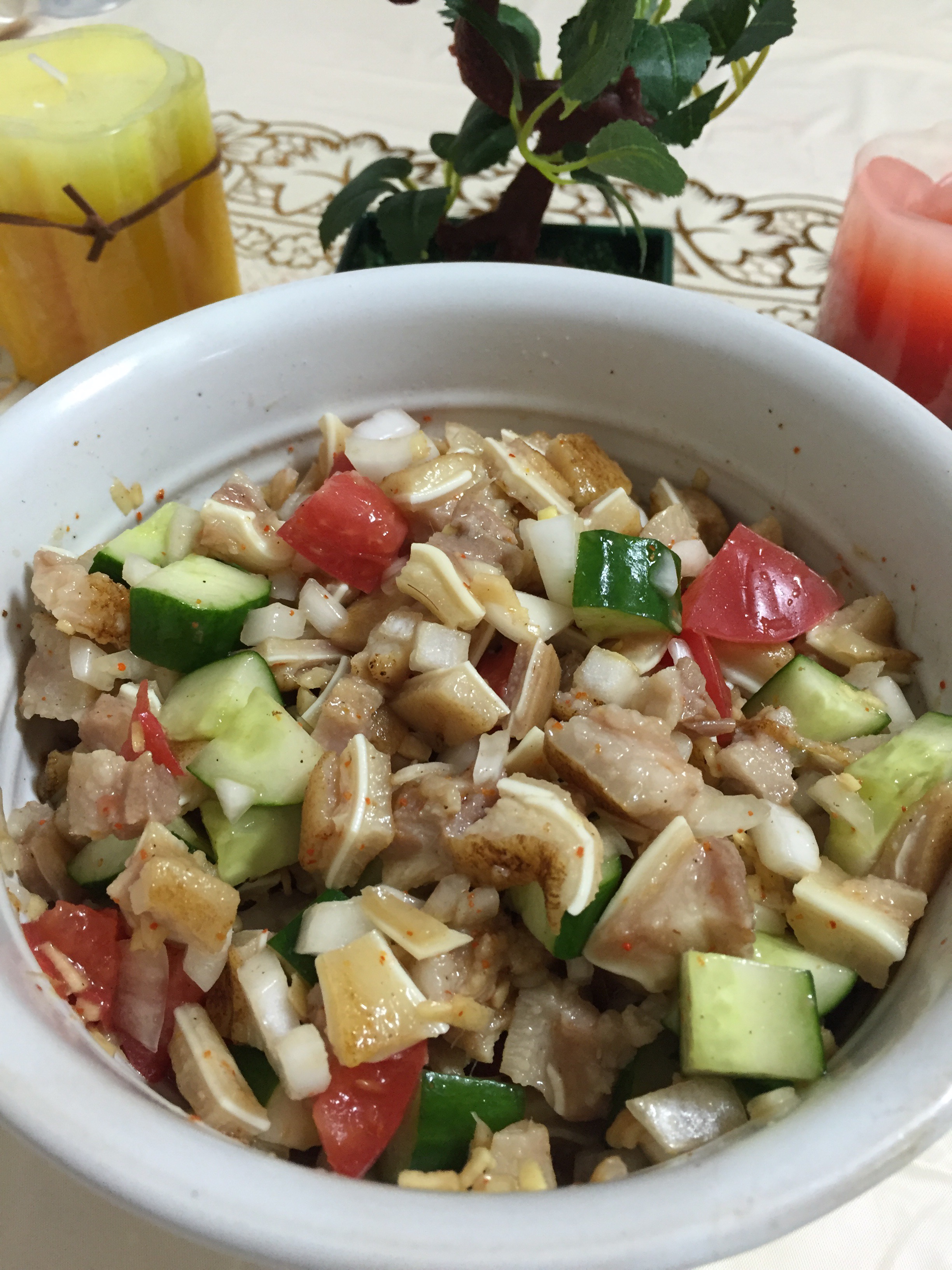
    Pork kilawin.

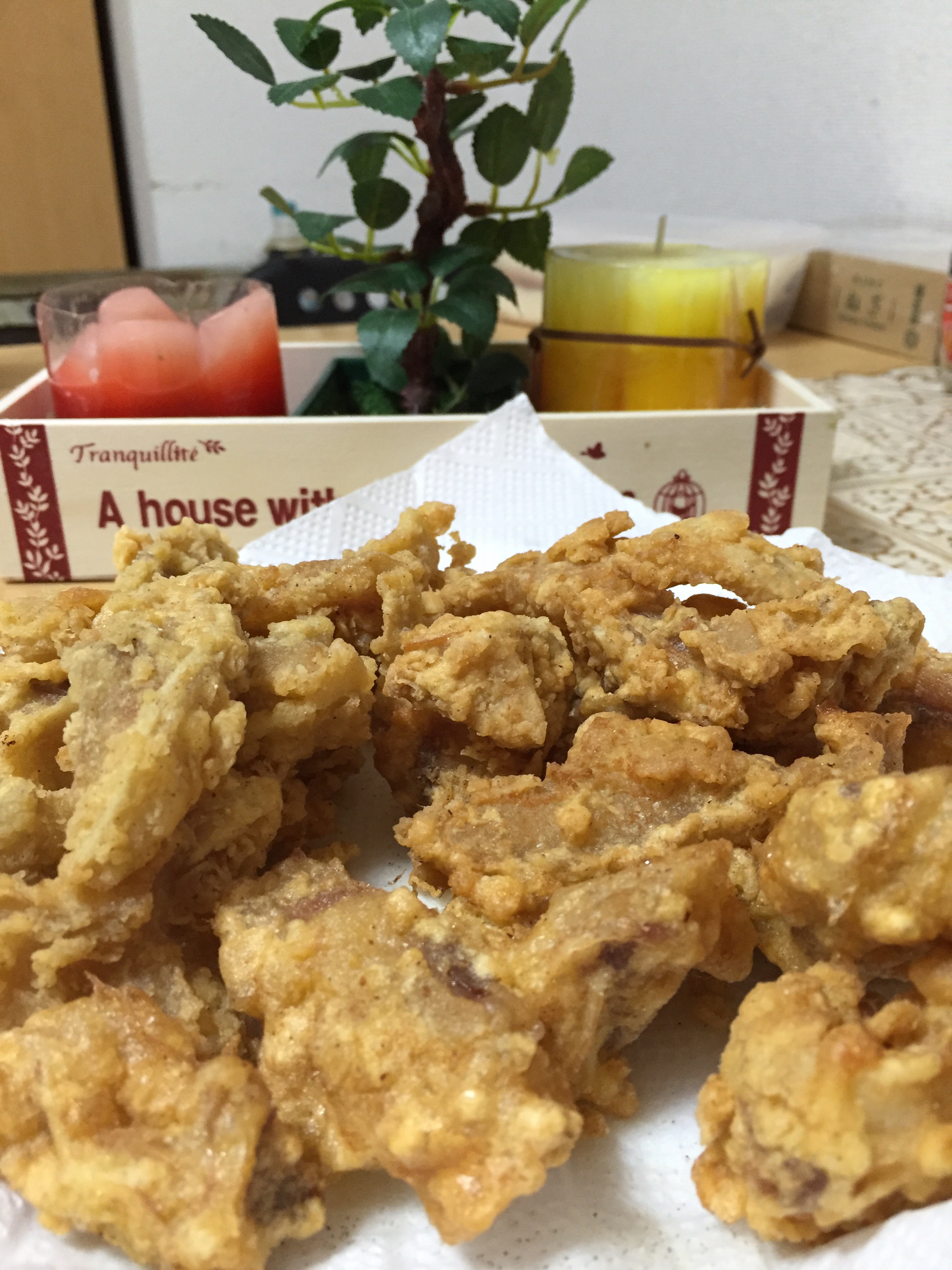
    Crispy pig’s ears.

  • Halo-halo in Japan

    Halo-halo in Japan

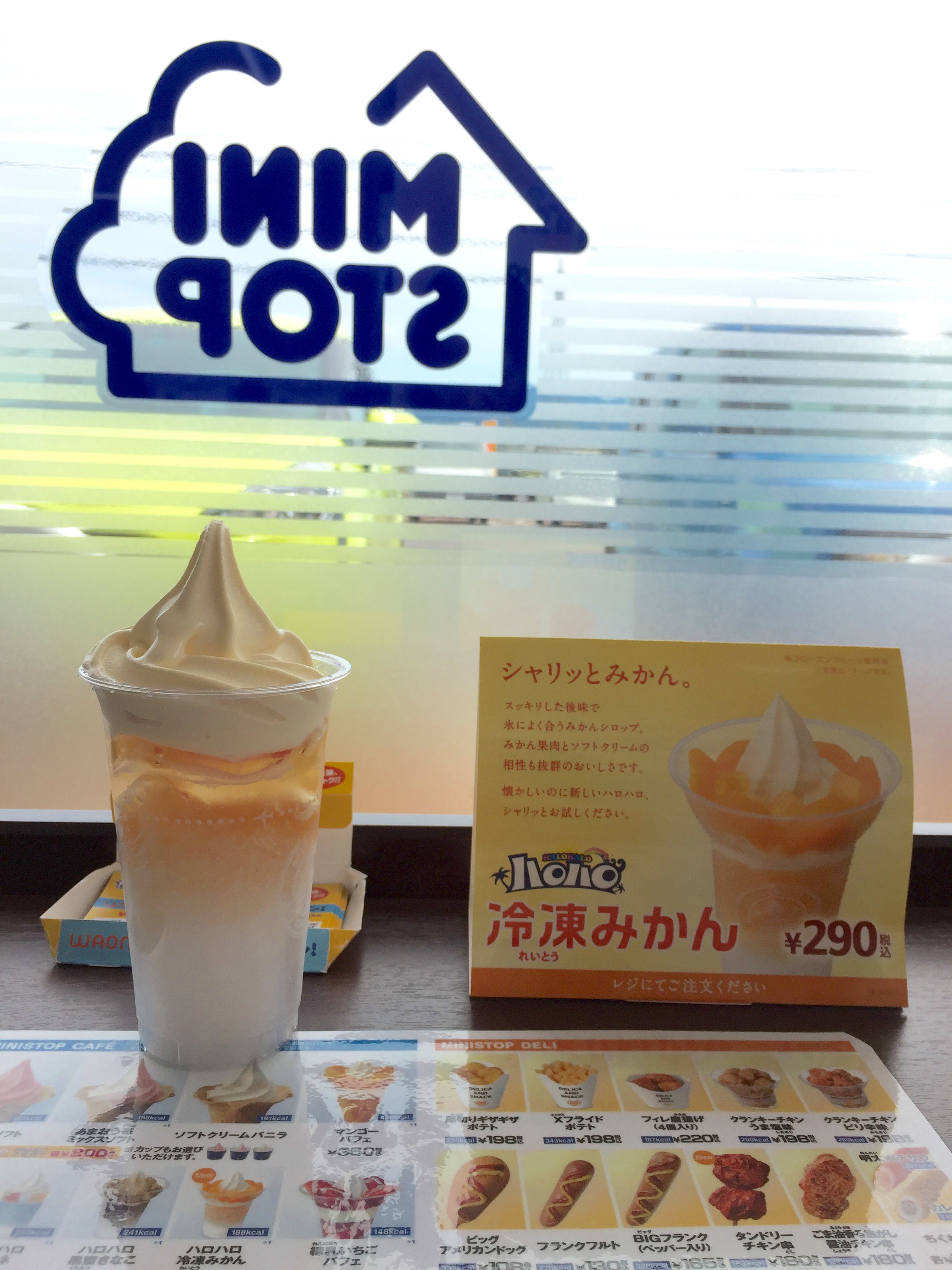
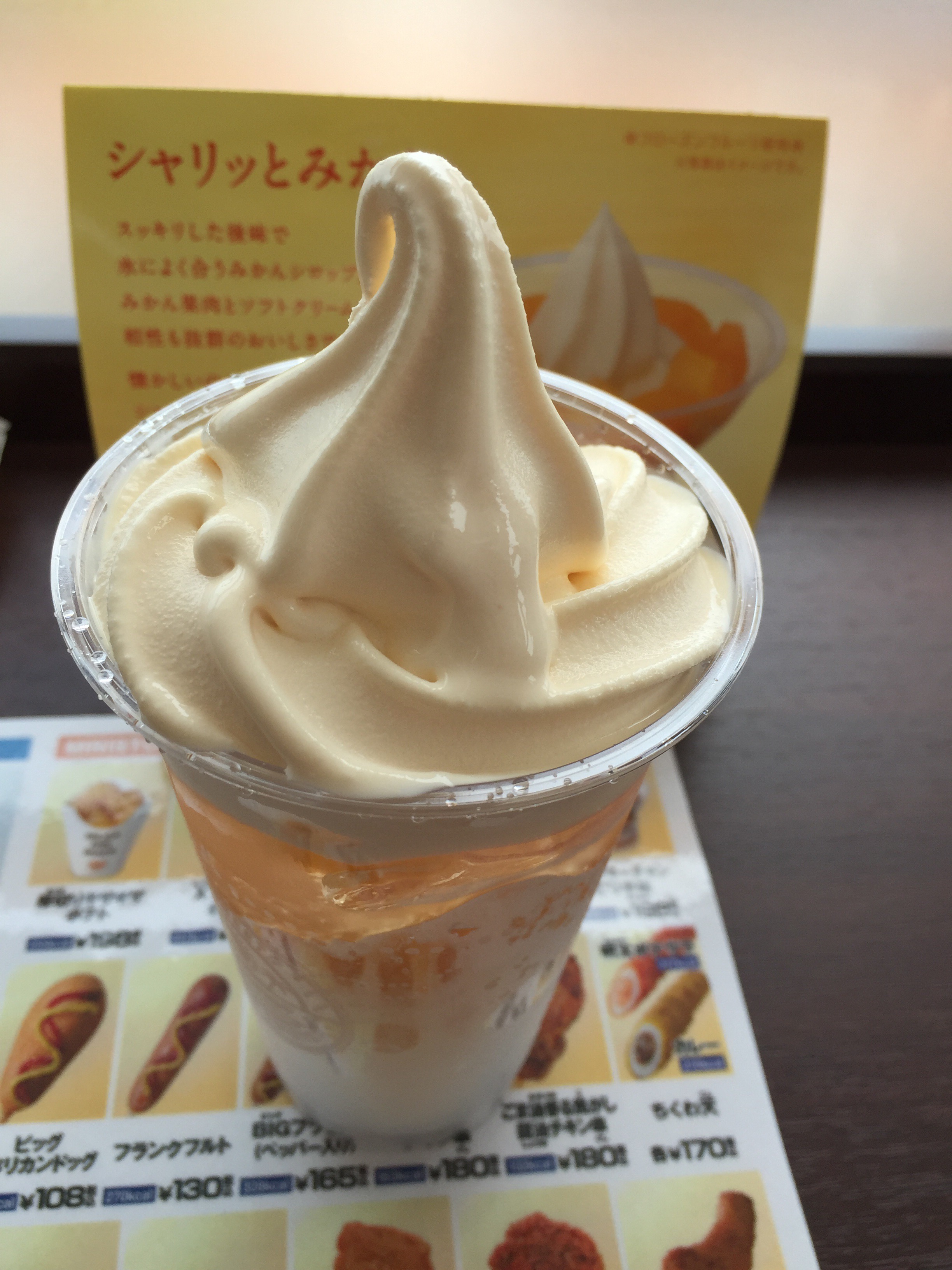
    When I did my self-introduction in class, I introduced Halo-halo as one of the Filipino’s favorite desserts. Some students said it is being sold in Mini Stop. So, one afternoon, on my way home,  I dropped by the convenience store Mini Stop and tried the Japanese style Halo-halo.

    I was a little bit disappointed because I was expecting to have the kind of Halo halo that I know.

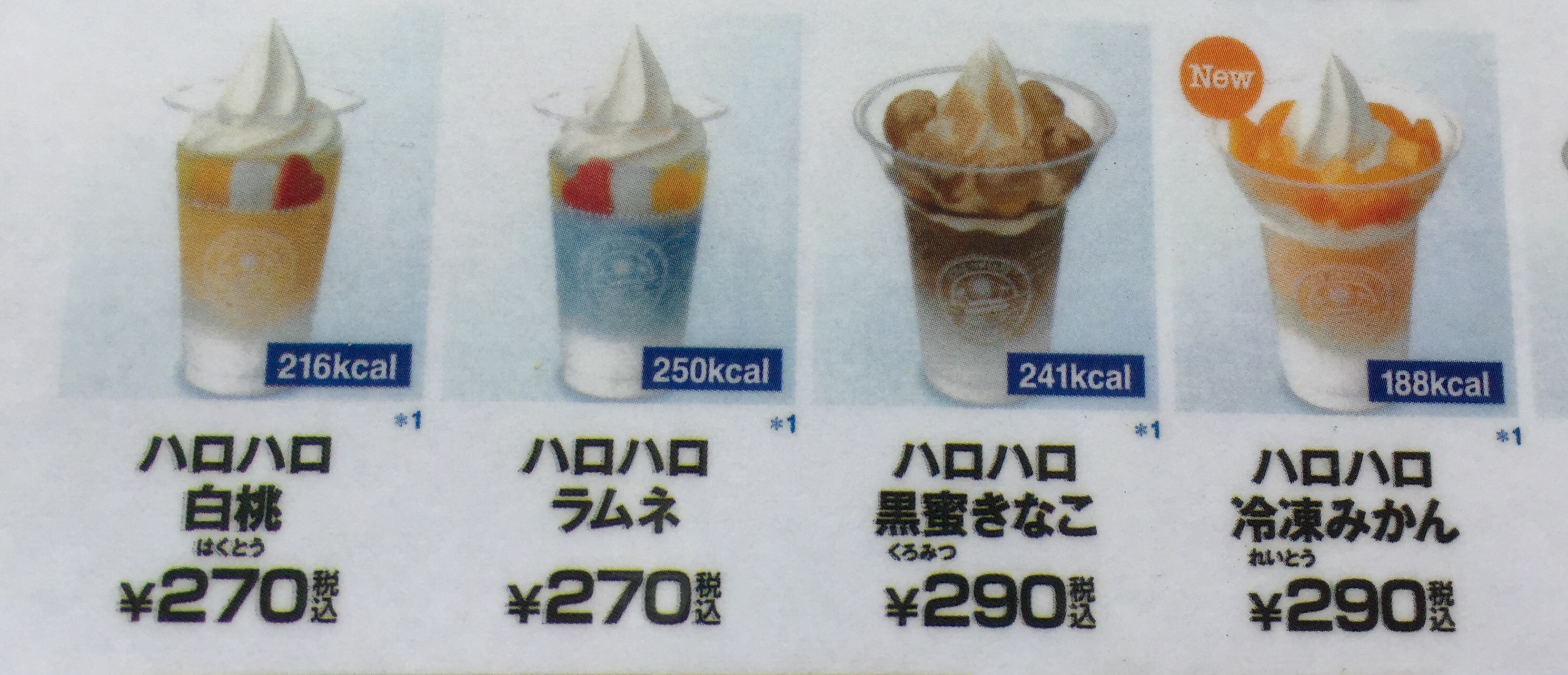
    Instead, what I got is the one below.


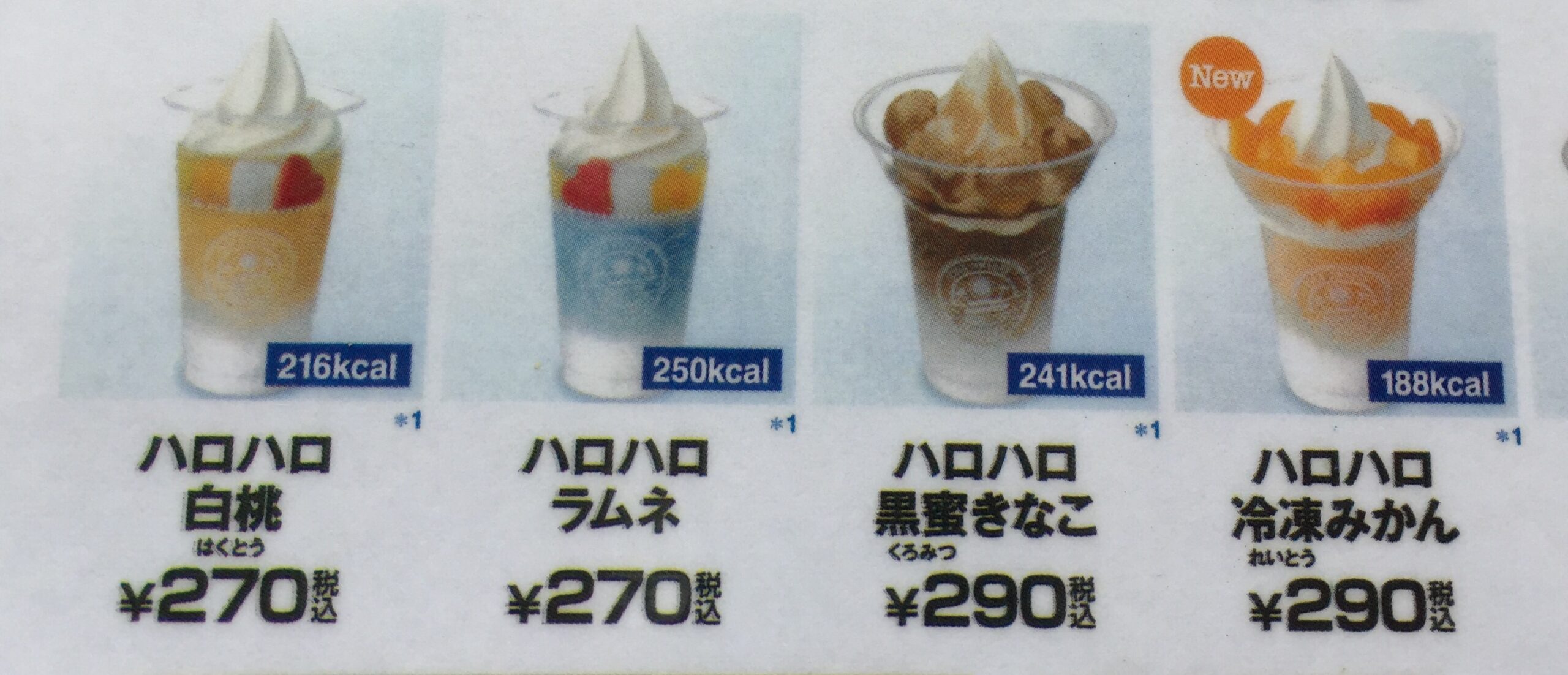
    There are four choices of Halo halo in Moni Stop. From left to right: Halo halo hakutou (white peach), Halo halo ramune (lemon soda), Halo halo kuromitsukinako (soybean in blackhoney?), and Halo halo reitou mikan (frozen oranges). I got the the first one on the left. It cost me ¥270 yen. It’s far from what I know Halo halo is but it’s good as what it is.


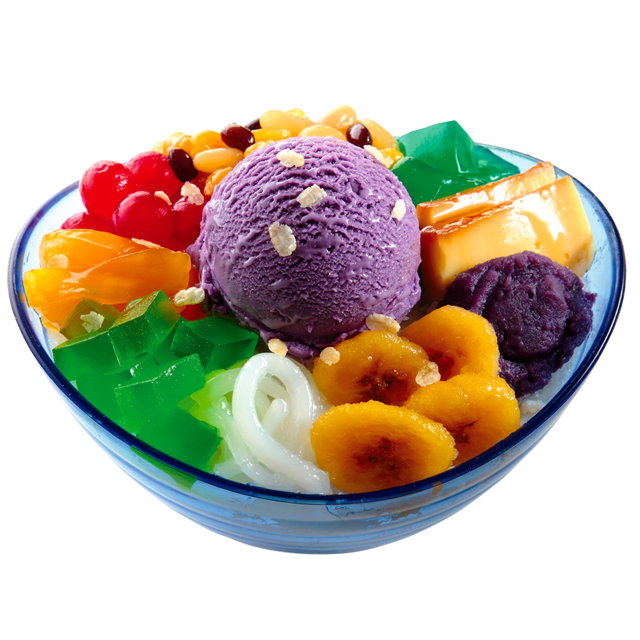
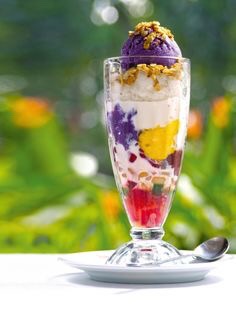
    Philippine Halo halo

    Halo halo is a famous dessert in the Philippines. It is made of finely crushed ice, top with fruits (usually jackfruit, banana, avocado,) sweet corn, red and green gelatin, ube, nata de coco, sago, sweet buko (coconut flesh), sweet beans, cornflakes, sugar, milk and finally ube ice cream on top. Halo means mix in English.    You have to mix it before you eat it to enjoy this awesome dessert at its best.


    One serving of Halo halo is about ₱40.00 equivalent to about ¥100.00. “Yasui!!!”, means cheap. As what my students said.