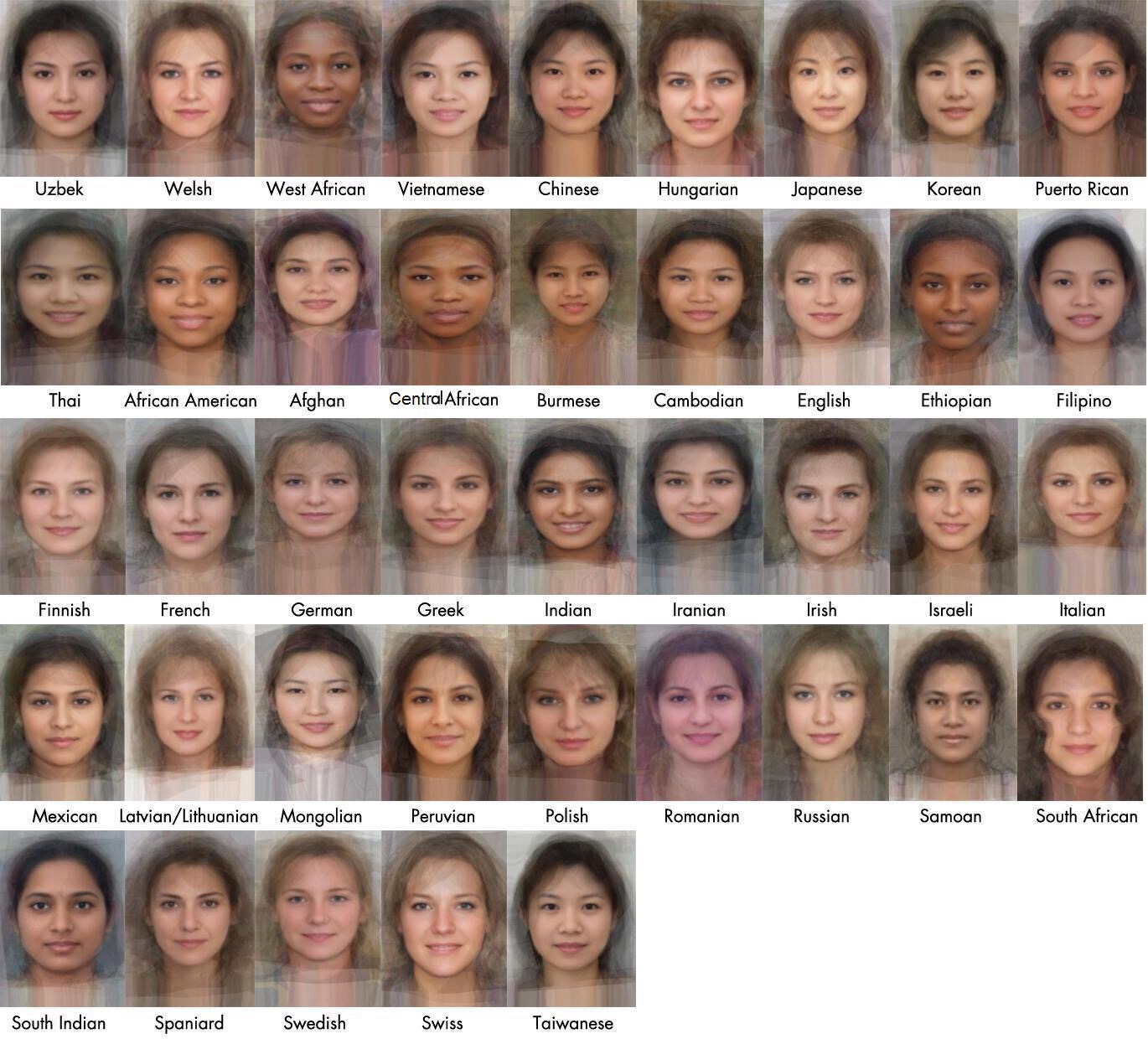
Can you tell if a person comes from a specific country? Before coming to Japan, I had no idea how to distinguish Japanese, Korean and Chinese from one another. I had quite a few experience (when I was in the university as an international student) of trying to speak Japanese to a fellow student who I thought is Japanese, but after all, turned out to be Korean or Chinese (who is new to Japan and cannot speak Japanese). To avoid future embarrassment of assuming someone is not, let me discuss their similarities and differences. This is according to my observations and the opinions of my friends with who I discussed the subject.
twitter.com
Similarities
1. Skin.
preview.ph
Japanese, Korean and Chinese, generally, have the same skin characteristics. It is popular that their skin is more resistant to aging and that they have fair, light porcelain-like skin. It is due to extreme sensitivity to environmental factors and chemical effects of some products, which can disrupt the pH balance. For this reason, advertising about skin beauty care in Asian countries is very economical as Japanese, Korean and Chinese (especially girls) have to be more careful with products and treatments they use on their skin. It is even impressive to see the number of skin care products build on the myth that Asian skin would look amazing and healthy for a long time. so, it is hard to tell who is who if you only look at their skin.
2. Body built
theatlantic.com
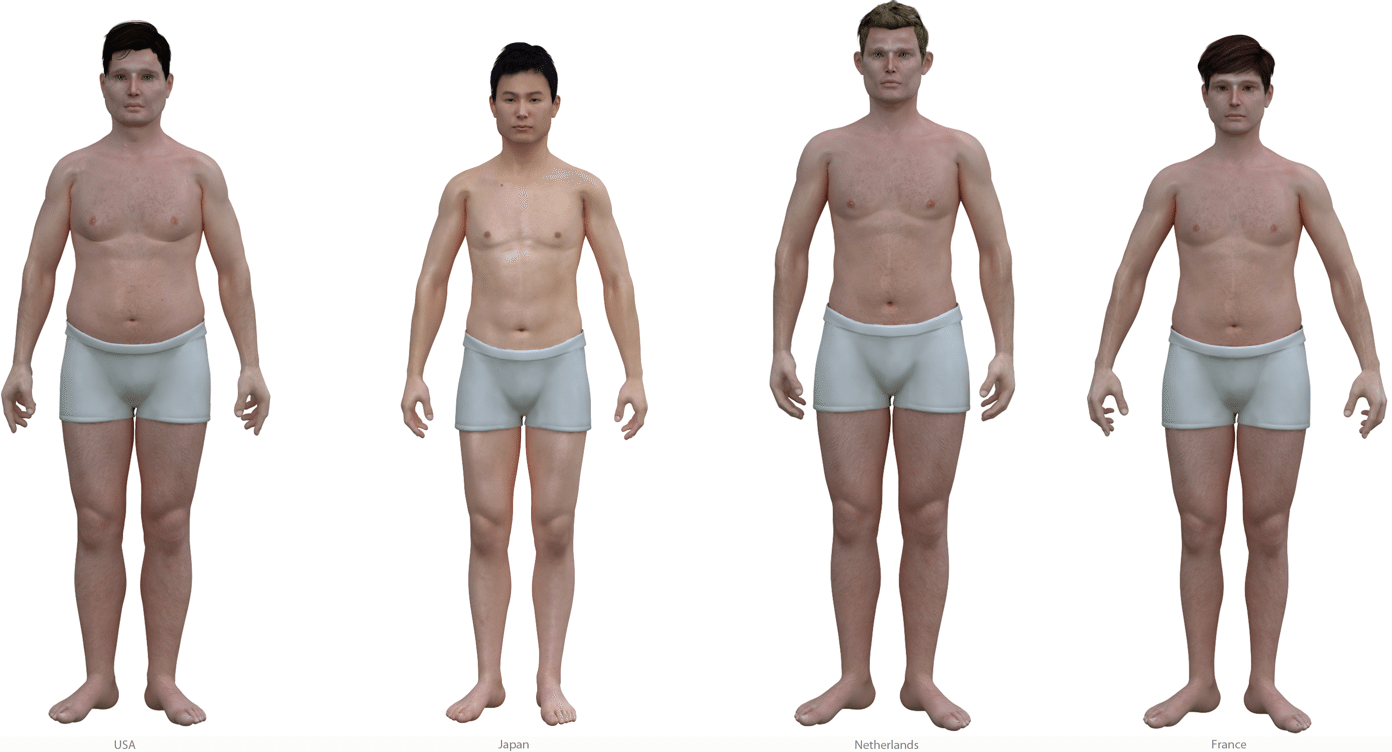
There are of course differences in body built among Japanese, Korean and Chinese people. As human as we are, we can be fat, thin, big or small. It all depends on our individual diet and consumption, not to mention our genes. Although we have a general impression as to how, for example, an American body tend to be (tall and big). Asians, specifically Japanese, Korean and Chinese, are typically of slim body built and kind of short in terms of height. But be careful not to label all of them slim and short, because, as I have said, everyone is different. Some can still be tall, big and fat.
Differences
1. Facial Features.
onehallyu.com
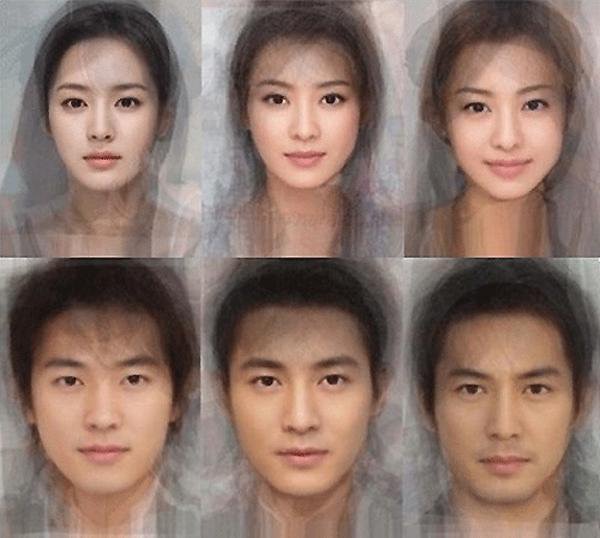
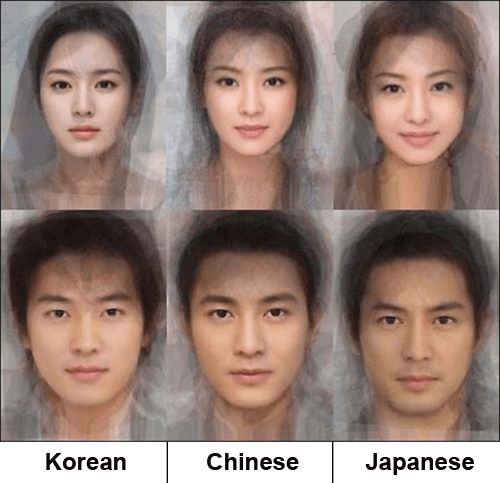
They may look the same, but if you are a keen observer, there are a few distinguishing characteristics. The Japanese face is generally longer and wider, while the Korean face often has a more prominent jaw and high cheekbones. The Chinese face is typically round in shape. When it comes to the “windows of the soul”, the Japanese eyes are often described as angled upwards, contrary to the Chinese eyes which are usually angled downwards. Koreans often have smaller eyes.
2. Dressing style
Japanese street fashion
thetokyogirl.com
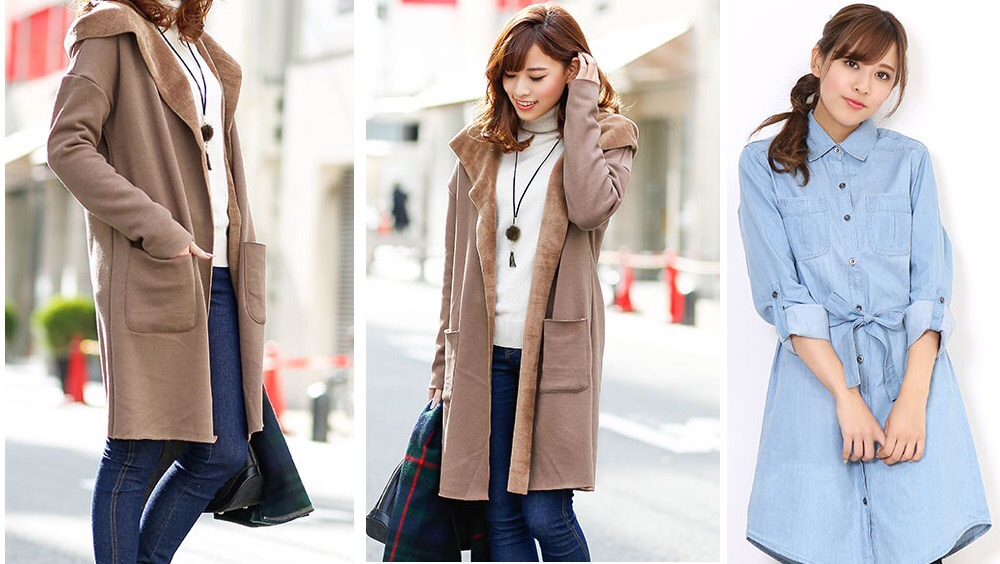
My Japanese friend told me it is easy to tell whether a person is Japanese or Korean. Just look at how they dress.Japanese people value harmony and uniformity, hence, when they dress up, it is something aimed to blend with the majority. Plain, simple and subtle colors are the key to typical Japanese attire. Nothing that stands out. I observed that wearing suit is very common in Japan. May it be a final (research) presentation in school, a job internship, a job interview, graduation; Japanese usually wear suits, in black and white (inner). Very seldom you can see a coloured inner.
kore.am
Contrary to Japanese,most Koreans wear bright and more colourful attire. I remember my Korean friend said in her culture presentation in school, that, unlike in Japan, they can wear nice colourful dresses when they do their internship and especially during job interview.Chinese, on the other hand, due to its high cultural diversity is difficult to distinguish.
Even up to now, after living for quite some time in Japan, it is still challenging for me to tell which is what, and who is who. Even people of the same race can look different. It is hard to generalize. We can never actually generalize. As the saying goes “Everyone is unique”.
Death is the only thing we know that is going to happen for sure, but still surprises us every time it comes. And it’s never a pleasant surprise. It’s devastating. Heart-breaking.
The unacceptable truth that no matter what we do, no matter who we are, each one of us will end up as a memory.
I’ve experienced the pain and emptiness that death has left behind many times already. I had a dear friend and co-teacher who was taken away by lung cancer. Within three months she was gone. I cried so hard from the bottom of my heart. Also, a college classmate was taken away by breast cancer a year ago. As far as I know, two of my former grade six students passed away due to some kind of disease. They died at a very young age. Heart-breaking. One former student was also a victim of attempted rape and homicide. There’s no escape from death. Even here in Japan, in my four years of teaching, two co-teachers already in two different schools did not escape death. One, a young male teacher taken by cancer and the other a retired teacher returning to teach as part-time. She died due to aneurysm. Even the principal of one of my previous schools, again by lung cancer. The most painful was when my dear father passed away just after my dear cousin was buried three years ago. It was a double tragedy. We buried two love ones within a month. I did not cry the moment my father passed away because I pretended to be strong for my family especially for my mother. But I regret it. I should have cried. I should have not stopped them cried. I should have let it out. All the pain. All the frustration. Everything in my heart. The indescribable feeling when you lose someone dear…forever. Life is unfair. It is always is. When my father died, I have asked myself many times ‘Why do we have to live when we all are gonna die?’
I still mourn for my father’s death. I think of him everyday. He’s in my thought. He’s in my dreams. That’s where he stays forever. And all the lives of those I know who were taken away by death.
And the most recent, a former co-teacher, now, a school principal passed away just this morning. A sudden death. Very shocking. Very heart-breaking. How can a seemingly healthy man, very active, a great father, husband, friend, mentor, educator, a community leader be gone like that.
Life is scary. Death is lurking around the corner. Watching us and waiting for the perfect (imperfect) time to grab us in our feet and put us down. Prepared or unprepared, we leave this world while the ones who are left behind are drowned in pain.
Mati, the place where I spent the first nine years of my life. I was born in Davao City, the biggest city in the island of Mindanao, but because of my father’s job as a Red Cross Administrator, we moved to a region down south, Davao Oriental, with Mati as its capital town.
I have rich childhood memories in Mati that keep coming back every time there’s a trigger. Like one day, when my husband and I were talking about our last trip to the Philippines, when we met this very cool taxi driver who coincidentally we had a ride two times within our ten-day vacation. He’s a good taxi driver who kept us entertained during the ride with his talk about many things and one of them, bananas. Bananas in the Philippines sometimes just pop out from nowhere and you can see them everywhere even in a big city like Davao. Much more in the countryside, like Mati, and that banana topic opened a stocked memories of my very precious childhood in Mati.
BANANAS, BANANAS
I remember how my siblings and I played outside of our backyard pinching and poking holes on the banana trunks with sticks and watching the sap flow out from it upon pulling out the sticks. We used to say that banana trees are peeing or crying. I know it’s not very nice poking banana trunks but we were kids and we didn’t see it like that. We enjoyed watching the water flow like it’s magic. And of course, our parents scolded us for doing that. That we should not ‘hurt’ the banana trees.
We used banana trunks to feed our pigs we raised in our backyard. We call banana trunks ‘bani’ in our local language. We sliced bani thinly and mix it with ‘tahop’, grounded husk of rice grain. It’s too expensive feeding pigs with commercial feed in the market so we settled with bani. My mother used to ask us to cut the bani when it’s feeding time for the pigs. We of my siblings took turns doing it . Sometimes we liked it, most of the time we didn’t. It’s a menial job. We did it in our backyard, where we had a small pigpen and a small duck’s pool.
THE DUCK’S SWIMMING POOL
That backyard in our house in Mati is mostly where are precious childhood memories happened. That small duck’s pool, I can never forget. One day, my sister Dhaday and my cousin Dodong decided to ‘sail’ our big plastic basin across the green dirty duck’s pool. We put Dodong in the middle of the basin for balance and pushed it to start ‘sailing’. When the basin was already half-way in the duck’s pool, my uncle William, Dodong’s father, came and the sight of Dodong in the basin in the middle of the green dirty duck’s pool infuriated him because for him it was dangerous. But for us, it was fun. We were like aged 7 or 8 at that time. When uncle William told Dodong to get out of the pool, my sister Dhaday and I ran quickly and hid and left Dodong in the middle of the pool. Dodong was crying of fear of his father and said ‘mudunggo na lagi ko pa, mudunggo na lagi ko pa’ meaning ‘I’m gonna land dad, I’m gonna land.” That was just one of the funny childhood memories.
THE MANZANITAS TREE
Near the duck’s pool is a Manzanitas tree. Manzanitas tree bear fruits like cherries. Birds love it and we, kids, love it, too. The fruits are green at first but when they ripe, they’re red. Very red, very many and very attractive to the eyes. I used to climb that Manzanitas tree and pick all the red, ripe fruits. We used to call them apples. Apples don’t grow in the Philippines and the idea of having mini apples is very heart-warming for us. One afternoon, siesta time, when my older sister made us take a nap, my sister Lea and I sneaked to the backyard and I climbed the Manzanitas tree. She was too little, at maybe age 6 or 7 to climb the tree and I was thinking I was big enough I could do it. I was about age 8 or 9. I told Lea to stay by the foot of the tree and wait for me while I get the red ripe fruits. I was enjoying picking fruits when I heard my mother’s voice coming. I was screwed. I will be punished for sure, I thought. So, I suddenly gestured my sister Lea to not look up the tree and to pretend she doesn’t know where I was. But of course she was too little to know how to lie. She panicked when Mama asked her where I was and looked up the tree and that’s how my mother caught me climbing the Manzanitas tree. I was scolded, yeah. But that stayed as a precious childhood memory I always love to look back.
THE MANGOE TREES
I loved climbing trees. I remember we had two mango trees in our house in Mati. One big “Carabao” mango tree in the front yard and one small “Cebu” mango tree in the backyard. (These are variant of trees we call in the local language.) We used to climb that small mango tree with salt in a saucer and a kabo (small bucket)filled with water. We picked the fresh budding leaves, wash them with water, dip in salt and eat them. All of that we did up in the tree. Yeah, that sounds crazy but I don’t know where we got that idea. Somebody just started saying ‘You can eat the young leaves…oh it’s good’ and we did it and it became one of our past time activities. Of course we also eat the fruit. We like the green ones. Oh, just thinking about it makes me droll. Sister Dhaday and I used to sneak out our window in the second floor up to the rooftop where we used a dughit (catcher) to pick the mango fruits. Of course we had our salt in saucer and small knife with us to peel the mangoes. We were careful not to drop the mangoes and hit the roof to avoid any sound that alarm our family downstairs that were up on the roof getting mangoes. We’d be screwed if we’d be caught doing that and it happened many times. Papa caught us one time because while he was walking in the front of the house with Lea, Lea saw us on the rooftop and pointed to us. I remembered we hurried back inside the house and hid but of course we couldn’t escape Papa. Papa got so angry and we were scolded.
OUR GUAVA TREES
We also had our own guava trees. Lea’s guava tree in the backyard was the most fruitful of all guava trees. Maybe because there was like a bunch of compost by its foot. It bears big, oval guava fruits. But, the fruit, they’re not tasty. It tasted bland. So, even if it bears a lot of fruits, we didn’t care that much. Ate Dhaday (ate is how we address our older sisters) had the best guava tree. The fruit are tiny and green but they tasted so sweet. I think they are the native kind. My guava tree outside the backyard fence bears fruit like once or twice a year. And when it bears fruit, only the biggest, most delicious fruit you can ever have. But, yeah. What good does it make when you have to wait for months. We were kids and we were impatient like that. We love ate Dhaday’s guava tree. During siesta time, when I get to sneak, I would climb ate Dhay’s guava tree and pick guavas and enjoy them while whistling and rocking on a branch. She would get angry at me the next day because the fruits she’s been waiting to ripe are already gone. Who else is the ‘thief’ but me. Lea couldn’t climb trees. And our older siblings already lost interest in them. They did their own ‘teenager’ things.
SUGAR CANE
My older siblings, on the other hand, they did have their own sugar cane plant. We call it tubo. Cutting and munching tubo is one of the happiest thing in our childhood. We cut and share tubo equally among us like we had to measure them in equal length for if one is bigger than the other, it could start a fight. We munched tubo and enjoyed it’s very sweet, juicy taste. If you don’t know, sugar is made from sugar cane.
PLAY HOUSE, PLAY STORE
My sisters Dhaday and Lea, we used to play houses a lot. We played house in our living room where we move chairs and use cardboard boxes and blankets to design our own spaces and define territories. We also played outside in the front yard where we used the bench as our ‘store’. We sell make-believe ginanggang. Ginanggang is roasted bananas glazed with margarine and white sugar. We picked leaves for bananas skewed in silhig tukog (coconut broomsticks) glazed with gumamela oil (we mashed gumamela leaves to make the oil) and sprinkled it with bukbuk (wood particles) as sugar coating for our ginanggang. We used candy wrappers as our money to buy. The blue wrapper is valued at two pesos and green wrappers are five. Our coins were flattened soft drinks’ cap. I miss those times. Those are the real play. No touch of technology or whatsoever digital.
PLAY FIGHT
We also have memories of playing fight where we use banana trunk to make our guns and armalites. We were so creative we could make them look like real guns. Kuyang, as we call our older brother, liked playing gunfights. And we of my sisters play with him. We used the seed of plant called buyangyang as our bullets. Buyangyang seeds are red and black in color. I’ve never seen that plant since we left Mati. I don’t know if they still exist up to now. When we play gunfight, we go all over the house, to the backyard and beyond that. We hid behind banana trees and our guava trees. It was so much fun running and hitting each other with our improvised weapons.
WATCHING AND CATCHING BIRDS
When I was young. I was crazy about birds. I so loved birds to the point where I was kind of obsessed about them. I remember I would stay near the bushes in our backyard. I don’t know what they’re called. Those bushes bear tiny fruits that the birds love to eat. I used to stay near them and tweet like I was talking to the birds. One time, I hid inside the big rubber water container near the bushes and called the birds. Of course, not a single bird came to play with me. I was also almost bitten by a snake just because I always stay near the grasses and bushes to watch and talk to the birds.
There was one bird I found outside the backyard. It had a broken wing and it couldn’t fly and it kept chirping. That’s how I found it. I was so happy and kept the bird as my pet. I put him under a big wooden food cover and tried to feed him with all kinds of food I can grab and water to drink. I was hoping he would get well someday and become my best friend. Until one day, a horrible accident happened. As I stood to pick up something and went back near the bird’s improvised cage, i didn’t notice it came out of the cage and I accidentally stepped on the bird. I could hear the sound of the bone cracking as I stepped on it. It died right away. It wouldn’t move. It wouldn’t chirp. Limp. I was so so sad and I cried so hard. I gave my pet bird a ‘funeral’ in our garden and I put a cross on its mound.
Looking back, now I realized why I really don’t have many close friends outside the family. Because I grew up playing with my sisters. We had a big house and a big lot in Mati and we explored and played every corner of it. Just us of my siblings and sometimes the visiting cousins. That moment of my life is very precious I will treasure it forever.
childhood memories
We did many other things in my childhood like playing with makahiya leaves. Makahiya is derived from the word “hiya” which means shy. It is a plant that when you touch it, it closes its leaves. We also listened to AM radio drama programs like Ramine ang Batang Bronse..lol. We went to the nearby stream to bathe and swim with our older siblings` pet dogs. Haha.. We joined Flores de Mayo where we would go pick flowers together with other children in the neighborhood. Life in the countryside is much different in the city. We moved back to Davao after fourth grade and it is a totally different experience. No more trees. No more streams. It is a big city. A new life. But the memories in Mati will never fade away.
It’s a day before Christmas, when usually the spirit is up. But it seems like the other way around. I can feel the sadness in my city.
Yesterday, December 23rd, the day of our flight coming back to the Philippines, I couldn’t go to bed until around 2 AM. Yes, I was excited (I was excited weeks and even months before that), but more than being excited I was worried trying to monitor my family (and relatives and friends) in the Philippines. There was a flash flood brought about by typhoon Vinta in my hometown and our place, just by Davao River, the largest river in Mindanao, is one of the affected areas. I went to bed after knowing that they were safe and rescued.
Waking up in the morning was a mix of excitement and sadness. The aftermath of flood is as distressing as the flood itself. I’ve seen pictures and videos of our house and my neighborhood soaked in mud. Everyone was busy cleaning up their houses. Just seeing them doing that made me feel tired as if I was there scraping the mud out, too. I’ve read news of death and missing people. Just bad vibes for the season. Not a good feeling to start our trip scheduled in that afternoon.
And because of that I blamed the troubles I had in the airport coming to the Philippines. I don’t have my residence card and I lost my laptop along the way of getting through immigration without that very important card for foreigners living in Japan. Bad news after bad news.
Yet, another bad news was on the way for my fellow Davaoeños. One of the big malls in my city and the nearest to our house, NCCC Mall, is on fire. The fire started around 9:30 in the morning of Saturday, December 23, and as of writing (morning of December 24) the fire is still on, engulfing the entire mall.
Coming back to the Philippines, my family is excited to do many things in the city and one of them is going to NCCC Mall. We often go there for shopping, dining and just whatever. It’s a big part of us. I think most of us in our neighborhood go to NCCC mall for Christmas shopping or any regular day shopping. It’s not uncommon to see a friend, a neighbor, a teacher, a classmate, an ex in the mall if you go shopping there, especially for us living in that area.
It’s just sad that around these days, when people usually go shopping for Christmas, they’re cleaning their homes of flood dirt and even if they finished cleaning and they decided to go to the mall they love, it’s not there anymore. It’s turned to ashes. An ugly sight. There’s no more walking distance mall to go to. Of course, there are still other malls in the city, but there’s nothing like NCCC. It’s a sad feeling. Not a very merry Christmas this year for my hometown.
The 21st of July. We, the sleepyheads, specially my dear husband, miraculously woke up before our alarm. Our long awaited summer vacation will start today. We’ll be flying to his homeland, the so-called land of the free, the USA. We’ll be out for a while in the land of the rising sun, Japan.
We got up early to prepare for a looong flight. The flight would be 19 hours and 30 minutes, well, shorter than the flight we had last year, and so far, the shortest we got. We didn’t want to do multiple and long lay-overs, never again.
Our flight have two stops. One at Narita, Tokyo and one at Los Angeles, California. Our flight to Narita was not until 1:35 in the afternoon but we decided to get to the airport early to avoid the cramming and stress we usually get in traveling. By the way, we live in Fukuoka, southwestern part of Japan. About an hour and a half to Tokyo.
Everything was fine going to Narita. The flight was on time and the teller didn’t ask me unnecessary questions regarding my documents like the last time we flew to the US. It was smooth until we landed in Narita.
The bad news
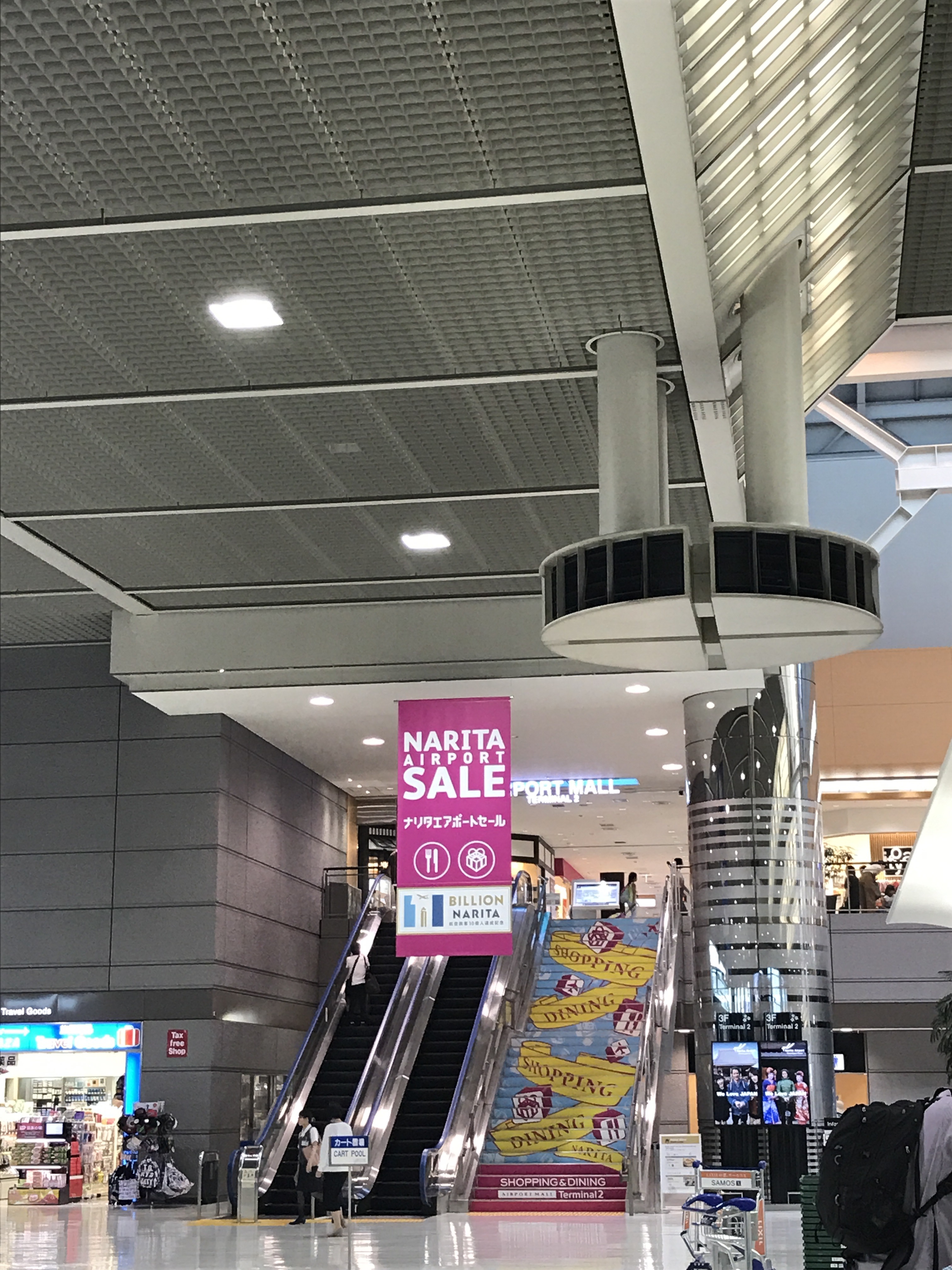
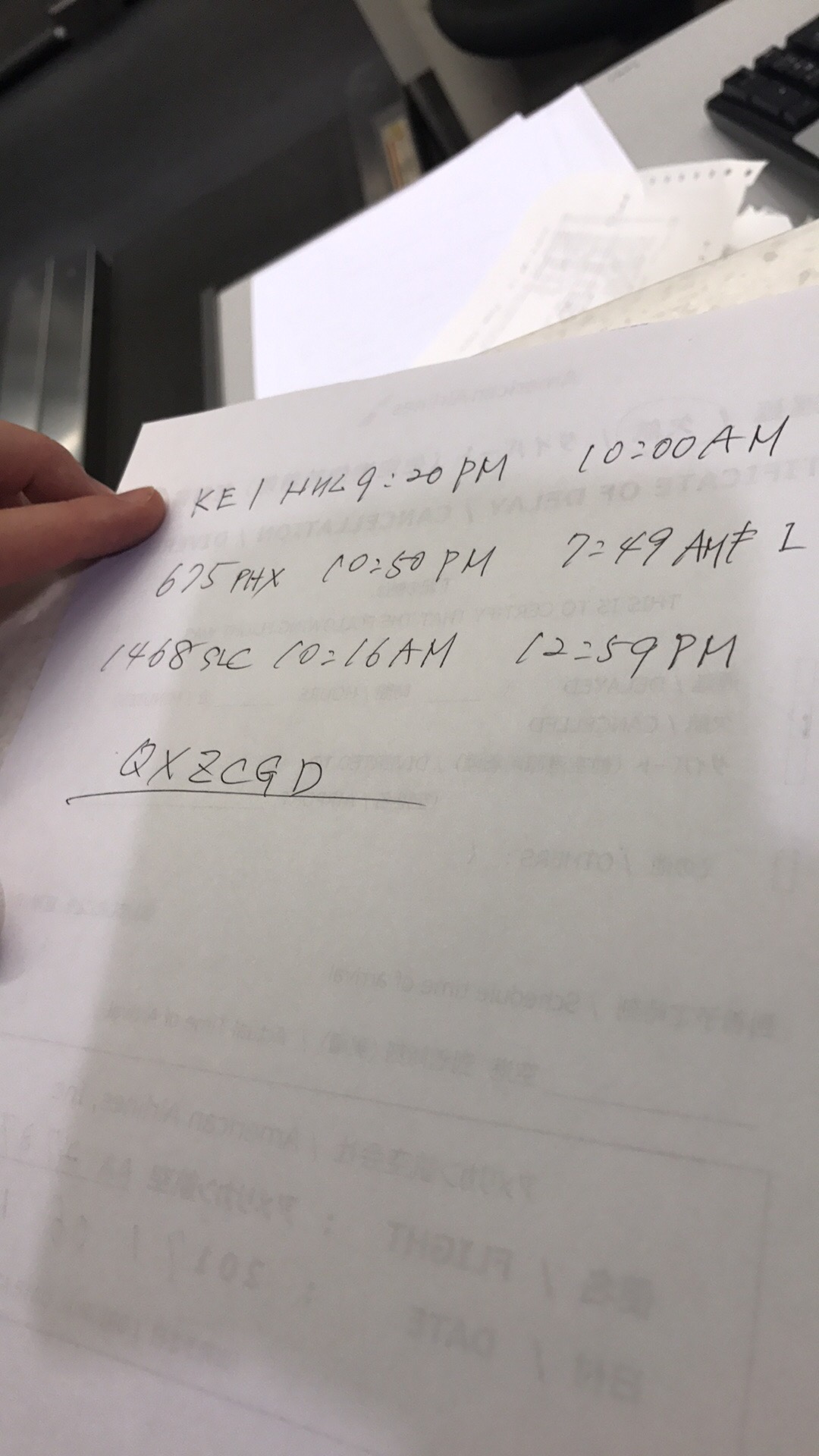
We looked for our connecting flight to Los Angeles upon landing in Narita. We only had like two hours lay-over, just enough time to check-in and go through immigration. But to our dismay, our flight was cancelled due to maintenance.
We were directed to the Customer Assistance Counter where a lady in her late 40’s or early 50’s told us after making several clicks on her computer and phone calls to who knows who that the best that she could find is a flight later that evening which will take us to Honolulu where there is a 12-hour lay-over and then from there a connecting flight to Phoenix and finally to Salt Lake. Upon hearing that, my usually friendly and jolly husband raised his voice to disagreement. He insisted to get a better offer since we, in the first place, chose this flight because we did not want to go through the hassle of multiple and long lay-over flights. The lady, then told us to wait again, this time it was longer. I don’t like waiting at all. It was exhausting.
[wpvideo 3X9Y9Gpr]
Finally, after almost an hour, the lady offered us a better deal. We could stay in Tokyo for a night with free hotel accommodation and get on the flight the next day, or if not, accept the first offer (the long lay-over in Honolulu). Although, I kind of wanted to go to Honolulu, too, since I’ve never been there before, but I just hate long travels and the thought of getting on and off several planes made me sick already. Finally, the lady made all the necessary arrangements for our changed flight and free hotel accommodation.
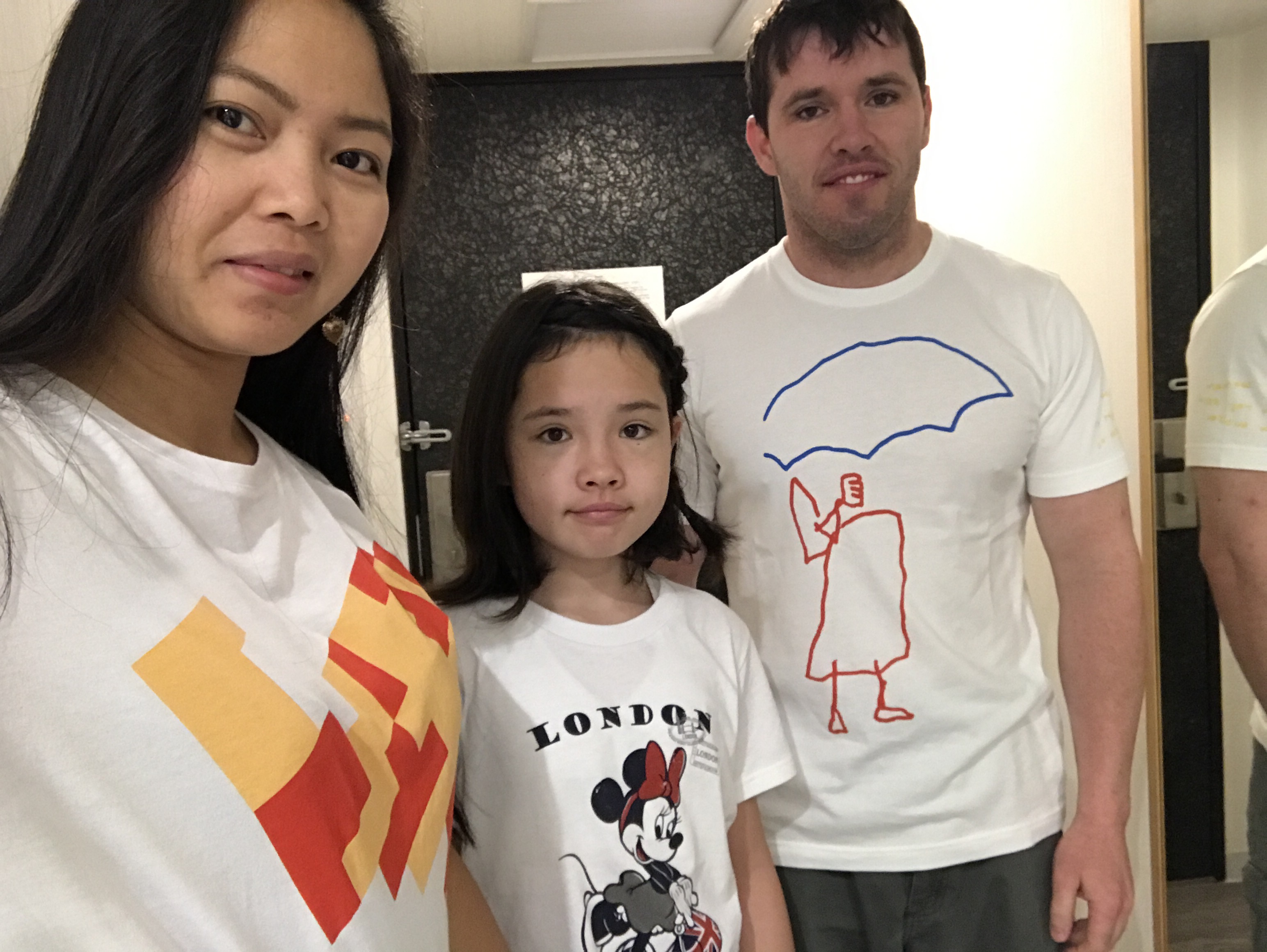
We were almost settled but then we realized we don’t have a change of clothing with us since our luggage has already been checked in and we’re not going to get until we arrive in the US.
But, thanks to UNIQLO we could get reasonably unexpensive decent-enough clothing to survive until the next day.
The complementary hotel accommodation
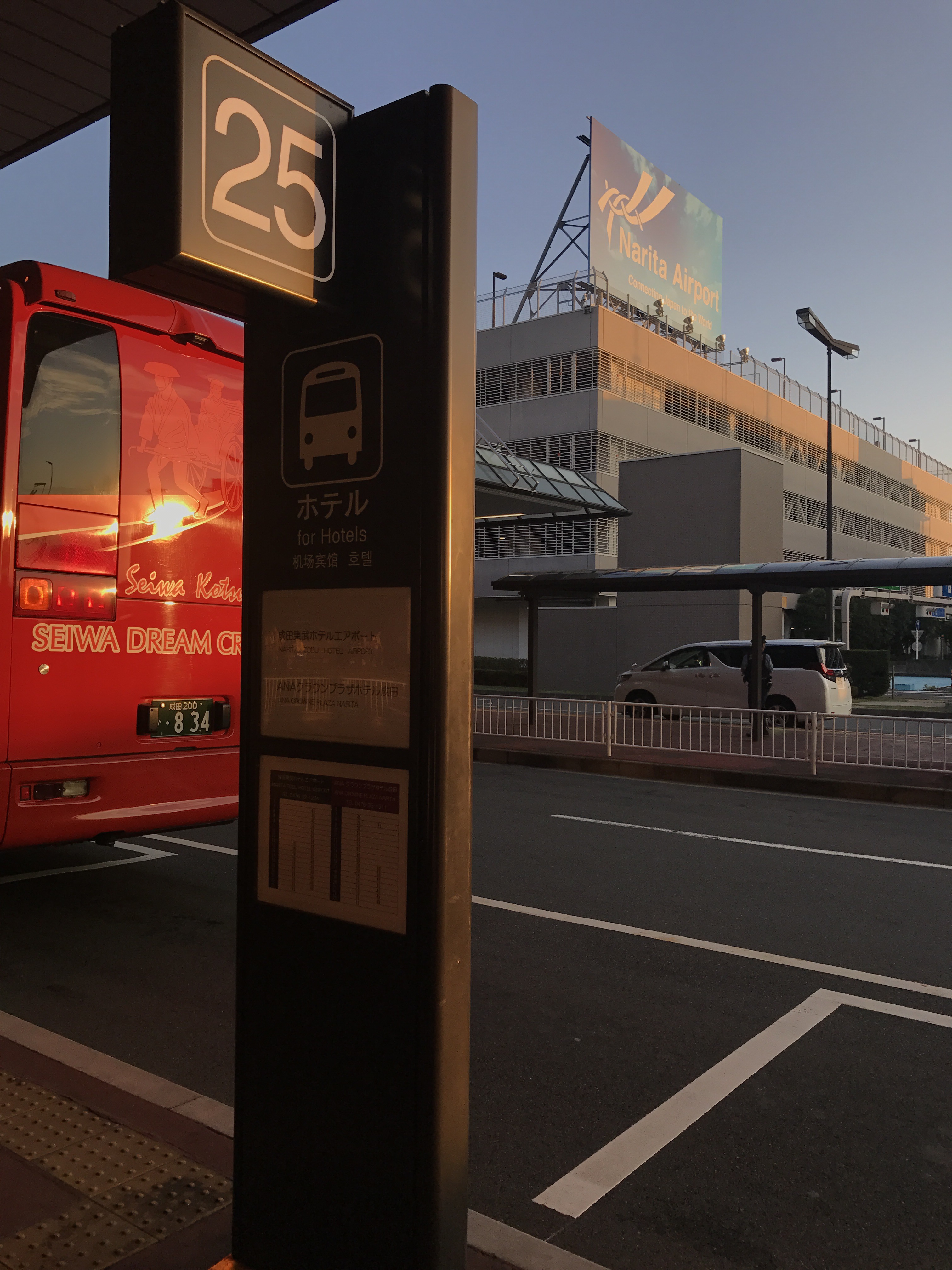
The shuttle bus came on time and took us to the hotel.
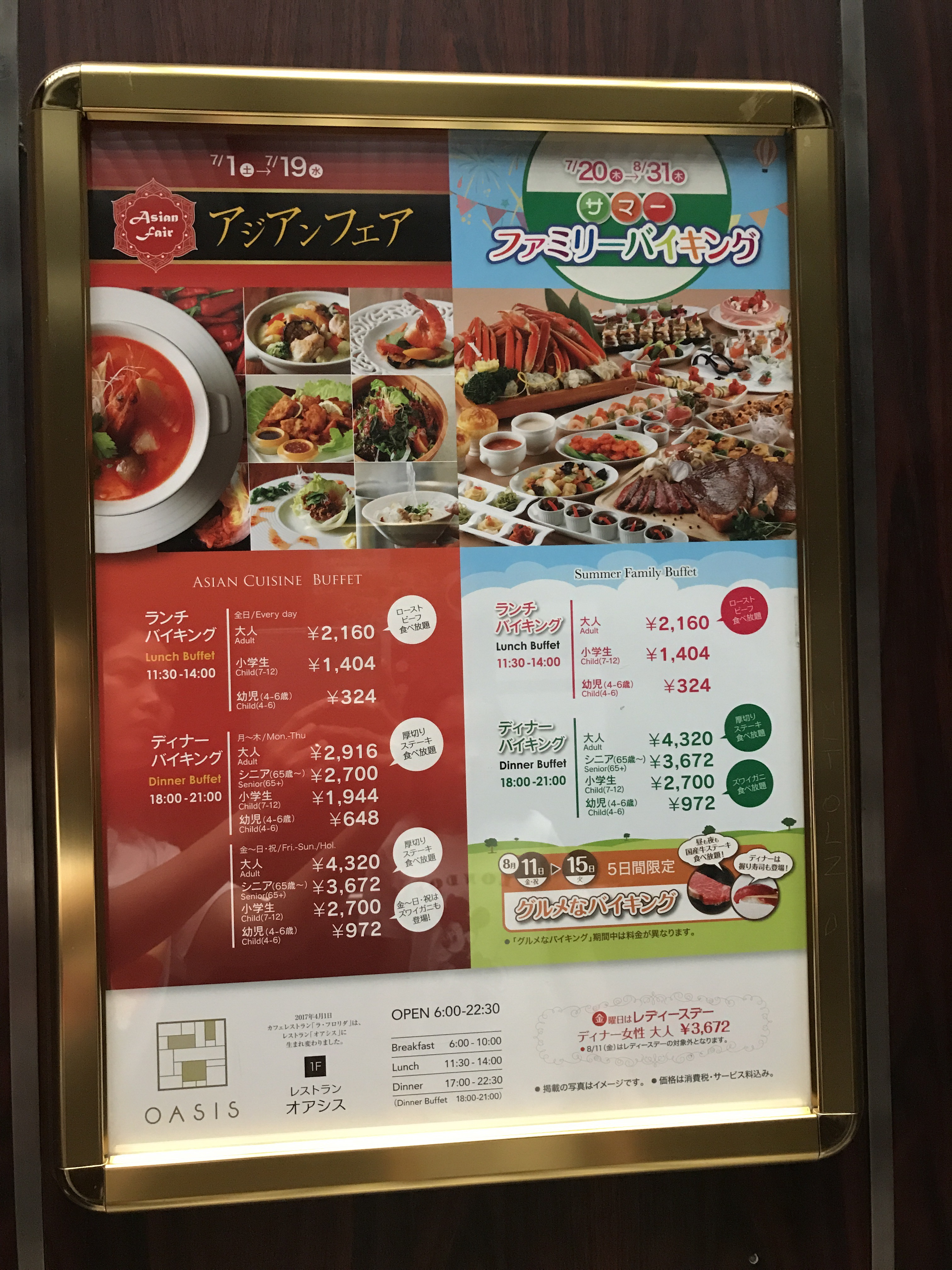
While inside the bus we saw a poster of a restaurant offering buffet. We got excited for a moment there but we quickly dismissed the idea of us getting into a nice hotel, the more of having a buffet dinner and breakfast. For sure we’re going to get a less than average accommodation and more or less a piece of bread or cereal and a cup of drink for our meals.
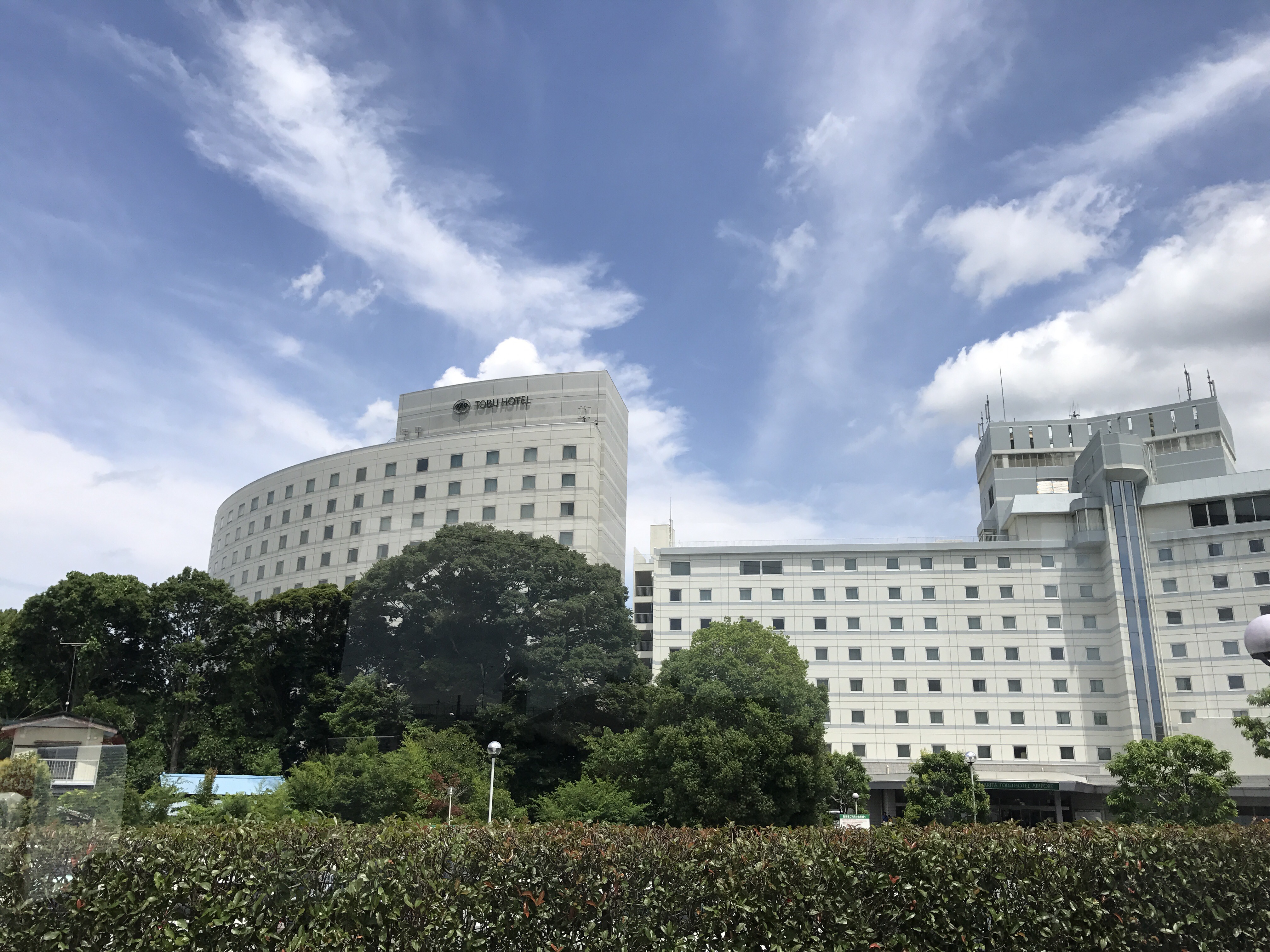
After about 20 minutes, we arrived at our hotel and we were happy to see that it’s more than what we expected.
It’s quite big, the lobby is nice, and receptionists are friendly and quick.
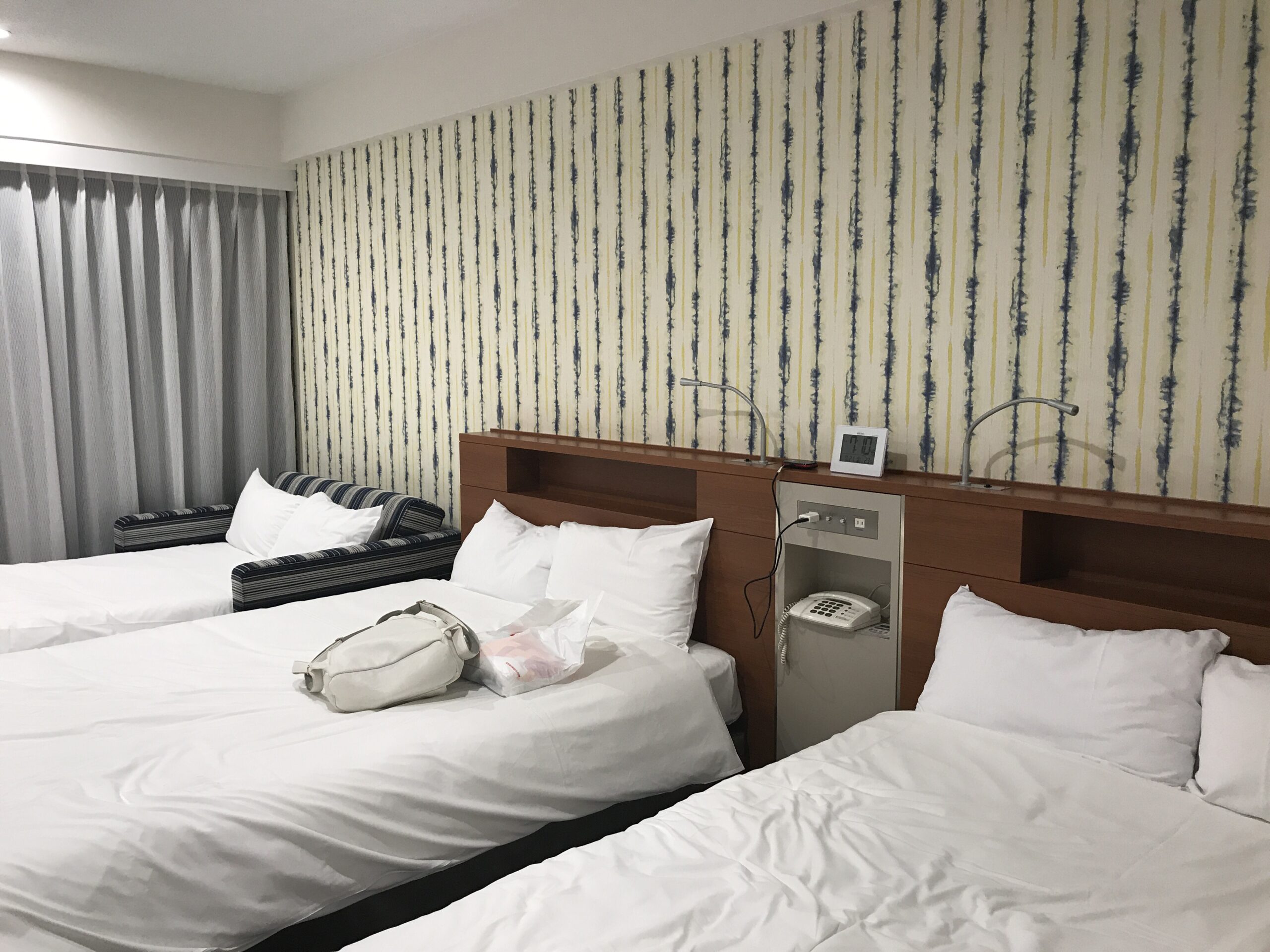
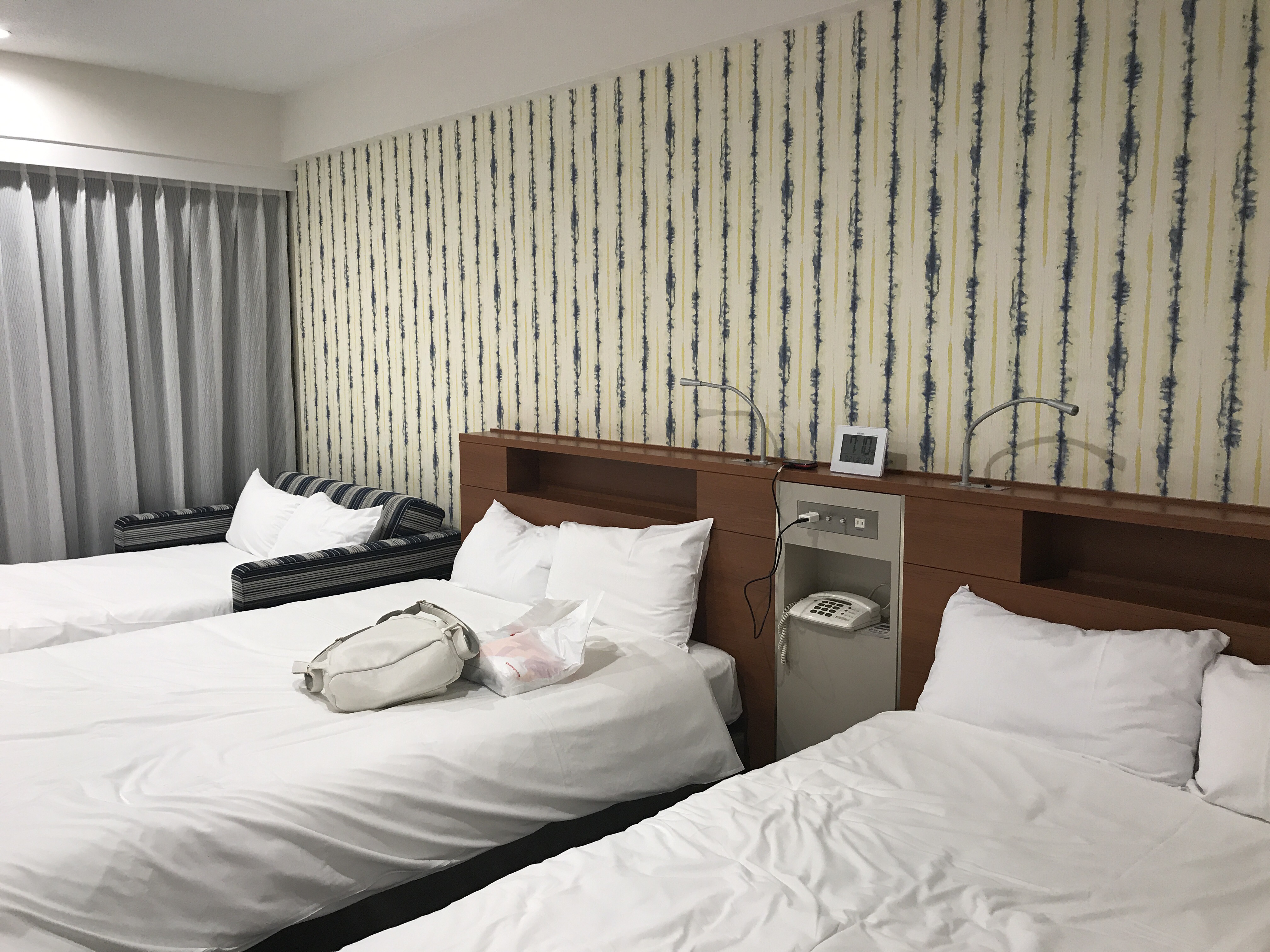
We were even more happy when we opened our room and saw that we got three beds, one for each of us.
The best part of our cancelled flight is the buffet dinner and breakfast included in our hotel accommodation. The restaurant was spacious and well-lighted and clean. the waiters and waitresses were pleasant and attentive. The food was great. There was steak, meat dishes, salads, fruits, desserts, ice cream, drink bar, and the best part was the winter crabs for dinner buffet. We ate crabs that night like we never had before. And the breakfast was equally fulfilling.
We left that hotel and headed to the airport the next day with the new perspective about cancelled flights. Not all cancelled flights are bad after all. Sometimes it’s just another opportunity to experience a new place.
Facebook is obviously the number one social media today. With almost 2 billion monthly active users, one can find all sort of entertainment and information there are, including some information you’d rather not know. Some of which are very private matters or just too unimportant to be on Facebook.
Many Fb users are so attached to it that it seems it’s their only best friend they can talk to. Like there is no one in reality that they can share life’s big and small(est) events.
The following posts I think are too much I considered them annoying.
1. Posting selfies (in towel) after taking a bath/shower saying “feeling fresh” with cleavage as the focal point.
2. Burping in your status to show you are (damn) full.
3. Saying “I love you” in your status to your partner you tagged who’s right beside you and your partner commenting “I love you, too.”
4. Saying ‘good morning’, ‘good evening’, ‘good night’, ‘I’m back’ in your status many times a week and worse, everyday.
5. Posting too much selfies (more than 5 a day or even a photo a day) that your friends memorize every angle of your face already even with their eyes closed.
6. Changing your profile picture with an edited picture of yourself many times a month too much that you look so different in person.
7. Expressing anger at someone with a 10-line post and saying “I’m not angry” or “I don’t care” at the end. Are you sure you’re not angry and you didn’t care after that rant?
8. Posting photos of dying patients and asking people for help by “liking” them. If that works, don’t you think all dying patients in the hospital should have their photos uploaded on Facebook?
9. Posting photos of accidents (mostly vehicular) with victims’ blood (or brain) and body parts scattered all over.
10. Posting a photo of a long-haired bearded guy and forcing everyone to type ” Amen”or else something bad will happen to them.
You might disagree to this article. This might annoy you, too. Well, “Different strokes for different folks.” What annoys me might interest you. I know there’s a way to avoid this negative feeling. Unfollow. That’s it.
Or if you agree, and you can relate, and thinks this list is not enough, then tell me more.
I am sure I am not alone when this matter. There are many sleepless nights in my calendar just like many of you out there. It usually happens to me in the weekends.
My mind is awake. My eyes are wide open. My fingers are busy with my phone.
What do you usually do when you can’t sleep at night? As for me, I usually just surf the internet. Scan the timeline of my Facebook. I read posts which catch my interest. Sometimes, I stalk on somebody’s profile ( like you do, right? 🙂 I just wonder what some people do, how they are nowadays.
I like reading comments of posts, too. I admit, most of the time I just go straight to reading the comments rather than reading the whole article. It is amusing reading people’s comments. The differences of each individual’s personality are revealed by their reactions/comments on certain issues.
I like googling things, too. Just random things that come to my mind. I like reading articles.
Sometimes, I feel I can do better. There are times I want to do something else. Like make money, more money than what I earn from my day job.
When that idea comes to my mind, I start goggling ‘how to start a business’. But, in the end, I’m still on my bed…nothing happens. It just keeps me more awake. Thinking and thinking.
So, I thought, I’d rather write.
But this article reflects what’s on my mind. Just random things. I don’t even know what it is.
The world is celebrating fathers’ day. Messages and pictures are flooding the Facebook timeline.
Almost everyone is telling that they have the best father in the world. That they are happy and thankful to have them in their lives.
Some of the messages are not at all an expression happiness nor gratitude. Some expresses regret and longing.
Those messages are from the people whose fathers are not anymore in the physical world.
They’re gone. They’re missed.
And I’m one of those people.
If only I could turn back time, I would spend more time with my papa. I would talk to him. Ask him questions about his younger days. About his life. His struggles and successes. Everything. Anything.
I miss my papa.
In my whole life, I only hugged him once. That was the first and last. And that was the last time I saw him alive. That was the last goodbye.
So, to all of you whose fathers are still alive, go and tell them you love them. Don’t just post on Facebook. Go to them. Give them a hug. Talk to them. Ask them questions. Not just on Father’s Day. Make every day special because nobody knows when they will be gone…forever.
April 30, 2011. When I first came to Japan as a visiting relative. I stayed for a month with my sister and in that short period of time, I fell in love with Japan. I came back as a scholar on September 24, 2012, and studied for a year and a half. During my stay, I’m so enchanted with Japan that I wanted to stay in this country for good. So, I’m here, staying for almost four years now. I have my reasons why I chose to stay in Japan, and I think many can relate with me.
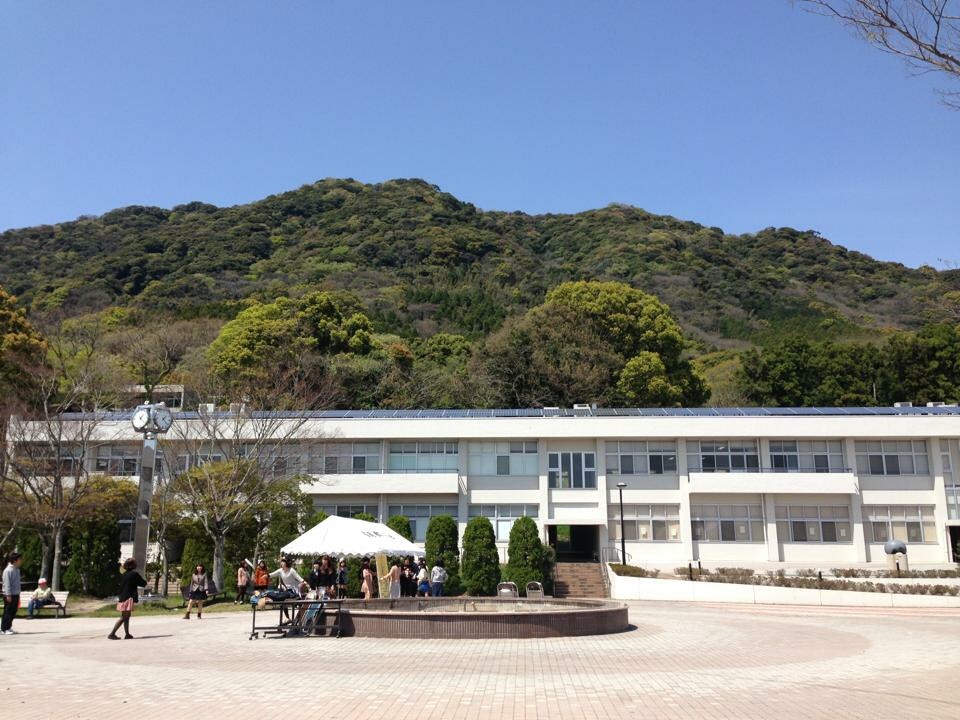
my university
5. Economic Advantage
tokyoezine.com
Japan is one of the top economic powers in the world. What I (financially) earn here (with lesser effort and work) is almost four times as much as I earn in my country. Although the cost of living is far different (it is so much cheaper in my homeland; Japan is expensive), with my earnings, I can provide myself more than enough, send money to my family back home and enjoy life without thinking so much of financial constraints.
4. Environmental Safety and Security.
welcomia.com
When I came here for the first time, I was surprised to see that there were no security guards in establishments (which is common in my country) and the policemen don’t have guns. There seems to be NO threat to security. The crime rate in Japan is relatively low. Japan was ranked as the safest country in the world in 2014 by the Organization of Economic Cooperation and Development (OECD). (You can read more about the crime rate in Japan here http://www.japantimes.co.jp/opinion/2014/01/25/editorials/crime-rate-dips-again-in-japan/).
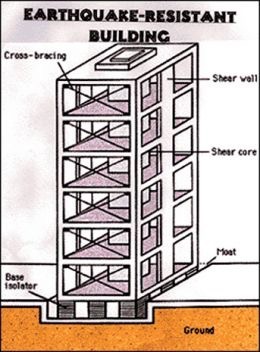
http://coolgeography.com.uk/ In terms of natural calamity, we know that Although Japan is prone to earthquakes and other natural calamities, the buildings are built to stand against strong shake and the emergency information system is very apt and advanced that whenever there is heavy rain pour or earthquake, cell phones alarm and disseminate automated messages regarding calamity and safety. Moreover, it is very clean in Japan. No pollution. The environment is clean, safe and secured.
3. Spirit of Equality and Harmony
japantoday.com
In Japan, harmony is very important. Japanese people follow rules and try to avoid conflict as much as possible. They are very harmonious and very disciplined. They follow rules and always think of others. You can see that when they get on the train, when they take escalators, when they go to the restaurant, they always fall in line and wait for their turn. Here, there seem to be no rich and poor. No “untouchables”. Here, a politician is just a worker, like everybody else. Everyone’s equal. Japanese give importance to uniformity, too. You can see that in the way they dress. Very few, almost nobody wants to stand out with bright-colored, printed dress. Subtle colors are prevalent. Everything is just smooth and neutral.
2. Advance Technology
http://en.wikipedia.org/
japantimes.com.jp
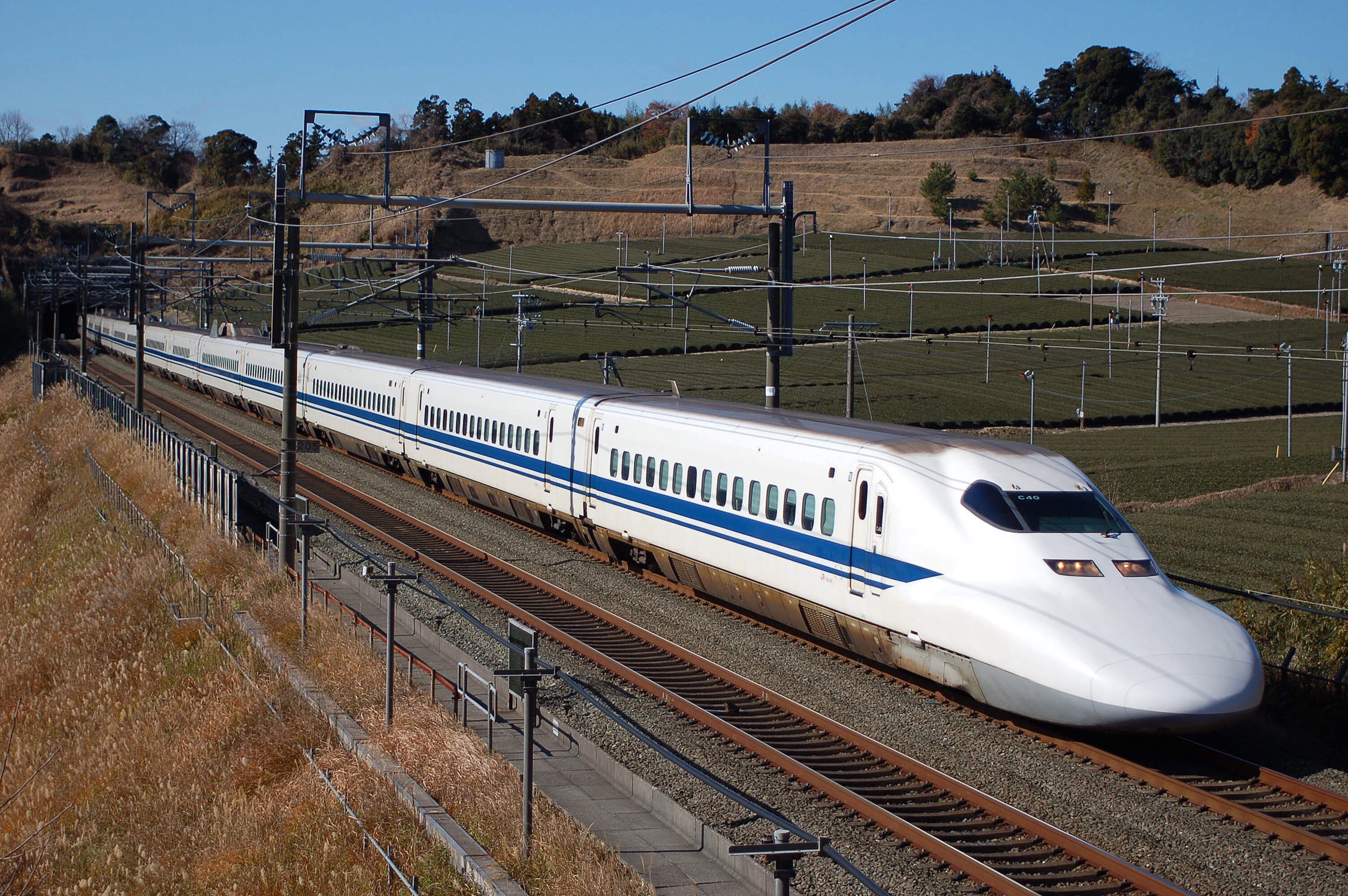
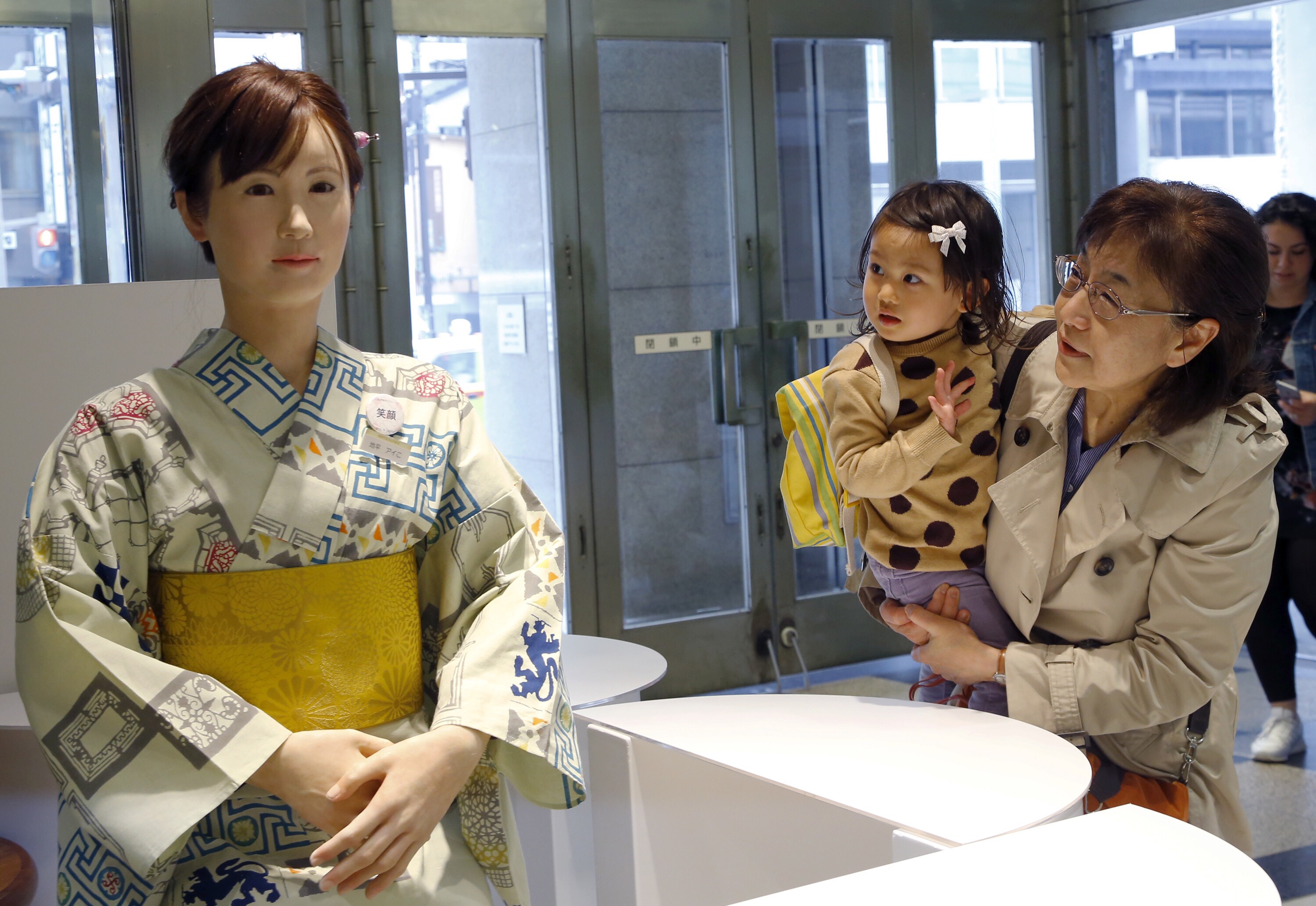
Undoubtedly, Japan is so far, very advanced in terms of technology. I can easily travel anywhere using its hi-tech transportation system: the bullet train, the efficient and always on time local trains, subways, and buses. The world is just a touch away using my smartphone with a very fast and reliable internet connection and free Wi-Fi in big cities. There are hi-tech toilets, vending machines, automatic doors, and (some places in Tokyo) robotic receptionist which makes Japan a really awesome and very convenient place to live.
1. Travel and Leisure
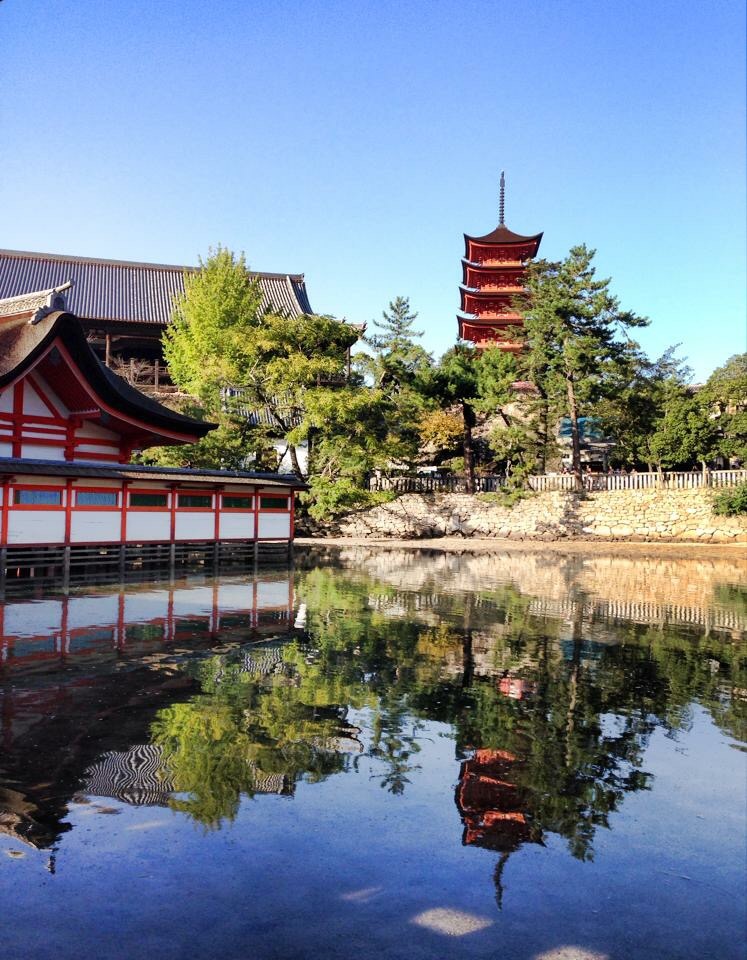
I took this photo in Miyajima
Most of all, living in Japan is like living my life on a grand vacation holiday. There are so many places in Japan worth visiting.
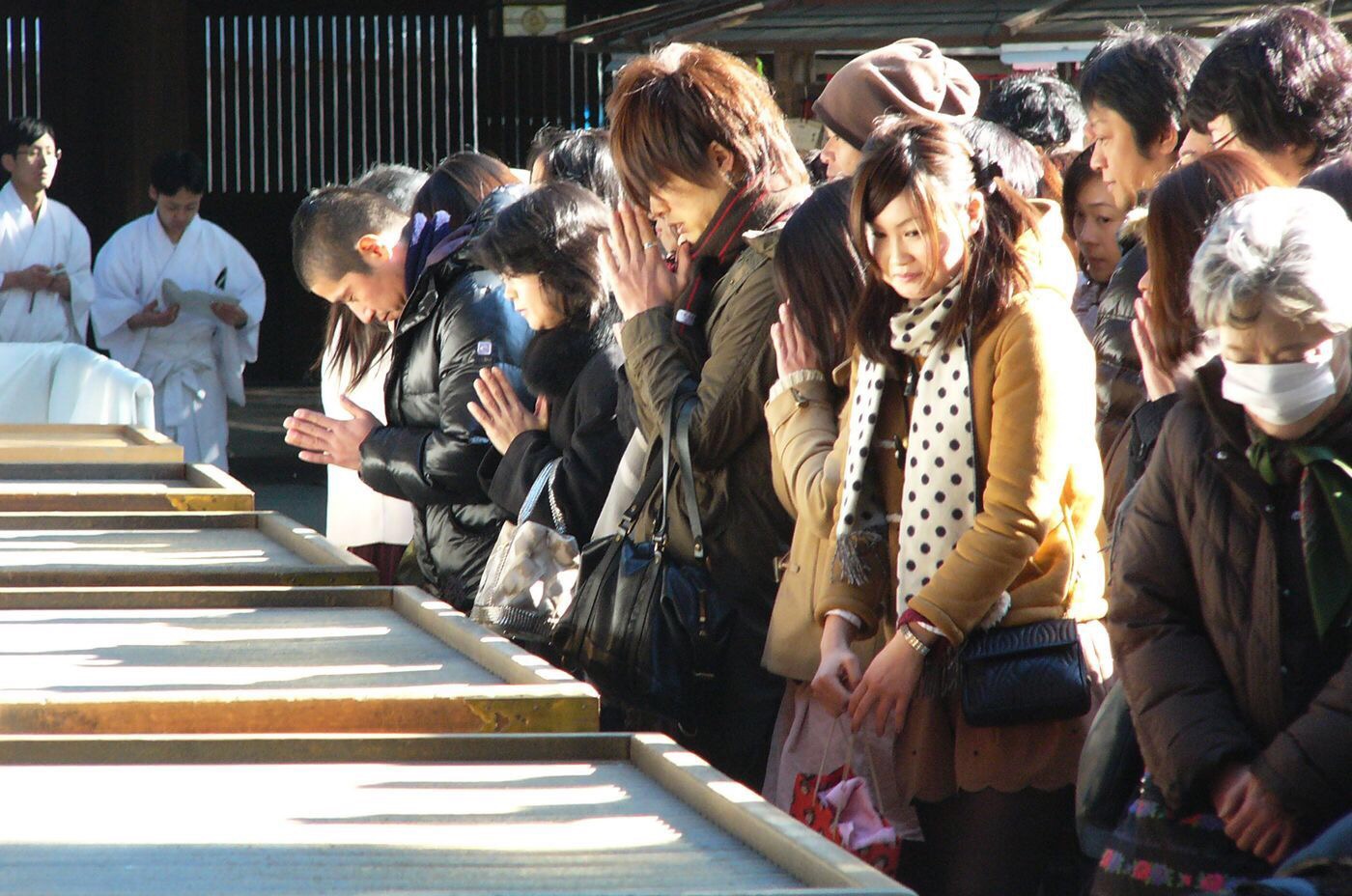
From the simple temples and shrines in my neighborhood to the grand ones in Kyoto (and many other places), the historic sites like Nagasaki and Hiroshima and the many world heritage sites scattered all over Japan. There are hot springs where I can have ultimate relaxation. The food is excellent and healthy. What else can you ask for?
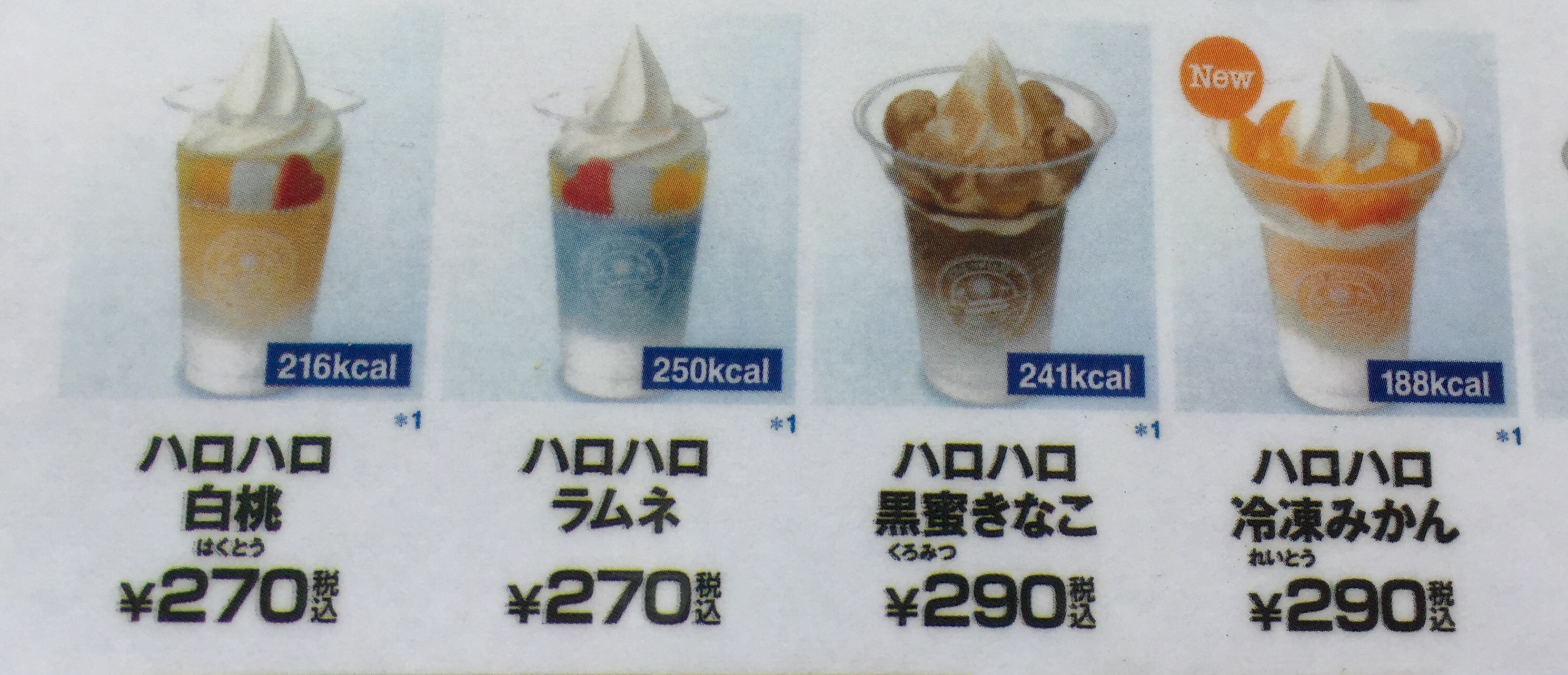
When I did my self-introduction in class, I introduced Halo-halo as one of the Filipino’s favorite desserts. Some students said it is being sold in Mini Stop. So, one afternoon, on my way home, I dropped by the convenience store Mini Stop and tried the Japanese style Halo-halo.
I was a little bit disappointed because I was expecting to have the kind of Halo halo that I know.
Instead, what I got is the one below.
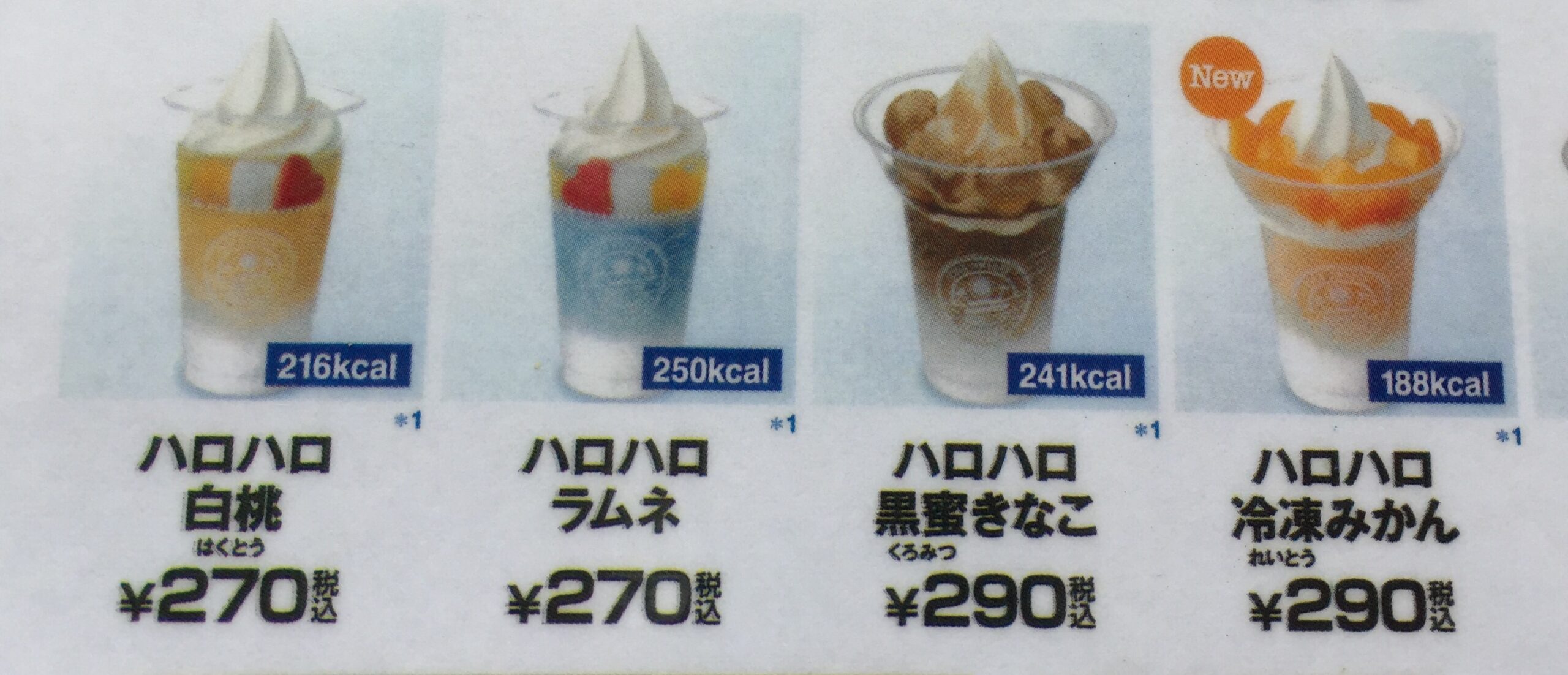
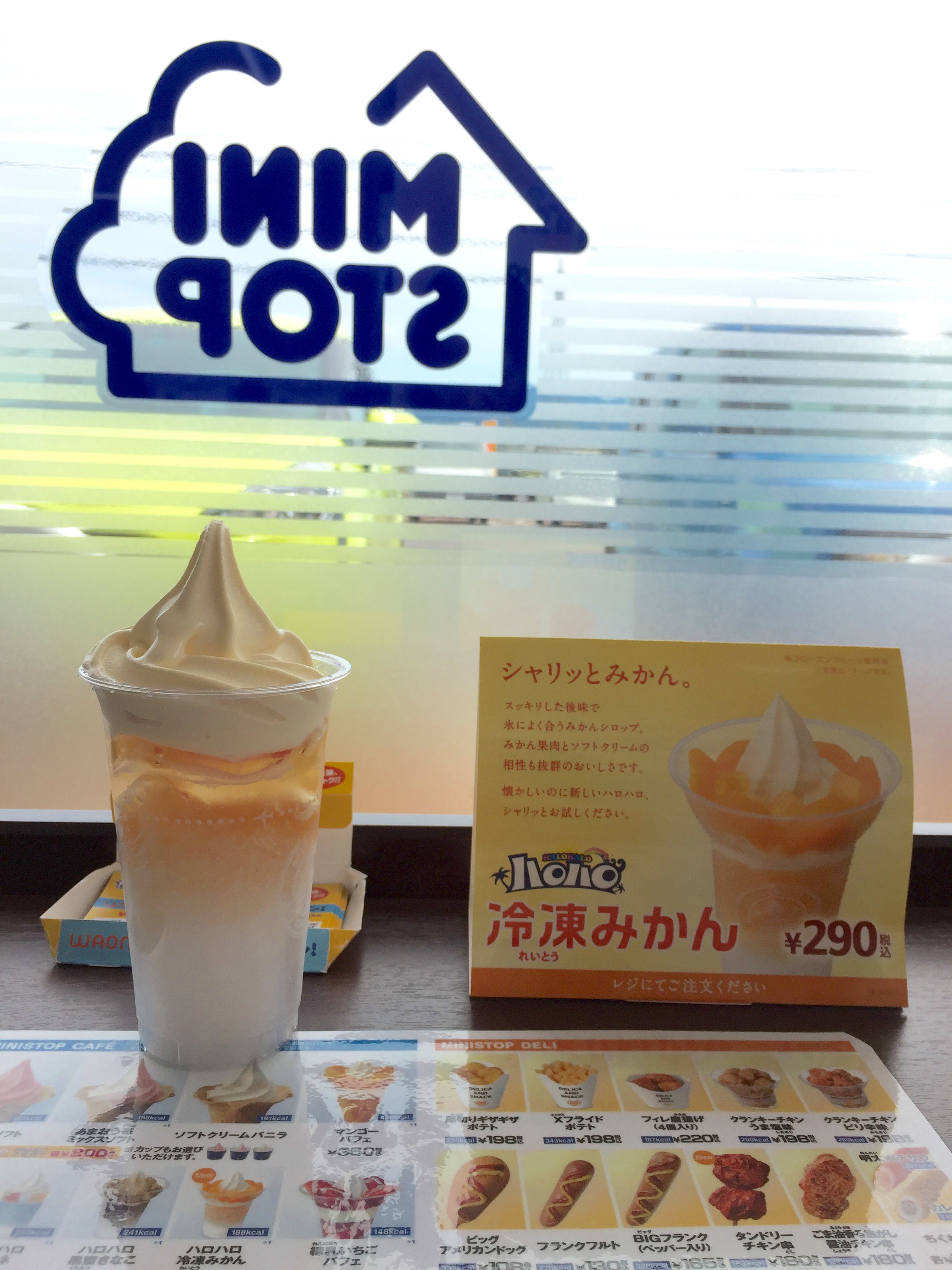
There are four choices of Halo halo in Moni Stop. From left to right: Halo halo hakutou (white peach), Halo halo ramune (lemon soda), Halo halo kuromitsukinako (soybean in blackhoney?), and Halo halo reitou mikan (frozen oranges). I got the the first one on the left. It cost me ¥270 yen. It’s far from what I know Halo halo is but it’s good as what it is.
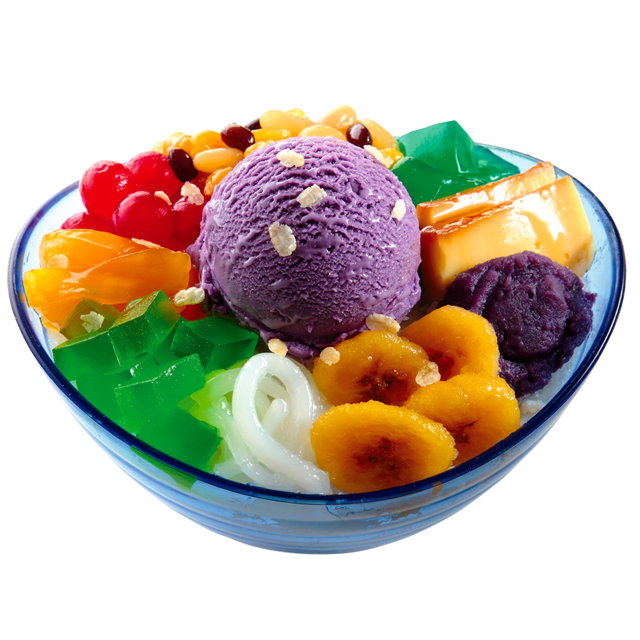
Philippine Halo halo
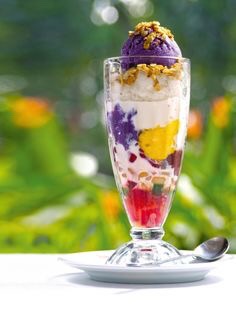
Halo halo is a famous dessert in the Philippines. It is made of finely crushed ice, top with fruits (usually jackfruit, banana, avocado,) sweet corn, red and green gelatin, ube, nata de coco, sago, sweet buko (coconut flesh), sweet beans, cornflakes, sugar, milk and finally ube ice cream on top. Halo means mix in English. You have to mix it before you eat it to enjoy this awesome dessert at its best.
One serving of Halo halo is about ₱40.00 equivalent to about ¥100.00. “Yasui!!!”, means cheap. As what my students said.