Author: Maryan

  • How I learned Japanese in 3 months

    Before coming to Japan, I only knew two words. Oishi (Yummy) and arigatou (thank you).

    When I came to visit for one month in 2011, I learned a few more words.

    Words that are used in everyday life:

    ohayou gozaimasu (good morning)

    konichiwa (hello)

    konbanwa (good evening)

    oyasumi (good night)

    itadakimasu (grace before meal)

    gochisosamadeshita (grace after meal).

    ittekimasu (I’m going – when leaving the house)

    itterashai (take care – to someone leaving the house)

    tadaima (I’m home)

    okaeri (I’m happy your back in the house)

    And words used by my sister raising her children (just by listening to her everyday)

    oide (come here)

    dame (No/not allowed)

    yamete (stop)

    abunai (dangerous)

    hamigaki (brush your teeth)

    shukudai (homework)

    tabete (eat)

    sugui (wow)

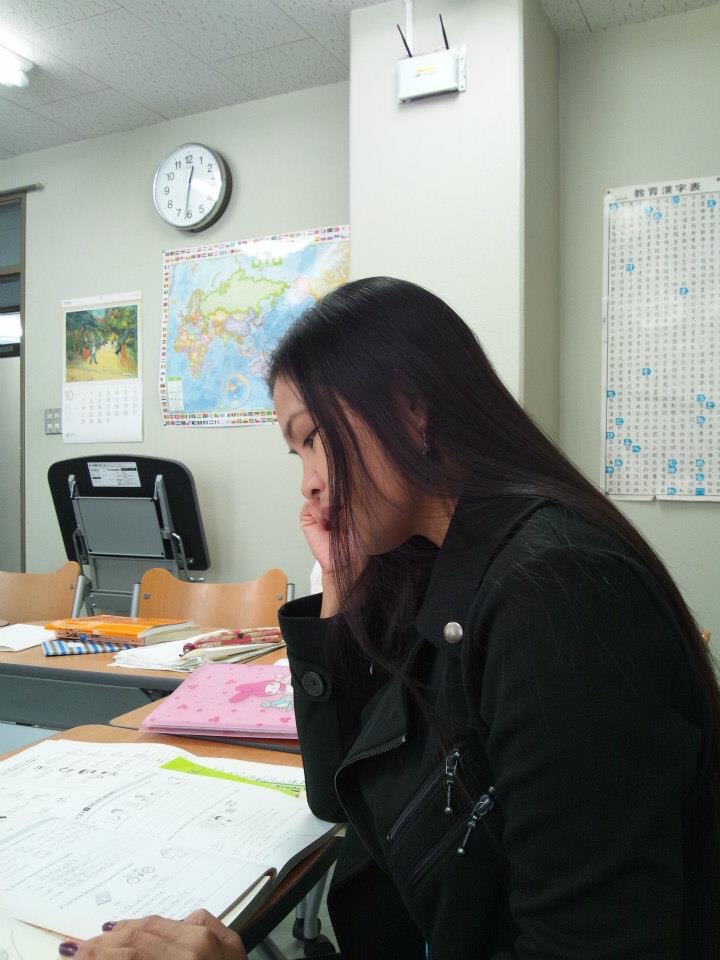
    The following year when I came back as a government scholar, learning Japanese was the main objective for the first semester.

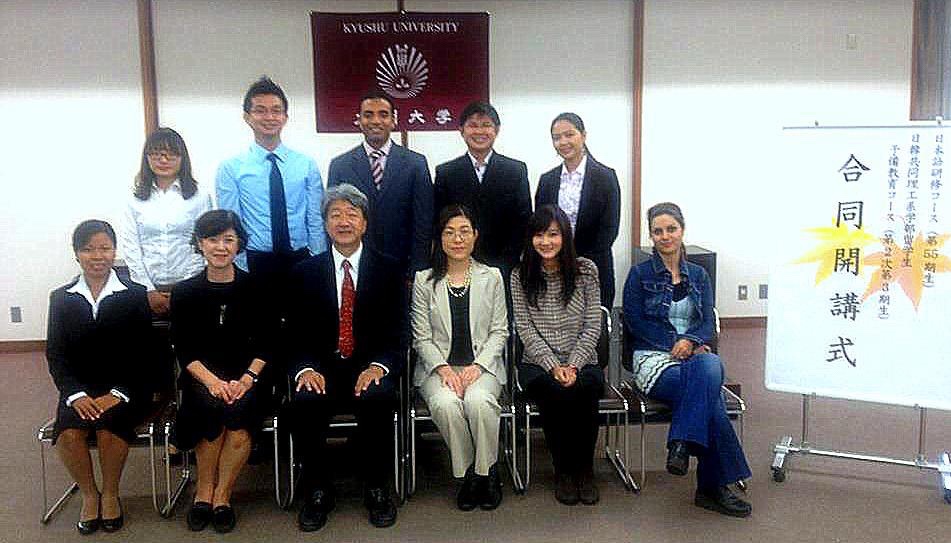
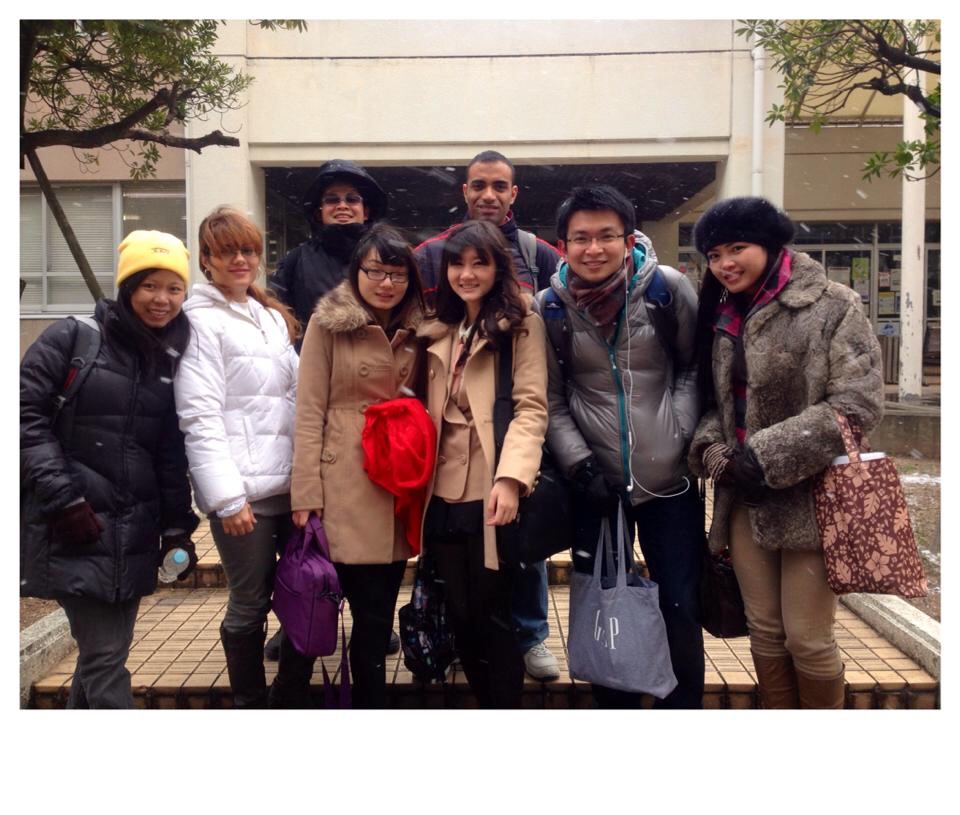
    We were eight students in our class. One from each country: Philippines (me), Myanmar, Thailand, Iran, Laos, Egypt, Malaysia, and China.

    So, how did I learn Japanese? Let me enumerate the methods below.

    1. Memorize hiragana and katakana. These are the basics like the alphabet. Katakana are for foreign/loan words and hiragana are for Japanese words. My university asked me to memorize katakana and hiragana even before coming to Japan. I can’t remember exactly if it was both or just one of the two but I’m sure it was the first task as a student.

    2. Increase vocabulary. By mastering hiragana and katakana, I learned to read words and thus increased my vocabulary. In my university, we were taught tons of new words everyday like twenty to thirty words depending on the lesson. We have to master those words because we were given a quiz everyday, five to ten words. And if we make a mistake, we had to write the words several times to fit on a whole sheet of paper. You don’t wanna do that, trust me.

    We also learned vocabulary by reading stories and learning the dreaded kanji.

    3. Conversation practice. This is the most important part, putting the learned language into practice. In my class, we always have kaiwa no renshu (conversation practice). We were paired with our classmates to do specific conversations and sometimes converse with the teacher. There was a recorded kaiwa test where we had to talk to the teacher and answer her questions. We listened to the record for evaluation.

    4. Make a (PowerPoint) presentation. Believe it or not, with very little vocabulary, we were told to make a presentation of our country almost every week. The purpose is to increase vocabulary, share our culture and gain confidence in speaking. We had Japanese tutors who helped us in our Japanese. I remember the first presentation was Watashi no Kuni no Asagohan (My Country’s Breakfast). We also presented about our countries houses, tourist spots and many more. And the final presentation- about our major.

    5. Write a diary. Once a week, every Monday, we were asked to submit a diary. This was also very hard in the beginning because of not enough vocabulary and knowledge of the language. But this really helped us learn the language on our own, translating every word and sentences we wanted to say in Japanese. This was when google translate became handy. And the app imiwa? is also very helpful. I highly recommend it. After the teacher checked our composition, we were asked to read it in front of everybody. Oh, I still remember a few times I couldn’t read my own writing. Lol.

    6. Watch movies and anime. This was my way to learn Japanese outside of class. Even before coming to Japan, I started watching Japanese movies and anime. A few of my favorites are Sen to Chihiro no Kamikakushi (Spirited Away), Hotaru no Hakka (Grave of the Fireflies), and Hachiko. I watched it in Japanese with English subtitles. I know it’s hard to learn a language this way but I kind of picked up some Japanese words and phrases. I was drowned in tears with the last two movies. My ultimate favorite anime is Chibi Maruko – which I still watch even up to now. I used to watch it everyday. I learned many things from Chibi Maruko- from daily Japanese family life to school life and events and Japanese culture and celebrations. The language used is fairly easy too because the main character is a third grade student.

    7. Talk to locals. There’s no better way to learn a language than using it to talk to the natives. You will be surprised how much you will learn naturally by engaging in conversations with the Japanese. I learned a lot talking to my Japanese tutor and my Japanese friends words and phrases I never learned in class. I was advised to have more Japanese friends and spend more time with them than hanging out with fellow foreigners/kababayan where you tend to use English or Filipino/Bisaya.

    Japanese Intensive Course

    I started learning Japanese officially in late October 2012 and we finished in early February 2013. It was called the Japanese Intensive Course. I salute all my teachers. They were all really good.

    During that rough three months, I learned to speak basic conversational Japanese and I was even able to give a (memorized) speech in full Japanese at the podium in front of everyone during the closing ceremony.

    Never Enough

    But, that was not enough. Japanese is a difficult language to master given that it uses many characters – hiragana, katakana, romaji and kanji, and it has many forms – basic, polite and honorific.

    Lifelong Learning

    Even after more than seven years I am still trying to learn more. I learn new words by dealing with everyday life – medical terms when I got sick and when I gave birth, construction and real estate terms, bank terms, neighborhood association terms and the list goes on.

    It’s like filling a sack with grains everyday. But the sack will never get full but surely the grains will get plenty enough to survive.

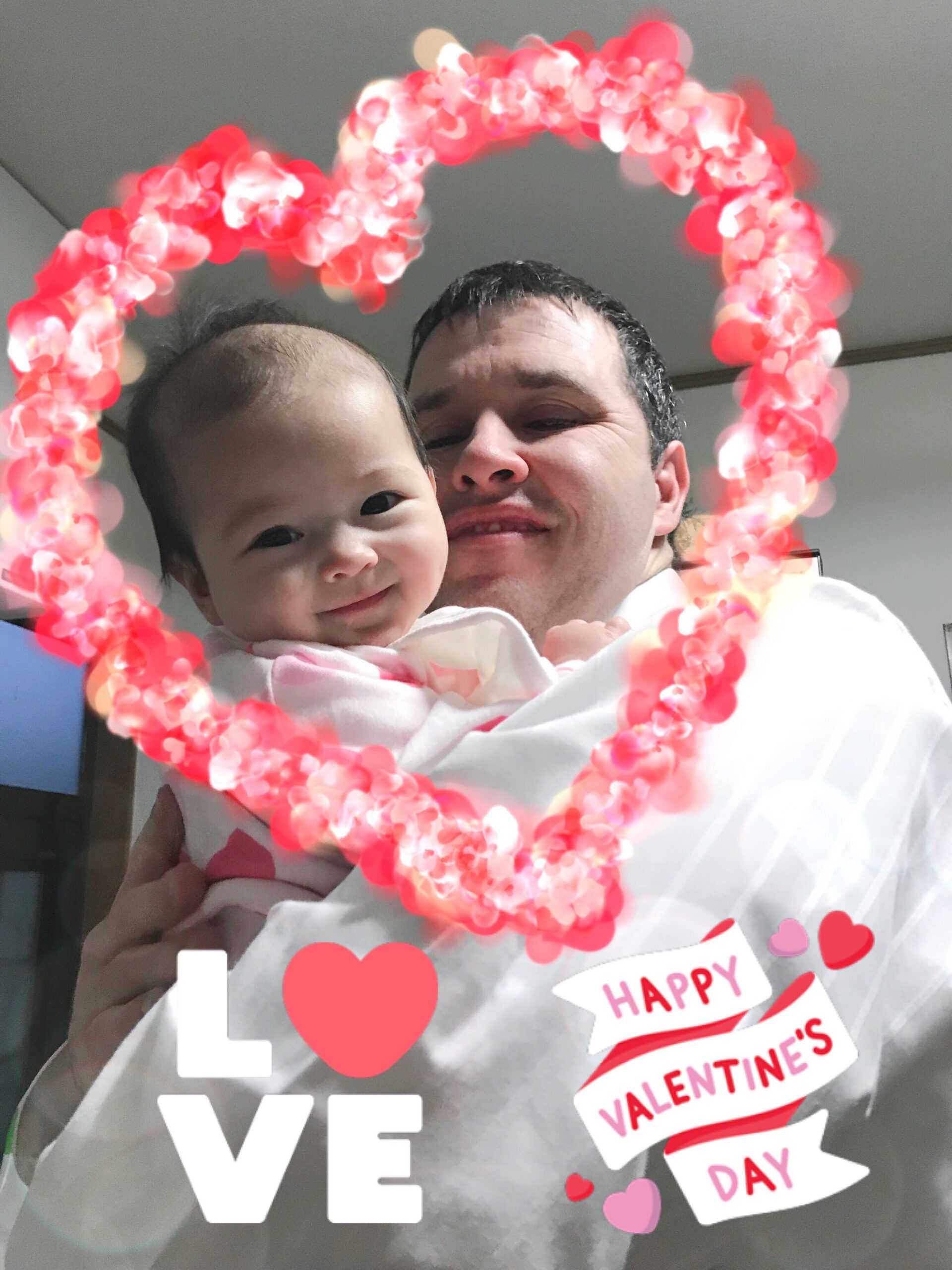
  • Valentine’s Day in Japan and the Philippines

    Valentine’s Day in Japan and the Philippines

    There is a huge difference between how the Philippines and Japan celebrate Valentine’s.

    What to give/receive

    In the Philippines, Valentine’s is more on flowers – roses as the main star. With matching teddy bears and chocolates on the side. And love letters too.

    In Japan, it’s mainly chocolate. Not very much on flowers.

    Who give

    Ladies are feeling princesses on Valentine’s Day in the Philippines because they are showered with love. Boyfriends, husbands and admirers are expected to give something to their girlfriends/wives. Teachers also receive presents from their students. And students are also encouraged to give something like a card to their parents as well.

    In Japan, it’s the opposite. Girls give to boys, and ladies to gents. There are three types of chocolate given on Valentine’s Day in Japan:

    1. Honmeichoko – for the opposite sex you like/love 2. Girichoko – from the word “giri”, meaning obligatory, like the subordinate to the boss. co-workers, not necessarily “love”, and 3. Tomochoko– from the word “tomo”, meaning friend, given between friends usually between girls. And this is getting more popular than honmeichoko.

    The Craze

    In the Philippines, you can feel that “love is in the air” in February. Shops, malls, restaurants, schools and offices get decorated with cupids and hearts.

    Come Valentine’s Day, red is the color. And many singles want to find “the one” to date or to settle down. Students celebrate by buying flowers and presents for their teachers. Sometimes, classes are canceled to give way to a Valentine Party.

    That would never happen in Japan. No disruption of classes because it’s Valentine’s. Not that I know of so far. Valentine’s Day is a somewhat ordinary day.

    Many couples go on a dinner date in the Philippines and many proposals happen too. I guess it’s similar in Japan but I just don’t see it or feel it.

    In Japan, girls (and their mothers) get really busy on Valentine’s Day (or the day before) making the best homemade chocolate.

    If you go to the supermarkets, the first thing you see on displays are arrays of chocolates and baking materials. It’s the season for chocolates. Actually, right after New Year’s, shops change to Valentine’s mood.

    Of all these differences, the girls giving chocolate to boys and expressing their affection is one thing that is hard for me to do. It’s not that it’s bad but it’s just something I did not do growing up. I was taught to just wait and never express your feelings to the opposite sex.

    But maybe it’s changing nowadays.

    What do you think?

    Would you rather be the one to give or receive?

    How do you celebrate Valentine’s in your country?

  • Biko-making

    Biko (bee-ko) is a Philippine dessert made from glutinous rice, coconut milk and sugar.

    We use black glutinous rice or white or mix of both.

    My mother usually do mix. We love mama’s biko. I still remember when we were young and mama makes biko. My sisters and I help stir the latik (caramelized sugar in coconut milk) and of course have a taste when it’s done. We would have our own spoon and scoop the remaining latik on the kawali/kaha (wide cooking pot). Mama would tell us to be careful coz it’s still hot and it would choke us.

    My mama’s recipe is simple. Cook the glutinous rice and make latik and mix them together.

    I’ve been wanting to make biko for a long time but I just didn’t have the time or complete ingredients to make it.

    And finally today, I did it.

    I did not follow my mama’s recipe this time and tried something else.

    I watched a video on Facebook and my friend also made something similar. It’s the style of biko where you put the latik on top and bake it.

    I also the ingredients to my preference.

    [wpvideo osqv2tir ]

    Ingredients

    2 & 1/2 cups glutinous rice

    1000 ml coconut milk

    1 cup white sugar

    1 cup brown sugar

    Procedures

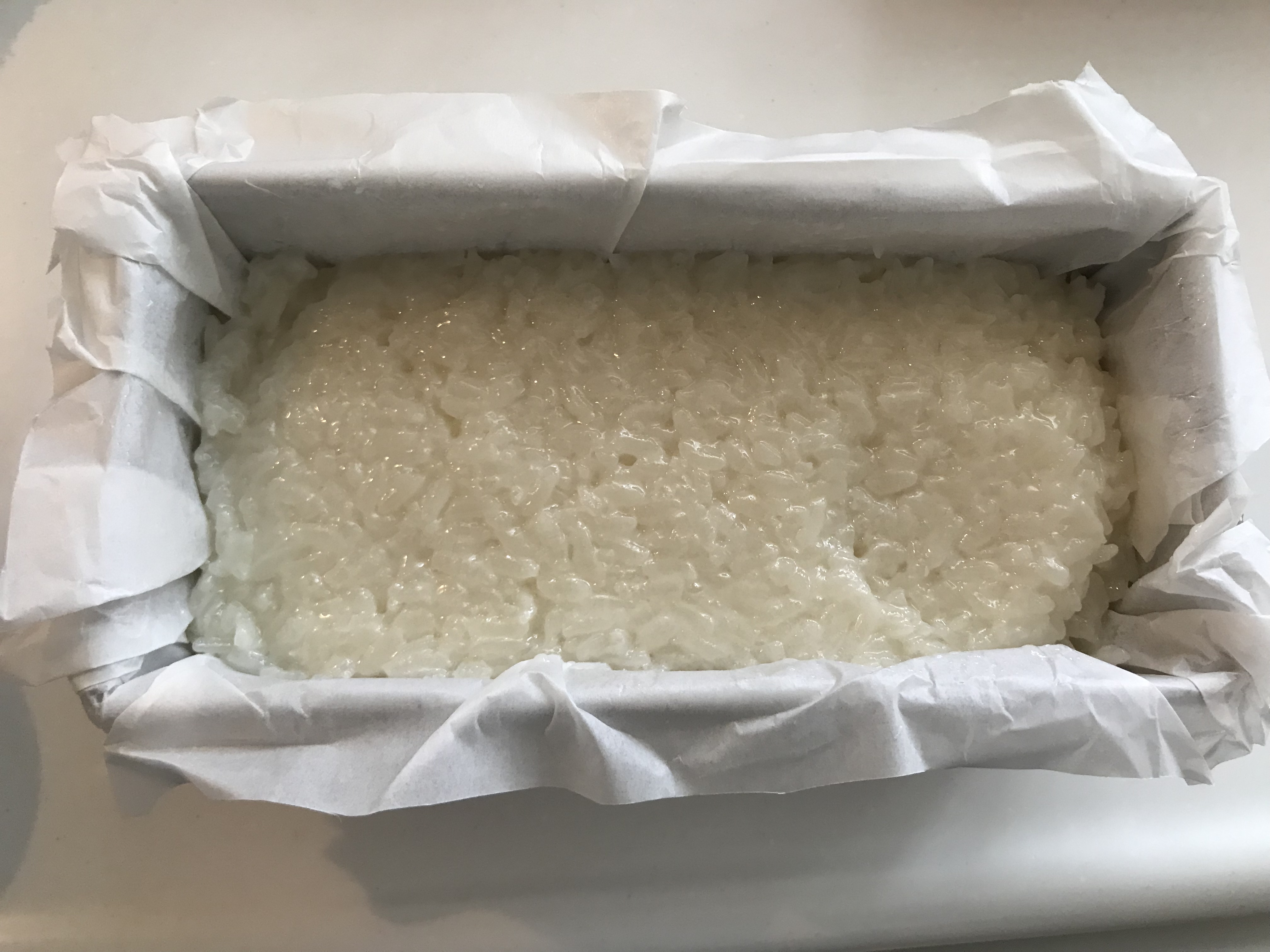
    1. Wash and cook the glutinous rice. You can use regular pot or a rice cooker. I used a rice cooker. It’s easier.

    2. While waiting for the rice to cook, put the coconut milk about half and half into two pots.

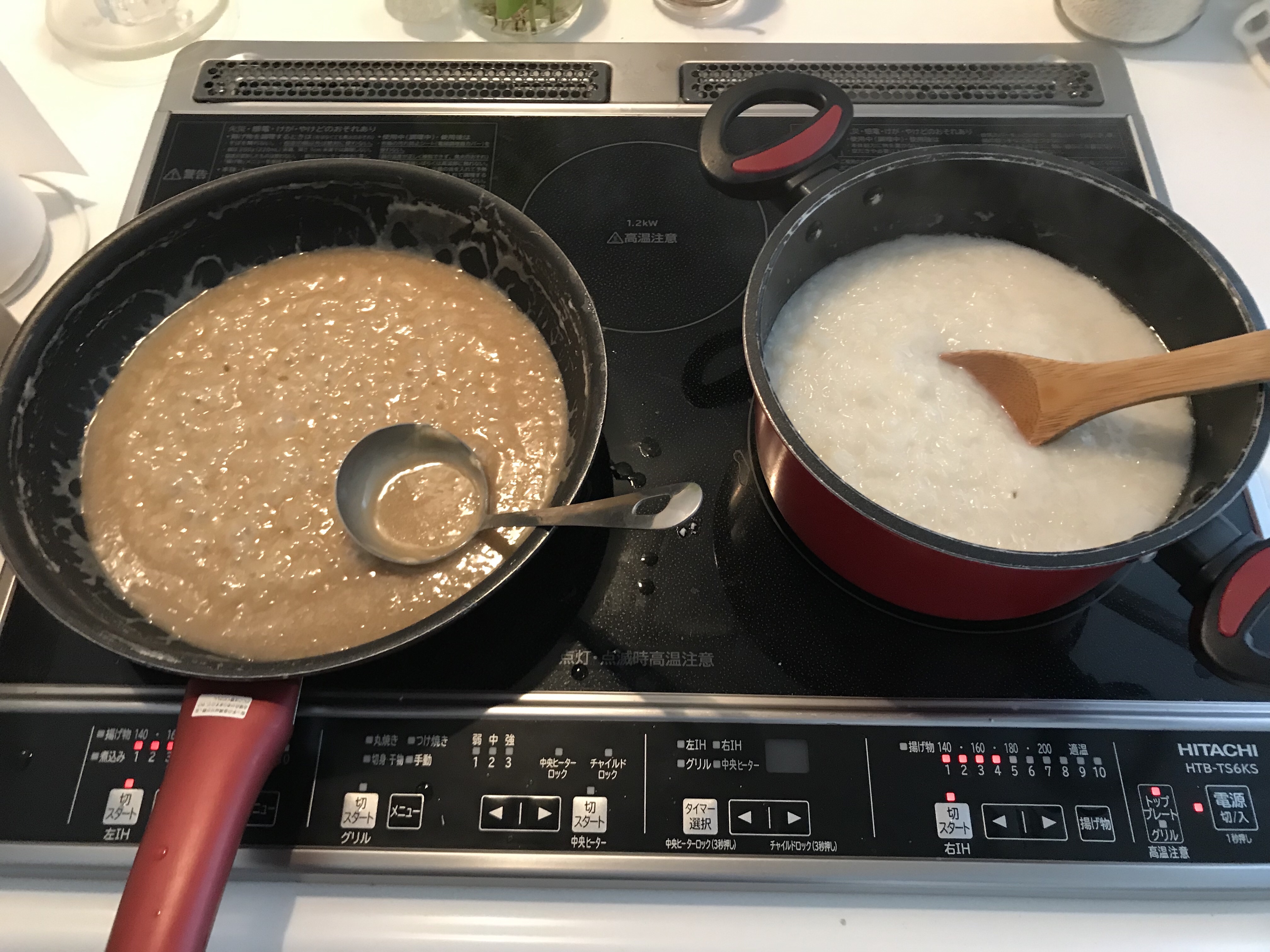
    3. Put 1.5 cups of white sugar into one pot and 1.5 cups of brown sugar into the other. Turn on the stove to low-medium heat.

    4. Bring to boil the coconut milk with white sugar and put the cooked glutinous rice into it. Mix until liquid is absorbed. (I had to turn off the stove and wait for the rice to cook).

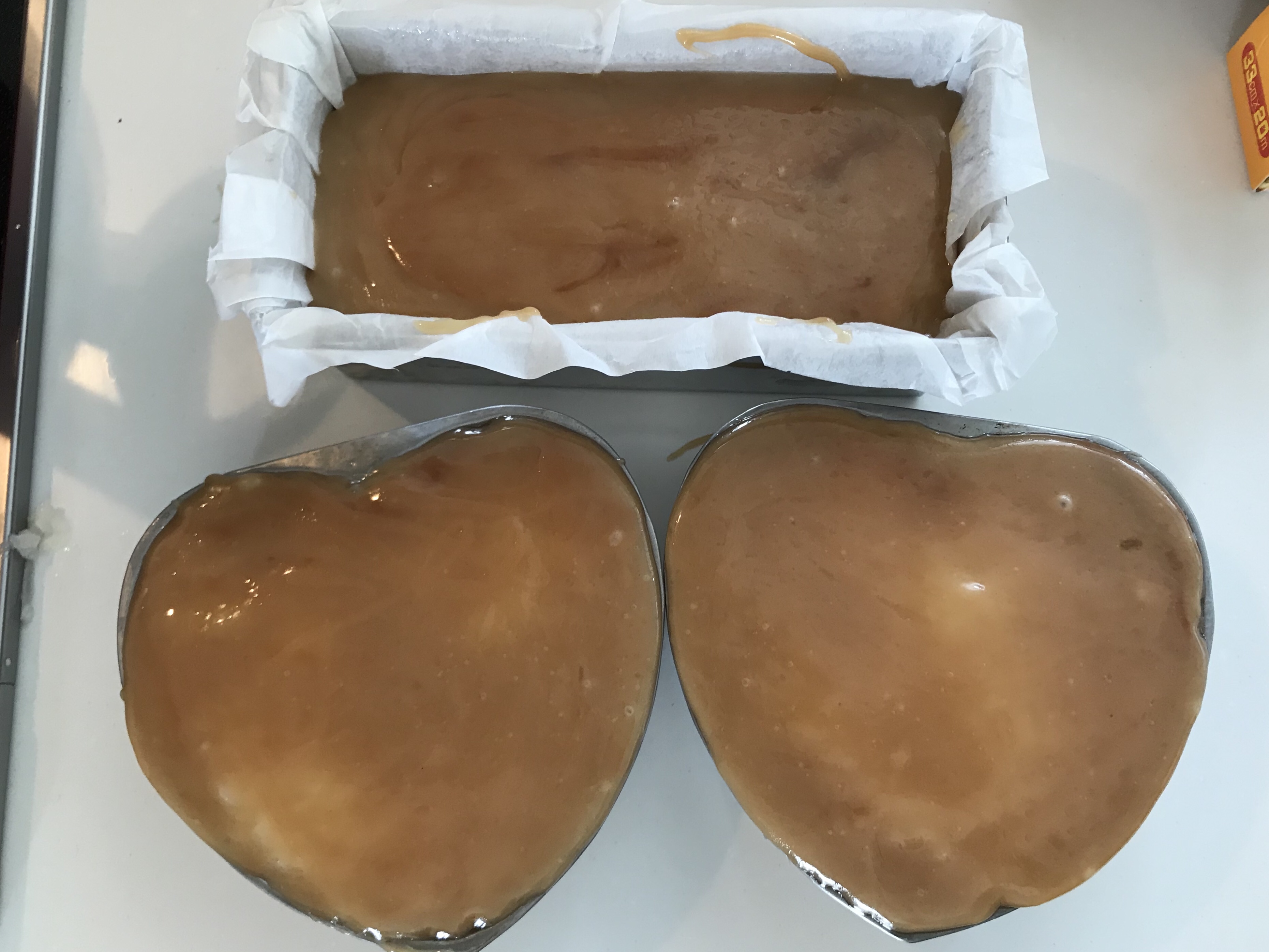
    5. Simmer the coconut milk and brown sugar mixture. Keep stirring in low heat until it gets sticky and brown.

    6. Put the rice in a container and pour latik on top. (I did not have the right container so I just used my leche flan heart molder and another rectangular cake tray. I also did not have banana leaves to put on the tray so I just used parchment paper.)

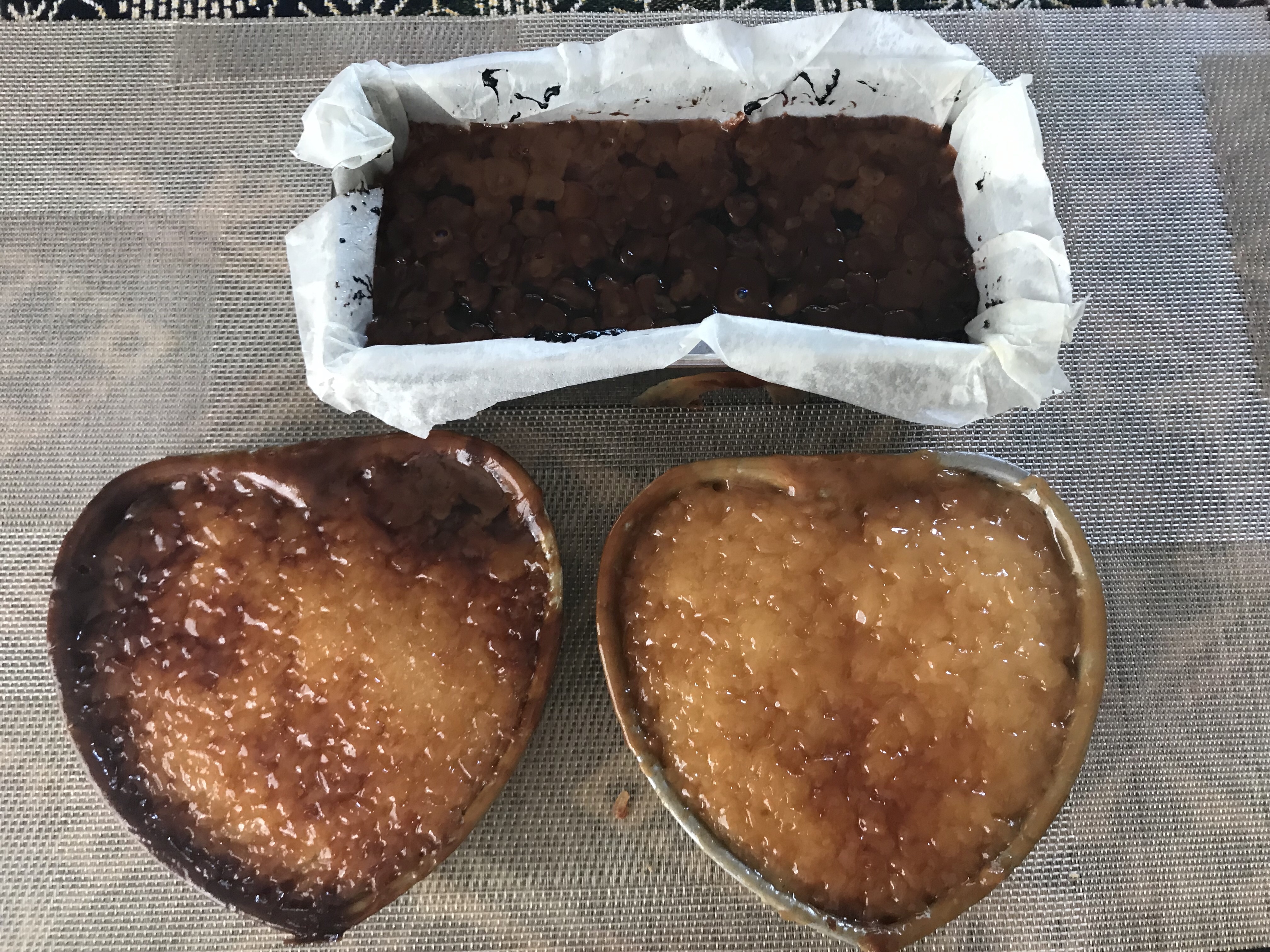
    7. Bake for 30 minutes at 380 degree Fahrenheit. I used our air fryer so it’s a preset function. I just chose “Bake” function.

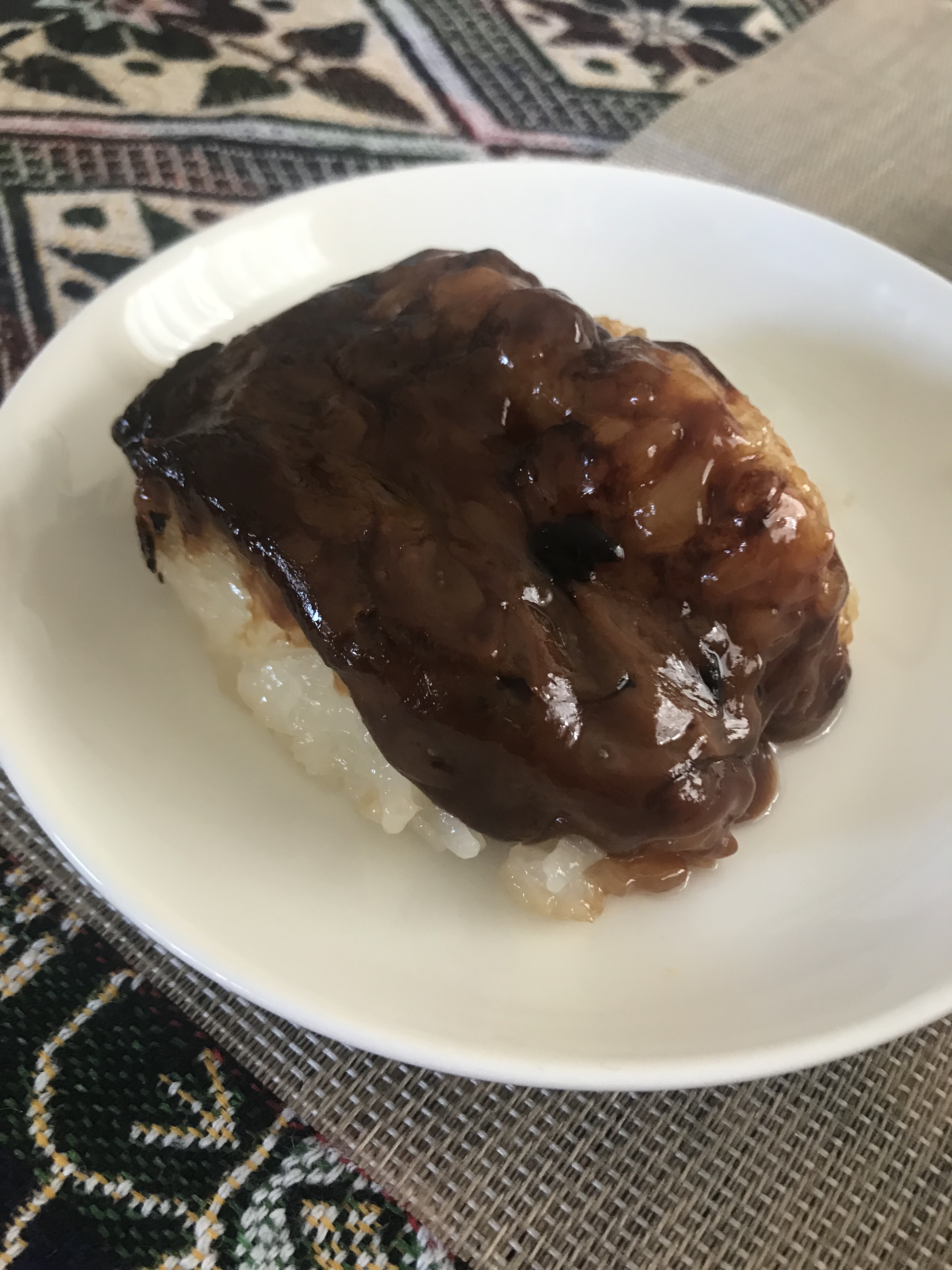
    8. Let it cool and enjoy.

    Things I wished I should have done

    1. I should have mixed the rice and coconut milk and sugar mixture longer and waited it to dry a little bit.

    2. I should have used a bigger container and only fill it half with rice so there’s space for the latik. Mine just flowed out of the heart molder and left a mess in our air fryer oven.

    ……………………………………………………

    There you go. My first time making biko with latik on top. Not bad but I could have done better. Till next time.

  • My Breastfeeding Story

    My Breastfeeding Story

    I thought I had already gone through the most difficult part when I delivered my baby until I started breastfeeding.

    I never thought breastfeeding will give me so much emotions – pain, happiness, love. I was too focused on pregnancy and giving birth and no one really told me about the beauty and struggles of breastfeeding.

    In the beginning, breastfeeding is very hard and very painful, as painful as labor pains or even more (at least for me). There was even a time I just wanted my breast cut off. I felt electrocuted, or like a hundred ants nibbling my nipples.

    The first weeks are the most horribly painful part but it gets better as time goes by.

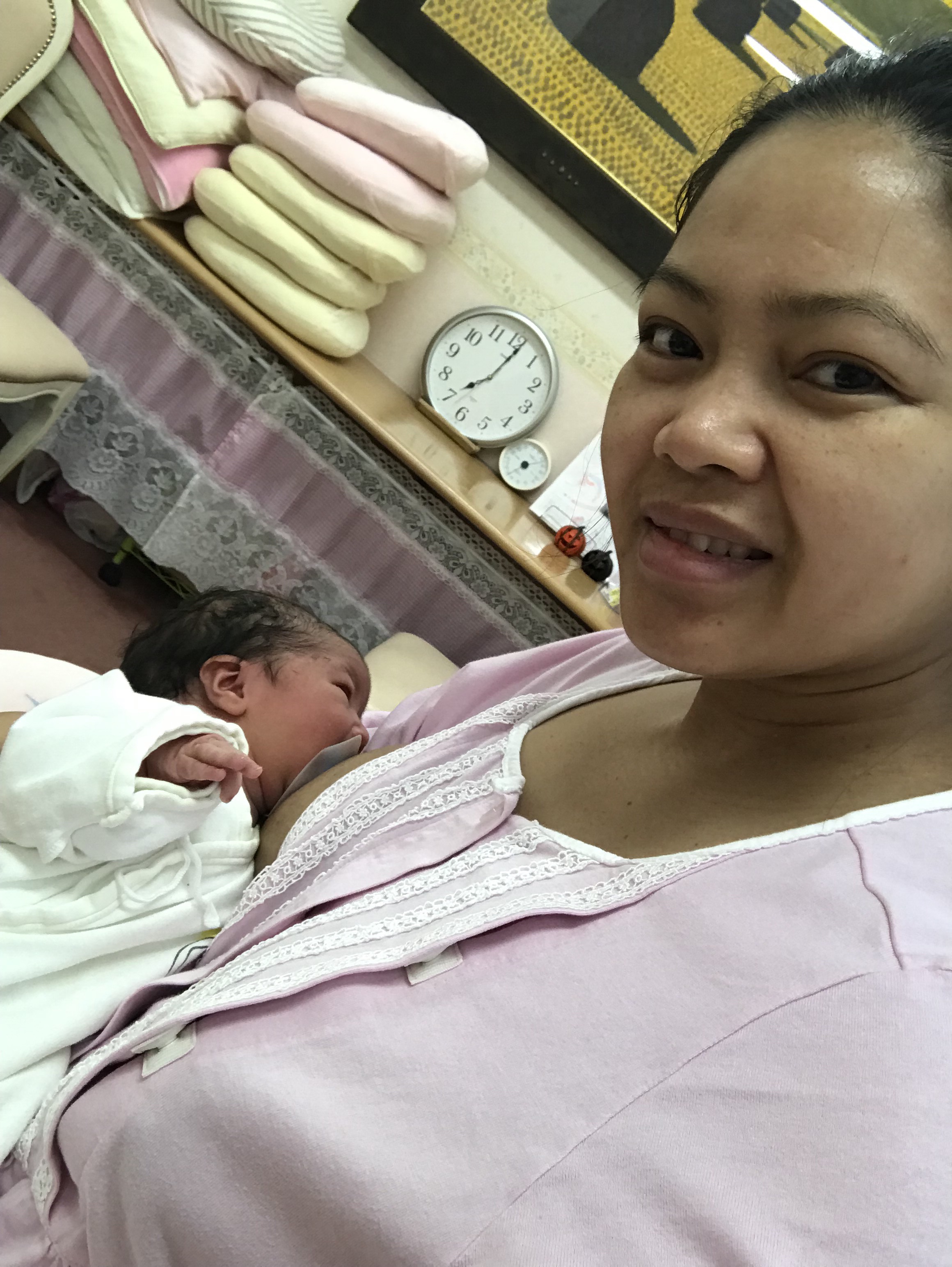
    Our very first breastfeeding session 10/23/2019 7a.m, the day after delivery

    Below are some of my breastfeeding experiences I would like to share and only breastfeeding mothers can relate.

    1. When baby was still too small to master the latch and her daily struggles to latch literally cut my nipples to bleed. Nipple shield on the rescue.

    2. When I forget to switch. One side orange , one side coconut.

    3. When baby cluster feeds, feeds for hours, feeds constantly and never gets satisfied. It makes me wonder the amount of my milk supply. Is my breastmilk sufficient enough?

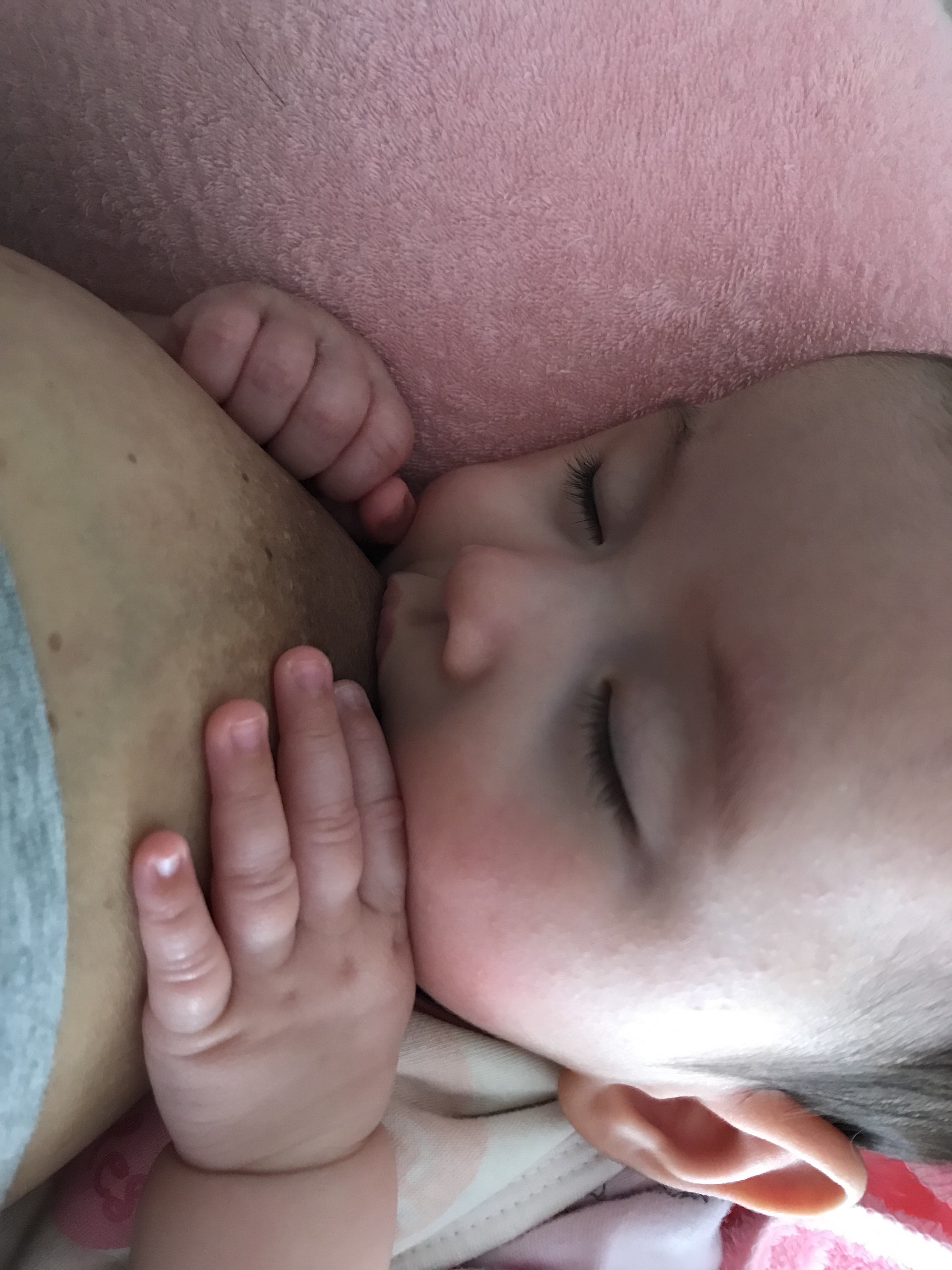
    4. When baby likes to massage, pinch, scratch and squeeze my boob with her little hands while breastfeeding and worse I forgot to clip her nails.

    [wpvideo WF0zPOSK ]

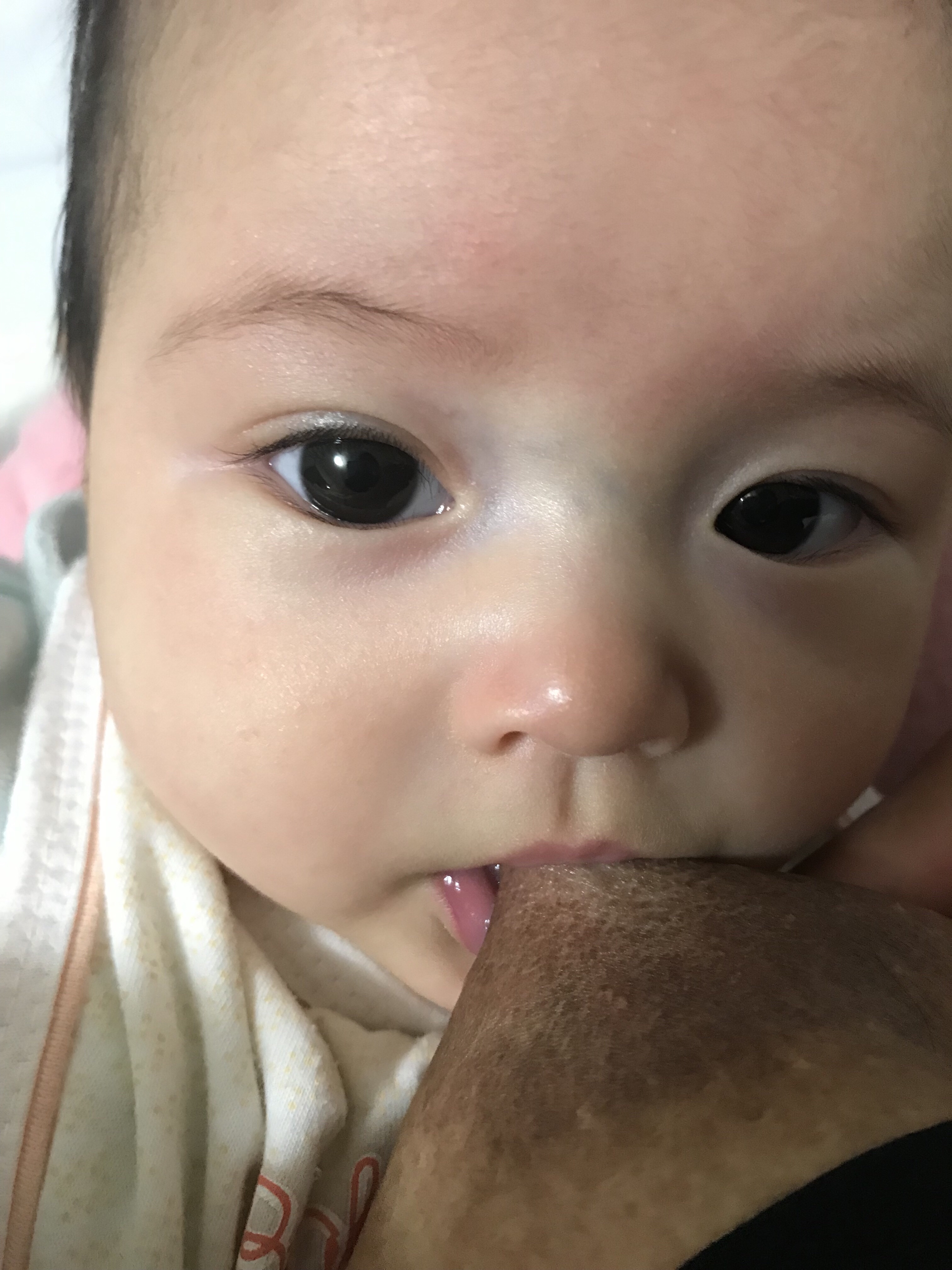
    5. When baby is so distracted with the surroundings so feedings take hours to finish. Baby stares at the ceiling, the light, the walls, or my face.

    6. When I want to use the toilet but I’m in the middle of breastfeeding.

    7. When I thought baby is in deep sleep so I try to unlatch only to see her suck hard as if saying “No, I’m not sleeping and you can’t take out the booby from me.

    [wpvideo iUmlKp9b ]

    8. When the mailman delivers a package and needs my sign but I’m breastfeeding and there’s no one else in the house, just baby and me.

    9. When baby coos while breastfeeding.

    [wpvideo BRSiZIAW ]

    10. When baby poops while breastfeeding yet continue to feed.

    11. When baby sleeps for long hours I get very full breast, clogged nipples, rock-hard breast, chills. I’m half dead. Mastitis it is. Thanks for the nurses in my clinic for the breast massage. It really helped.

    12. When baby won’t sleep without booby in her mouth. I’m a human pacifier.

    13. When baby bites and pulls the nipple.

    14. The midnight feedings. Sleepless nights are so real and six to eight hours of continuous sleep is only a wish.

    …………………………………………………..

    My baby is still three months and three weeks as of writing and I’m not even half of my desired breastfeeding journey.

    Even how hard and painful and difficult breastfeeding in the beginning is, I am very grateful and happy to be able to experience this.

    Not all women can be a mother and not all mothers can breastfeed.

    There is a very special feeling that flows with my breastmilk from me to my daughter. A special bond, a baby’s survival, a mother’s unconditional, selfless love.

    To all new moms who are struggling with breastfeeding, in pain, ready to give up. Don’t. Rest assured your glory days will come.

    Now, I enjoy breastfeeding. I love it. I love the feel of my baby in my arms. I love how she needs me. And I hope I can continue to breastfeed her as long as I can, as long as she wants.

    Kudos to all breastfeeding moms.

  • Why most Japanese people don’t speak English well?

    Why most Japanese people don’t speak English well?

    You might be surprised and ask yourself this question when you visit Japan for the first time.

    Having lived in Japan for many years now, I would like to share my thoughts on this matter. There are many reasons why Japanese people don’t speak English well.

    1. Japanese Sense of Nationalism

    First of all, I observed that Japanese people are very nationalistic. They love everything about their country and they are very proud to be Japanese. I am sure I am not the only English teacher here who encountered a student who resists learning English and says ‘Why do we have to speak English? We are Japanese!’ or ‘This is Japan! Speak Japanese!’

    2. Music Culture

    Learning English songs is one way to speak English fast. We learn phrases and new words through the lyrics. It helps us memorize lines and learn pronunciation naturally.

    While we in the Philippines are very familiar with English songs and foreign singers as the influence of American music is strong, Japanese have their own strong music trend and popular bands and singers. I was surprised that nobody knew Bruno Mars or his song ‘Count on Me’ among my students, young and adults as well. When I played ‘Always’ by Jon Bon Jovi, it was their first time to hear it. Or maybe my choice of music is just bad. Well, I just played the songs I like and I thought everyone knows it. Well, not in Japan.

    The influence of Korean artists, the K-pop groups is stronger than American music in Japan. I remember the phrase ‘Korean invasion ‘ that we used when we went crazy over Korean dramas in the Philippines. I was one of those who watched Jewel in the Palace, Full House, and many other Korean dramas. In Japan, it’s not Korean dramas but K-pop singers. This makes some Japanese especially the younger generation, interested in learning Korean rather than English.

    3. Shy Culture

    Learning a language is learning a culture. Most Americans and foreigners in general, are assertive and expressive people. They speak their minds and are not afraid to voice their opinions, using language as a tool. On the other hand, most Japanese are rather reserved and shy. They keep their opinions to themselves. They rather follow and listen than question. Very passive. While we were trained to orally participate in class in my elementary and high school years, I observed that it’s not very much the practice in Japan. Teachers mostly dominate the classes thru lecture method and employees seldom raise questions during meetings.

    4. Perfect English Concept

    “If you can’t speak English right, better not speak at all.” I’ve heard this line many times already. Even in my country. Many Japanese and second language learners are afraid to make grammatical mistakes when using English. Being looked down awaits to those who dare to. “It’s embarrassing.” In this case, many prefer to say nothing. Closed lips. Mum. Sshhh.

    5. English is taught mainly in Japanese

    Whether it is in elementary, junior high school, senior high school or university level, do not be surprised if one day you observe an English class, fully taught in Japanese. The books are in Japanese, discussions in Japanese, tests are in Japanese, what else is left? Greetings? That, too, is surely in Japanese. “Kirits! Rei! Onengaishimasu.” If there are institutions that use English, it’s very few and it’s not all English. Maybe 70-30, with Japanese as majority.

    6. English Teachers Don’t Speak English

    Not once, not twice but many times, I encounter a Japanese English teacher who blatantly (sometimes proudly) admit they can’t speak English. Yes. You read it right. I was so surprised the first time I heard it. Of course not all Japanese English teachers are proud non-English speakers. Most of them can actually speak (they studied it in the university ) but won’t. It goes back to the sense of nationalism and the perfect English concept. Why speak English when they are all Japanese and they are in Japan? English Department Teachers meetings are, of course, conducted in….Japanese.

    7. The Need to Speak English

    In the Philippines, there is a need to learn and speak English. Elementary and high school subjects like Mathematics, Science and English are taught in all English. In the university, all subjects except Filipino are taught in English. If you apply for a job, you have to have good English communication skills to have an edge and land a decent job. Many Filipinos go abroad to work, in which the universal language, which is English, is used.

    On the other hand, in Japan, all subjects are taught in Japanese. If they master the Japanese honorific language which is used in the business world, that is sufficient enough. Only recently that companies want employees with English speaking skills. Most Japanese are not interested in working abroad. Not even go visit English speaking countries. Some of my students in a little bit challenging junior high school told me why they don’t like English. They love Japan. They live and work in Japan. They listen to Japanese songs, watch Japanese dramas and movies. Why do they need English? Not even interested in having foreign friends/boyfriends/girlfriends. If there are those who are very interested in English, and have all the reasons to learn the language, only a few.

    These are only my opinions and observations based on my own experience in staying and living in Japan for some time now. If you have your own, don’t hesitate to share.

    To my Japanese friends and other ESL learners, who wants to speak English, I have some tips for you.

    1. Don’t just study but speak it. Just like driving, you have classes to learn the basics, but you will never know how to drive if you don’t get into the car and actually drive it. English (and any language you are learning) is the same. Speak it to learn it.

    2. Don’t be afraid to make mistakes. Even the native speakers commit mistakes. Ask yourself: Do I speak my mother language the proper way? Oftentimes no. We don’t. Language is a tool. It is used to communicate. To connect. What’s a small mistake will do but make you learn and become better. It is the mistake that we remember and learn to not make it wrong again.

    3. Accept that we are not perfect. If we don’t speak English perfectly, that means we speak another language, not just English. We are bilingual or multilingual. Take pride of that gift.

    4. Discover your interest in the foreign culture. Most often than not, the reason why we want to learn a language is our interest to learn the culture. It might be music, food, religion or tourism. Before, I had no interest in learning Spanish but when I discovered we have many similar words, that’s when I got so interested in the language. I also fell in love with Latin telenovelas and music. I love Thalia!!! As for my interest in Japanese, I love how interesting Japanese people are, their discipline, their politeness. And the beauty of Japan never ceases to amaze me.

    Speaking a foreign language or not being able to is not what’s the most important point. What matters most is our understanding and openness why some people do speak and some people don’t. No hate. No judgement. Just realities we have to face when we step into a new culture.

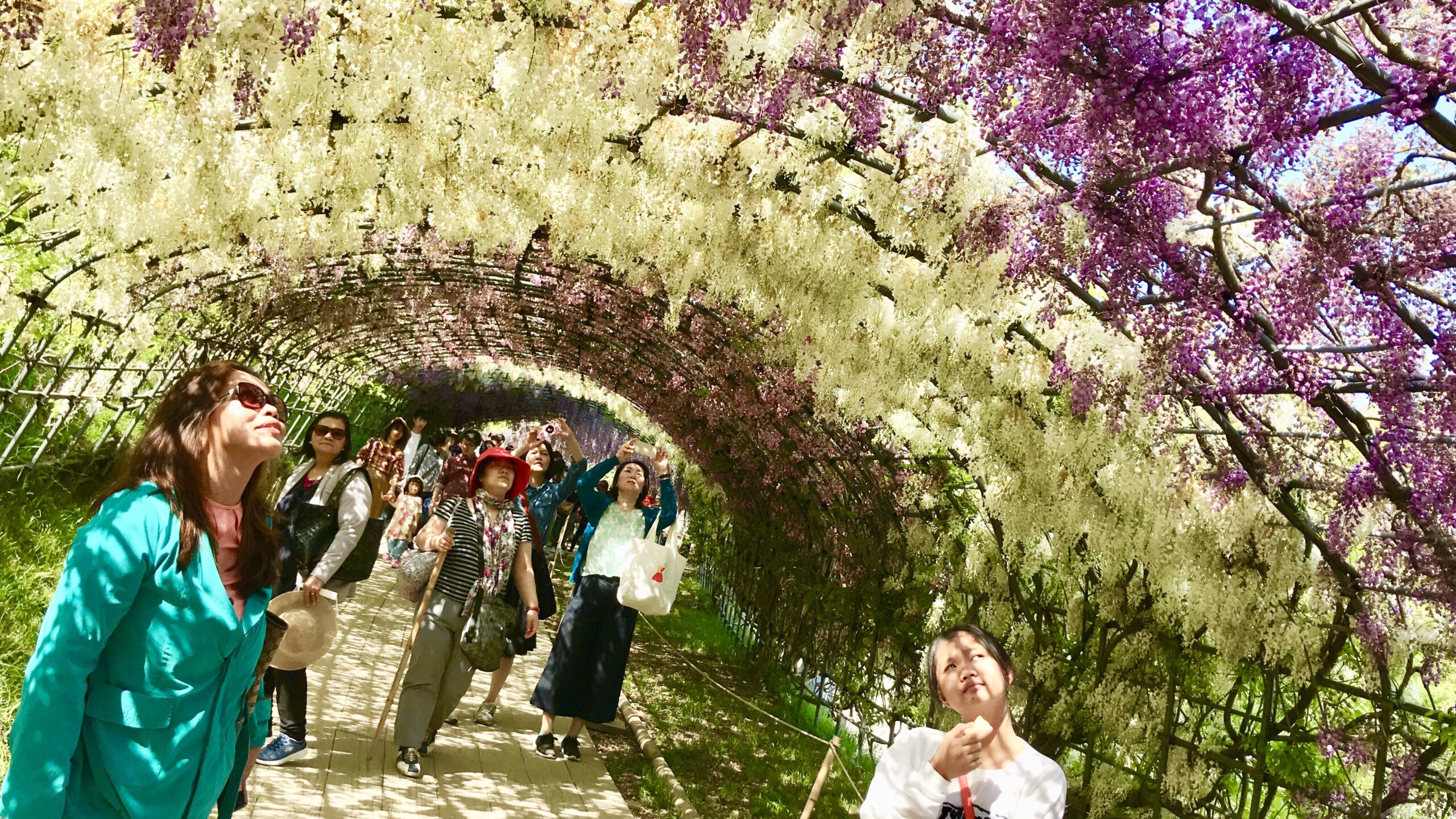
    Wisteria Gardens in Kitakyushu, Fukuoka Prefecture, Japan
  • New Year’s Celebration in Japan and the Philippines

    As a Filipina living in Japan for many years now, I can compare how New Year’s Day is celebrated in both countries. There are few similarities and many differences between Philippines and Japan celebrating New Year’s Day that I would like to share according to my observation and experience.

    Decorations and Preparations

    In the Philippines, whatever is decorated for Christmas will be carried over for the New Year’s. In fact, the greetings “Merry Christmas and a Happy New Year” is commonly displayed in houses, offices, shops, restaurants and malls.

    To welcome the year, a tradition of displaying 12, which is recently changed to 13 round fruits – we call the lucky fruits on the dinner table on New Year’s Eve, is practiced in the Philippines. 12 represents each month and 13 represents an extra month which means abundance. Round signifies infinity, no beginning and no end of good luck and good fortune. Round objects are considered lucky so it is common to see people wearing polka dots. Round and sweet foods like leche flan, puto cheese, kalamay are considered lucky.

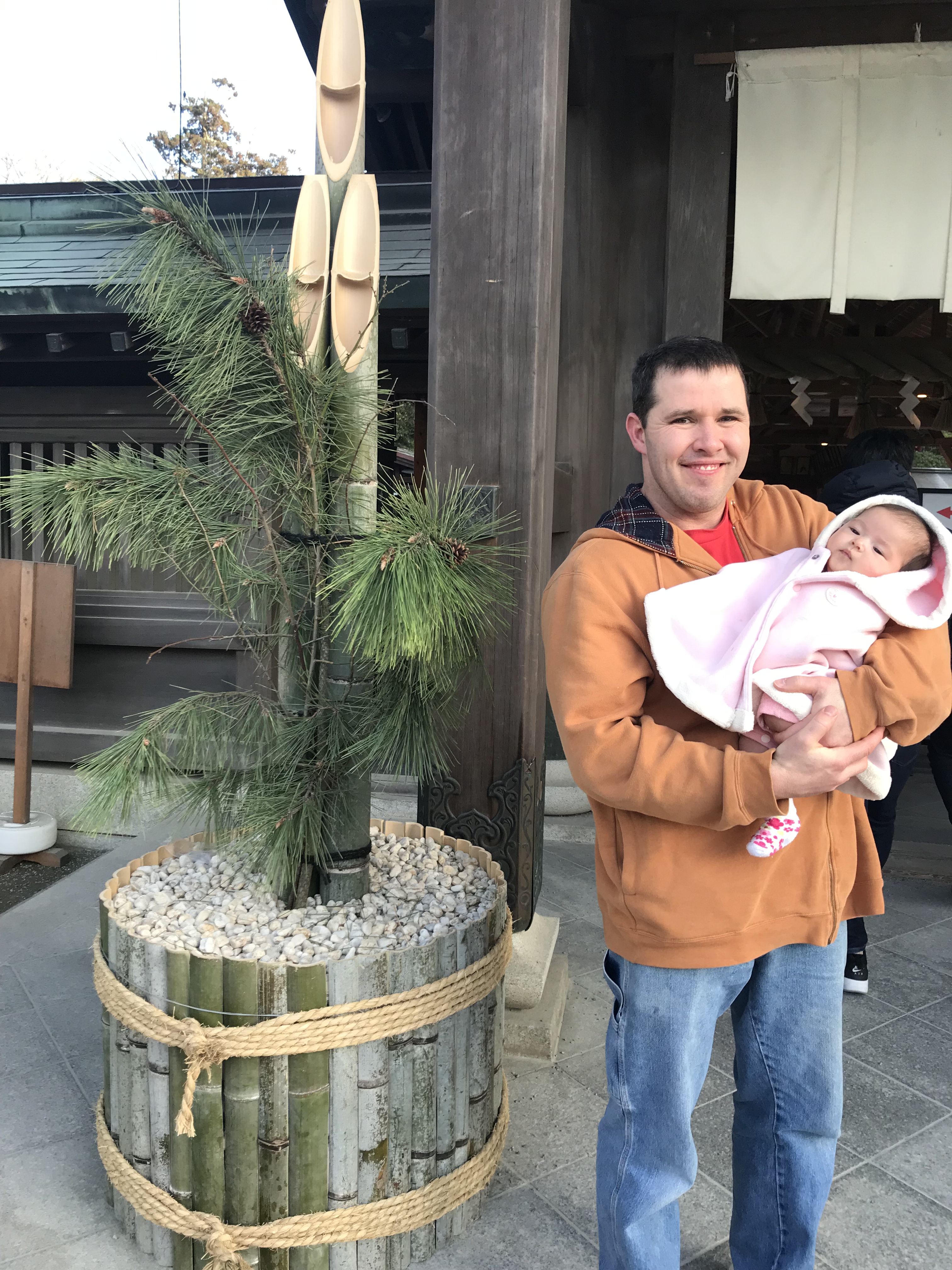
    In Japan, New Year’s is the biggest event of the year. Japanese start preparing for the New Year’s by doing a general cleaning which they call osoji. People clean their houses and offices from the main door to the windows, waxing floors , bathroom and everything in between. Shimenawa (sacred straw rope) also called shimekazari and kadomatsu (bamboo and pine decoration) are seen in main doors and gates. Shimenawa are seen in shrines all throughout the year but houses only display these in New Year’s season. There is also kagamimochi (mirror rice cake) and a display of the year’s animal symbol. These decorations are believed to welcome the ancestral spirits and gods to enter the home.

    Kadomatsu at Munakata Shrine

    Food

    In the Philippines, people rush to the market at the break of the dawn on the 31st and expect the supermarket to be flooded with shoppers to prepare for media noche. There is a long list of food prepared for media noche but the regulars are lechon (whole roasted pig), pansit (noodles), lumpia(spring rolls), fried chicken, macaroni salad and spaghetti and of course the lucky fruits. Mostly people prepare food that are either round and sweet and those believed to make the year lucky and abundant.

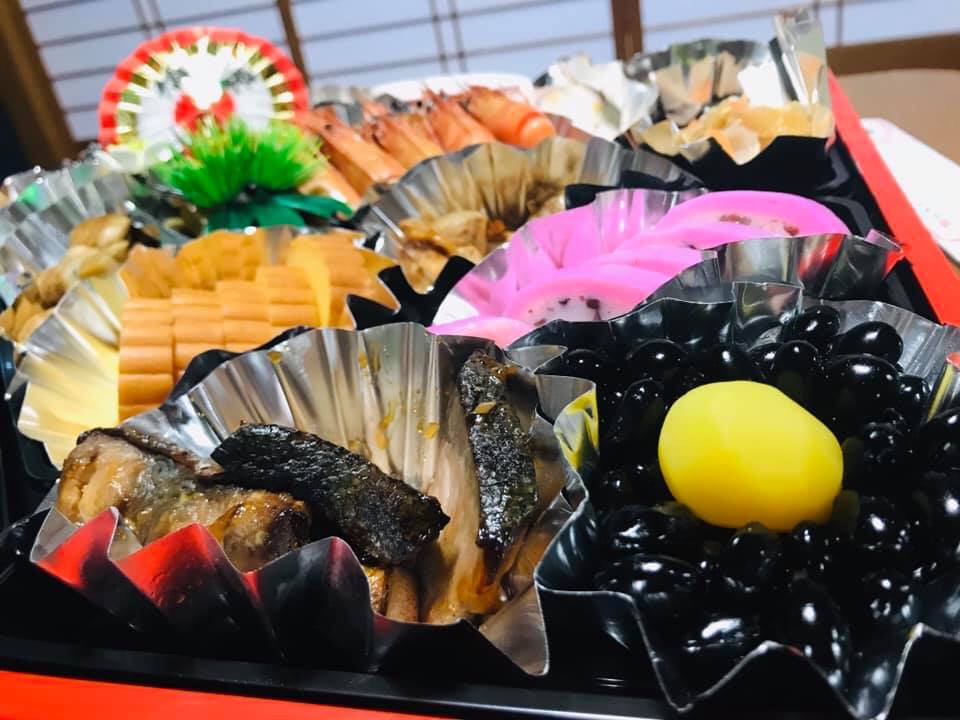
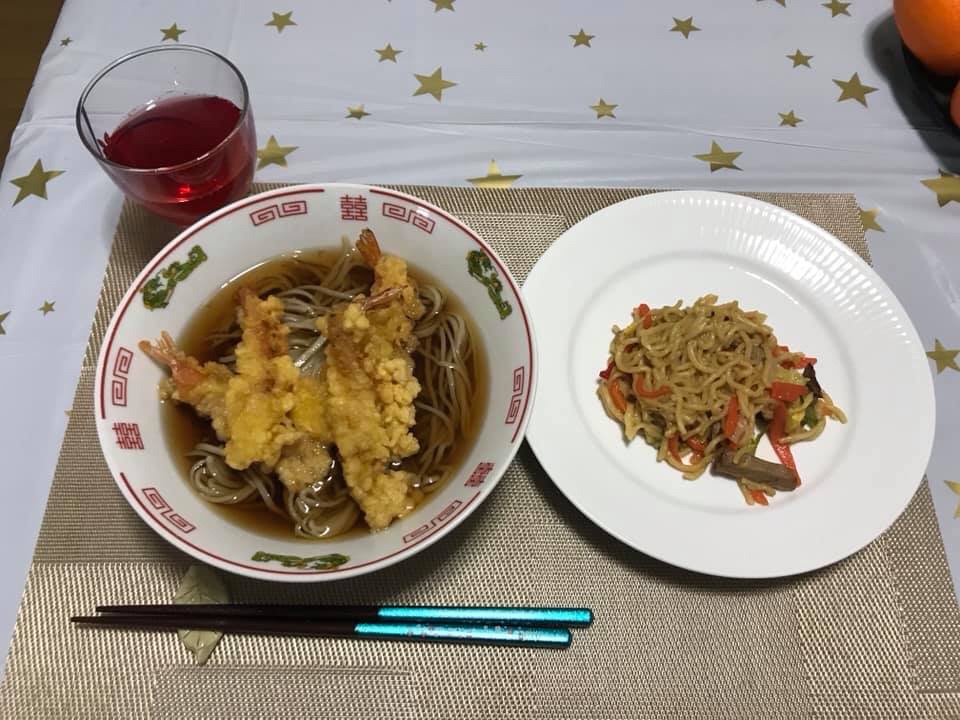
    In Japan, there is toshikoshi soba and osechi ryouri. Toshikoshi soba is eaten on New Year’s Eve as a symbol of crossing to a new year. Osechi consists of many different kinds of food in a box. Each food carries a meaning. For example, shrimp means long life as the shrimp is curved like an old person.

    Our first osechi ryouri in our house 2018-2019
    Toshikoshi soba (Japan) on the left and pansit (Philippines) on the right

    New Year’s Eve

    It’s hard to keep up with the energy of the Filipinos when it comes to welcoming the new year. The most exciting countdown begins hours before midnight ( three more hours, two more hours, one more hour) and the closer it gets, the higher the energy and the louder the noise. Party starts when darkness hit or even before that. The neighborhood turns into karaoke bar and disco bar with people drinking and dancing on the streets. The ten minutes before 12 and the first ten minutes of January first is the noisiest, loudest, craziest, happiest time of the year. Before the ten-second countdown, people scream of excitement, get ready to jump (for those who wants to get tall), turn on all the lights in the house, turn on the car or motorcycle engine, blow the horns incessantly, get something even the pot cover to make noise. Everyone counts the last ten seconds “10-9-8-7-6-5-4-3-2-1! BOOM! The fireworks, the blowing of horns, the noise of cars and motorbikes, the jumping, the dancing, the shouting “Happy New Year” is endless. You don’t say it once, nor twice, nor three times. You say it to everyone in the house and to the neighbors. People go crazy with New Years. And many goes live on Facebook. It is believed that noise shoo the bad lucks. Some people wear polka dots (rounds objects are lucky), put coins in their pockets and shake them to make noise, and sometimes throw coins for the people to catch (rain of money – paulan ug kwarta). And after the countdown is the feast. Everyone gathers in the dinner table for the media noche.

    This scenario might not be the same in the entire Philippines. I am speaking of my experience and my neighborhood and I am sure many can relate.

    I remember the first time my husband spent New Year’s in the Philippines, he couldn’t stand the noise. It was too much for him it gave him headache. He wanted to go somewhere quiet but I told him, it’s the same everywhere we go.

    On the contrary, in Japan, New Year’s eve is a very silent night compared to the Philippines. All is calm, all is normal.

    Last year I spent New Year’s in our newly-bought house (the reason why we spent New Year’s in Japan). I was kind of disappointed or let’s say frustrated. It was just me, my husband and our daughter (my step daughter). Yes, we had our special dinner. I cooked special menu. But when it was almost 12 o’clock my energy as a Filipino was really high, I was the only one who was very excited to welcome the new year. I turned all the lights in the house, went upstairs and downstairs. I got really excited. But when I looked outside the window nobody was there, it was a very silent night. I was like a burning fire thrown a bucket of water. This is not the Philippines. This is Japan. But I’m not saying Japanese don’t celebrate. They do but in a different way.

    Most people in Japan go back to their jikka (実家) or parents’ home to celebrate. On New Year’s Eve, Japanese eat toshikoshi soba and greet each other ‘akemashite omedetou gozaimasu’ (Happy New Year). They don’t normally do countdown at home, but you can go to clubs/bar in the city where the young party people go and party like there’s no tomorrow and welcome the new year. That’s how I spent New Year’s in Japan in 2014. It is a peaceful and simple celebration at home. On the 31st, after doing the general cleaning (osoji) and preparing or buying the special food osechi ryouri , most Japanese families gather and watch NHK’s Kohaku Uta Gassen or commonly called kohaku. This is a TV program where Japanese singers are divided into competing teams of red and white. This finishes shortly before midnight and judges and audiences vote which group perform better.

    Some people visit temples and shrines. At the temple, or if you live nearby, you will hear the bell ringing on New Year’s Eve. This is called joyanokane (除夜の鐘). They ring the bell for exactly 108 times at New Year’s Eve which symbolizes 108 human sins in Buddhist belief.

    First Day(s) of the Year

    It is very common for Filipino families to go swimming on January first or anytime during the first days of the week.

    Family Samal Outing 2017

    The party and merry making continue. Left-over lechon will turn into lechon paksiw. There is also a belief that whatever you do on the first day of the year will forecast what will happen for the rest of the year. If you wake up late on January 1, expect that you will always wake up late. If you spend, you will always be spending. If you cry, then your year will be full of tears. In bisaya, we say “malihian“. My mama would say to us to do good things on the first day of the year and we will be lucky the whole year. “Magpalihi ug swerte.” She also told us not to spend a single cent or else money will fly away and we will keep spending the whole year and we will go broke. Lol.

    In Japan, it is very famous to watch the first sunrise of the year (hatsuhi/hatsuhinode) and people go to temples or shrines to pray (hatsumode).

    [wpvideo JxWGAn34]

    The first day of the year is one of the happiest days for children because they get otoshidama, which is money gift from parents and relatives. People flock to the stores for its hatsuuri (first sales) and buy their fukubukuro (lucky bags). These lucky bags are sold for a certain price with random unknown things inside. The total value is more than the sale price.

    If you notice – hatsuhi, hatsuhinode, hatsumoude, hatsuuri, all starts with hatsu. It’s because hatsu (初) means first and that is how Japanese values and enjoys the “firsts” of the year.

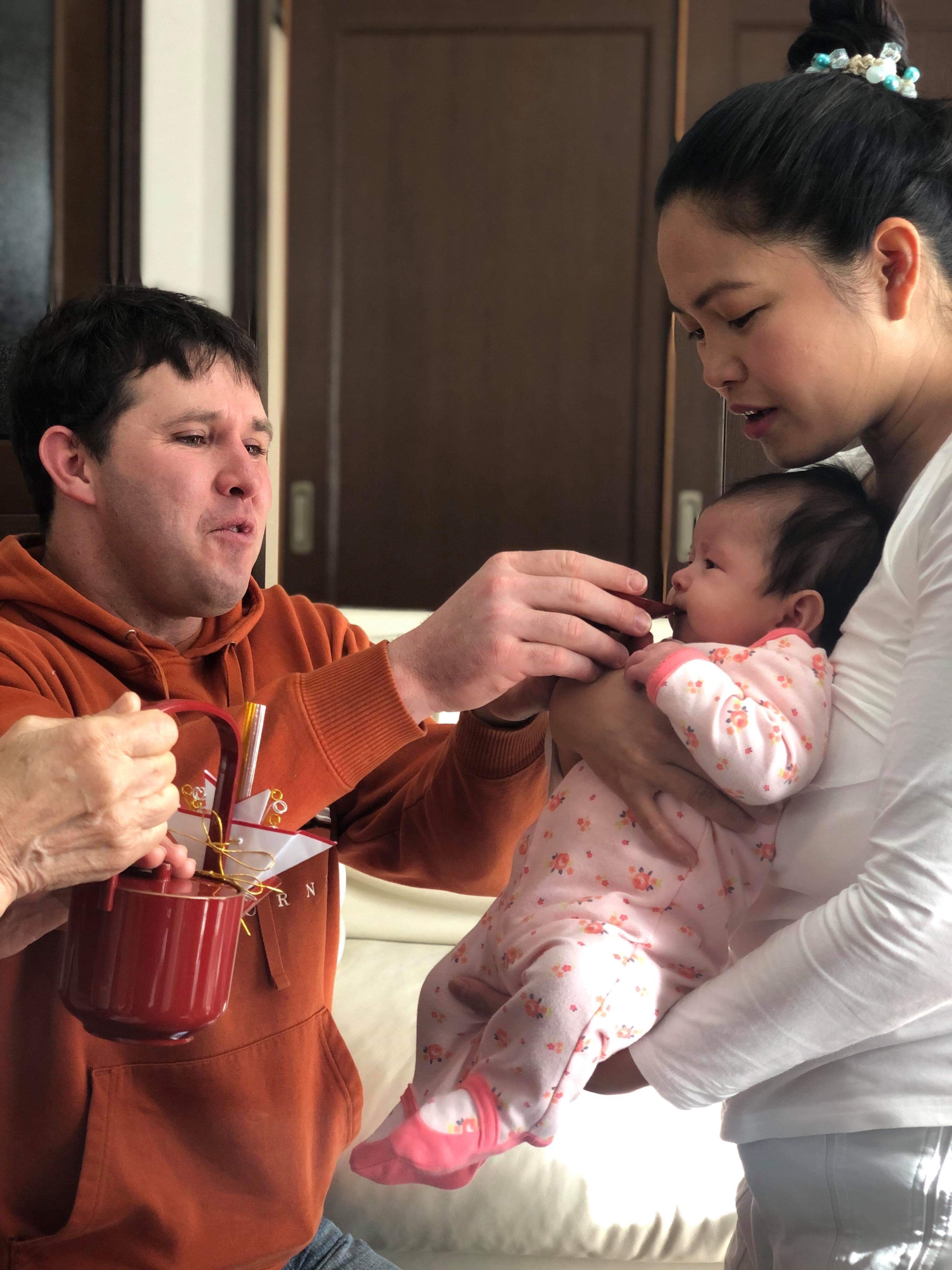
    My sister’s Japanese family gather on the first day of the year in the parents’ house and review the year that passed. They also express their aspirations for the new year and they drink otoso (お屠蘇) New Year’s sake. The drinking of otoso starts from the youngest in the family up to the oldest.

    Mari ‘s first new year and first otoso

    Conclusion

    New Year’s is the most celebrated event around the world. It doesn’t matter where you are from or what race you belong. People celebrate New Year’s regardless of religion.

    Both Filipinos and Japanese celebrate it. Both value the gathering of families to welcome the new year. It is in the same manner that most go back to their parents’ home to celebrate and do things (although done differently) to attract good fortune for the whole year to come. Filipinos party and make noise to welcome the new year while Japanese enjoy the firsts of the year. Although the food prepared is entirely different, they share the idea of good luck, hope for good health and longevity.

    If you ask me which celebration I prefer, I am sure I will have a hard time answering your question. It is hard for me to choose. Of course, there is no place like home. I like to celebrate this event with my family, with the merriment, with parties left and right, with the noise of excitement and bliss. But I also like the simplicity, the practicality, and the idea of enjoying the firsts of the year.

    If you have reached this part, thank you for your time reading this article. I hope you enjoyed it and learned something from it and I hope you enjoyed your New Year’s celebration where ever in the world you are from.

    Happy new year!

    Akemashite omedetou gozaimasu!

    あけましておめでとうございます!

  • My Childbirth Story

    The Big Day – a Holiday

    October 22, 2019, Tuesday, the day I gave birth to my precious daughter. I was 38 weeks 6 days pregnant. This day was also the Enthronement Ceremony of Japan’s new emperor, a special holiday in Japan.

    Surprised

    I never expected to give birth that day. I was caught off guard. My due date was the 30th of October and I kept telling my baby to come out on the 26th, Saturday (as if she would listen to me :-)), because my husband would be off work he would be there for me. I did not do any exercises to prepare me for delivery for I was waiting to hit 39 weeks. I had been reading articles and most articles said that babies delivered 39 to 40 weeks are much more healthier in later life than those delivered earlier (37-38 weeks 6 days). Indeed the doctor was right when he said nobody knows when the baby would come. I had been having pains and contractions the past few weeks. Braxton Hicks is what they call it. My belly bump would turn really hard like a solid ball. I remember the doctor said ( as what I understood with his gestures) during the childbirth seminar that during pre-labor, the belly bump would turn as hard as a wall.

    The Visperas

    The night of the 21st, I was not feeling good at all. I had a slight headache and I didn’t want to eat. I had no appetite. In the kitchen after dinner , seeing me tired and looking exhausted and in pain, my husband said that the day will be the following day, the 22nd, to which I disagreed. I didn’t even think it would be possible. I was confident that I will reach 39 weeks. Although the past days, the contraction was getting me. My back hurt and my tummy was hard at random times. I didn’t believe him at all because I didn’t feel that it would be really happening the following day.

    At the bed when we were going to sleep, baby in my tummy was extra active. She was making my tummy wave. She moved up and down, right and left. I took a lot of videos using my phone and even my husband’s phone.

    [wpvideo 24keycHo ][wpvideo eCPfn8EH ][wpvideo kwdghABS ][wpvideo eTOKlSjV ]

    The Dawn

    Around 2:30 in the morning, I woke up to pee, which I usually does. My back was still painful. After a few minutes the pain didn’t go away. It stayed. I went back to bed but then after a few minutes later I felt like I want to poop and I was back in the toilet again. I felt very uncomfortable with my tummy and my back. I really couldn’t sleep that morning. I was back-and-forth to the toilet and the bed. I pooped like four times. I was tossing left and right on the bed just to ease my feelings. My husband noticed me and he also couldn’t go back to sleep. I started counting the contractions and timing it using the app on my phone.
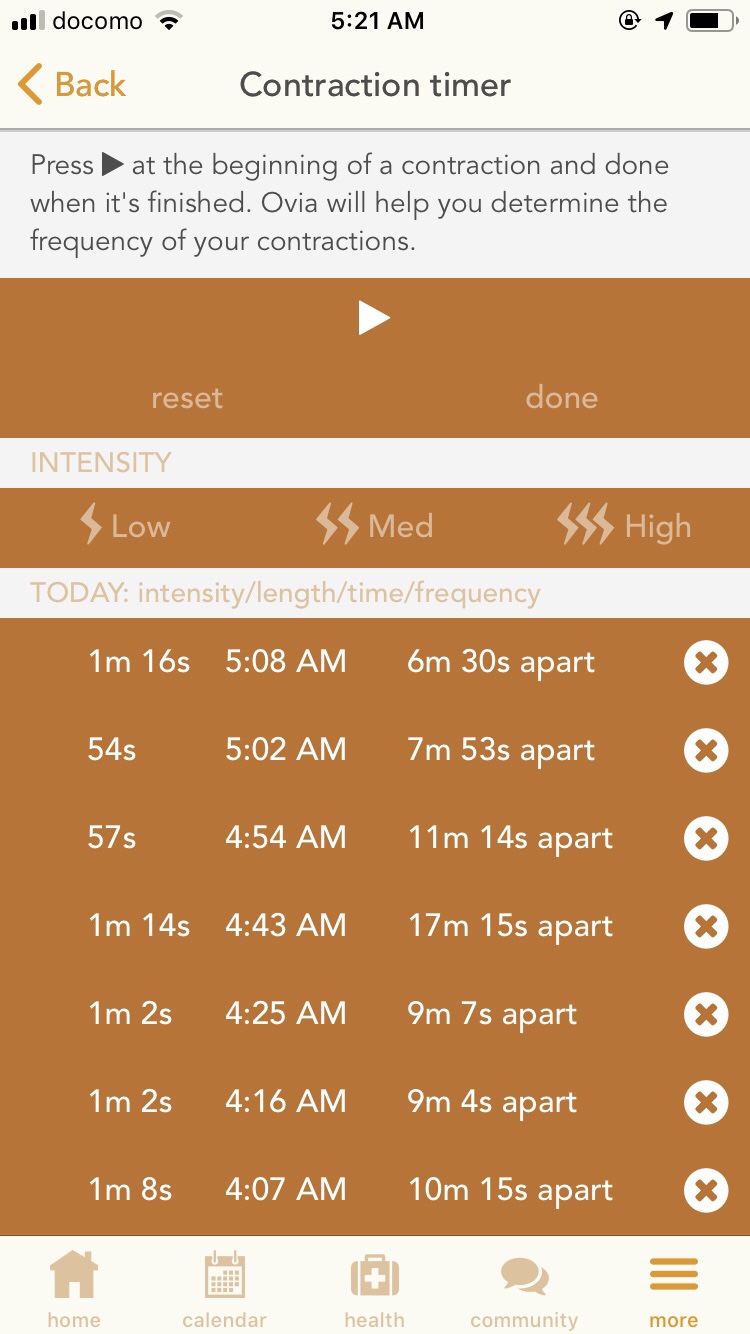
    At the back of my head I thought this is still pre- labor. I will still reach that 39 weeks. Just one more day. Not that day since it was a holiday. I didn’t want to pay extra. And I didn’t want to pay extra for going outside of clinic hours. Lol! I thought I was still in control. But no, I wasn’t. My baby was.

    The Bloody Show

    Around five in the morning when I peed and wiped, I noticed there was bloody mucus in the tissue (sorry for TMI). That was the first time for me to see that in my entire pregnancy. That’s when I thought that it was it. It was that day we were waiting for.

    The Call

    Around six in the morning I called the clinic and told the nurse I was in pain. She asked me when it started, for how long the pain was, how many minutes will it take me to get to the clinic, and finally told me to first, just relax in the house.

    Around seven in the morning I got a callback from the clinic and the nurse told me to come. So I changed clothes and my husband too and we went downstairs to get ready to go. I told my mama who was still sleeping in the Japanese room with my sister Lea that I was going to the hospital that morning. She was surprised because like me, she also never expected it to be that soon. That very day.

    The Magic Oil

    Before leaving to the clinic I went to pee again and there was more bloody show. Even more in quantity.

    And before we forget (mama reminded me) to use the snake oil (lana sa bitin) to rub on my tummy. Well, my husband didn’t know about it (sorry babe ;-/) and I didn’t let him know because I didn’t want any discussions about superstitions and such. (In bisaya, walay mawala kung mutuo) LoL. You’ll lose nothing in believing.

    Arrival at the Clinic

    We got at the clinic at around 7:30 in the morning and since it’s out of office hours, I had to press the doorbell so the nurse who was on duty in the second floor would come down to open the door for us. She asked me if I could walk. Of course I could walk. The pain was not really that bad and it comes and goes. The nurse led us to the second floor towards our private room. We were at room 8, nearest to the lounge/eating room.

    The Preparation

    I was told to change clothes and put on the clinic-provided robe and waited for the nurse to come back. After settling in our room the nurse came back and told me to go with her in the Labor and Delivery Room (LDR) just a few meters away. There they cleaned me down, shaved clean and made me excrete whatever in my intestines, I mean large intestines. You know what I mean, right? And it was this time I learned the word kancho. 🙂

    The road to 10 cm

    After cleaning and preparation I was asked to just lay on the LDR bed. Then a nurse came and told me she’s going to check my cervical dilation. This is one of the many painful parts of labor. The nurse inserted I don’t know how many fingers in my vagina and God, it hurt! Really bad. She’s not just inserting but moving her fingers right left up and down. That’s what I felt.

    The first check I was already 4 cm. And from time to time a nurse would come to me and check again. Imagine the pain every time they check me. It was a hard road I had to go through.

    But I also had moments when there was nothing. No pain. I was just on the bed. Laying flat and talking to my husband who was with me all the time. I could even use my phone and was updating my family through Facebook messenger. My sister was surprised I was in labor and messaging them at the same time.

    [wpvideo D5KZ6vJm ]

    [wpvideo djNrpOsh ]

    In between cervical dilation checking and rest were labor pains. I felt like my back was beaten by an angry ogre. Trying to be funny in the middle of pain, I kept saying “Babe, this is Breaking Back” not “Breaking Bad” the Netflix series.

    The pain was unbearable, unexplainable, unimaginable. I can’t even remember now that I’m writing this. The nice thing was the older nurse told me that if there’s no pain there is no baby. That helped me a lot. Pain means baby. The more pain I feel, the closer I get to see baby.

    When I was finally nine cm (that was around 11:30 to 12 noon), I couldn’t understand what I felt. It was like my back was torn into pieces. I wanted to poop so I kept telling the nurse let me go to the toilet. But they won’t let me. They said it’s the baby. They readied me for delivery – moved my bed to where I could bend my knees and open my legs wide. There was a handle on the sides where I was told to grab and pull. The nurse rehearsed me how to push. She said when I feel the pain, I have to take three deep breaths, hold the third and push for ten seconds.

    Finally, the nurses called the doctor. I was so scared to see him because I knew he was going to cut me down there.

    The Push

    When the doctor was finally in front of my widely open diamond, I knew it was happening. This was the moment I have been imagining my entire pregnancy and even before that. I am going to deliver a baby!

    I could feel that doctor touched me inside and boom! The water flowed! That was my water breaking. The doctor told me to look him in the eye and spit the baby into his face. I didn’t know if he was trying to be funny or what. I was just moaning in pain and catching my breath on the bed with my husband on my right and three nurses assisting the doctor. Sometimes the doctor would say something but I couldn’t understand because I waste consumed with the pain I felt. I had to ask my husband to translate what the doctor said.

    I was instructed to push hard when I feel the pain but the problem was I had weak pains. I didn’t know when to push and how to push. The first time I push was not a push at all. The older nurse said that “She is not pushing. She is just holding her breath.” So the younger nurse told me that pushing is just like passing some hard stool. That was what my older sister and mother told me.

    They could see through the monitor if my tummy was contracting and they would tell me that was the time to push. Minutes and minutes passed I only felt weak pain. I tried to push and push and practice pushing until it was just really painful I could hardly do it. At the back of my head I said I couldn’t do it anymore. I heard the doctor asked something from the nurse on his left to help the baby come out. And another nurse, the older one, pushed my tummy to help the baby out. Everyone was sweating. I was wondering if neither me or my baby would survive. And then I felt an extra strength. I’ve been through a lot to have this baby and I just had to do this miraculous push. This life-giving push. I wanted to see my baby. I just had to give my all. When I was pushing I could hear my husband said “She’s coming! She’s coming. I can see her. ” That is what really helped me to just keep on pushing even if I felt that my lungs and brain would explode any moment.

    The Cry

    After the hardest and longest push I did in my whole life, I felt something pass through the opening between my legs and I heard a baby cry. My baby was born. I was conscious but I couldn’t see her I only could see the doctor and the nurses doing something down there. One nurse reminded my husband that it’s time to take videos and pictures and so he hurried and went beside the doctor to take videos. After a few minutes I saw the nurse ,the younger one , took the baby to the table on my right. And I could see the baby crying. I was expecting for them to bring the baby to my chest but it didn’t happen. One nurse was doing something to the baby checking her throat and I don’t remember what else.

    The Moment I Saw My Baby

    I was still on the LDR bed with my legs still open. The doctor with three nurses cleaned my precious diamond. During that time, I was just looking at my baby. I was still in shock how could a baby that size came out of me, how could she fit inside of my tummy. I was amazed at the miracle of pregnancy and birth. Most women who give birth say they felt this happiness they can’t explain when they first saw their babies but for me, it was more of amazement and disbelief. I was proud and happy I did it.

    The Stitch

    I thought that after delivering the child, it was over. But no. I laid on the bed for more than an hour with the doctor and nurses “fixing” and “cleaning” my vagina. Childbirth is like a powerful tornado that damaged national roads and highways. When the doctor was stitching me down there, I just felt so exhausted the nurse thought I collapsed and unconscious. They called me by my surname “Mo-gan-san!”. Yes. Morgan becomes Mo-gan(モーガン) in Japanese. They kept telling me to stay awake. I was so pale and weak.

    When I held my baby

    After stitching the cut, they let me rest on the bed and they finally gave me the baby. She was so tiny and cute. I noticed her cute little nails. Her face was still kind of swollen from the amniotic fluid I guess. Here’s that moment:

    [wpvideo JvT0aVAk ]
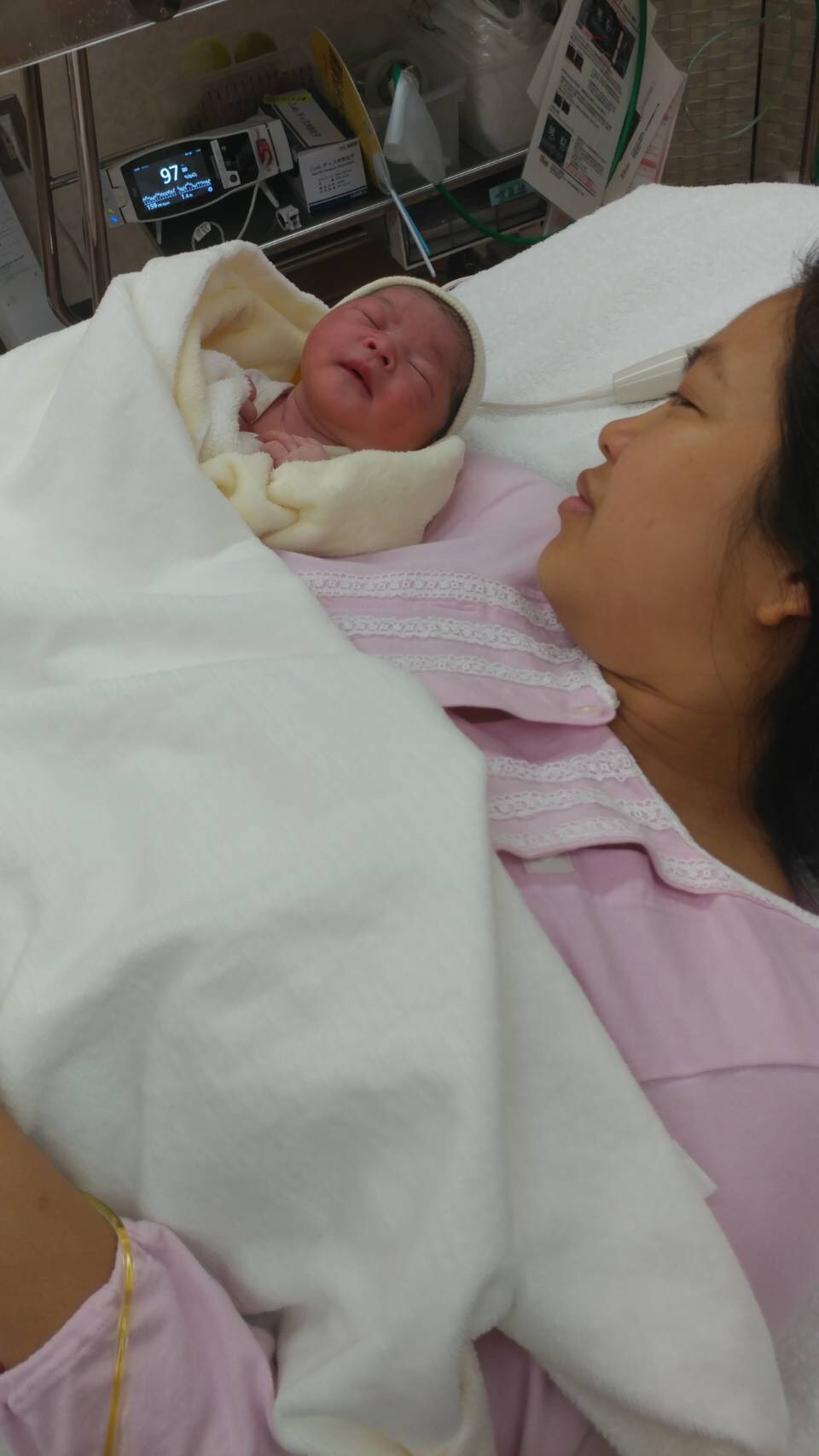
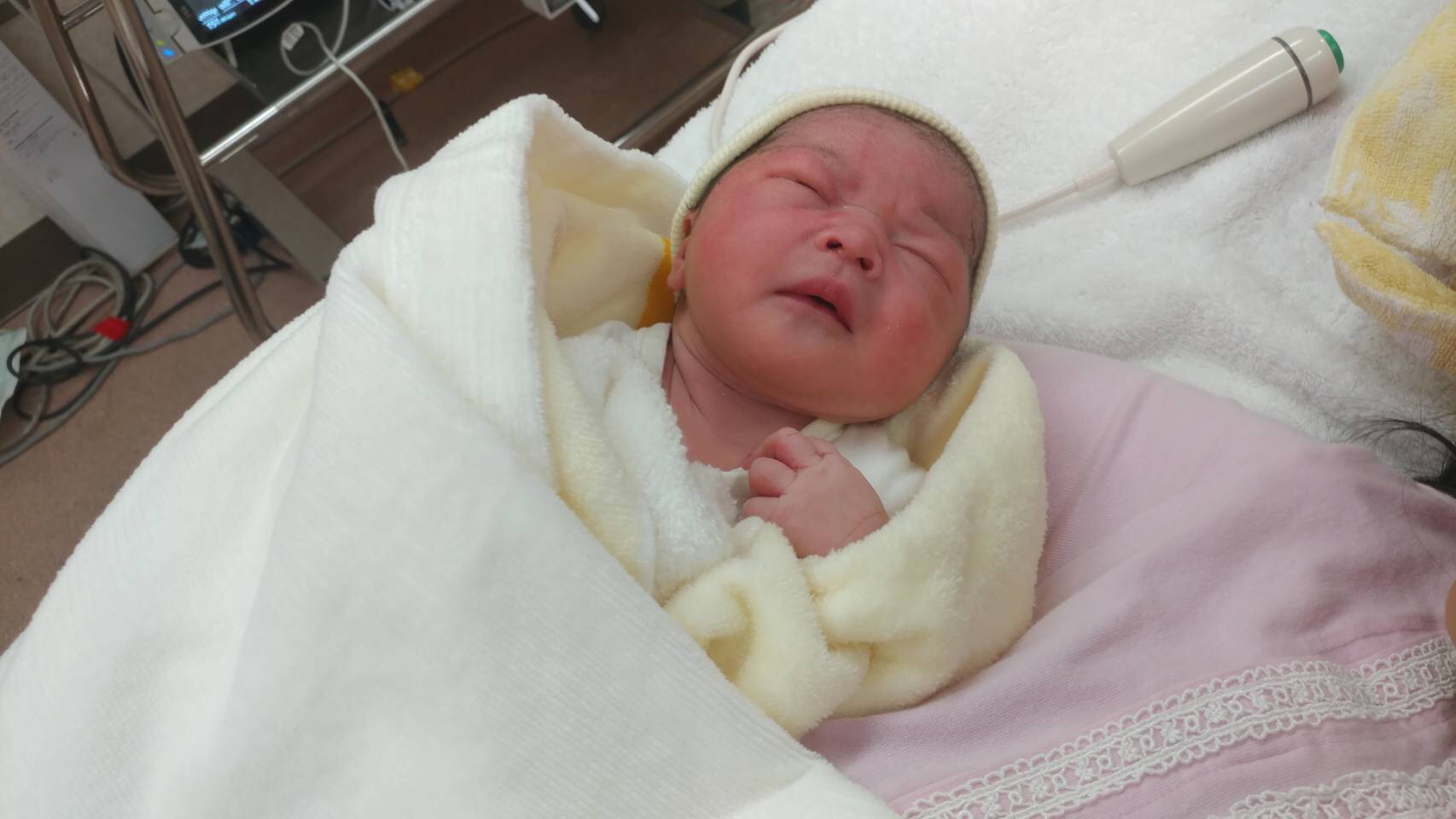
    That moment it still did not sink in that I was a mother already. I was still shocked and amazed of what I’ve been through.

    The After Effect

    I felt hungry I wanted to eat. It was already past 2 pm. They brought inside my lunch in a tray and they helped me sit down on my bed. The moment I started eating, I felt dizzy. I could only had a spoon of rice and I was back on the bed. I felt terrible. I felt very cold that I was shivering. Very cold that my mouth would shiver. That was the coldest I felt in my entire life. They covered me with blankets and electric blanket. The one that heats up to keep me warm. They also turned on the heater. It was a terrible after effect.

    The Visitors

    Minutes later my family (mother and sisters) came to visit but sorry I was not the star. Lol. I just realized it’s all about the baby now. “Where’s the baby?” “I wanna see the baby.” “Oh, she’s so cute! What a darling” and I was on the bed laying still weak and pale. I told my husband that everyone wants to see the baby but not me. Maybe it was just my hormones lol. My mother was worried about me but my husband assured them he’s going to take care of me and I’ll be fine. The nurse let them hold the baby they took turns. They did not stay long since I needed to rest.

    Back to my Private Room

    After hours of resting in the LDR, they finally took me back to my room. They helped me get into the wheelchair coz I was still in pain. I couldn’t barely move my hips and my bum just felt heavy. I looked like I was left in the open during strong typhoon. That night I just rested. My husband also stayed with me. The clinic gave him an extra bed in the room.
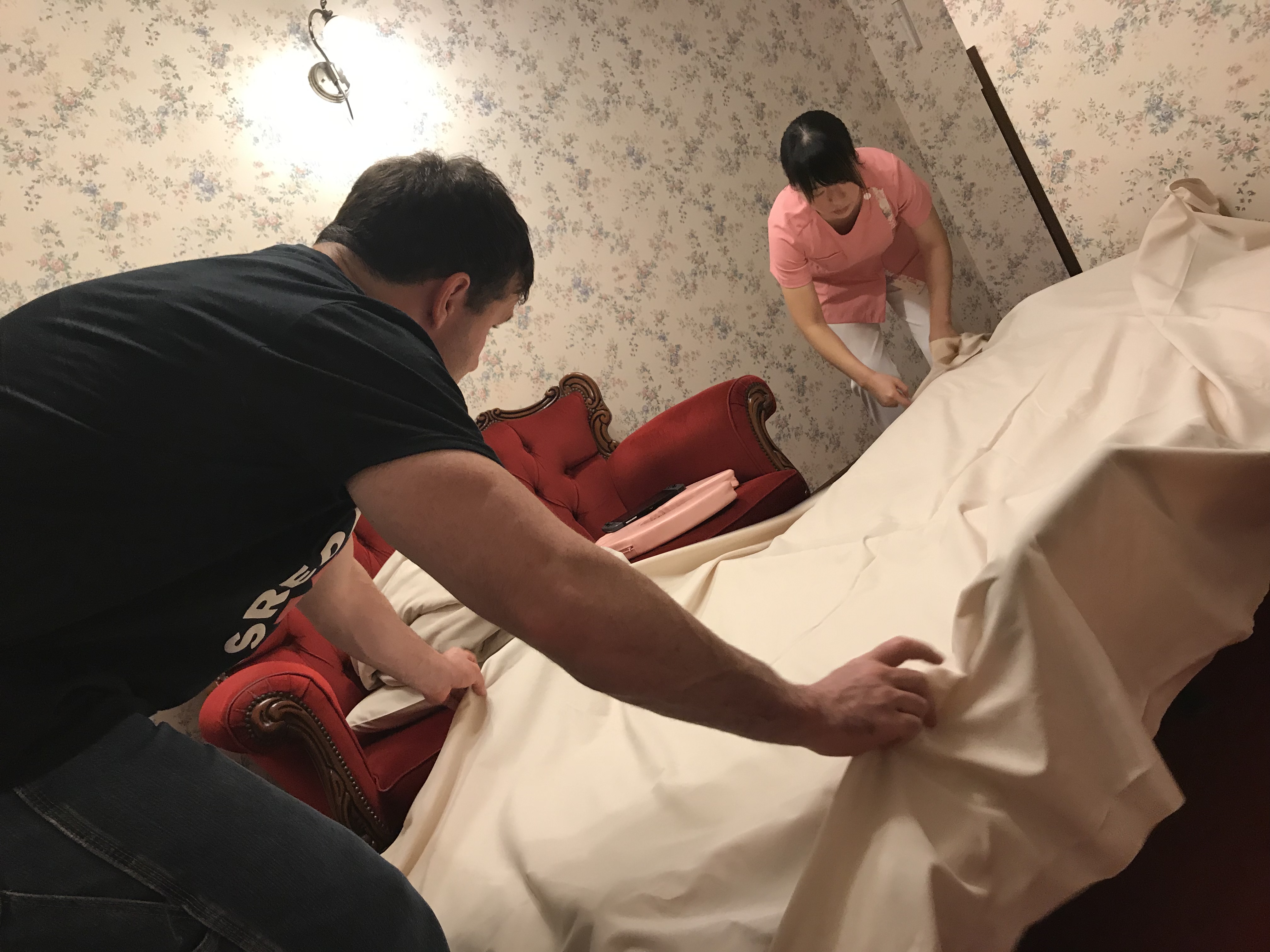
    Before we went to bed, my husband kept going back and forth to the viewing room. He kept watching the baby. That time, we were the only one in the clinic. He felt sorry for baby for being alone in that room.

    The next morning – first breastfeeding

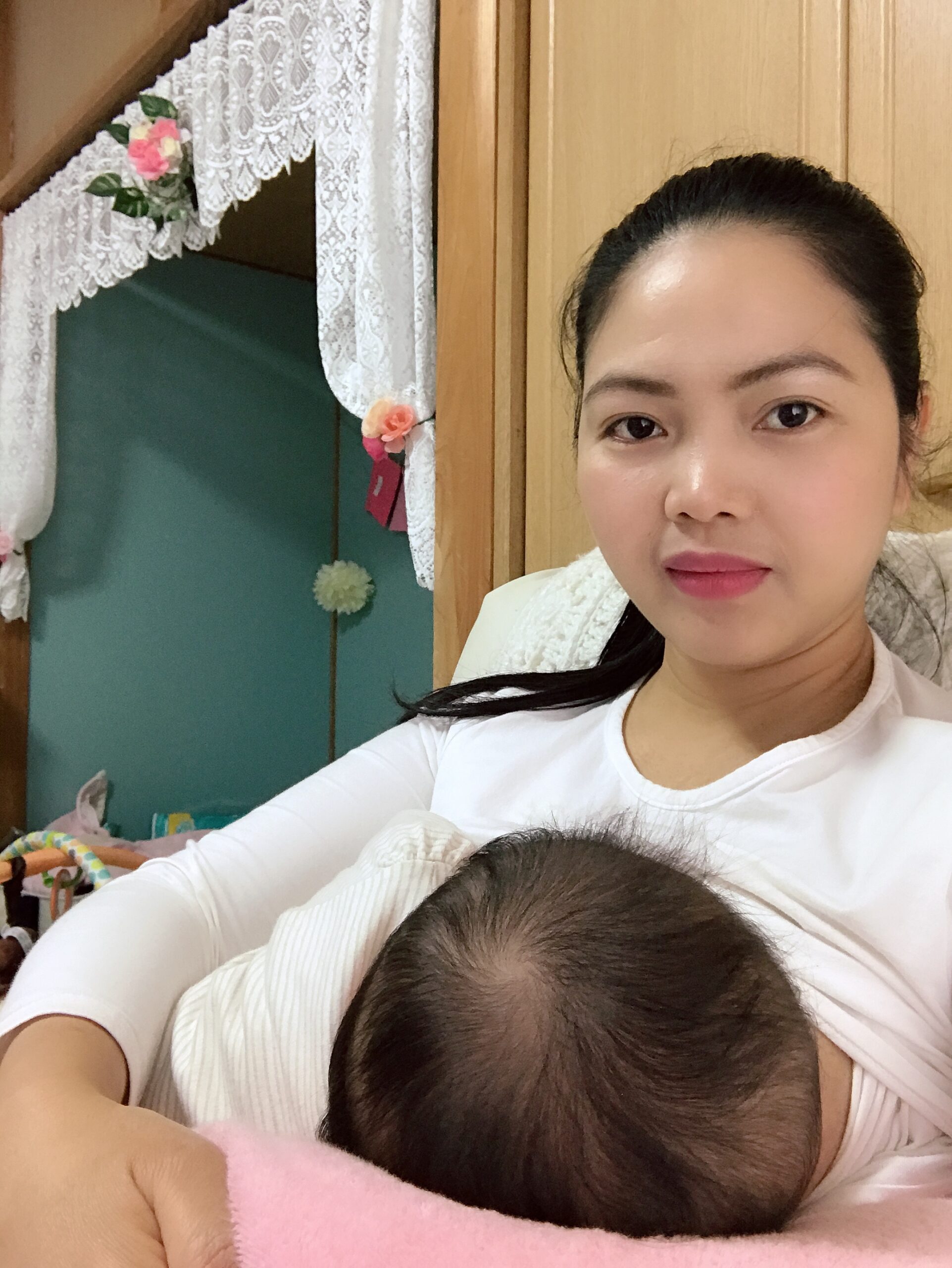
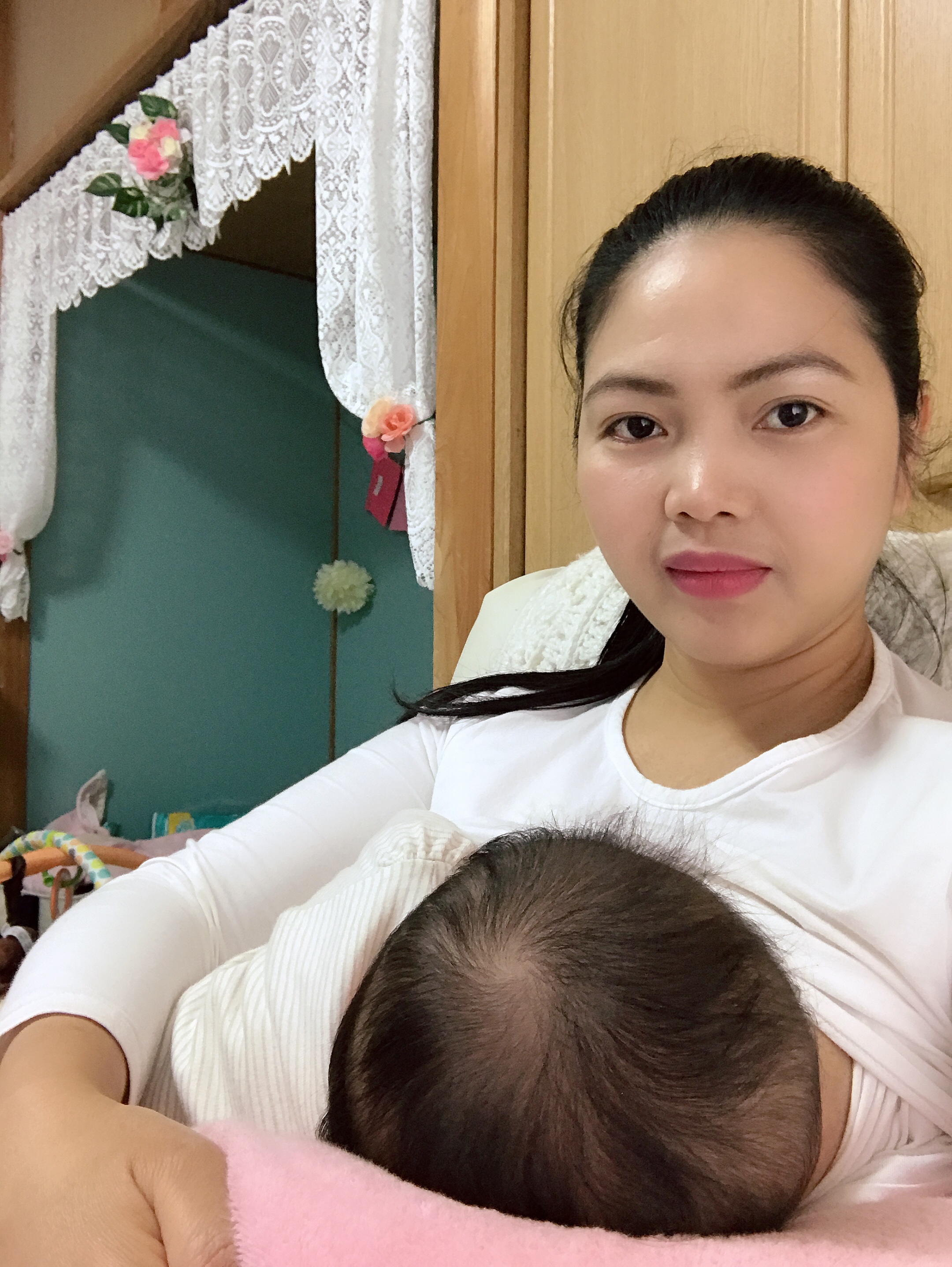
    At 7:00 in the morning, they called me to go to the nurse station to nurse my baby for the first time. That time I was so excited. I wanted my husband to go with me and record everything but for the nurses did not let him in. No husbands are allowed in the breastfeeding room. :-/ So I just took our first breastfeeding selfie. Me and baby.
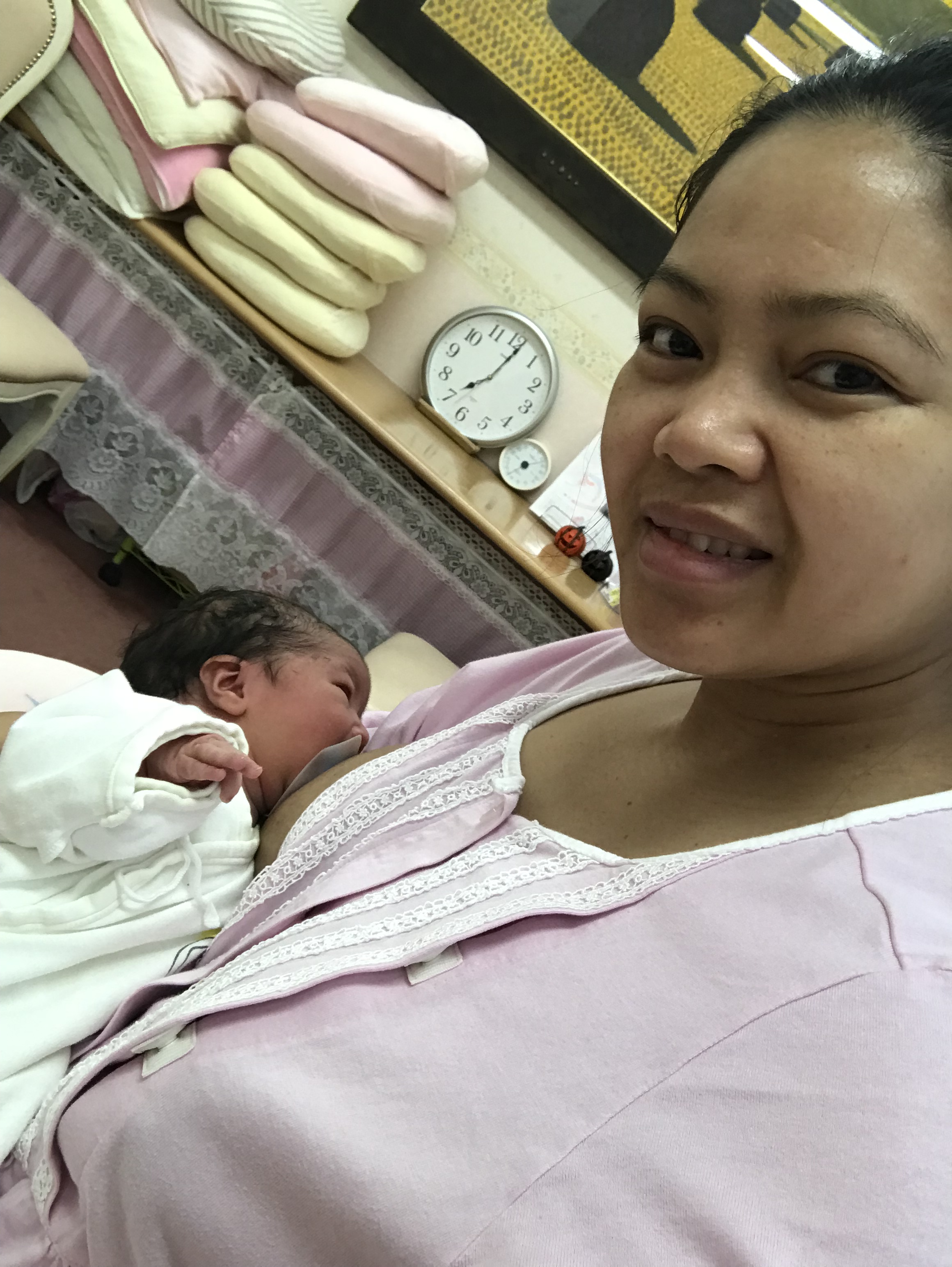
    If you notice, there is something between baby and my breast. That is a nipple shield. That helps baby latch since she is still too small she doesn’t know how to latch properly. My nipple is on the smaller side too, it doesn’t help. At that moment, I started to feel I was really a mother. I was happy. Little did I know, it was just the start of another big challenge of motherhood, which I will share to you in the next article.
  • Goodbye 2019, Hello 2020

    2019 has been so far the best year for me. I finally got pregnant after a long wait and gave birth to our precious baby daughter. I invited my family to come visit me here in Japan two times -in spring and in summer to autumn. I also got my permanent residency in Japan.

    I’m looking forward for another great year this year 2020. More achievements, more happiness, more good memories.

    I will try to spend less time on social media and more time writing and studying (Japanese and Spanish). Less Facebook (lol), less worrying too much (as I am a worrywart), less spending.

    Above all, I want to be a good mother and a good wife.

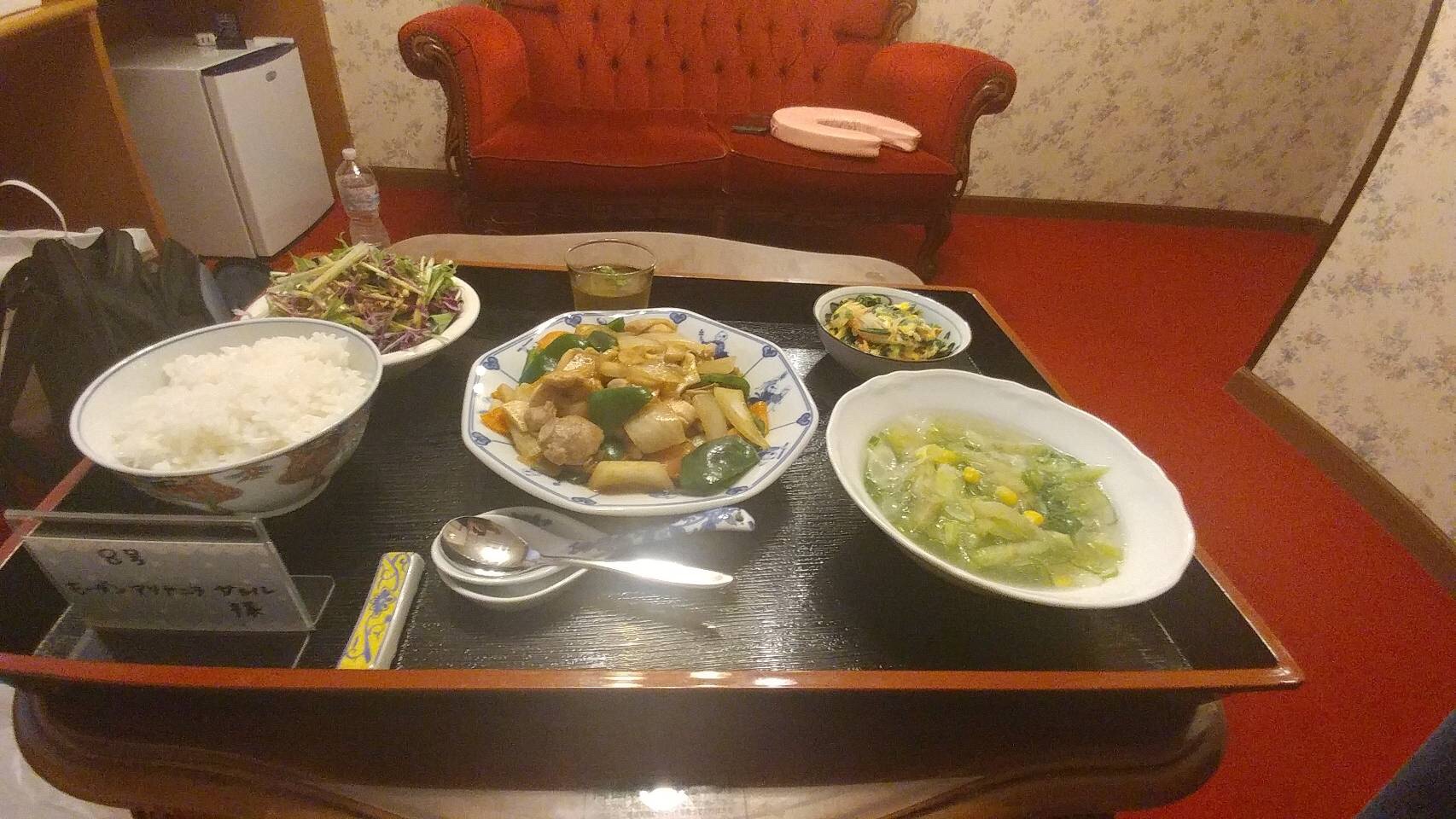
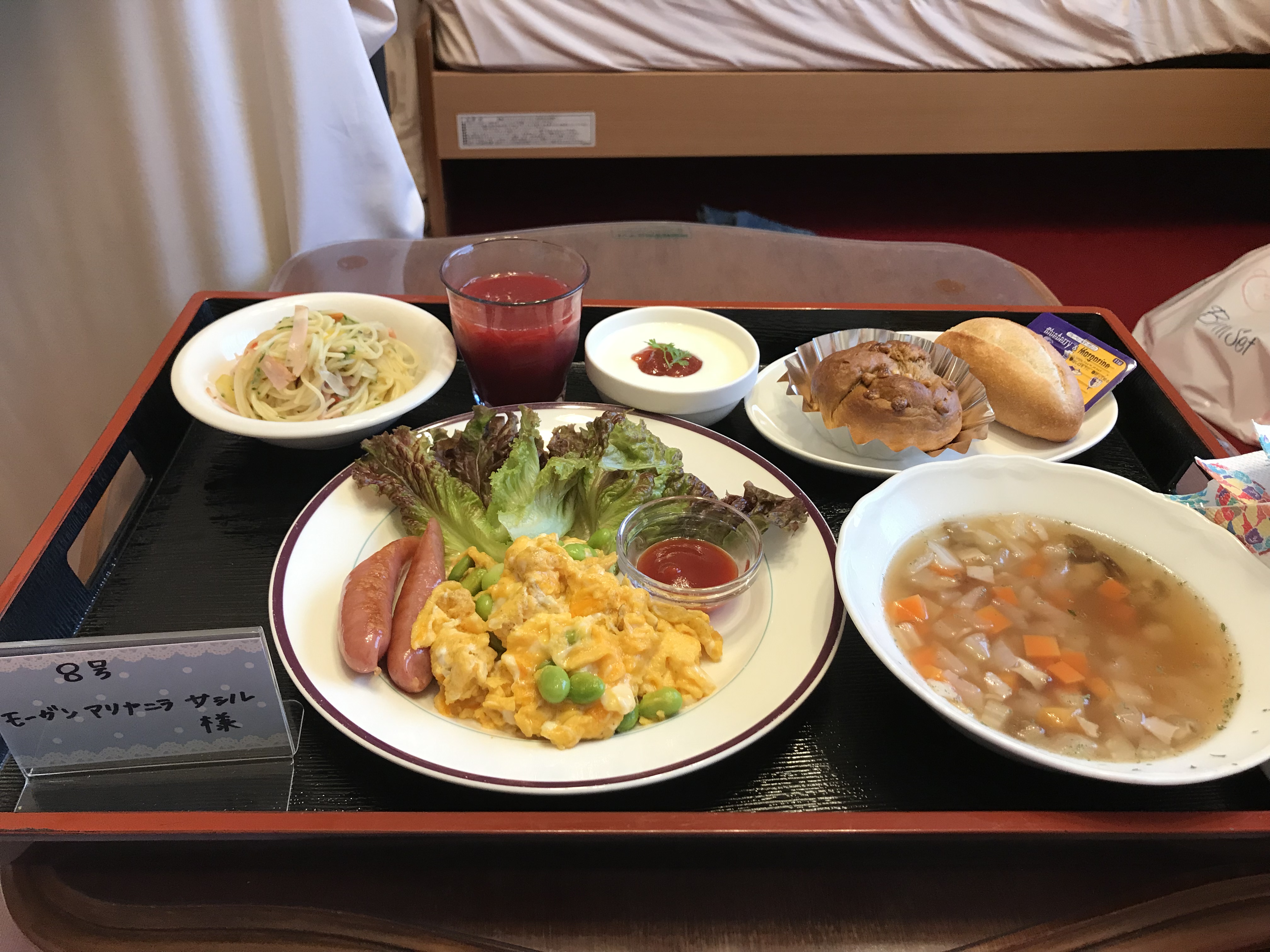
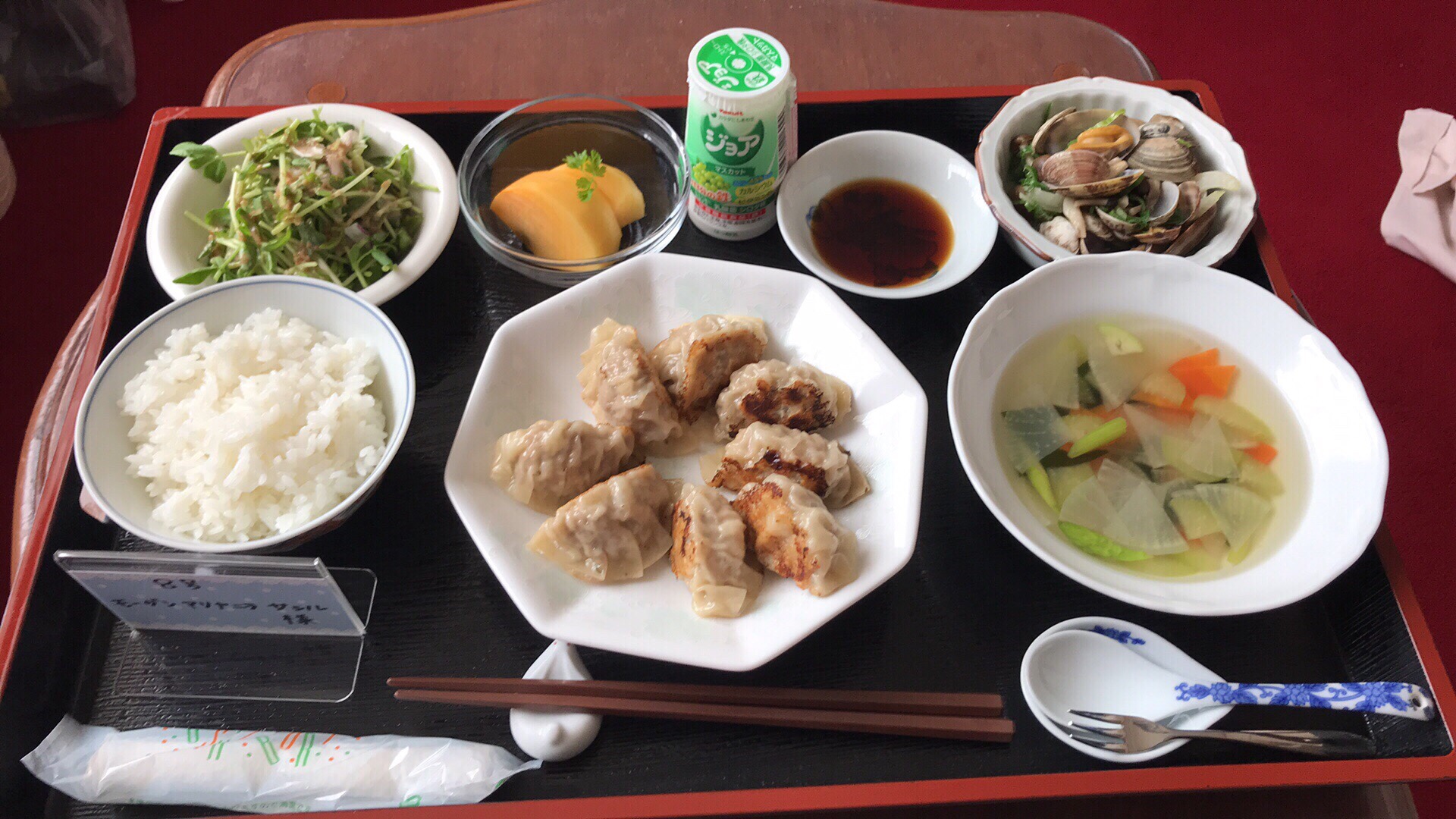
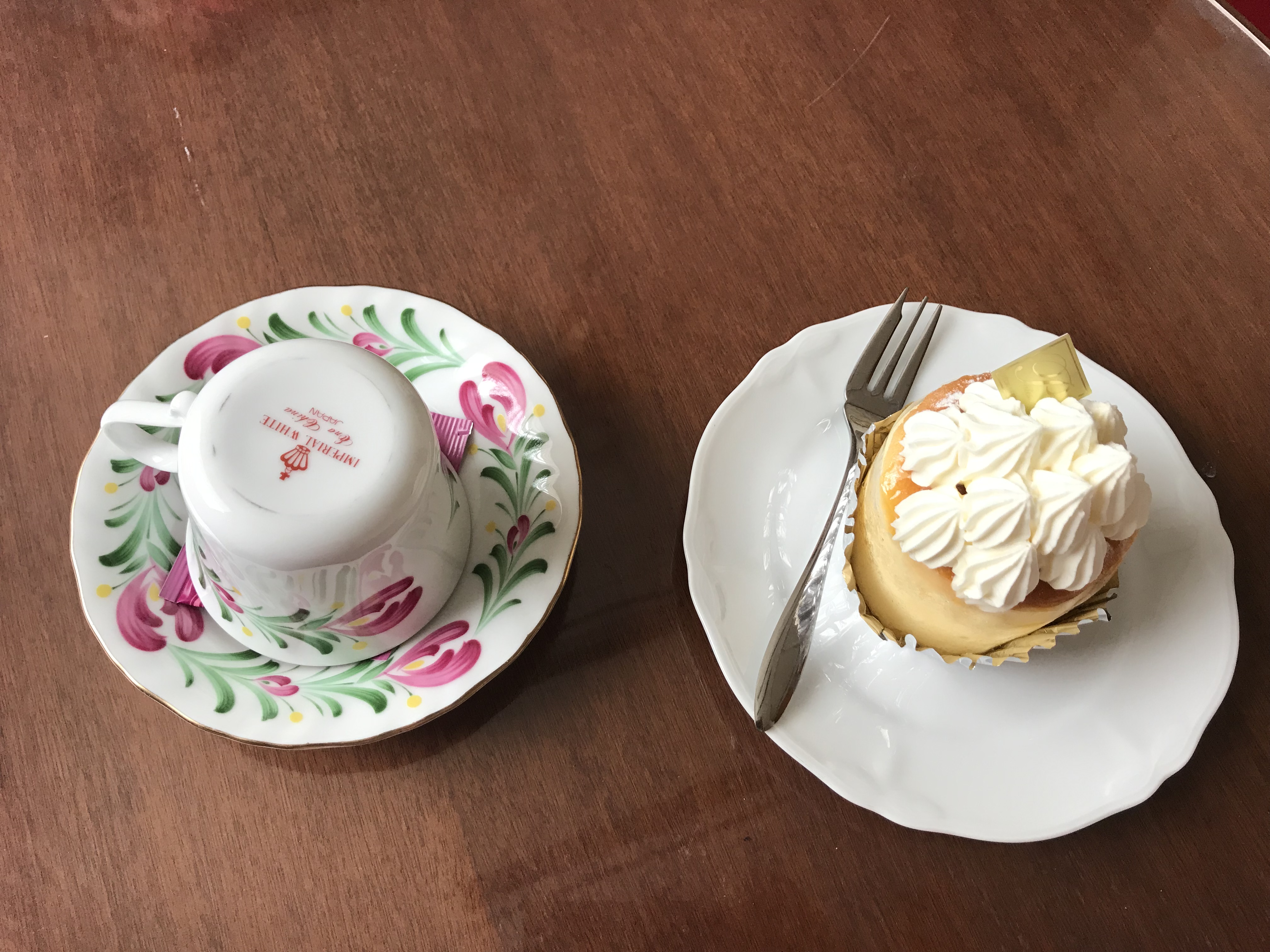
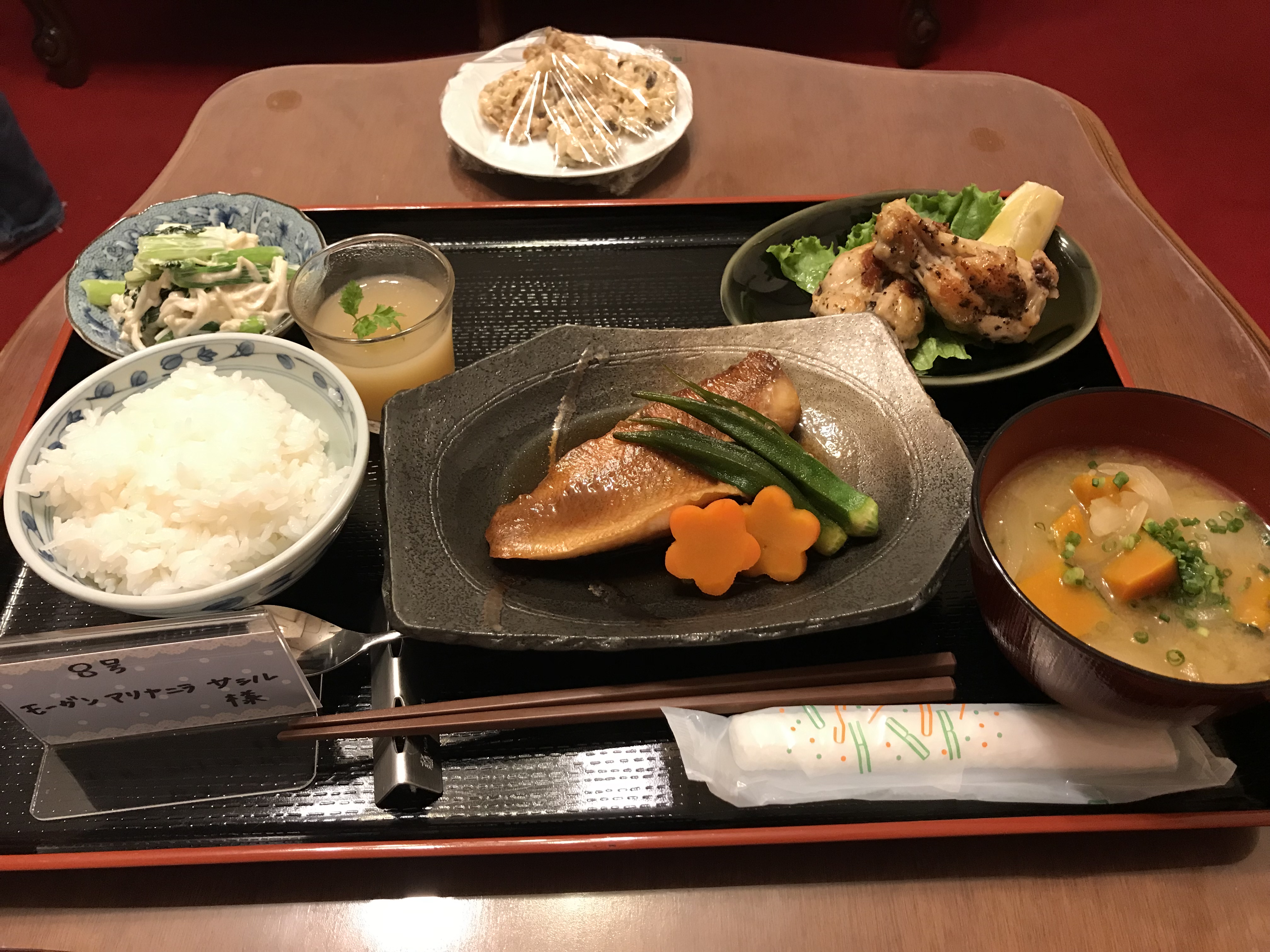
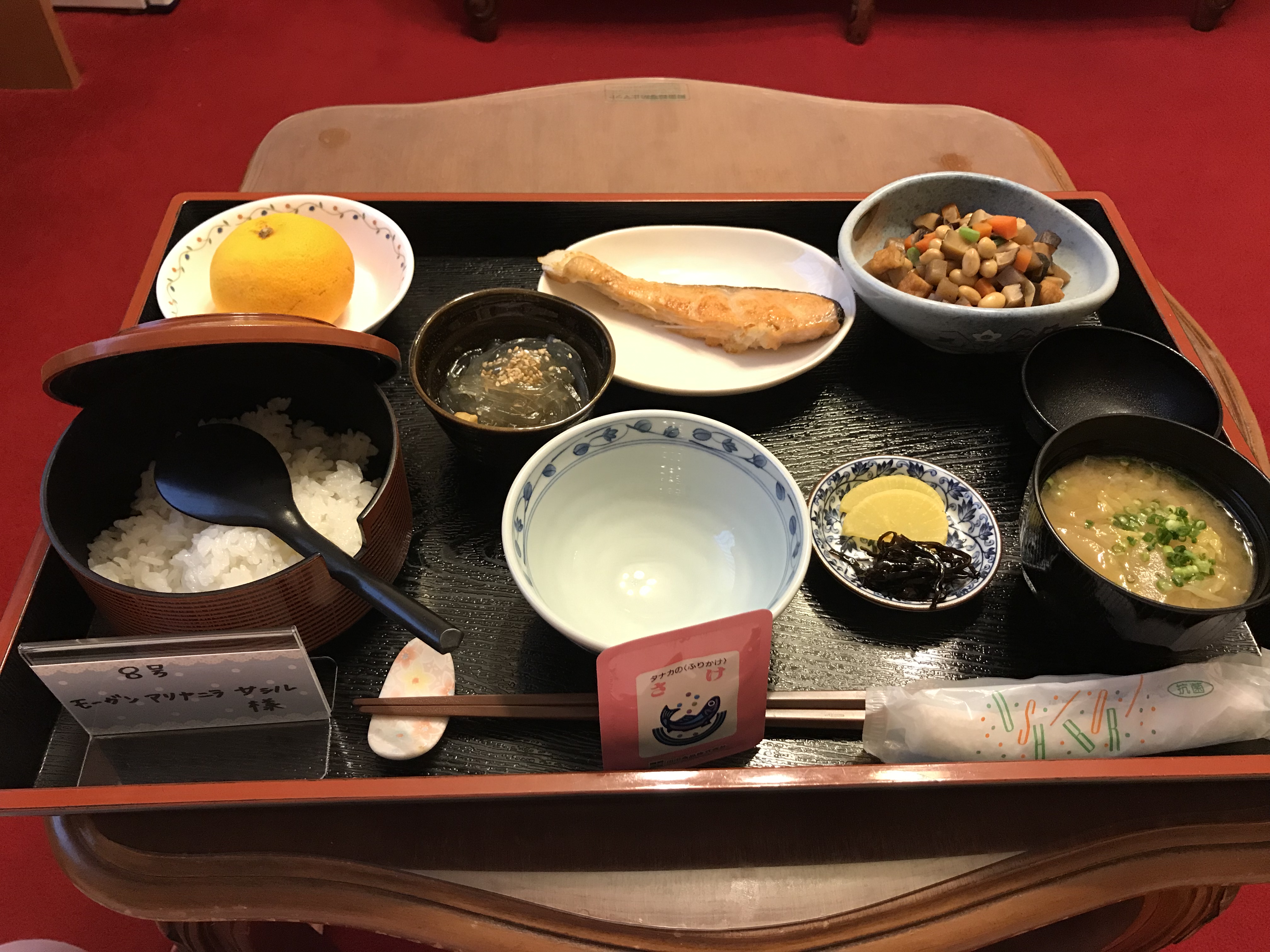
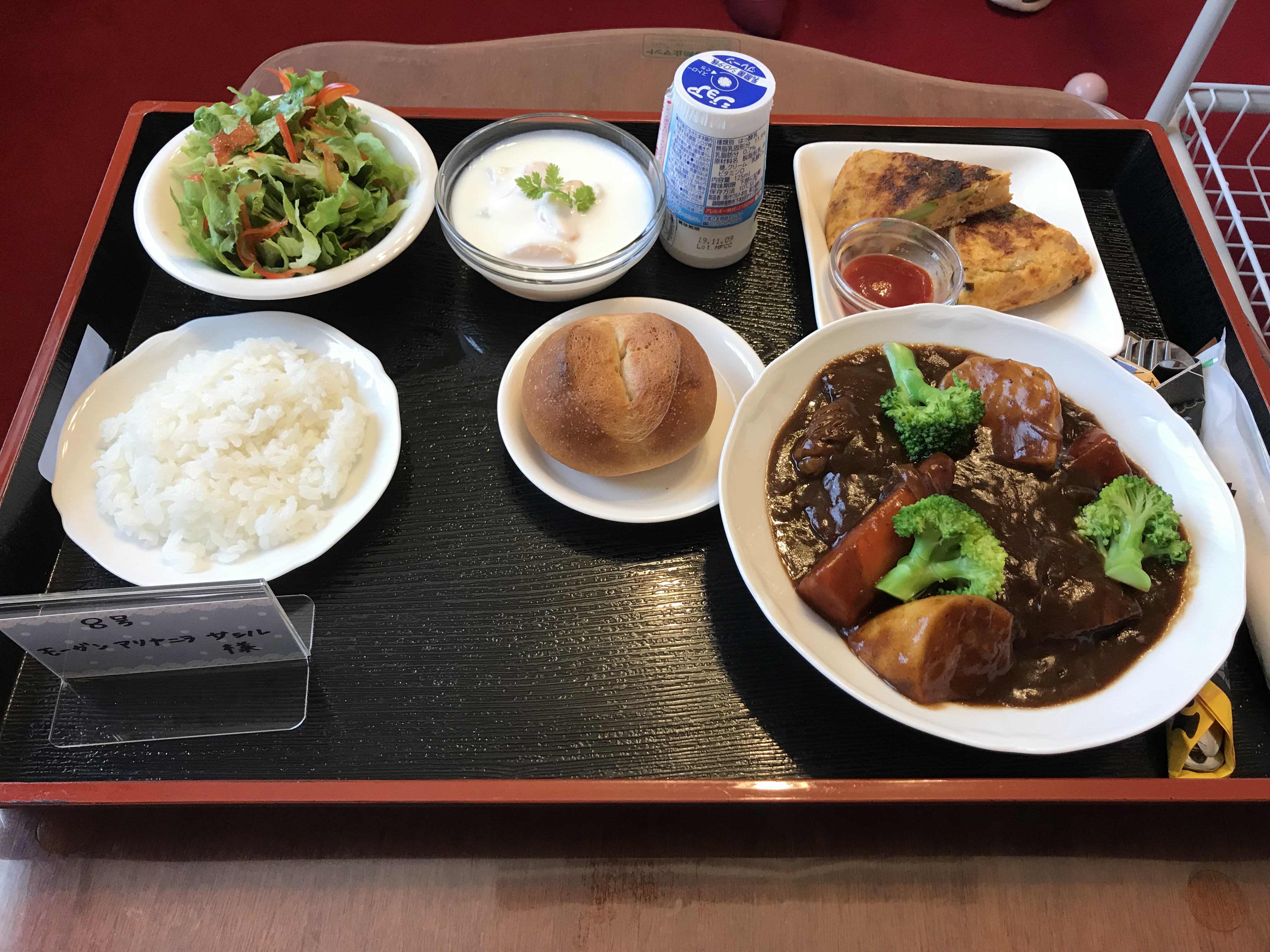
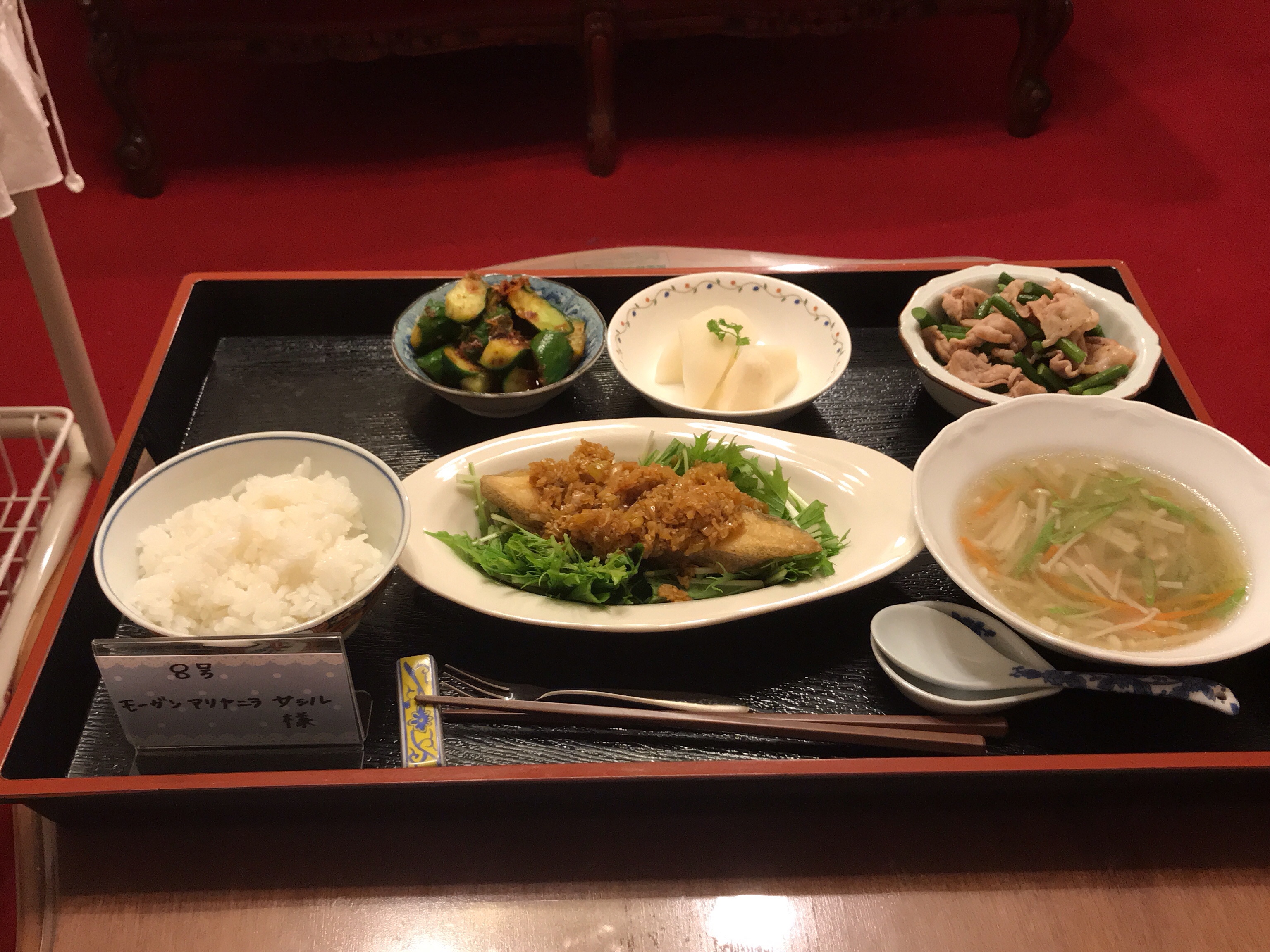
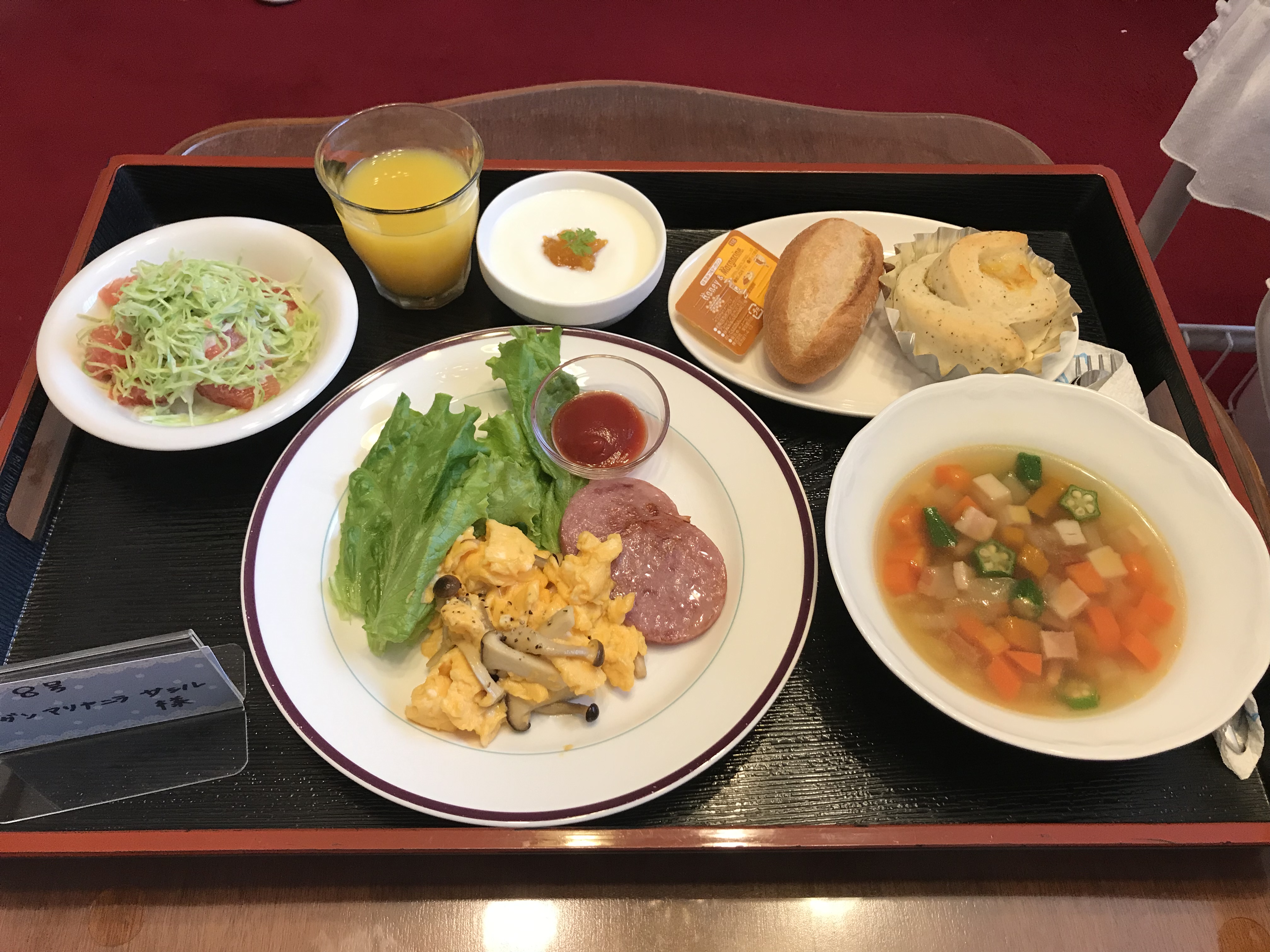
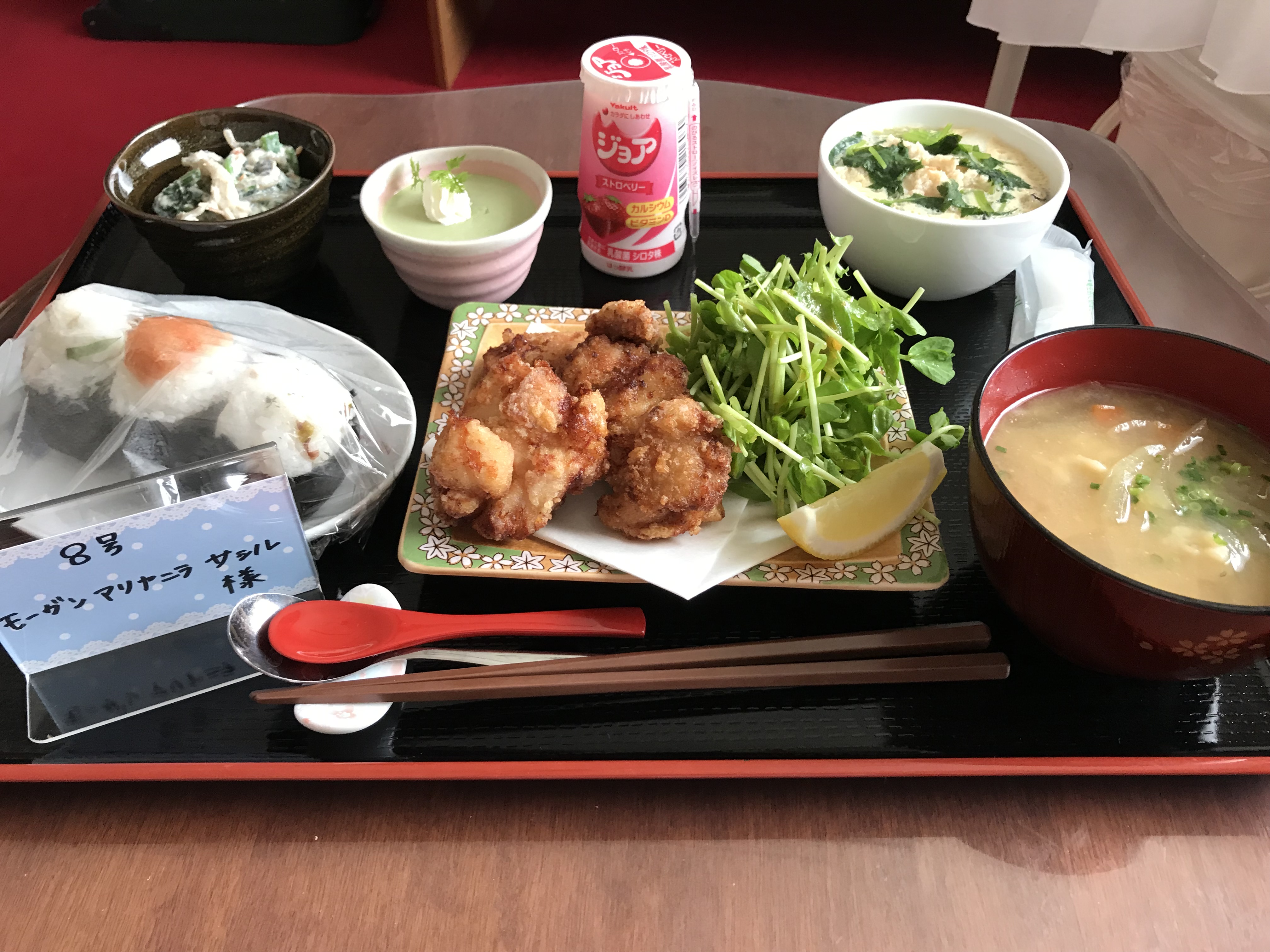
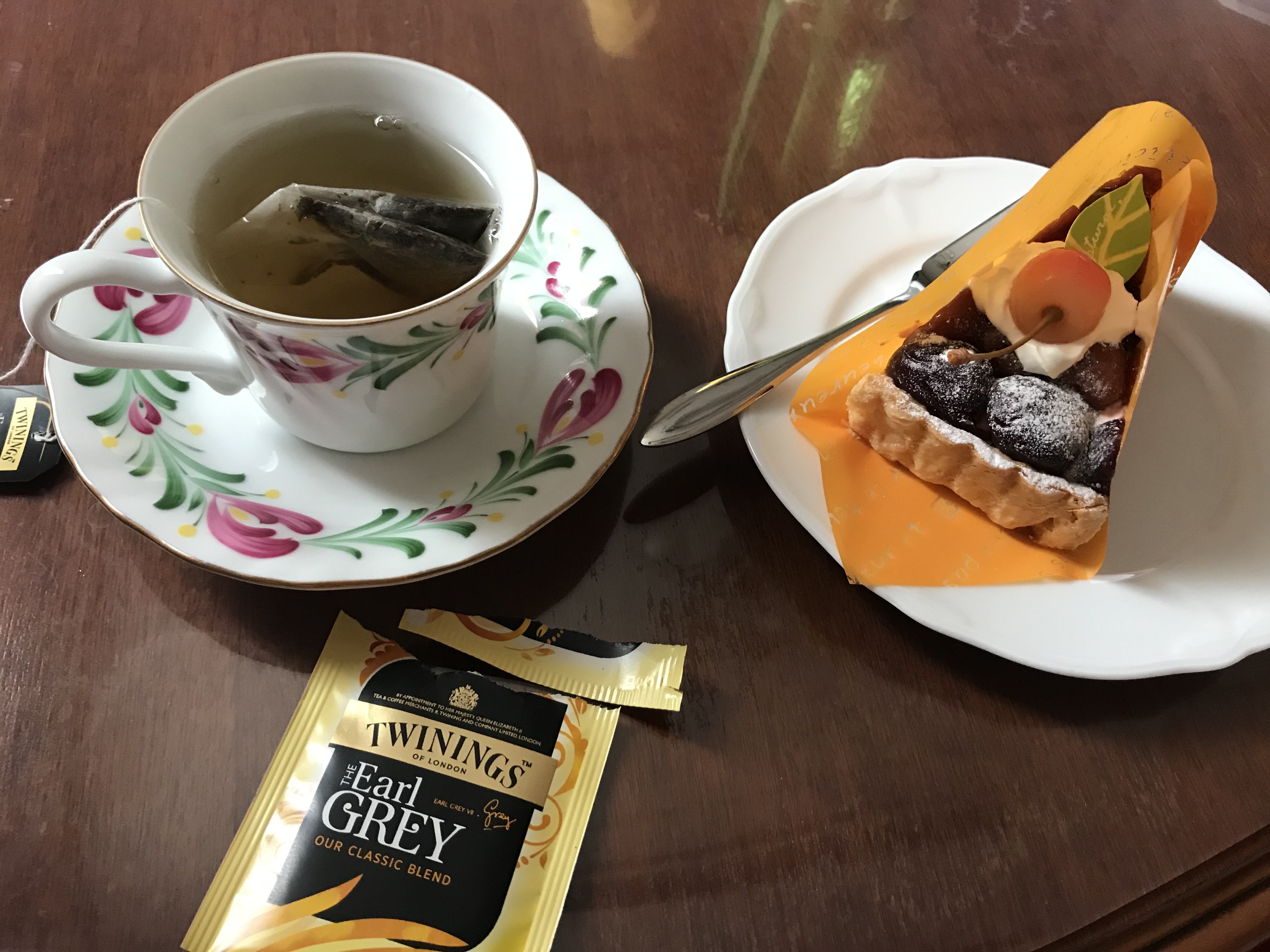
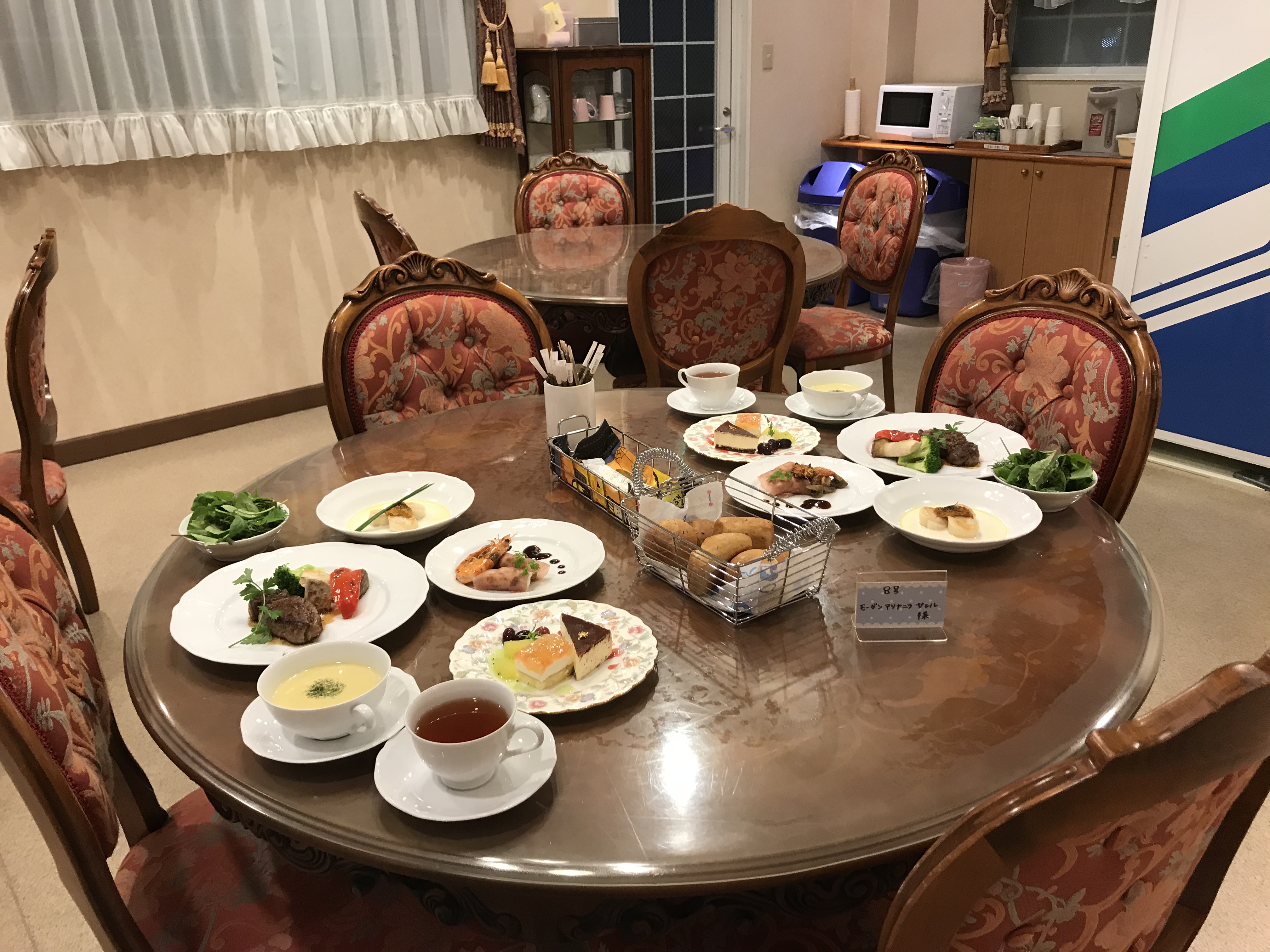
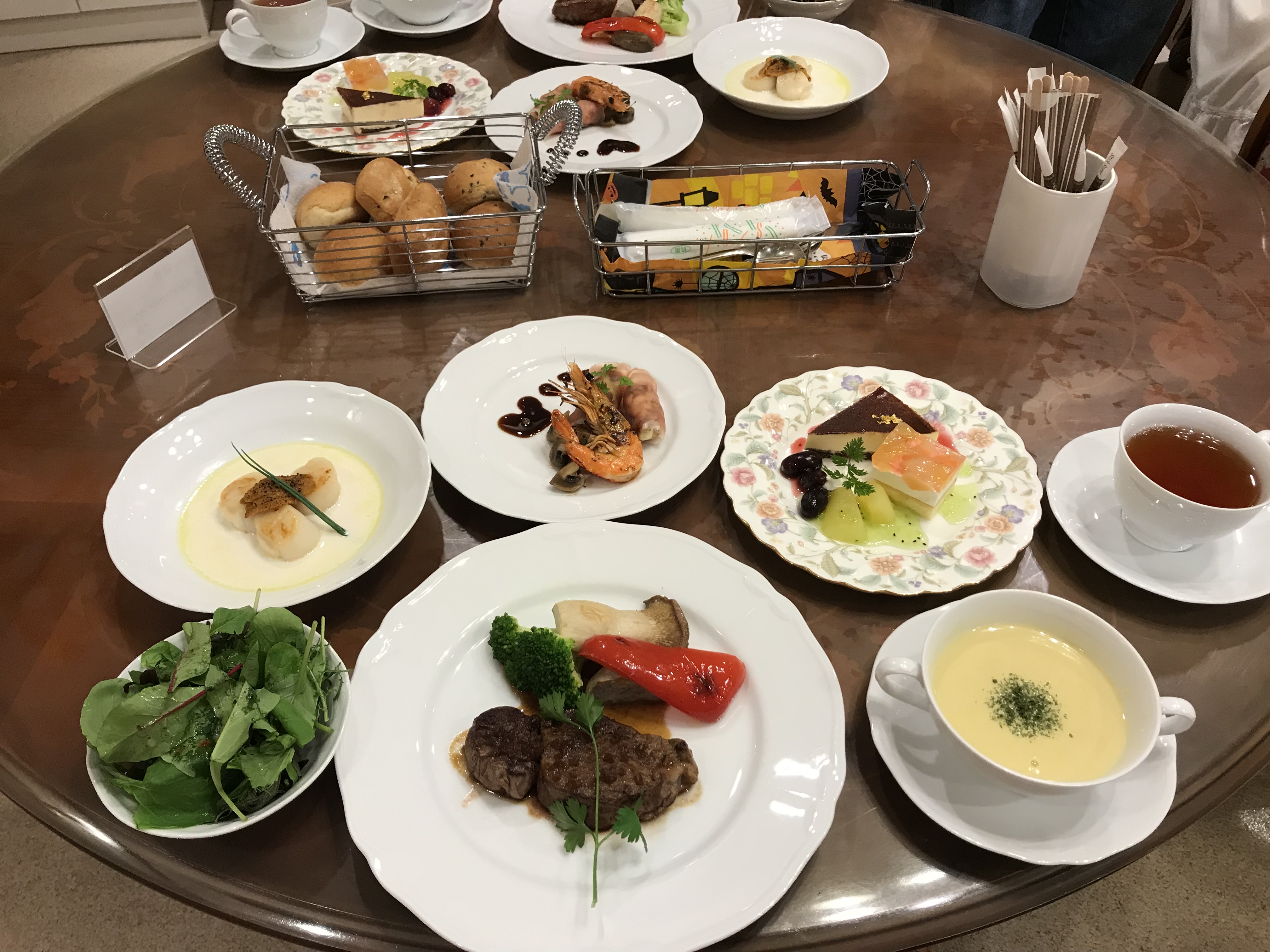
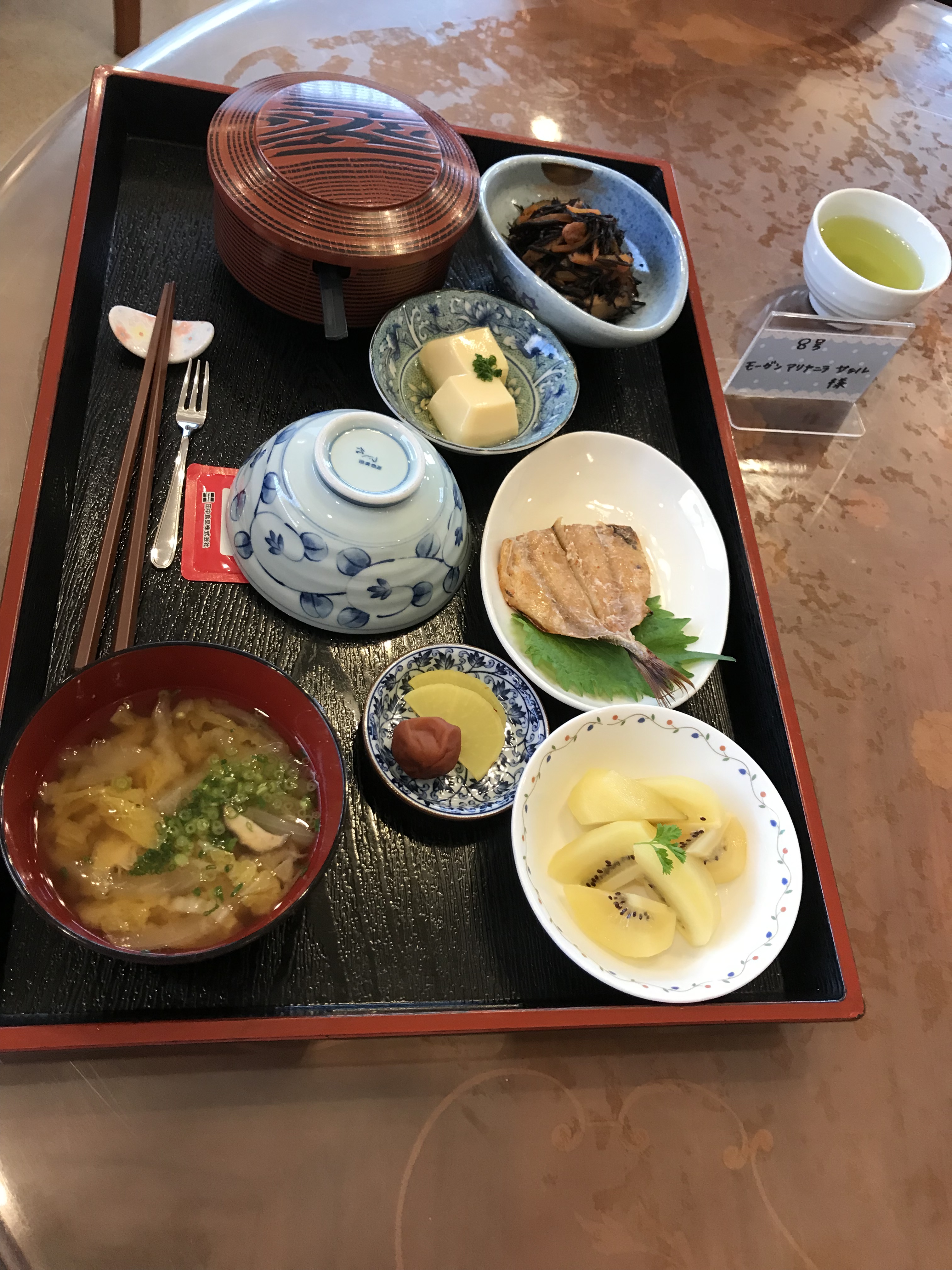
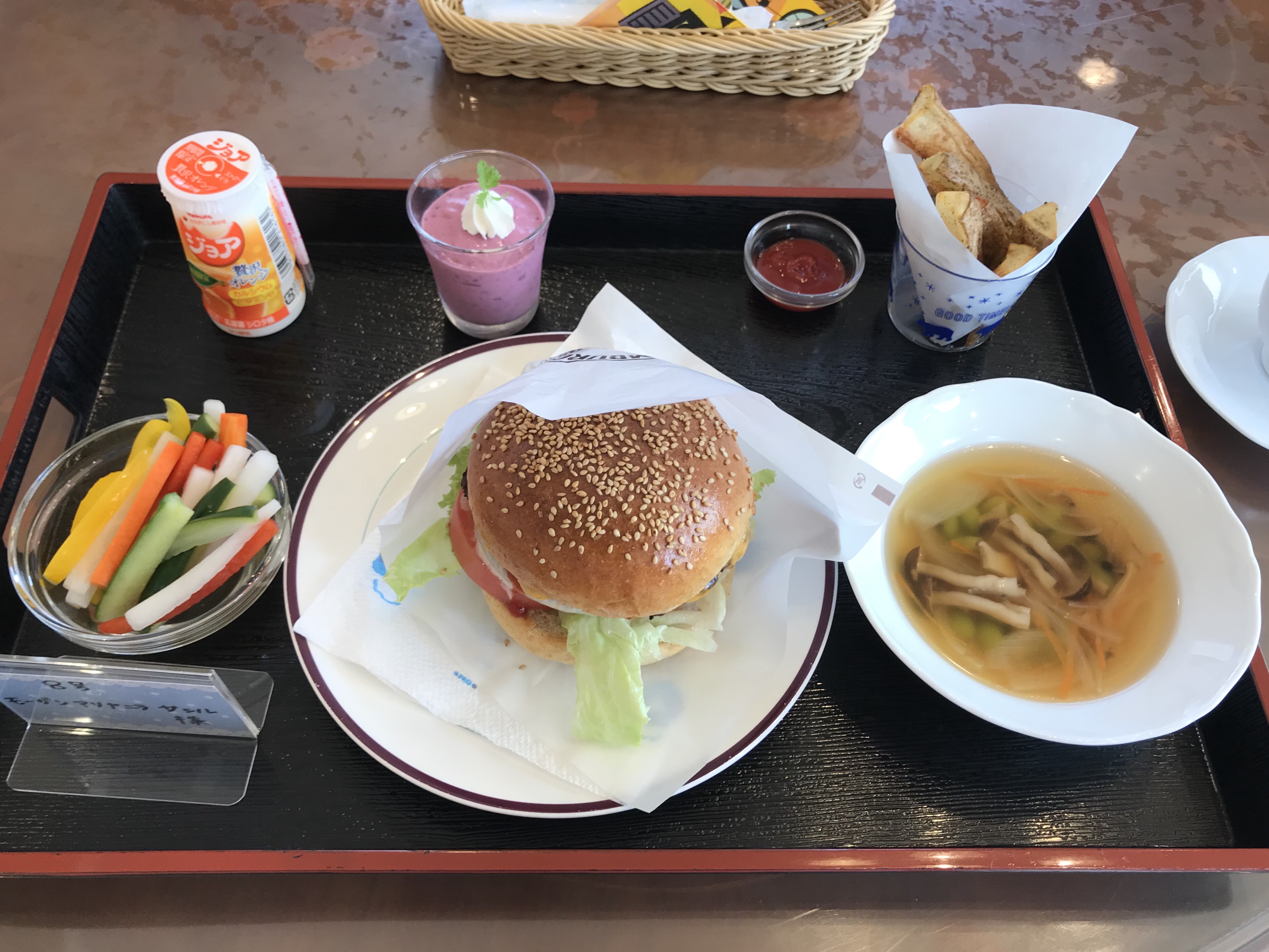
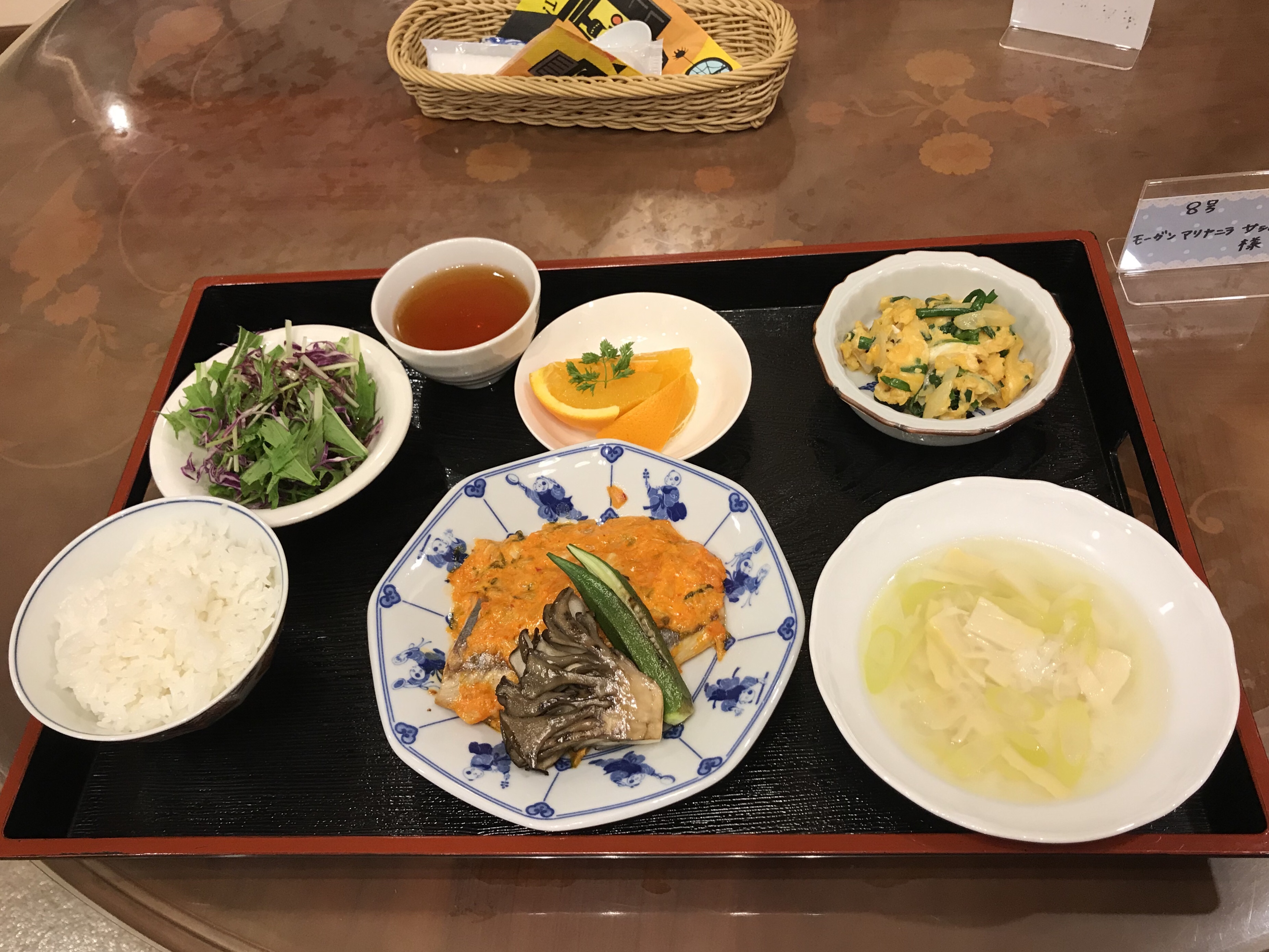
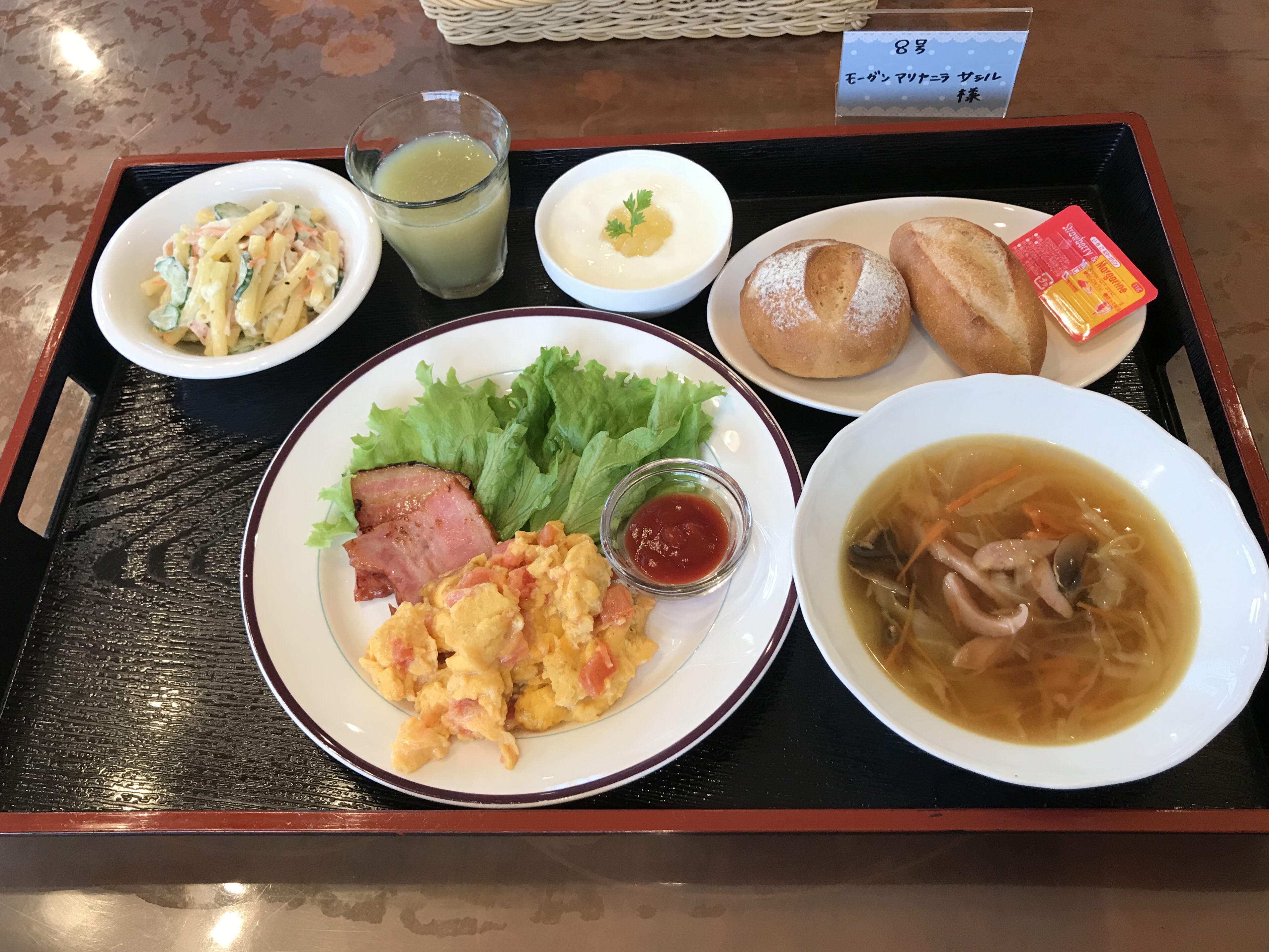
  • Food Served at my Maternity Clinic

    Food Served at my Maternity Clinic

    Food and good nutrition is an essential part in recovery from delivering a baby.

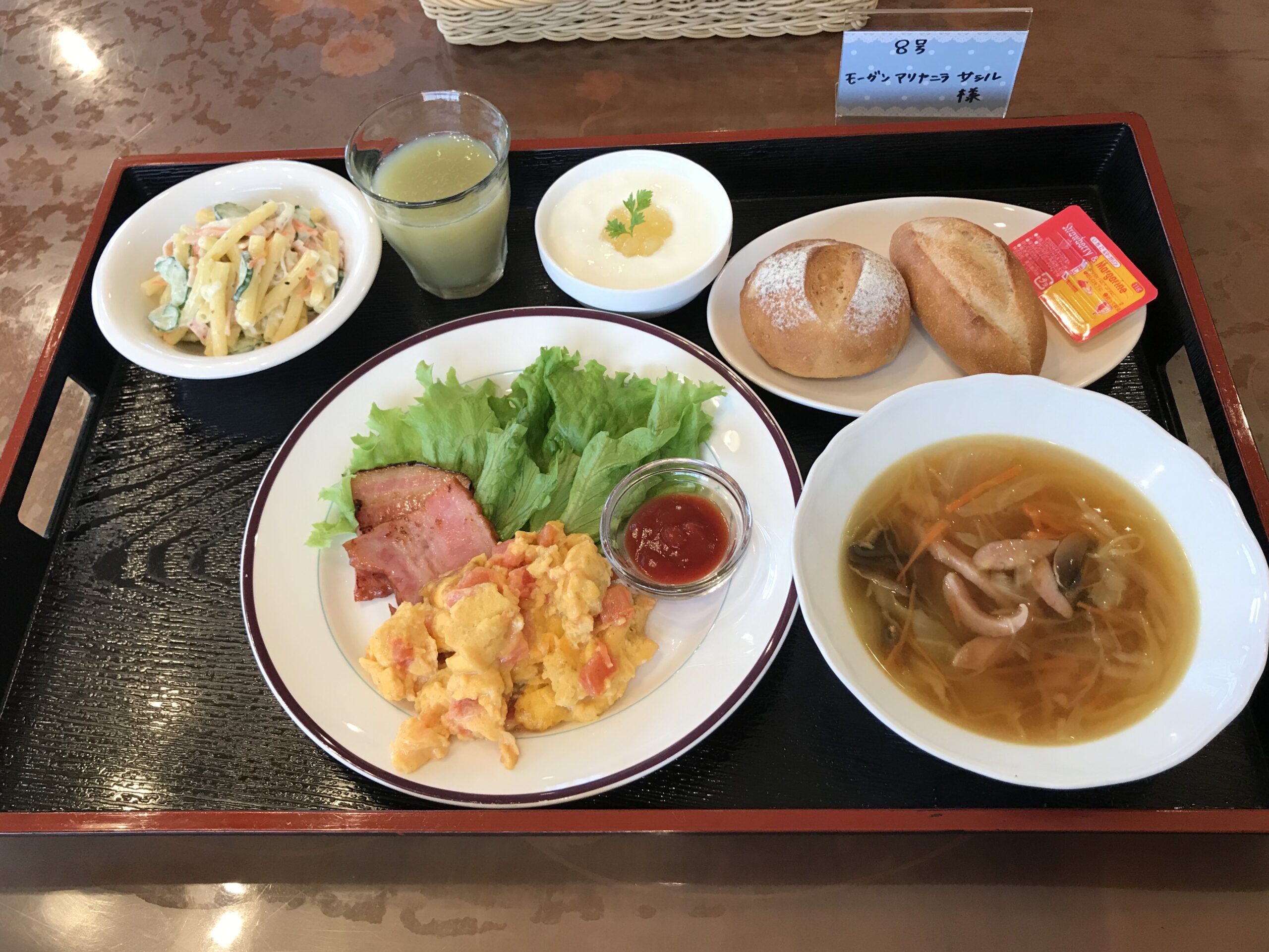
    I would like to share the meal prepared in my entire stay (six days, five nights) in my maternity clinic.

    I got admitted in the morning of Tuesday, October 22, 2019, past breakfast time (around 7:30). I delivered the baby at 12:34 in the afternoon.

    Day 1 (Tuesday, October 22,2019)

    Lunch – so exhausted I couldn’t even eat much more take a picture.

    Dinner

    Day 2 (Wednesday, October 23,2019)

    Breakfast

    Lunch

    Snack time

    Dinner

    Day 3 (Thursday, October 24,2019)

    Breakfast

    Lunch

    Dinner

    Day 4 (Friday, October 25,2019)

    Breakfast

    Lunch

    Snack time

    Oiwai (Celebration) Dinner

    Day 5 (Saturday, October 26,2019)

    Breakfast

    Lunch

    Dinner

    Day 6 (Sunday, October 27,2019)

    Breakfast (Last meal in the clinic)

  • My Childbirth Seminar: Sneak Peek at my Clinic

    My Childbirth Seminar: Sneak Peek at my Clinic

    Friday, September 27, 2019, the day I attended the childbirth seminar in my clinic. This was scheduled a week before, during my last prenatal check-up. It was scheduled for an hour and a half, from two o’clock to three-thirty in the afternoon.

    I was the first one to arrive (about fifteen minutes before the time) at the clinic. It was held in the waiting area of the clinic. Upon arriving the nurse asked for my maternal and child handbook. The chairs were rearranged to form a U and a table and chair were set-up in front. There were single chairs and double chairs. I chose to sit on the double chair on the second line, right side of the room, so I could see whoever is conducting the seminar without anything blocking my sight.

    Just a few minutes later, the waiting area was filled with very pregnant women like me. The bumpers paraded and settled on the chairs. Quiet and still.

    This is very naturally Japanese. Nobody talks to anyone. We were just strangers (in one shape-bumpers) packed in one area to listen to something.

    I could not help but compare them in my country where situations like this will surely give you an instant friend through random questions and conversations. Like “Hi! How are you? How many months along are you now?”, “Is it your first time?”, “Do you live close?” “Oh, my baby is so active, she kicks my bladder.”, “Oh, I’m so tired. It’s getting heavier each day.” Etc, etc.

    But not in Japan. People respect and value each other’s space and privacy (sometimes too much they tend to be so cold). They don’t want to disturb and annoy anyone with random questions and comments.

    So I sat there in my chair and minded my own business. I used that short waiting time to try to comprehend what was in the paper given to us. Everything, of course, was in Japanese and I had to use google translate and imiwa? applications to help me understand the written material in my hand. I encountered the word 陣痛 for the first time and found out it is read as jintsuu, which means ‘labor pains’. Another word, 破水 read as hasui, meaning ‘water breaking in pregnancy’. There was a lot of information in that paper it was too overwhelming.

    At two o’clock, the doctor came and sat in the chair in front of everyone and started to speak in a very fast, difficult to understand (for me) Japanese. I was expecting him to greet us and let us introduce ourselves one by one and maybe tell how many weeks we were on ( like what I saw on Youtube how they conduct childbirth seminar). But nothing like that. The doctor went straight talking about the things he summarized in a small piece of paper. He was looking at it and obviously used it as a guide for his speech. I didn’t understand everything he said but I could figure out that he was talking about when to go to the hospital. I understood that he said if water breaking and bleeding occurs, go straight to the clinic. Don’t wait any longer. Also, if the labor pain occurs twice in ten minutes then go to the clinic. Other than that, it’s just a false labor. Stay at home and wait. Out of everything he said, I think I understood about less than fifty percent.

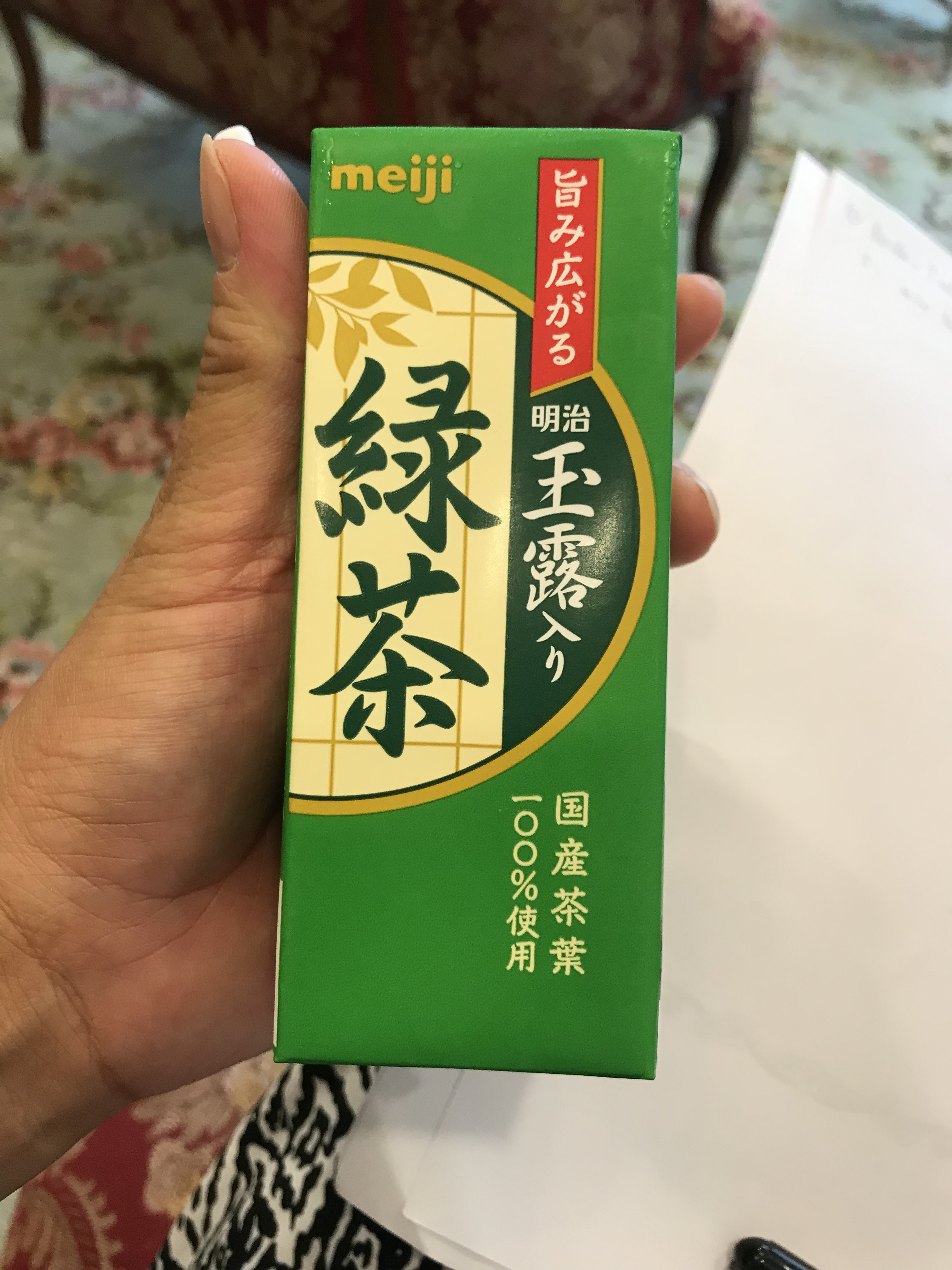
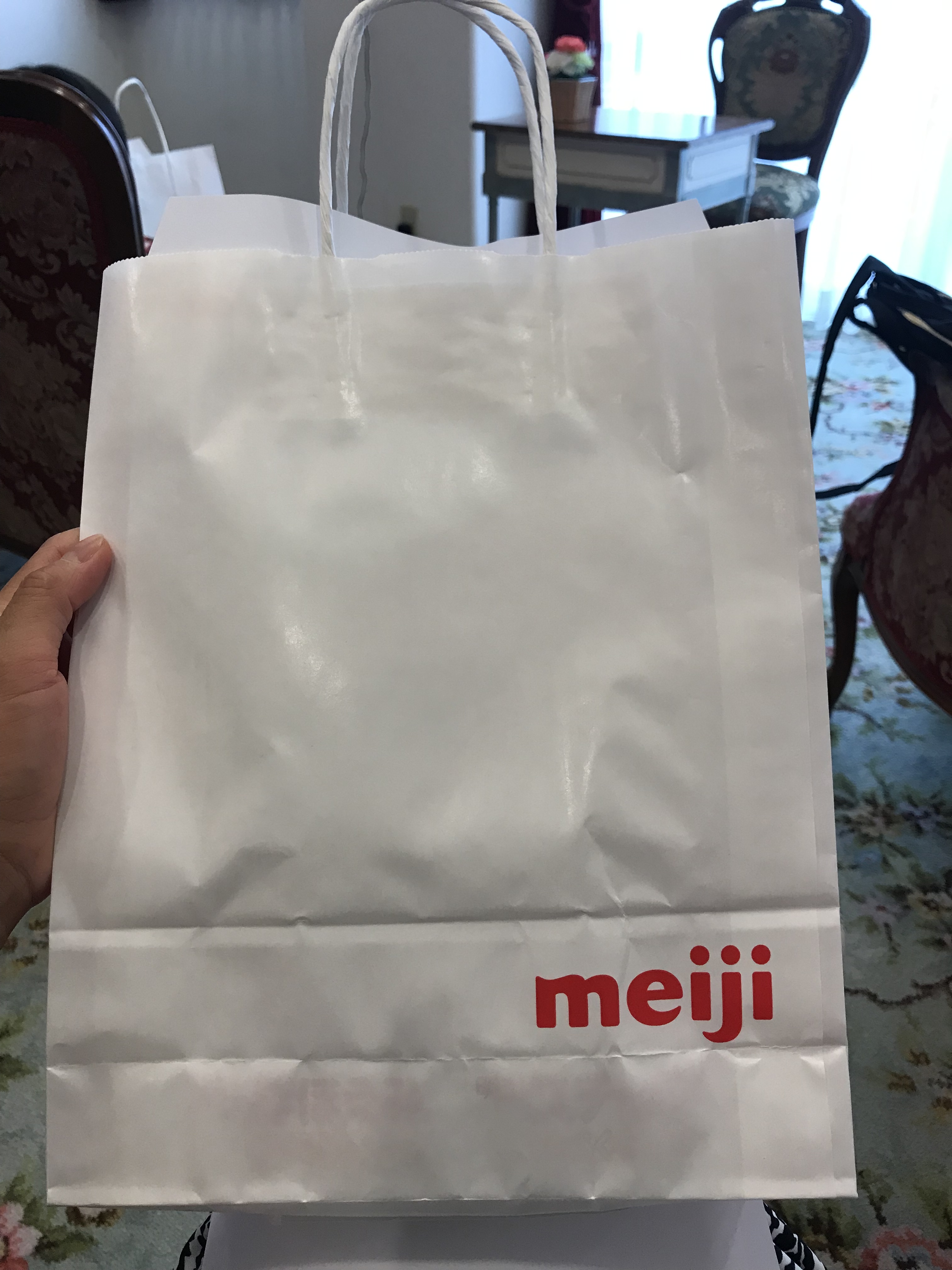
    After the doctor, a nurse came in front and told us that we would all be going to the second floor and give us a tour of the clinic. We were given five minutes of toilet break before going up. During this break, another nurse gave each one of us a drink and a bag of “gift”.

    Then, we headed to the elevator to take us to the second floor.

    We had to be split into two groups.

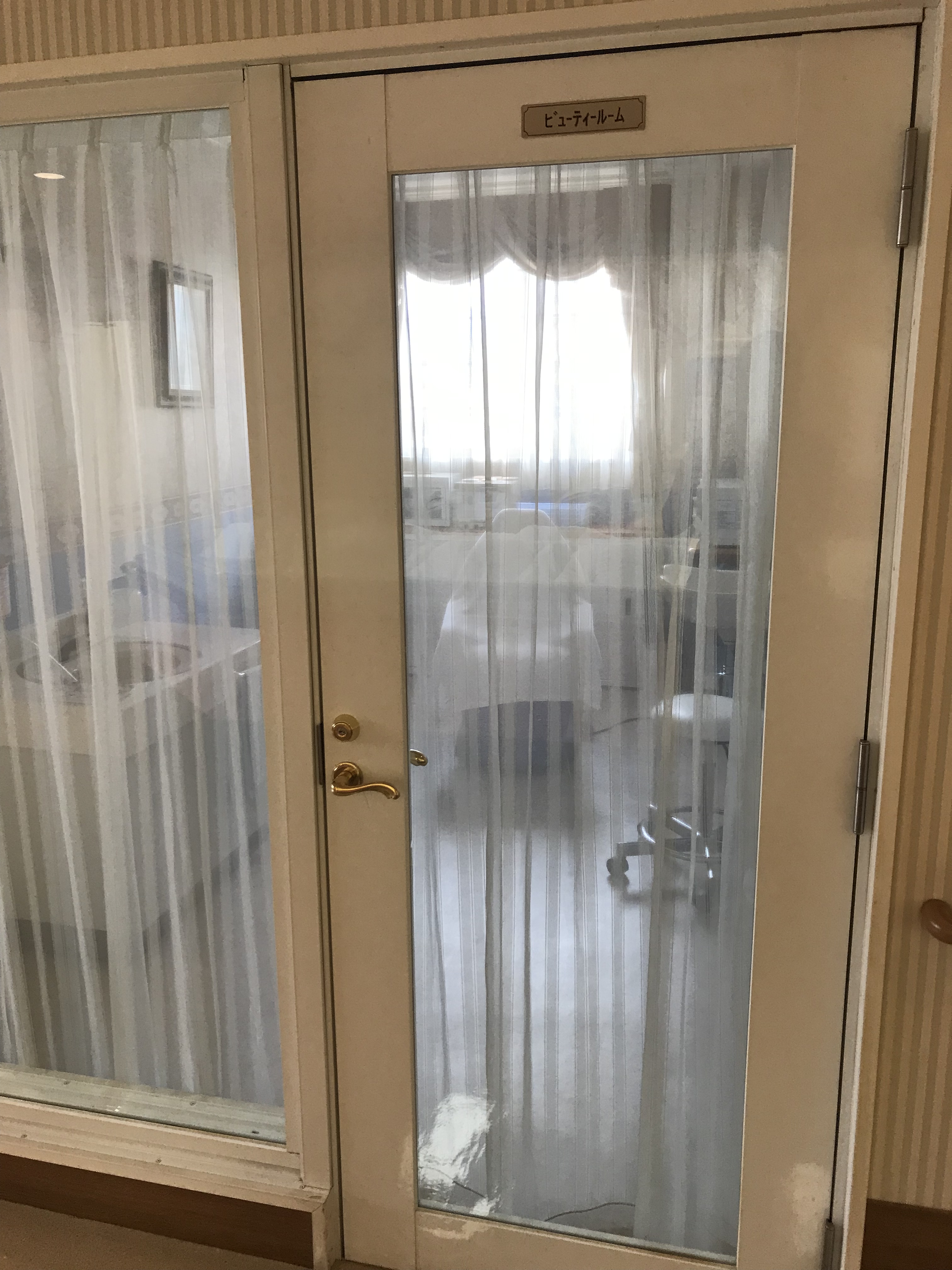
    The first room that was shown to us was the “beauty room“. I didn’t understand precisely what the nurse said about this room. I just followed the flock of bumpers.

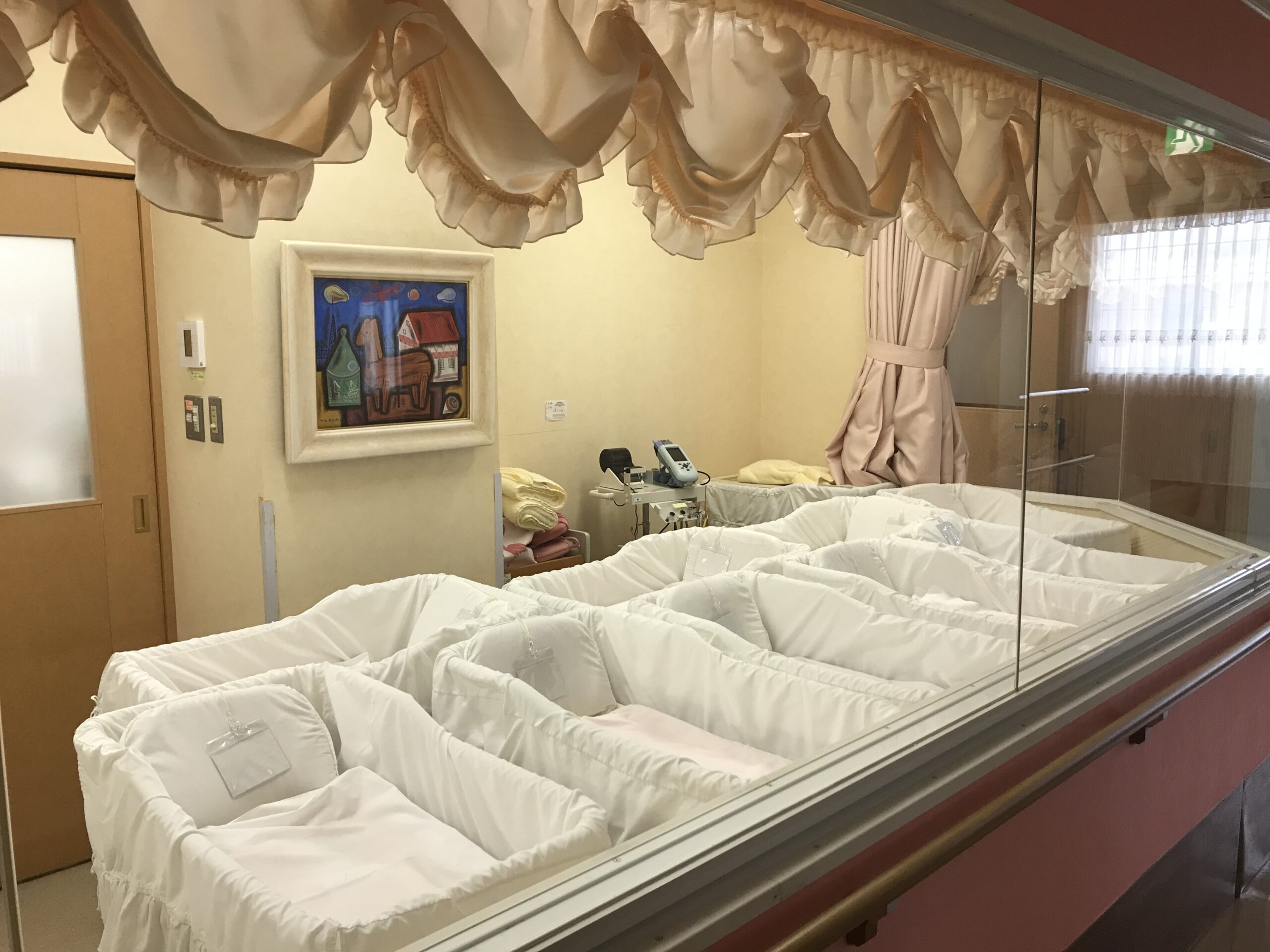
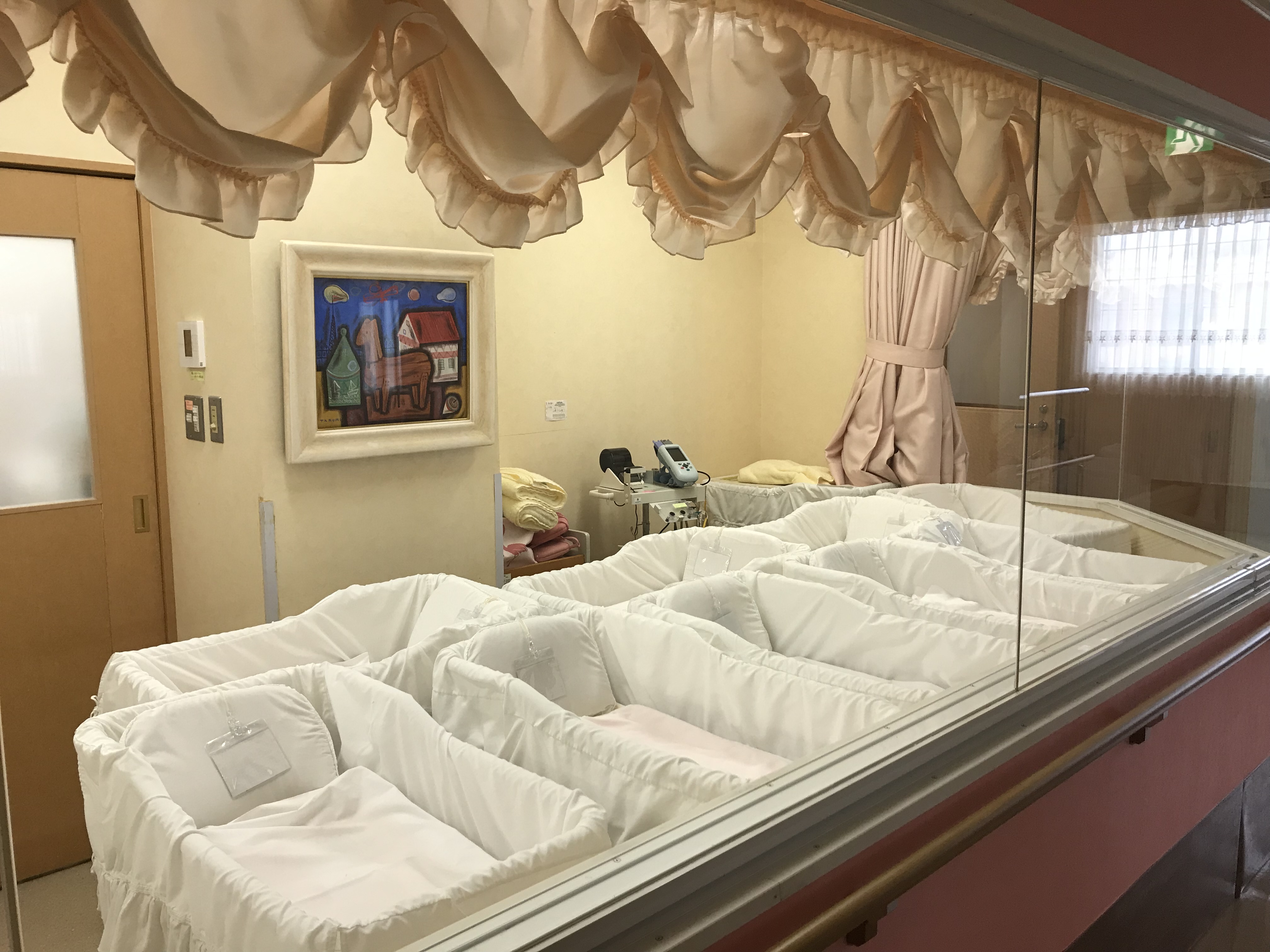
    In front of this room is the viewing room. I was imagining to see my baby in one of those bassinets.

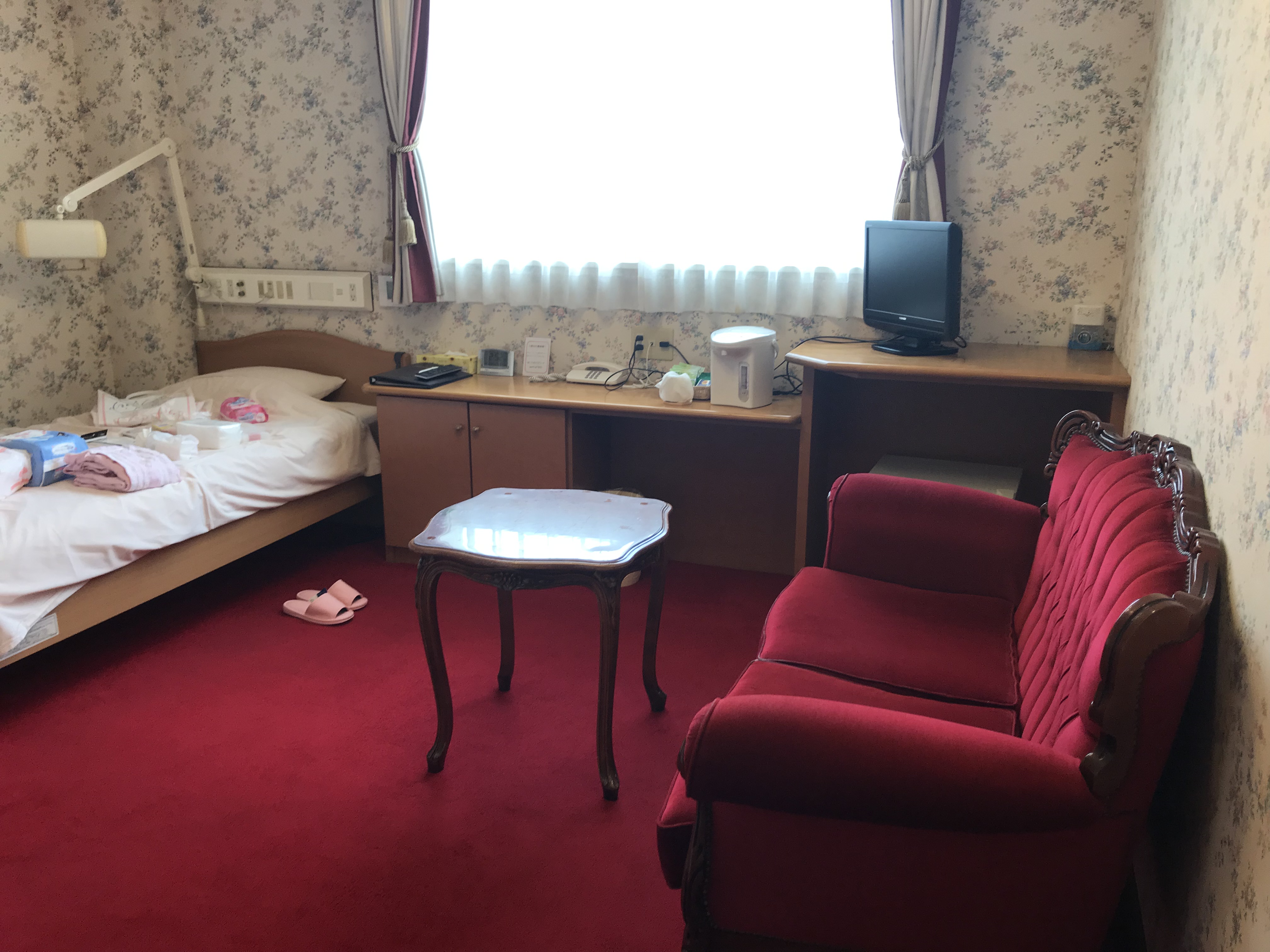
    And then we were guided to see the private room, they call it 病室 byoushitsu.


    On the bed, things were laid. The nurse explained that those are things that will be given to us during our stay. It includes a robe, maternity pads, underwear, toiletries. I can’t remember everything. The nurse also showed the bathroom that we can use and that we get fresh towels every day. There is a small sofa, a TV, a phone, a water boiler and a small fridge inside the room. And most important, it has a WiFi connection. It was pretty good. I liked the sofa and the carpet in a deep red/maroon.

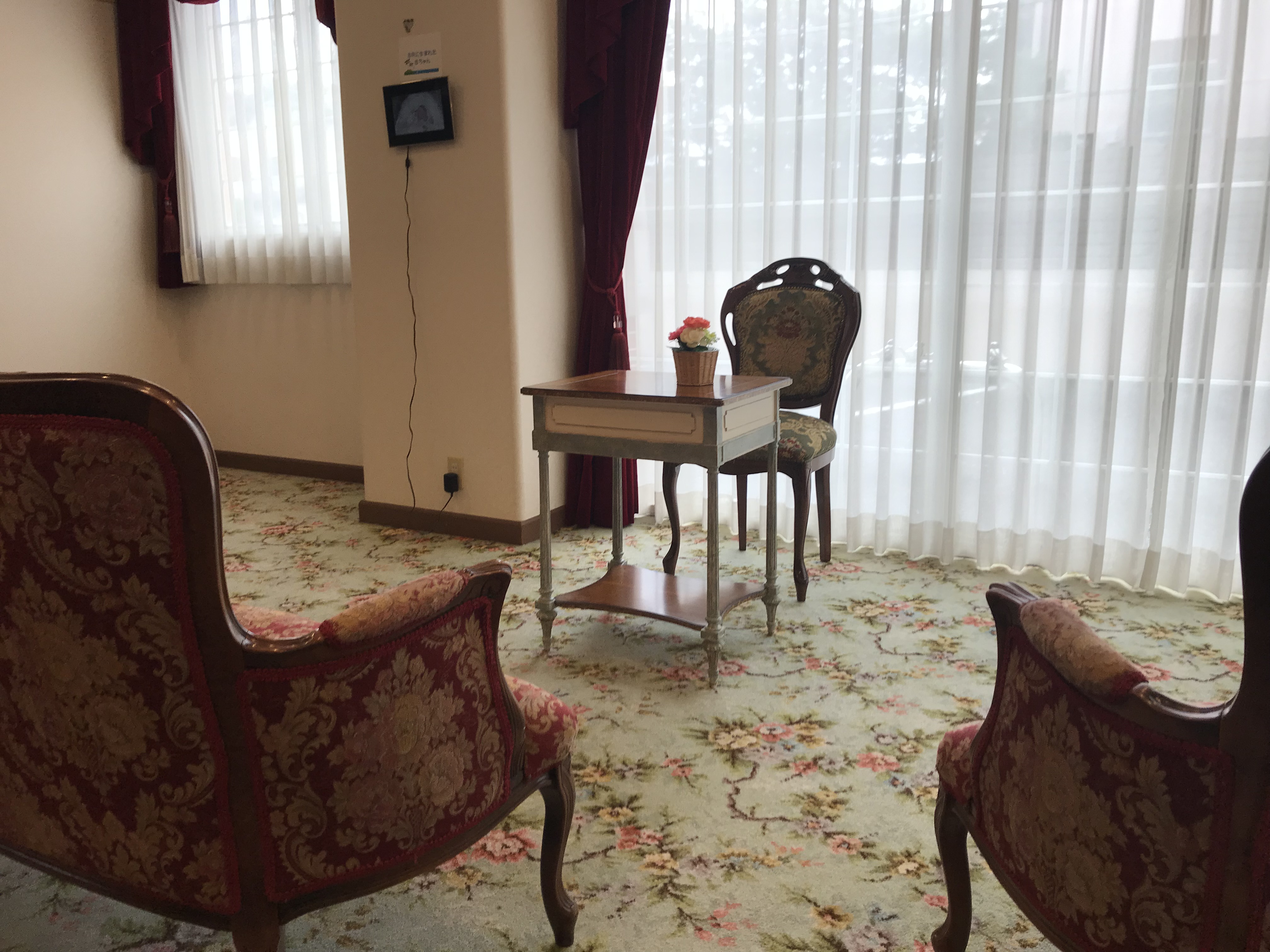
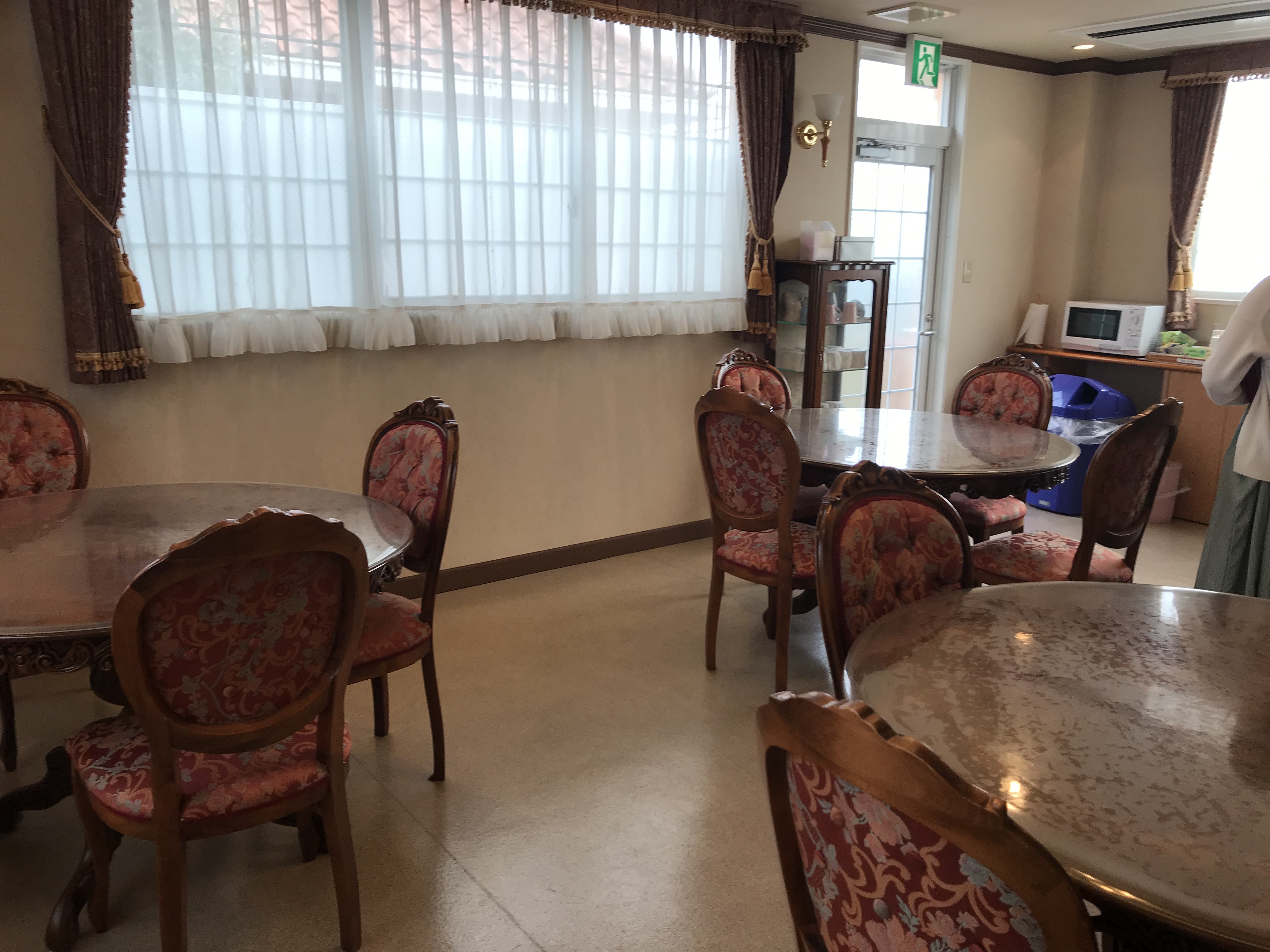
    They also have a lounge we can use to have meals or waiting area for guests.

    We were then taken to the delivery room.

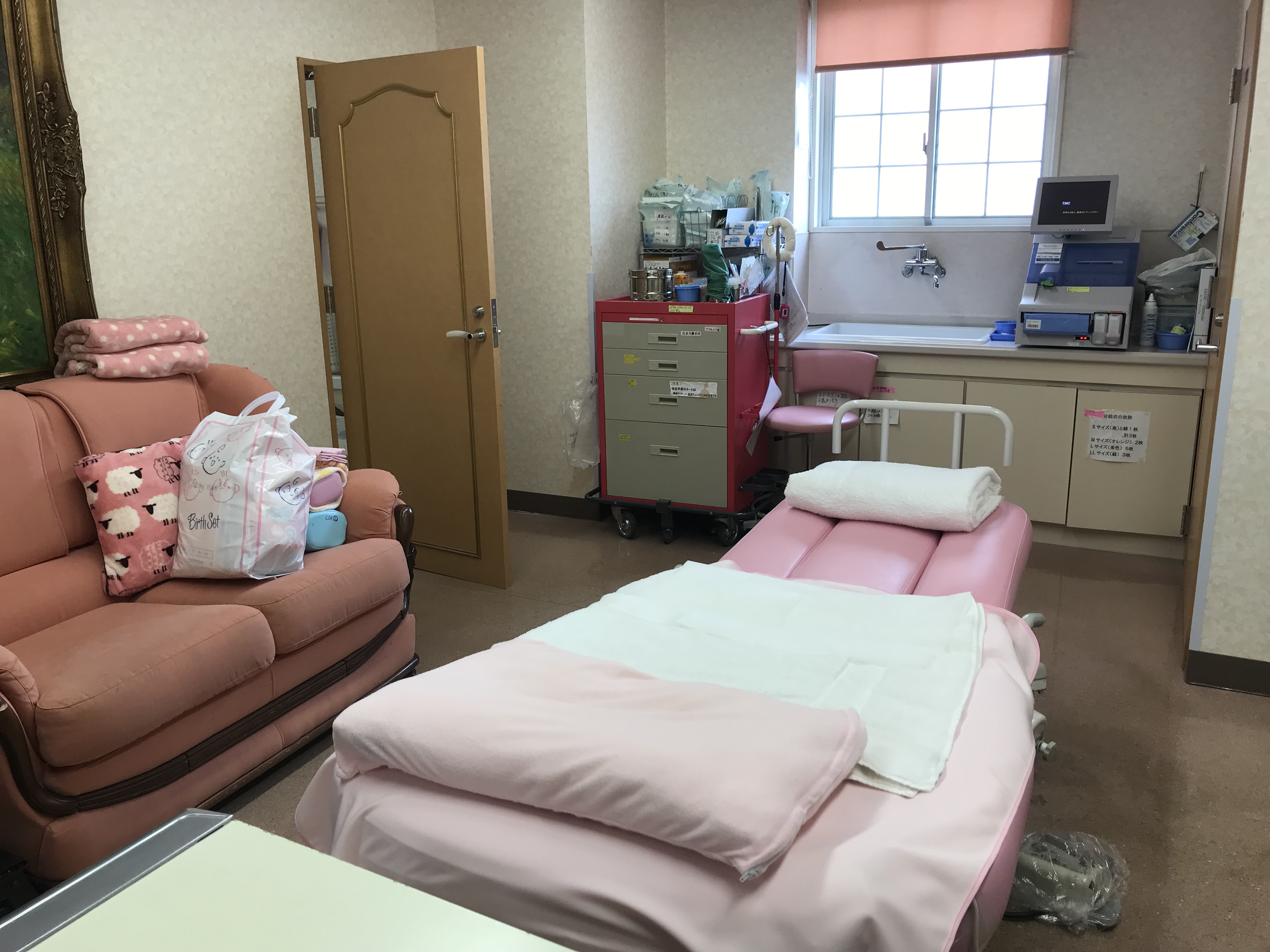
    Inside the delivery room, the nurse told us that during delivery, it is requested for the watcher to refrain from taking videos. Taking videos is allowed after the delivery of the child. This is to avoid distractions and also the nurse said no mother would want to record the pain and the struggle of delivering a baby. But deep inside me, I would love to record that very precious moment. I might not be able to experience it again. Might as well video record it. I don’t care how I look when in labor pain. Also, young children are not allowed to stay in the delivery room to avoid distractions as well. After giving birth, the mother can stay in the delivery room for two to four hours before moving to the private room. There were two delivery rooms in the clinic. The other one was smaller than the one in the picture.

    We were then guided to the breastfeeding room. It was just a small room with chairs lined up on the sides of the room and a changing table filled with diapers and baby clothes under it. We can use them freely. There were also baby bottles we can use. I couldn’t take a picture of that small room since we were packed in there. No space to take a snap without photo-bombers.

    And that was all for the tour on the second floor of the clinic.

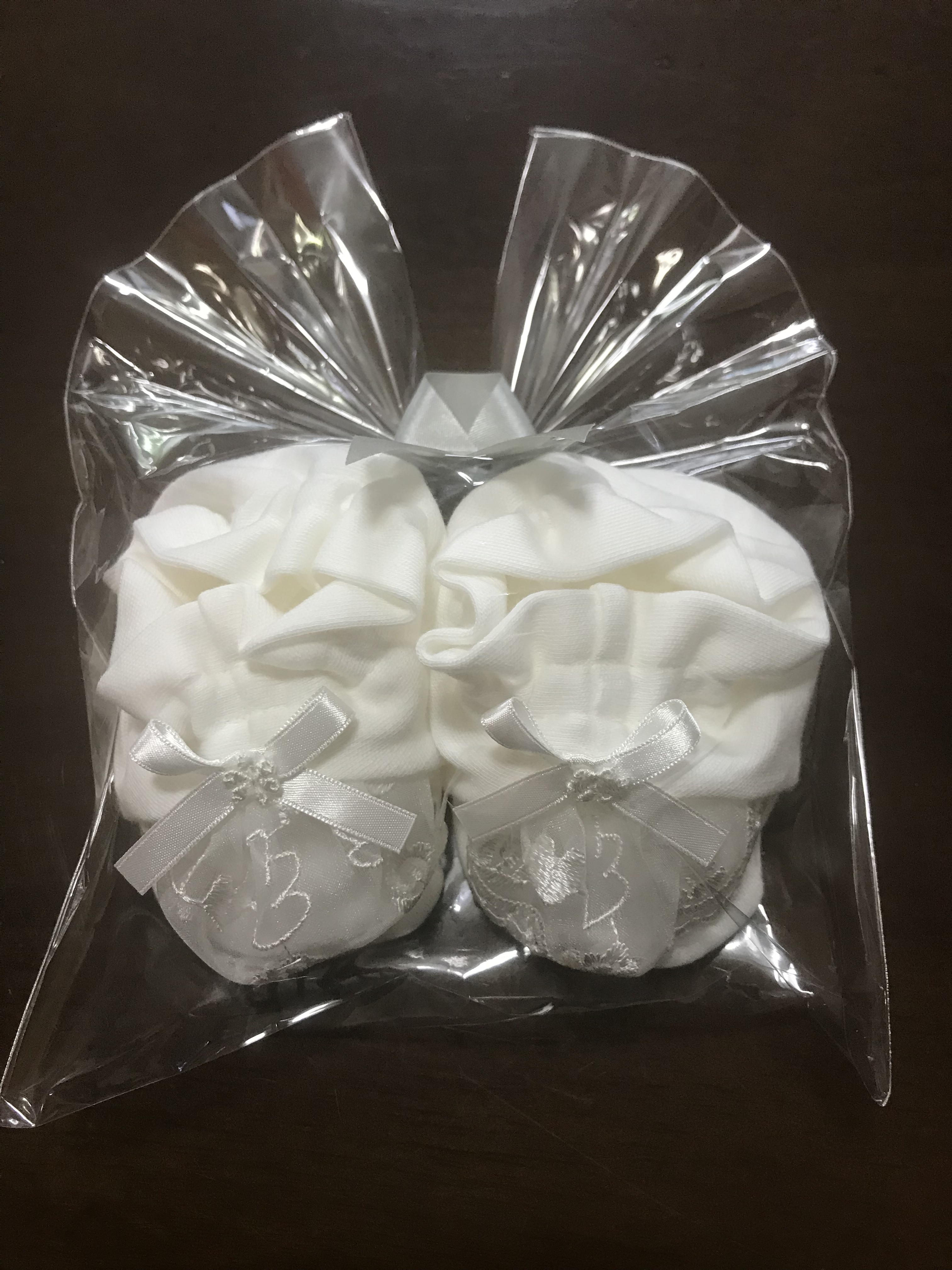
    We went back to the waiting area and another person came in front to talk. It was the nutritionist. She asked us to take out the pamphlet inside the gift bag and then she explained and showed us it’s content. It talks about the right food to eat, a balanced diet chart, fighting anemia, BMI and so on and so forth. The gift bag also contained a diaper, baby wipes and a very cute baby shoes.

    That was the end of our seminar.

    I left the clinic past three-thirty in the afternoon feeling excited for the delivery day.