When I was younger, I used to feel embarrassed speaking Bisaya whenever there were Tagalog speakers around or whenever I traveled to places where people didn’t speak Bisaya. Back home in the Philippines, there’s this stereotype that if you speak Bisaya, people think you’re poor, uneducated, or that your accent sounds “rough.” You know what I mean.
I was also afraid to speak English because I worried about my grammar, pronunciation, and limited vocabulary.
There was always that feeling of self-doubt. Somehow, speaking Tagalog—especially English—made people seem more educated or wealthier. But then, if a fellow Bisaya heard you speaking English, sometimes they’d joke that you were being “too proud” or acting like you’re somebody. 🤣😂
Everything changed after I moved to Japan.
Japan is mostly a monolingual country, and people here truly love their own language. In fact, many Japanese people are shy about speaking English. One answer I’ve heard from my students is, “Why should we speak English? We’re in Japan. We are Japanese.”
It was the complete opposite of what I grew up with.
They’re proud of their language. They’re only shy because they’re afraid of making mistakes in English—not because they think Japanese is inferior.
To be honest, my English has never been perfect. Of course not. I was born and raised speaking Bisaya. English wasn’t even my favorite subject in school. I liked Science, Math, P.E., Music, and Home Economics much more. 😂
But when I became an international student in Japan, I met people from Laos, Thailand, Iran, Egypt, China, Malaysia, Taiwan, Pakistan, Myanmar, Azerbaijan, and many other countries I honestly don’t even remember learning about in school because I probably wasn’t paying attention during Geography. 🤣 I also met Filipinos from all over the Philippines.
That was when I truly learned to appreciate my own language—my Bisaya.
When I first became an English teacher in Japan, I was terrified during teacher training. Around 95% of my coworkers in my first company were white foreigners. I think there were only two Filipinos.
I was so nervous speaking English because, in my mind, they were all Americans… well, okay, there was an Australian too. But you know how it is back home—if they’re foreigners, we call everyone “Amerikano.” 🤣
During one training session, I had to read a children’s book in front of everyone.
My tongue froze.
I sounded like a first grader struggling to read.
Afterward, everyone gave me feedback. They said I didn’t pause enough, didn’t use proper phrasing, and didn’t stop at the periods. 🤣😂 Some probably just wanted a chance to say something too. 😅
I’ll never forget that experience.
Some trainees cried.
I didn’t.
Even though I wanted to.
I just smiled and accepted every comment.
Deep inside I was thinking, “Go ahead and talk. I’m a teacher by profession. Teaching is the easy part.” 😂
Thankfully, our trainer was very kind. He stepped in and said it was okay because it was my first training and I was simply nervous.
When I finally entered the classroom, teaching was actually easy.
In fact, I quickly learned that I couldn’t use too much English with Japanese students because they’d get confused. 🤣
On my very first day, I spoke in full English like this:
“Good morning, class. Our lesson for today is…”
Guess what?
My school coordinator reported back to the company that my English was too difficult because my sentences were too long. 🤣😂
So I learned to keep it simple.
Instead of,
“Good morning, class. Please open your books to page…”
Just say,
“Good morning.”
That’s enough. 🤣
Anyway…
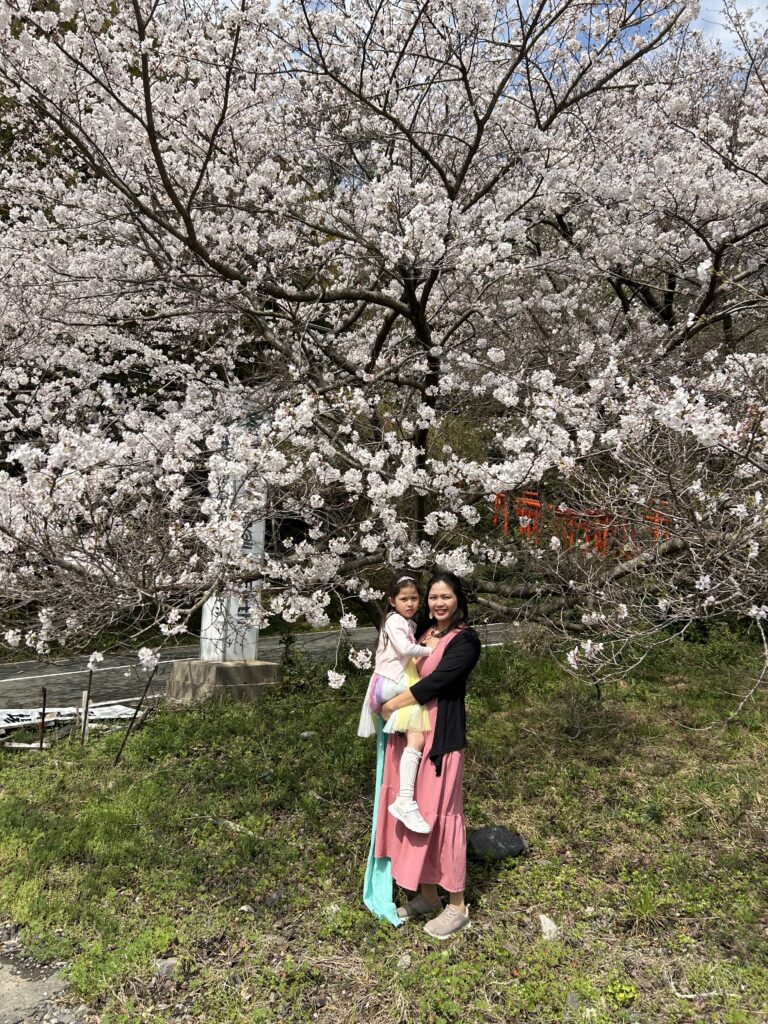
The reason I’m proud to speak Bisaya—and why I made sure my daughter learned it too—is because language is a gift.
It’s part of who we are.
Sometimes I jokingly tell my daughter, “If you can’t speak Bisaya, you’re not my daughter anymore.” 😂
Now, about imperfect English…
It’s completely okay.
Even native English speakers make grammar mistakes.
I’ve heard plenty of Americans here make mistakes too.
Even we Bisaya speakers don’t always speak perfect Bisaya.
Even native Japanese speakers sometimes make mistakes in Japanese.
We’re not books.
We’re people.
We’re not AI.
We’re not supposed to be perfect.
Honestly, conversations that sound too perfect can feel robotic. They lose that human touch. 😂
Now, if you’re teaching English for an exam, that’s a different story. Grammar and accuracy matter.
But if language is simply a tool for communication, don’t be afraid to make mistakes.
And don’t ever be ashamed of your own language or your accent.
That’s actually your strength.
I make mistakes in English because it means I speak another language—not just English.
As for me…
I’m Bisaya.
I can speak English, Japanese, Tagalog, and a little Spanish.
I’m multilingual.
And when I talk, I often mix all my languages together. I code-switch. I forget words. I substitute one language for another. I simply use whichever language helps me express myself best.
And I’m no longer embarrassed by that.
This is who I am.
Language is a gift, and now I’m passing that gift on to my daughter.
That’s all.
This turned out much longer than I expected.
Blame the jet lag. 😂 It’s been days since I’ve had a proper sleep schedule.
If you’ve made it this far, thank you for reading.
Comment “Thanks for sharing.” 😂🥰🤣
Reader responses